Kirjojen hintavertailu – 12 903 725 kirjaa ja 27 kauppaa

Kirjailija

Eileen Boris

Kirjat ja teokset yhdessä paikassa: 7 kirjaa, julkaisuja vuosilta 1994–2023, suosituimpiin kuuluu Public Workers in Service of America. Vertaile teosten hintoja ja tarkista saatavuus suomalaisista kirjakaupoista.

7 kirjaa

Kirjojen julkaisuvuodet: 1994–2023.

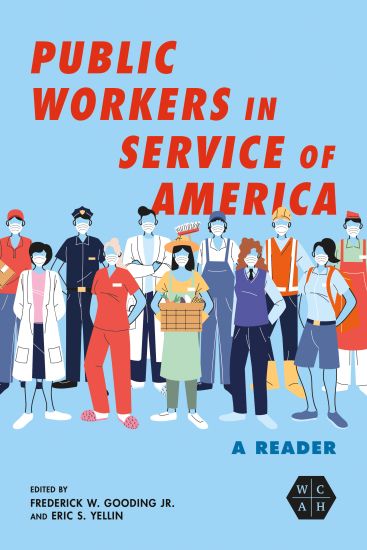
Public Workers in Service of America

Public Workers in Service of America

Joseph A. McCartin; Eileen Boris

UNIVERSITY OF ILLINOIS PRESS
2023
nidottu
From white-collar executives to mail carriers, public workers meet the needs of the entire nation. Frederick W. Gooding Jr. and Eric S. Yellin edit a collection of new research on this understudied workforce. Part One begins in the late nineteenth- and early twentieth century to explore how questions of race, class, and gender shaped public workers, their workplaces, and their place in American democracy. In Part Two, essayists examine race and gender discrimination while revealing the subtle contemporary forms of marginalization that keep Black men and Black and white women underpaid and overlooked for promotion. The historic labor actions detailed in Part Three illuminate how city employees organized not only for better pay and working conditions but to seek recognition from city officials, the public, and the national labor movement. Part Four focuses on nurses and teachers to address the thorny question of whether certain groups deserve premium pay for their irreplaceable work and sacrifices or if serving the greater good is a reward unto itself. Contributors: Eileen Boris, Cathleen D. Cahill, Frederick W. Gooding Jr., William P. Jones, Francis Ryan, Jon Shelton, Joseph E. Slater, Katherine Turk, Eric S. Yellin, and Amy Zanoni
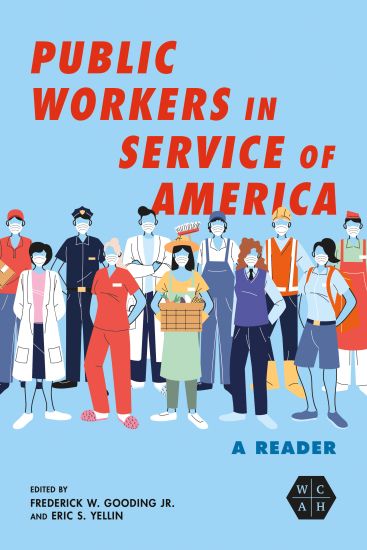
Public Workers in Service of America

Public Workers in Service of America

Joseph A. McCartin; Eileen Boris

UNIVERSITY OF ILLINOIS PRESS
2023
sidottu
From white-collar executives to mail carriers, public workers meet the needs of the entire nation. Frederick W. Gooding Jr. and Eric S. Yellin edit a collection of new research on this understudied workforce. Part One begins in the late nineteenth- and early twentieth century to explore how questions of race, class, and gender shaped public workers, their workplaces, and their place in American democracy. In Part Two, essayists examine race and gender discrimination while revealing the subtle contemporary forms of marginalization that keep Black men and Black and white women underpaid and overlooked for promotion. The historic labor actions detailed in Part Three illuminate how city employees organized not only for better pay and working conditions but to seek recognition from city officials, the public, and the national labor movement. Part Four focuses on nurses and teachers to address the thorny question of whether certain groups deserve premium pay for their irreplaceable work and sacrifices or if serving the greater good is a reward unto itself. Contributors: Eileen Boris, Cathleen D. Cahill, Frederick W. Gooding Jr., William P. Jones, Francis Ryan, Jon Shelton, Joseph E. Slater, Katherine Turk, Eric S. Yellin, and Amy Zanoni
Making the Woman Worker

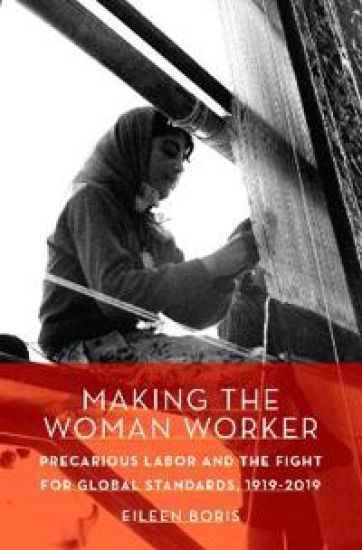
Making the Woman Worker

Eileen Boris

Oxford University Press Inc
2019
sidottu
Founded in 1919 along with the League of Nations, the International Labour Organization (ILO) establishes labor standards and produces knowledge about the world of work, serving as a forum for nations, unions, and employer associations. Before WWII, it focused on enhancing conditions for male industrial workers in Western, often imperial, economies, while restricting the circumstances of women's labors. Over time, the ILO embraced non-discrimination and equal treatment. It now promotes fair globalization, standardized employment and decent work for women in the developing world. In Making the Woman Worker, Eileen Boris illuminates the ILO's transformation in the context of the long fight for social justice. Boris analyzes three ways in which the ILO has classified the division of labor: between women and men from 1919 to 1958; between women in the global south and the west from 1955 to 1996; and between the earning and care needs of all workers from 1990s to today. Before 1945, the ILO focused on distinguishing feminized labor from male workers, whom the organization prioritized. But when the world needed more women workers, the ILO (a UN agency after WWII) highlighted the global differences in women's work, began to combat sexism in the workplace, and declared care work essential to women's labor participation. Today, the ILO enters its second century with a mission to protect the interests of all workers in the face of increasingly globalized supply chains, the digitization of homework, and cross-border labor trafficking. As Boris shows, the ILO's treatment of women is a window into the modern history of labor. The historic relegation of feminized labor to the part-time, short-term, and low-waged prefigures the future organization of work. The labor force is increasingly self-employed and working as long as possible--a steep price for flexibility--with minimal governmental oversight. How we treat workers in the next century will inevitably build upon evolving ideas of the woman worker, shaped significantly through the ILO.
Caring for America

Caring for America

Eileen Boris; Jennifer Klein

Oxford University Press Inc
2015
nidottu
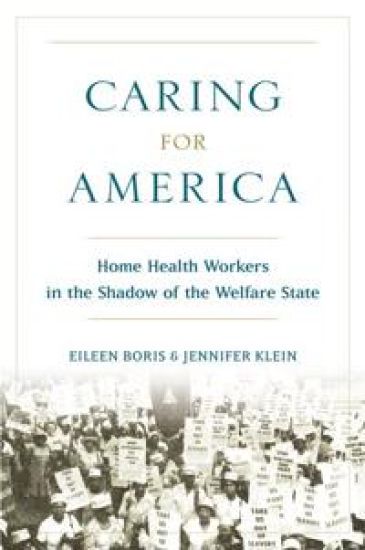
In this sweeping narrative history from the Great Depression of the 1930s to the Great Recession of today, Caring for America rethinks both the history of the American welfare state from the perspective of care work and chronicles how home care workers eventually became one of the most vibrant forces in the American labor movement. Eileen Boris and Jennifer Klein demonstrate the ways in which law and social policy made home care a low-waged job that was stigmatized as welfare and relegated to the bottom of the medical hierarchy. For decades, these front-line caregivers labored in the shadows of a welfare state that shaped the conditions of the occupation. Disparate, often chaotic programs for home care, which allowed needy, elderly, and disabled people to avoid institutionalization, historically paid poverty wages to the African American and immigrant women who constituted the majority of the labor force. Yet policymakers and welfare administrators linked discourses of dependence and independence-claiming that such jobs would end clients' and workers' "dependence" on the state and provide a ticket to economic independence. The history of home care illuminates the fractured evolution of the modern American welfare state since the New Deal and its race, gender, and class fissures. It reveals why there is no adequate long-term care in America. Caring for America is much more than a history of social policy, however; it is also about a powerful contemporary social movement. At the front and center of the narrative are the workers-poor women of color-who have challenged the racial, social, and economic stigmas embedded in the system. Caring for America traces the intertwined, sometimes conflicting search of care providers and receivers for dignity, self-determination, and security. It highlights the senior citizen and independent living movements; the civil rights organizing of women on welfare and domestic workers; the battles of public sector unions; and the unionization of health and service workers. It rethinks the strategies of the U. S. labor movement in terms of a growing care work economy. Finally, it makes a powerful argument that care is a basic right for all and that care work merits a living wage.
Caring for America

Caring for America

Eileen Boris; Jennifer Klein

Oxford University Press Inc
2012
sidottu
Through a sweeping analytical narrative, from the Great Depression of the 1930s to the Great Recession of today, Caring for America shows how law and social policy shaped home care into a low-wage job, stigmatized as part of public welfare, primarily funded through Medicaid, and relegated to the bottom of the medical hierarchy. Care work became a job for African American and immigrant women that kept them in poverty, while providing independence from institutionalization for needy elderly and disabled people. But while the state organized home care, it did not do so without eliciting contestation and confrontation from the citizens themselves who gave and received it. Authors Eileen Boris and Jennifer Klein trace the intertwined, sometimes conflicting search of care providers and receivers for dignity, self-determination, security, and personal and social worth. This book highlights social movements of senior citizens for disability rights and independent living, the civil rights organizing of women on welfare and domestic workers, the battles of public sector unions, and the unionization of health and service workers. It rethinks the history of the American welfare state from the perspective of care work, all the while re-examining the strategies of the U. S. labor movement in terms of a growing care work economy. An unprecedented study, Caring for America serves as a definitive historical account of how public policy has impacted major modern movements and trends in class, race, and gender politics in the United States.
Home to Work

Home to Work

Eileen Boris

Cambridge University Press
1994
sidottu
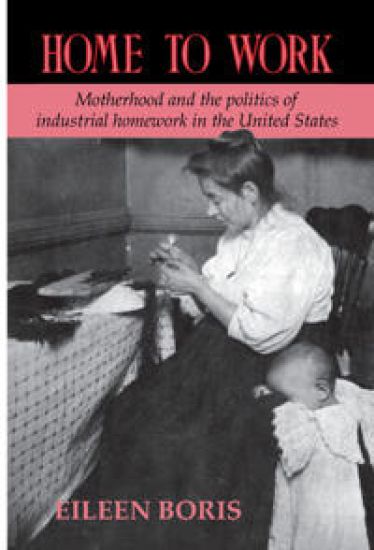
In the minds of most people, the home has stood apart from the world of work. By bringing the factory or office home, homework challenges this division. Home to Work restores the voices of homeworking women to the century-long debate over their labour. It provides a historical context to the Reaganite lifting of New Deal bans. Where once men's right to contract inhibited regulation, now women's right to employment undermined prohibition. Economic and political justice, whether based on rights to homework or rights as workers, will depend on homeworkers becoming visible as workers who happen to mother.
Home to Work

Home to Work

Eileen Boris

Cambridge University Press
1994
pokkari
In the minds of most people, the home has stood apart from the world of work. By bringing the factory or office home, homework challenges this division. Home to Work restores the voices of homeworking women to the century-long debate over their labour. It provides a historical context to the Reaganite lifting of New Deal bans. Where once men’s right to contract inhibited regulation, now women’s right to employment undermined prohibition. Economic and political justice, whether based on rights to homework or rights as workers, will depend on homeworkers becoming visible as workers who happen to mother.