Kirjojen hintavertailu – 12 903 725 kirjaa ja 27 kauppaa

Kirjailija

Ekaterina Pravilova

Kirjat ja teokset yhdessä paikassa: 5 kirjaa, julkaisuja vuosilta 2014–2023, suosituimpiin kuuluu Imperija v poiskakh obschego blaga. Sobstvennost v dorevoljutsionnoj Rossii. Vertaile teosten hintoja ja tarkista saatavuus suomalaisista kirjakaupoista.

5 kirjaa

Kirjojen julkaisuvuodet: 2014–2023.

The Ruble

The Ruble

Ekaterina Pravilova

OXFORD UNIVERSITY PRESS INC
2023
sidottu
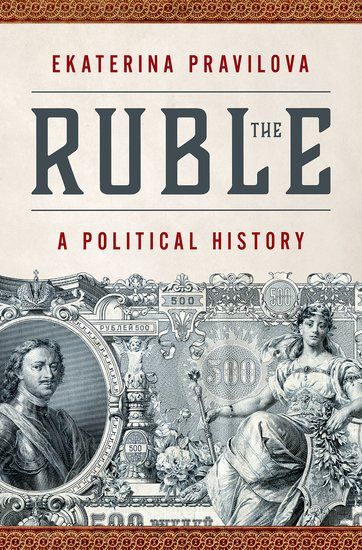
A groundbreaking history of Russia, from empire to the Soviet era, viewed through the lens of its money. Money seems passive, a silent witness to the deeds and misdeeds of its holders, but through its history intimate dramas and grand historical processes can be told. So argues this sweeping narrative of the ruble's story from the time of Catherine the Great to Lenin. The Russian ruble did not enjoy a particularly reputable place among European currencies. Across two hundred years, long periods of financial turmoil were followed by energetic and pragmatic reforms that invariably ended with another collapse. Why did a country with an industrializing economy, solid private property rights, and (until 1918) a near perfect reputation as a rock-solid repayer of its debts stick for such a prolonged period with an inconvertible currency? Why did the Russian gold standard differ from the European model? In answering these questions, Ekaterina Pravilova argues that politics and culture must be considered alongside economic factors. The history of the Russian ruble offers an opportunity to explore the political reasons behind the preservation of a supposedly backward financial system and to show how politicians used monetary reforms to block or enact political transformations. The Ruble is a history of Russia written in the language of money. It shows how economists, landowners, merchants, and peasants understood, perceived, and used financial mechanisms. In her definitive account, Pravilova interprets the well-known political events of the eighteenth to early twentieth centuries--wars, attempts at constitutional transformations, revolutions--through the ideas and politics of currency reforms and offers a new history of Russia's imperial expansion and collapse.
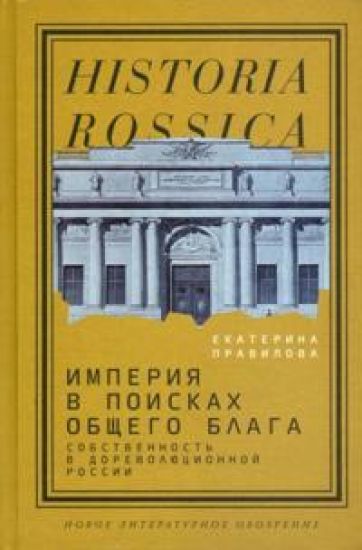
Imperija v poiskakh obschego blaga. Sobstvennost v dorevoljutsionnoj Rossii
Prinjato schitat, chto v dorevoljutsionnoj Rossii chastnaja sobstvennost ne byla dostatochno zaschischena i chto rossijskij liberalizm ne smog obosnovat idealy individualizma i svobody sobstvennosti. Odnako kniga E. Pravilovoj predlagaet sovershenno novyj vzgljad na etu problemu. Ona pokazyvaet, chto, vopreki obschemu mneniju, samoderzhavnoe gosudarstvo stojalo na strazhe interesov vladeltsev, v to vremja kak liberalnye mysliteli, politiki i eksperty ratovali za ogranichenie gipertrofirovannykh chastnykh prav v polzu obschestva. E. Pravilova analiziruet vozniknovenie i razvitie idej i institutov "publichnoj sobstvennosti" v neskolkikh oblastjakh - zaschita okruzhajuschej sredy, razvitie gidroenergetiki i ispolzovanija prirodnykh resursov, okhrana khudozhestvennykh i arkheologicheskikh pamjatnikov, a takzhe literaturnoj sobstvennosti. Na rubezhe KHIKh i KHKh vekov sudba russkikh lesov i pravoslavnykh ikon, arkhitekturnykh shedevrov i proizvedenij velikikh pisatelej svjazyvalas s peresmotrom sistemy sobstvennosti. Juristy i arkhitektory, iskusstvovedy i lesovody, inzhenery i literaturnye kritiki ratovali za to, chtoby obschestvo stalo polnopravnym vladeltsem "obschikh veschej". Kak pokazyvaet avtor, rossijskij dorevoljutsionnyj liberalizm ne byl individualisticheskim - on razvival idei grazhdanskogo obschestva, postroennye na publichnom vladenii natsionalnym bogatstvom. Ekaterina Pravilova - istorik, professor Prinstonskogo universiteta (SSHA).
Liberties Journal of Culture and Politics

Liberties Journal of Culture and Politics

Cass R. Sunstein; Carissa Veliz; Ekaterina Pravilova; Richard Taruskin; Claire Malroux; Richard Wolin; Mark Polizzotti; Jonathan Zimmerman; Marissa Grunes; Andrew Butterfield; Scott Spillman; Leora Batnitzky; Helen Vendler; Jared Marcel Pollen; Paula Bohince

Liberties Journal Foundation
2022
nidottu
“A Meteor of Intelligent Substance”“Something was Missing in our Culture, and Here It Is”"Invaluable""Liberties is THE place to be. Change starts in the mind.” Liberties, a journal of Culture and Politics, is essential reading for those engaged in the cultural and political issues and causes of our time. Liberties features serious, independent, stylish, and controversial essays by significant writers and leaders throughout the world; new poetry; and, introduces the next generation of writers and voices to inspire and impact the intellectual and creative lifeblood of today’s culture and politics. In this issue of Liberties: Cass R. Sunstein - The Supreme Court Gone Wrong; Carissa Veliz - Digitization is Surveillance; Ekaterina Pravilova - The Autocrat’s War; Richard Taruskin - What is Bad Taste; Jonathan Zimmerman - Memoirs of a White Savior; Richard Wolin - The Cult of Carl Schmitt; Mark Polizzotti - Surrealism and Cancellation; Andrew Butterfield - Dante During Covid; Scott Spillman - The Strange History of the Slave Songs; Leora Batnitzky - The Sacrifice of Edith Stein; Helen Vendler - Sylvia Plath on Motherhood; Jared Marcel Pollen - Was Havel Right?; Celeste Marcus - The Curse of the Radical Israeli Right; Leon Wieseltier - The Future of Nature; and new poems by Claire Malroux, Marissa Grunes, Paula Bohince.
A Public Empire

A Public Empire

Ekaterina Pravilova

Princeton University Press
2018
pokkari
"Property rights" and "Russia" do not usually belong in the same sentence. Rather, our general image of the nation is of insecurity of private ownership and defenselessness in the face of the state. Many scholars have attributed Russia's long-term development problems to a failure to advance property rights for the modern age and blamed Russian intellectuals for their indifference to the issues of ownership. A Public Empire refutes this widely shared conventional wisdom and analyzes the emergence of Russian property regimes from the time of Catherine the Great through World War I and the revolutions of 1917. Most importantly, A Public Empire shows the emergence of the new practices of owning "public things" in imperial Russia and the attempts of Russian intellectuals to reconcile the security of property with the ideals of the common good. The book analyzes how the belief that certain objects—rivers, forests, minerals, historical monuments, icons, and Russian literary classics—should accede to some kind of public status developed in Russia in the mid-nineteenth century. Professional experts and liberal politicians advocated for a property reform that aimed at exempting public things from private ownership, while the tsars and the imperial government employed the rhetoric of protecting the sanctity of private property and resisted attempts at its limitation. Exploring the Russian ways of thinking about property, A Public Empire looks at problems of state reform and the formation of civil society, which, as the book argues, should be rethought as a process of constructing "the public" through the reform of property rights.
A Public Empire

A Public Empire

Ekaterina Pravilova

Princeton University Press
2014
sidottu
"Property rights" and "Russia" do not usually belong in the same sentence. Rather, our general image of the nation is of insecurity of private ownership and defenselessness in the face of the state. Many scholars have attributed Russia's long-term development problems to a failure to advance property rights for the modern age and blamed Russian intellectuals for their indifference to the issues of ownership. A Public Empire refutes this widely shared conventional wisdom and analyzes the emergence of Russian property regimes from the time of Catherine the Great through World War I and the revolutions of 1917. Most importantly, A Public Empire shows the emergence of the new practices of owning "public things" in imperial Russia and the attempts of Russian intellectuals to reconcile the security of property with the ideals of the common good. The book analyzes how the belief that certain objects--rivers, forests, minerals, historical monuments, icons, and Russian literary classics--should accede to some kind of public status developed in Russia in the mid-nineteenth century. Professional experts and liberal politicians advocated for a property reform that aimed at exempting public things from private ownership, while the tsars and the imperial government employed the rhetoric of protecting the sanctity of private property and resisted attempts at its limitation. Exploring the Russian ways of thinking about property, A Public Empire looks at problems of state reform and the formation of civil society, which, as the book argues, should be rethought as a process of constructing "the public" through the reform of property rights.