Kirjojen hintavertailu – 12 903 725 kirjaa ja 27 kauppaa

Kirjailija

Elaine J. Lawless

Kirjat ja teokset yhdessä paikassa: 14 kirjaa, julkaisuja vuosilta 1988–2019, suosituimpiin kuuluu God's Peculiar People. Vertaile teosten hintoja ja tarkista saatavuus suomalaisista kirjakaupoista.

Nimi esiintyy myös muodoissa: Elaine J Lawless

14 kirjaa

Kirjojen julkaisuvuodet: 1988–2019.

Reciprocal Ethnography and the Power of Women's Narratives

Reciprocal Ethnography and the Power of Women's Narratives

Elaine J. Lawless

Indiana University Press
2019
sidottu
Folklorist Elaine J. Lawless has devoted her career to ethnographic research with underserved groups in the American Midwest, including charismatic Pentecostals, clergywomen, victims of domestic violence, and displaced African Americans. She has consistently focused her research on women's speech in these contexts and has developed a new approach to ethnographic research which she calls "reciprocal ethnography," while growing a detailed corpus of work on women's narrative style and expressive speech. Reciprocal ethnography is a feminist and collaborative ethnographic approach that Lawless developed as a challenge to the reflexive turn in anthropological fieldwork and research in the 1970s, which was often male-centric, ignoring the contributions by and study of women's culture. Collected here for the first time are Lawless's key articles on the topics of reciprocal ethnography and women's narrative which influenced not only folklore, but also the allied fields of anthropology, sociology, performance studies, and women's and gender studies. Lawless's methods and research continue to be critically relevant in today's global struggle for gender equality.
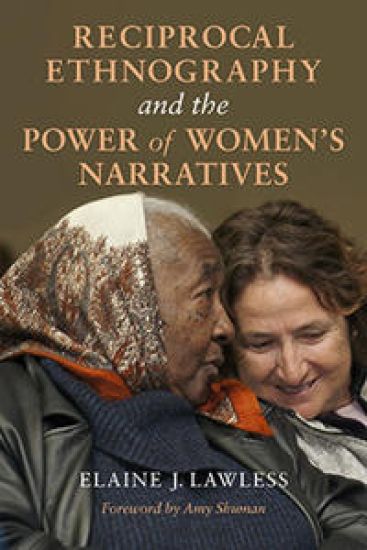
Reciprocal Ethnography and the Power of Women's Narratives

Reciprocal Ethnography and the Power of Women's Narratives

Elaine J. Lawless

Indiana University Press
2019
pokkari

Halvin toimitettuna 33,40 €

Folklorist Elaine J. Lawless has devoted her career to ethnographic research with underserved groups in the American Midwest, including charismatic Pentecostals, clergywomen, victims of domestic violence, and displaced African Americans. She has consistently focused her research on women's speech in these contexts and has developed a new approach to ethnographic research which she calls "reciprocal ethnography," while growing a detailed corpus of work on women's narrative style and expressive speech. Reciprocal ethnography is a feminist and collaborative ethnographic approach that Lawless developed as a challenge to the reflexive turn in anthropological fieldwork and research in the 1970s, which was often male-centric, ignoring the contributions by and study of women's culture. Collected here for the first time are Lawless's key articles on the topics of reciprocal ethnography and women's narrative which influenced not only folklore, but also the allied fields of anthropology, sociology, performance studies, and women's and gender studies. Lawless's methods and research continue to be critically relevant in today's global struggle for gender equality.
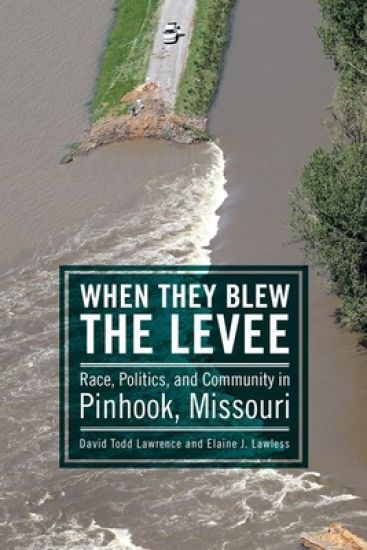
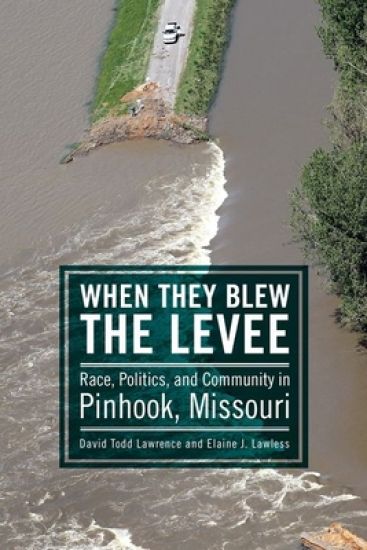
When They Blew the Levee

When They Blew the Levee

David Todd Lawrence; Elaine J. Lawless

University Press of Mississippi
2018
sidottu
In 2011, the Midwest suffered devastating floods. Due to the flooding, the US Army Corps of Engineers activated the Birds Point-New Madrid Floodway, one of the flood prevention mechanisms of the Mississippi Rivers and Tributaries Project. This levee breach was intended to divert water in order to save the town of Cairo, Illinois, but in the process, it completely destroyed the small African American town of Pinhook, Missouri. In When They Blew the Levee: Race, Politics, and Community in Pinhook, Missouri, authors David Todd Lawrence and Elaine J. Lawless examine two conflicting narratives about the flood--one promoted by the Corps of Engineers that boasts the success of the levee breach and the flood diversion, and the other gleaned from displaced Pinhook residents, who, in oral narratives, tell a different story of neglect and indifference on the part of government officials. Receiving inadequate warning and no evacuation assistance during the breach, residents lost everything. Still after more than six years, displaced Pinhook residents have yet to receive restitution and funding for relocation and reconstruction of their town. The authors' research traces a long history of discrimination and neglect of the rights of the Pinhook community, beginning with their migration from the Deep South to southeast Missouri, through purchasing and farming the land, and up to the Birds Point levee breach nearly eighty years later. The residents' stories relate what it has been like to be dispersed in other small towns, living with relatives and friends while trying to negotiate the bureaucracy surrounding Federal Emergency Management Agency and State Emergency Management Agency assistance programs. Ultimately, the stories of displaced citizens of Pinhook reveal a strong African American community, whose bonds were developed over time and through shared traditions, a community persisting despite extremely difficult circumstances.
When They Blew the Levee

When They Blew the Levee

David Todd Lawrence; Elaine J. Lawless

University Press of Mississippi
2018
nidottu
In 2011, the Midwest suffered devastating floods. Due to the flooding, the US Army Corps of Engineers activated the Birds Point-New Madrid Floodway, one of the flood prevention mechanisms of the Mississippi Rivers and Tributaries Project. This levee breach was intended to divert water in order to save the town of Cairo, Illinois, but in the process, it completely destroyed the small African American town of Pinhook, Missouri. In When They Blew the Levee: Race, Politics, and Community in Pinhook, Missouri, authors David Todd Lawrence and Elaine J. Lawless examine two conflicting narratives about the flood--one promoted by the Corps of Engineers that boasts the success of the levee breach and the flood diversion, and the other gleaned from displaced Pinhook residents, who, in oral narratives, tell a different story of neglect and indifference on the part of government officials. Receiving inadequate warning and no evacuation assistance during the breach, residents lost everything. Still after more than six years, displaced Pinhook residents have yet to receive restitution and funding for relocation and reconstruction of their town. The authors' research traces a long history of discrimination and neglect of the rights of the Pinhook community, beginning with their migration from the Deep South to southeast Missouri, through purchasing and farming the land, and up to the Birds Point levee breach nearly eighty years later. The residents' stories relate what it has been like to be dispersed in other small towns, living with relatives and friends while trying to negotiate the bureaucracy surrounding Federal Emergency Management Agency and State Emergency Management Agency assistance programs. Ultimately, the stories of displaced citizens of Pinhook reveal a strong African American community, whose bonds were developed over time and through shared traditions, a community persisting despite extremely difficult circumstances.
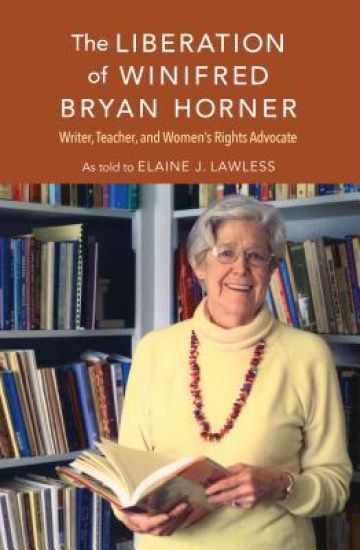
The Liberation of Winifred Bryan Horner

The Liberation of Winifred Bryan Horner

Elaine J. Lawless

Indiana University Press
2018
sidottu
This inspiring tale of grit and determination sprinkled with humor, wit, and a taste of irony is the story of Winifred Bryan Horner's journey from a life of domesticity on the family farm after World War II to becoming an Endowed Professor. Her compelling story is one of a woman's fight for equal rights and her ultimate success at a time when women were openly deemed "less than" men in the professional world. Winifred, a professional writer and consummate storyteller known to friends and family as Win, always assumed she would write her own memoir. But after retiring from teaching, she found that she could never find the time or inspiration to sit down and record the pivotal stories of her remarkable 92 years of life. Colleague and mentee Elaine J. Lawless devised a plan to interview Win about her life and allow her to tell stories with the intention that Win would edit the transcriptions into her memoir. Over four months, Elaine visited Win on Wednesdays to interview her about her life. Sadly, just one week after the conclusion of the final interview, Win unexpectedly passed away, before Elaine could give her the final transcripts. With the support of Win's family, Elaine set out to finish this book on Win's behalf. Win's story is one that will inspire and resonate with women as they continue to work toward equality in the world.
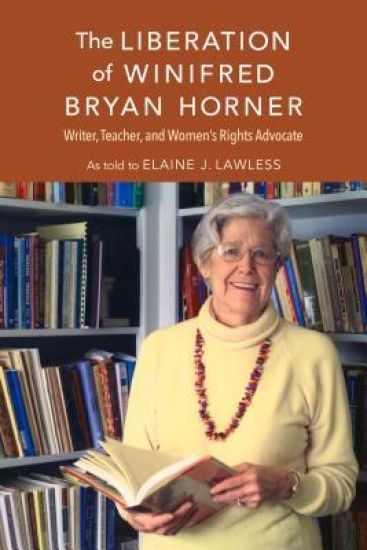
The Liberation of Winifred Bryan Horner

The Liberation of Winifred Bryan Horner

Elaine J. Lawless

Indiana University Press
2018
pokkari
This inspiring tale of grit and determination sprinkled with humor, wit, and a taste of irony is the story of Winifred Bryan Horner's journey from a life of domesticity on the family farm after World War II to becoming an Endowed Professor. Her compelling story is one of a woman's fight for equal rights and her ultimate success at a time when women were openly deemed "less than" men in the professional world. Winifred, a professional writer and consummate storyteller known to friends and family as Win, always assumed she would write her own memoir. But after retiring from teaching, she found that she could never find the time or inspiration to sit down and record the pivotal stories of her remarkable 92 years of life. Colleague and mentee Elaine J. Lawless devised a plan to interview Win about her life and allow her to tell stories with the intention that Win would edit the transcriptions into her memoir. Over four months, Elaine visited Win on Wednesdays to interview her about her life. Sadly, just one week after the conclusion of the final interview, Win unexpectedly passed away, before Elaine could give her the final transcripts. With the support of Win's family, Elaine set out to finish this book on Win's behalf. Win's story is one that will inspire and resonate with women as they continue to work toward equality in the world.
Troubling Violence

Troubling Violence

M. Heather Carver; Elaine J. Lawless

University Press of Mississippi
2010
nidottu
Troubling Violence: A Performance Project follows the collaboration between performance studies professor M. Heather Carver and ethnographic folklorist Elaine J. Lawless. The book traces the creative development of a performance troupe in which women take the stage to narrate true, harrowing experiences of domestic violence and then invite audience members to discuss the tales. Similar to the performances, the book presents real-life narratives as a means of heightening social awareness and dialogue about intimate partner violence.""Troubling violence"" refers not only to the cultures in our society that are ""troubling,"" but also to the authors' intent to ""trouble"" perceptions that enforce social, cultural, legal, and religious attitudes that perpetuate abuse against women. Performance, this book argues, enhances ethnographic research and writing by allowing ethnographers to approach both their field studies and their ethnographic writing as performance. The book also demonstrates how ethnography enhances the study of performance. The authors discuss the development of the Troubling Violence Performance Project in conjunction with their own ""performances"" within the academy.
Holy Women, Wholly Women

Holy Women, Wholly Women

Elaine J. Lawless

Wipf Stock Publishers
2010
nidottu
In Holy Women, Wholly Women, Elaine J. Lawless continues her work with women in American religion, and explores the life experiences of women in parish ministry in several Protestant churches--including the United Methodist, Christian Church-Disciples of Christ, American Baptist, Episcopal, and Unitarian churches. Applying an approach, which she calls ""reciprocal ethnography,"" Lawless collects and interprets the stories of ten women ministers and examines their public and private lives, their ministries, their images of God, and their negotiations of sexuality and the religious life. Throughout, she retains much of the dialogue, which developed between herself and the participants; the voices of the women are clearly distinguishable from Lawless's words and from each other's. These women are ordained in different denominations, yet their deep-seated beliefs about spirituality, God, and ministry are surprisingly similar. Denominational affiliations are less critical for them than is the maintenance of a theology of wholeness and well-being for all humans. By employing an ethnographical approach informed by feminist theory, Holy Women, Wholly Women contributes to our understanding of women in the ordained ministry. It will be of compelling interest to students and scholars in folklore, women's studies, and religion.
Handmaidens of the Lord

Handmaidens of the Lord

Elaine J. Lawless

Wipf Stock Publishers
2010
nidottu
Handmaidens of the Lord focuses on the lives and ministry of Pentecostal women pastors and preachers in central Missouri. In devoting themselves to energetically serving their Lord, they often spend days and nights away from home ministering to their flock. How do they pursue this course in a church so fundamentalist that it decrees a woman's only place to be the home? In a religion that believes the Bible inerrant, Paul's admonition that women keep out of church business is taken very seriously. How then do the men and women in the churches view these women in authority? Elaine Lawless contends that it is the woman preacher's dedication to the sacred (as opposed to the secular) which provides her access to the pulpit. The preacher and her congregation firmly believe that her commission comes from God, and her task is not to overturn Pentecostal beliefs about home and family but to be both the epitome of good wife and mother and also the loyal servant of God. The congregation sees her as a mother figure, an image of nurturer that is compatible with Pentecostal beliefs about a woman's place. Lawless stresses that the women recognize, but perhaps could never articulate, that they walk a fine line between power and subservience. She concludes from hours of interviews and recordings that the woman pastor or preacher copes with this dichotomy by continuously re-scripting her life into a pattern acceptable to her community, because it is perceived by them, and by her, to be God's plan. The ""calling"" to serve becomes the central event in her life stories, and all her work revolves around it. Handmaidens of the Lord includes life histories of four women preachers, transcriptions of sermons, and analyses by Lawless of both life stories and sermons. It will be valuable to scholars of religion, ethnography, folklore, and women's studies.
God's Peculiar People

God's Peculiar People

Elaine J Lawless

The University Press of Kentucky
2005
nidottu
"Holy Rollers" -- with this epithet most people dismiss members of the Pentecostal sect as wild religious fanatics. In this new study, folklorist Elaine Lawless draws on fieldwork among Pentecostal congregations in the limestone region of southern Indiana to offer a sympathetic view of the Pentecostals as a special group distinguished by their own folk traditions and religious expression. From her findings she describes the members' codes of dress and behavior, their attitudes toward themselves and others, their special use of words, and their distinctive religious practices. Focusing on the activity of a particular church, she then analyzes the structure of the service and shows how its elements -- singing, praying, testifying, preaching, and speaking in tongues -- exhibit, not a formless display of fervor, but rather an ordered and traditional sequence that creates a unique religious expression. Important to the study is the attention given the role of women. Although the Pentecostal interpretation of Biblical teachings accords men dominance, women occasionally preach in the church and during the testifying part of the service they are often able to exercise control and religious authority. Many of the women have relatives in the dangerous work of the limestone quarries, and for these women the personal experience and close relationship fostered by the Pentecostal church, Lawless finds, offers welcome emotional support. This readable study affords a new understanding of one Pentecostal sect and an appreciation of the role of women in fundamentalist religious practices.
Women Escaping Violence

Women Escaping Violence

Elaine J. Lawless

University of Missouri Press
2001
sidottu
Once every nine minutes in the United States, a woman is beaten by her spouse or partner. This work gathers together the experiences of women who have fallen victim to domestic violence, and those who have managed to escape and rebuild their lives.
Women Preaching Revolution

Women Preaching Revolution

Elaine J. Lawless

University of Pennsylvania Press
1996
sidottu
Do women preach differently than men? In Women Preaching Revolution Elaine J. Lawless contends that they do. Drawing on her study of more than 150 sermons and extensive interviews with the clergywomen who preached them, Lawless argues that women have changed traditional preaching in ways that reflect their socialization as women and their experiences of being female in America. Many of the women in her study were expected to take courses on the art of preaching as part of their seminary training. Most of them rejected the sermon structure and strategies they were taught in seminary, viewing them as part of a "male" homiletic tradition, and developed styles that celebrate their commitment to connection, relationship, and dialogue.