Kirjojen hintavertailu – 12 903 725 kirjaa ja 27 kauppaa

Kirjailija

Eldar Haber

Kirjat ja teokset yhdessä paikassa: 5 kirjaa, julkaisuja vuosilta 2018–2026, suosituimpiin kuuluu Using AI in Academic Writing and Research. Vertaile teosten hintoja ja tarkista saatavuus suomalaisista kirjakaupoista.

5 kirjaa

Kirjojen julkaisuvuodet: 2018–2026.

Using AI in Academic Writing and Research

Using AI in Academic Writing and Research

Eldar Haber; Jemielniak Dariusz; Artur Kurasiński; Aleksandra Przegalińska

Springer International Publishing AG
2026
Nidottu
This book comprehensively explores how AI tools can revolutionize academic writing, research, grant proposals, and educational practices. With a focus on practical applications, ethical considerations, and future trends, the book serves as an indispensable roadmap for academics, researchers, and educators eager to integrate AI into their work. Whether you're looking to enhance your research capabilities, craft compelling grant proposals, personalize learning experiences, or lead your institution into the future, this book provides the insights and tools necessary to navigate and shape the AI-enhanced landscape of academia. It demonstrates how to redefine scholarly work with cutting-edge AI innovations through real-life, practical examples, yet keeping the level of generalization high enough to keep it relevant for a few years. By balancing specific, actionable insights with broader perspectives, this book equips readers to not only adapt to but actively influence the evolving role of AI in higher education, research, and funding acquisition, ensuring its value as a resource both now and in the coming years.
Using AI in Academic Writing and Research

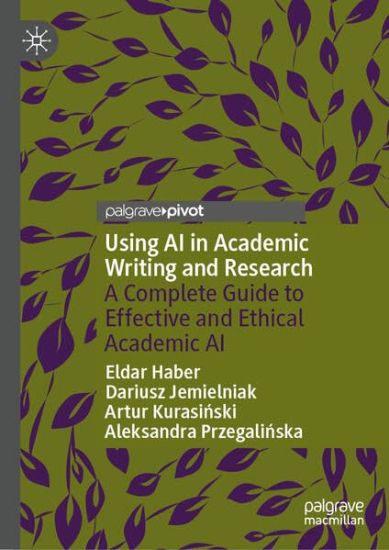
Using AI in Academic Writing and Research

Eldar Haber; Dariusz Jemielniak; Artur Kurasinski; Aleksandra Przegalinska

Springer International Publishing AG
2025
sidottu

Halvin toimitettuna 55,40 €

This book comprehensively explores how AI tools can revolutionize academic writing, research, grant proposals, and educational practices. With a focus on practical applications, ethical considerations, and future trends, the book serves as an indispensable roadmap for academics, researchers, and educators eager to integrate AI into their work. Whether you're looking to enhance your research capabilities, craft compelling grant proposals, personalize learning experiences, or lead your institution into the future, this book provides the insights and tools necessary to navigate and shape the AI-enhanced landscape of academia. It demonstrates how to redefine scholarly work with cutting-edge AI innovations through real-life, practical examples, yet keeping the level of generalization high enough to keep it relevant for a few years. By balancing specific, actionable insights with broader perspectives, this book equips readers to not only adapt to but actively influence the evolving role of AI in higher education, research, and funding acquisition, ensuring its value as a resource both now and in the coming years.
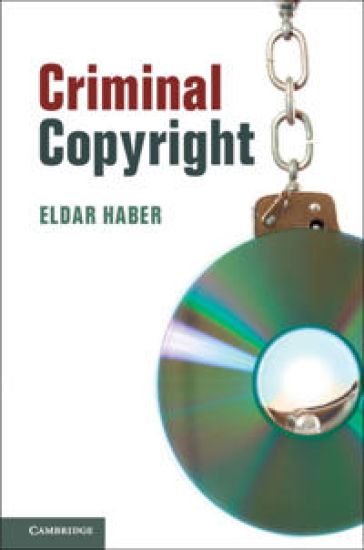
Criminal Copyright

Criminal Copyright

Eldar Haber

Cambridge University Press
2018
pokkari
Since the birth of criminal copyright in the nineteenth century, the copyright system has blurred the distinction between civil and criminal infringements. Today, in many jurisdictions, infringement of copyrighted materials can result in punitive fines and even incarceration. In this illuminating book, Eldar Haber analyzes the circumstances, justifications, and ramifications of the criminalization process and tells the story of how a legal right in the private enforcement realm has become over-criminalized. He traces the origins of criminal copyright legislation and follows the movement of copyright criminalization and enforcement on local and global scales. This important work should be read by anyone concerned with the future of copyright and intellectual property in the digital era.
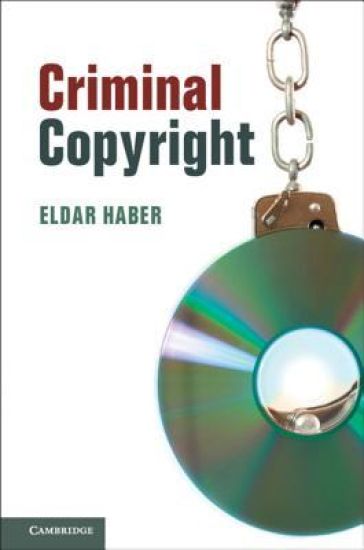
Criminal Copyright

Criminal Copyright

Eldar Haber

Cambridge University Press
2018
sidottu
Since the birth of criminal copyright in the nineteenth century, the copyright system has blurred the distinction between civil and criminal infringements. Today, in many jurisdictions, infringement of copyrighted materials can result in punitive fines and even incarceration. In this illuminating book, Eldar Haber analyzes the circumstances, justifications, and ramifications of the criminalization process and tells the story of how a legal right in the private enforcement realm has become over-criminalized. He traces the origins of criminal copyright legislation and follows the movement of copyright criminalization and enforcement on local and global scales. This important work should be read by anyone concerned with the future of copyright and intellectual property in the digital era.