
Kirjojen hintavertailu – 12 903 735 kirjaa ja 27 kauppaa

Kirjailija

Eleanor J. Sterling

Kirjat ja teokset yhdessä paikassa: 2 kirjaa, julkaisuja vuosilta 2008–2010, suosituimpiin kuuluu Problem-Solving in Conservation Biology and Wildlife Management. Vertaile teosten hintoja ja tarkista saatavuus suomalaisista kirjakaupoista.

2 kirjaa

Kirjojen julkaisuvuodet: 2008–2010.

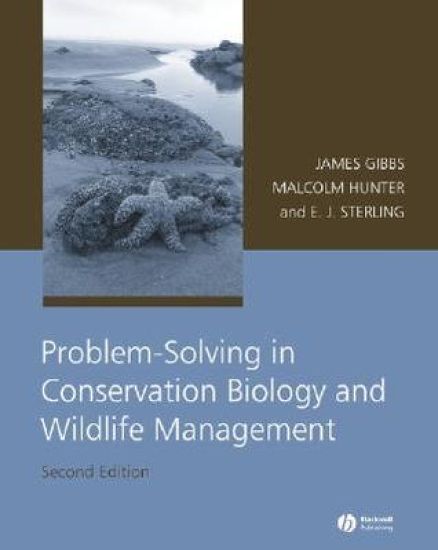
Problem-Solving in Conservation Biology and Wildlife Management

Problem-Solving in Conservation Biology and Wildlife Management

James P. Gibbs; Malcolm L. Hunter; Eleanor J. Sterling

Wiley-Blackwell (an imprint of John Wiley Sons Ltd)
2008
nidottu
This set of exercises has been created expressly for students and teachers of conservation biology and wildlife management who want to have an impact beyond the classroom. The book presents a set of 32 exercises that are primarily new and greatly revised versions from the book's successful first edition. These exercises span a wide range of conservation issues: genetic analysis, population biology and management, taxonomy, ecosystem management, land use planning, the public policy process and more. All exercises discuss how to take what has been learned and apply it to practical, real-world issues. Accompanied by a detailed instructor’s manual and a student website with software and support materials, the book is ideal for use in the field, lab, or classroom. Also available: Fundamentals of Conservation Biology, 3rd edition (2007) by Malcolm L Hunter Jr and James Gibbs, ISBN 9781405135450 Saving the Earth as a Career: Advice on Becoming a Conservation Professional (2007) by Malcolm L Hunter Jr, David B Lindenmayer and Aram JK Calhoun, ISBN 9781405167611
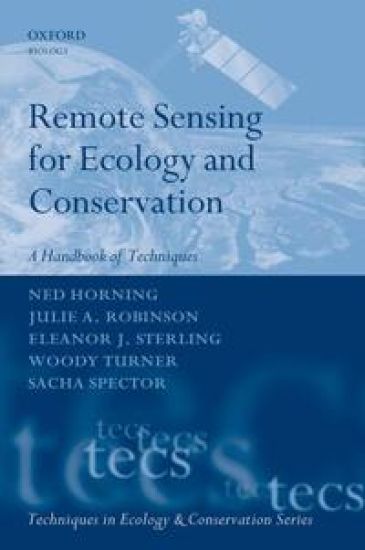
Remote Sensing for Ecology and Conservation

Remote Sensing for Ecology and Conservation

Ned Horning; Julie A. Robinson; Eleanor J. Sterling; Woody Turner; Sacha Spector

Oxford University Press
2010
nidottu
The work of conservation biology has grown from local studies of single species into a discipline concerned with mapping and managing biodiversity on a global scale. Remote sensing, using satellite and aerial imaging to measure and map the environment, increasingly provides a vital tool for effective collection of the information needed to research and set policy for conservation priorities. The perceived complexities of remotely sensed data and analyses have tended to discourage scientists and managers from using this valuable resource. This text focuses on making remote sensing tools accessible to a larger audience of non-specialists, highlighting strengths and limitations while emphasizing the ways that remotely sensed data can be captured and used, especially for evaluating human impacts on ecological systems.