Kirjojen hintavertailu – 12 865 720 kirjaa ja 27 kauppaa

Kirjailija

Elena Poniatowska

Kirjat ja teokset yhdessä paikassa: 26 kirjaa, julkaisuja vuosilta 1995–2026, suosituimpiin kuuluu Mexico City. Vertaile teosten hintoja ja tarkista saatavuus suomalaisista kirjakaupoista.

26 kirjaa

Kirjojen julkaisuvuodet: 1995–2026.

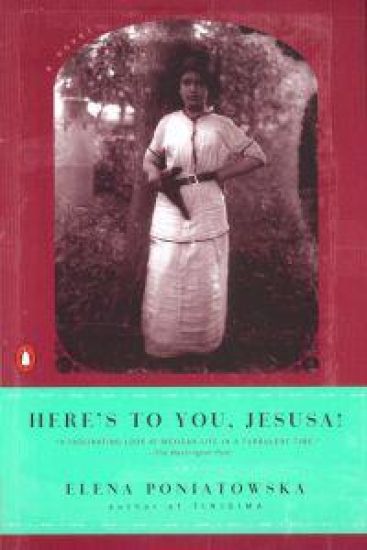
Here's to You, Jesusa!

Here's to You, Jesusa!

Elena Poniatowska

PENGUIN BOOKS
2002
nidottu
A sensitive account of the life of Jesusa Palancares de Aguilar follows the young woman from her childhood, through her role in the Mexican Revolution and difficult marriage, to her post-revolutionary criminal career, in a richly textured historical novel that offers an intriguing study of the most important events in Mexican history during the twentieth century. Reprint.
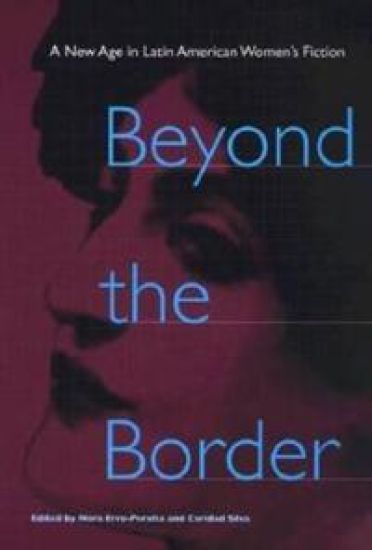
Beyond the Border

Beyond the Border

Elena Poniatowska

University Press of Florida
2000
nidottu
A collection of 15 short stories by female, Latin American writers, including Isabel Allende and Luisa Valenzuela. Ranging across boundaries of geography and gender, the work covers such topics as incest, race, politics, sexual needs, love, old age, and child abuse.
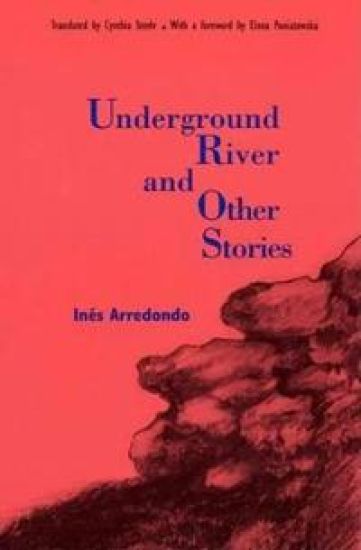
Underground River and Other Stories

Underground River and Other Stories

Elena Poniatowska; Ines Arredondo

University of Nebraska Press
1996
sidottu
"Outstanding collection of stories chosen from Arredondo's Obras completas (1991), translated by Cynthia Steele, Elena Poniatowska, and the author. Informative essay by Steele, foreword by Poniatowska, and Steele's fine translation provide a welcome introduction to a body of work that deserves a wider readership in both Spanish and English. Highly recommended"--Handbook of Latin American Studies, v. 58.http://www.loc.gov/hlas/In the author's first collection of stories translated into English, she writes of erotic obsession, passionate love, depravity, and power
Underground River and Other Stories

Underground River and Other Stories

Elena Poniatowska; Ines Arredondo

University of Nebraska Press
1996
pokkari
Inés Arredondo (1928–1989) published just three slim volumes of stories over twenty-three years, yet her reputation as a great writer, “a necessary writer,” is firmly established in Mexico. Her works dwell on obsessions: erotic love, evil, purity, perversion, prostitution, tragic separation, and death. Most of her characters are involved in ill-fated searches for the Absolute through both excessively passionate and sadomasochistic relationships. Inevitably, the perfect, pure dyad of two youthful lovers is interrupted or corrupted through the interference of a third party (a rival lover or a child), aging, death, or public morality. Set at the beginning of the twentieth century in the tropical northwestern Mexican state of Sinaloa, the stories collected in Underground River and Other Stories focus on female subjectivity. Arredondo’s adult male characters are often predators, depraved collectors of adolescent virgins, like the plantation owners in “The Nocturnal Butterflies” and “Shadows in the Shadows” and the dying uncle in “The Shunammite,” who is kept alive by incestuous lust. Since the young female protagonists rarely have fathers to protect them, the only thing standing between them and these lechers are older women. Perversely, these older women act as accomplices–along with the extended family and the Roman Catholic Church–in the sordid age-old traffic in women. Underground River and Other Stories is the first appearance of Arredondo’s stories in English.
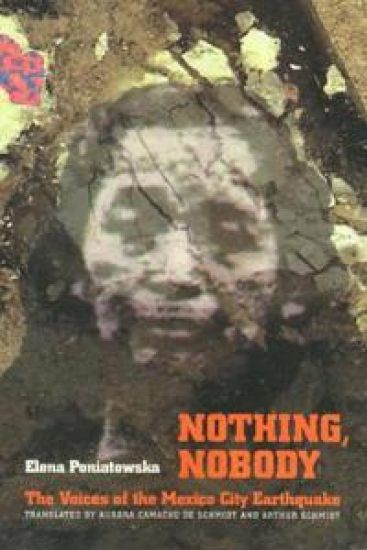
Nothing, Nobody

Nothing, Nobody

Elena Poniatowska

Temple University Press,U.S.
1995
pokkari
In September 19, 1985, a powerful earthquake hit Mexico City in the early morning hours. As the city collapses, the government fails to respond. Long a voice of social conscience, prominent Mexican journalist, Elena Poniatowska chronicles the disintegration of the city's physical and social structure, the widespread grassroots organizing against government corruption and incompetence, and the reliency of the human spirit. As a transformative moment in the life of Mexican society, the earthquake is as much a component of the country's current crisis as the 1982 debt crisis, the problematic economic of the last ten years, and the recent elections. In masterfully weaving together a multiplicity of voices, Poniatowska has reasserted the inherent value and latent power of people working together. Punctuated by Poniatowska's own experiences and observations, these post disaster testimonies speak of the disruption of families and neighborhoods, of the destruction of homes and hospitals, of mutilation and death the collective loss of a city. Drawing the reader dramatically into the scene of national horror through dozens of personal stories, Poniatowska demonstrates the importance of courage and self-reliance in redeeming life from chaos. Elena Poniatowska, a prominent and prolific Mexican journalist and novelist, has written twenty-five books. Several have been translated into English, including "Massacre in Mexico" about the 1968 student/worker uprising in Mexico City, and the forthcoming "Tinisima", which centers upon the life of Tina Modotti. Aurora Camacho de Schmidt is Assistant Professor in the Department of Modern Languages and Literatures at Swarthmore College. She has worked as a writer and as the National Representative for the Mexico-U. S. Border Program of the American Friends Service Committee. Arthur Schmidt is Associate Professor of History and former Director of the Latin American Studies Center at Temple University. He is the author of "The Social and Economic Effect of the Railroad in Puebla and Veracruz, Mexico, 1867-1911".

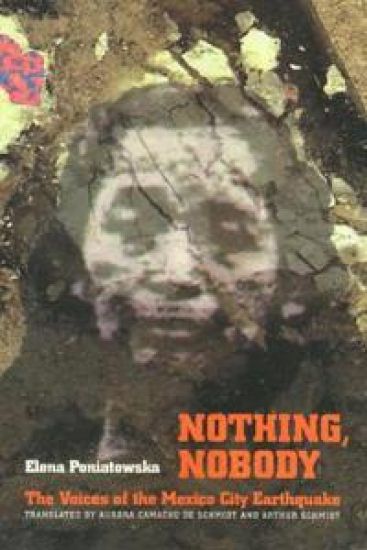
Nothing, Nobody

Nothing, Nobody

Elena Poniatowska

Temple University Press,U.S.
1995
sidottu
In September 19, 1985, a powerful earthquake hit Mexico City in the early morning hours. As the city collapses, the government fails to respond. Long a voice of social conscience, prominent Mexican journalist, Elena Poniatowska chronicles the disintegration of the city's physical and social structure, the widespread grassroots organizing against government corruption and incompetence, and the reliency of the human spirit. As a transformative moment in the life of Mexican society, the earthquake is as much a component of the country's current crisis as the 1982 debt crisis, the problematic economic of the last ten years, and the recent elections. In masterfully weaving together a multiplicity of voices, Poniatowska has reasserted the inherent value and latent power of people working together. Punctuated by Poniatowska's own experiences and observations, these post disaster testimonies speak of the disruption of families and neighborhoods, of the destruction of homes and hospitals, of mutilation and death the collective loss of a city. Drawing the reader dramatically into the scene of national horror through dozens of personal stories, Poniatowska demonstrates the importance of courage and self-reliance in redeeming life from chaos. Elena Poniatowska, a prominent and prolific Mexican journalist and novelist, has written twenty-five books. Several have been translated into English, including "Massacre in Mexico" about the 1968 student/worker uprising in Mexico City, and the forthcoming "Tinisima", which centers upon the life of Tina Modotti. Aurora Camacho de Schmidt is Assistant Professor in the Department of Modern Languages and Literatures at Swarthmore College. She has worked as a writer and as the National Representative for the Mexico-U. S. Border Program of the American Friends Service Committee. Arthur Schmidt is Associate Professor of History and former Director of the Latin American Studies Center at Temple University. He is the author of "The Social and Economic Effect of the Railroad in Puebla and Veracruz, Mexico, 1867-1911".