Kirjailija
Elie Wiesel
Kirjat ja teokset yhdessä paikassa: 73 kirjaa, julkaisuja vuosilta 1920–2026, suosituimpiin kuuluu Dimensions of the Holocaust. Vertaile teosten hintoja ja tarkista saatavuus suomalaisista kirjakaupoista.
73 kirjaa
Kirjojen julkaisuvuodet: 1920–2026.
The narrative of a boy who lived through Auschwitz and Buchenwald provides a short and terrible indictment of modern humanity.
Stories about charismatic Hasidic rabbis who revitalized Judaism with their faith convey the passion of these diverse men and their dramatic, extraordinary abilities to inspire faith and joy. Reprint. 10,000 first printing.
The Nobel laureate shares his unique insights into a broad spectrum of biblical figures, Talmudic scholars, and Hasidic rabbis, including Sarah, the mother of Isaac, Samson, Isaiah, and Rabbi Shimon bar Yohai, explaining how their experiences, triumphs and tragedies, teachings, and faith can transform our own lives. Reprint. 12,500 first printing.
When their plane en route from New York to Tel Aviv is forced down by bad weather, five passengers seek refuge at a nearby house where they encounter their enigmatic host, known only as the Judge, who begins to interrogate them, forcing them to confront the reality and meaning of their lives before it is too late. Reprint. 20,000 first printing.
A collection of tales immortalizing the heroic deeds and visions of people Wiesel knew during and after World War II.
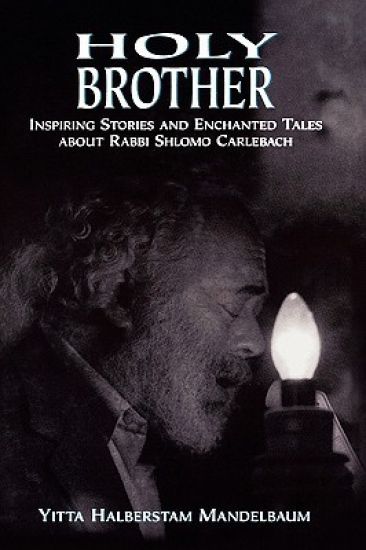
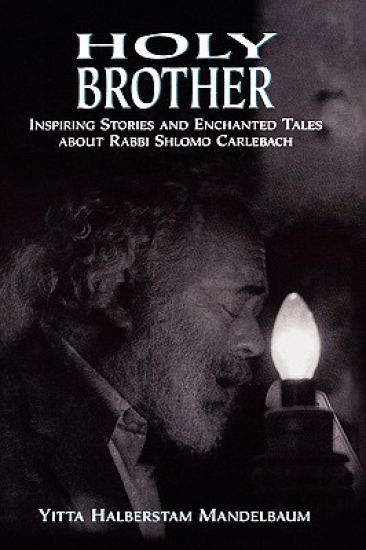
Rabbi Shlomo Carlebach was one of the most original and inspired Jewish personalities of the twentieth century. In this incredible volume, Yitta Halberstam Mandelbaum, a devoted student of Reb Shlomo, gathers dozens of stories about this charismatic, loving Jewish leader. The episodes retold here by Reb Shlomo's followers and admirers underscore his unfailing generosity, his capacity to love unconditionally, and his desire to reconnect every Jew with his or her heritage. As a whole, the collection reveals how many individuals were touched by Reb Shlomo, and serves as a moving tribute to the man many consider a tzaddik (righteous one).
Indelible Shadows investigates questions raised by films about the Holocaust. How does one make a movie that is both morally just and marketable? Annette Insdorf provides sensitive readings of individual films and analyzes theoretical issues such as the ‘truth claims’ of the cinematic medium. The third edition of Indelible Shadows includes five new chapters that cover recent trends, as well as rediscoveries of motion pictures made during and just after World War II. It addresses the treatment of rescuers, as in ‘Schindler’s List’; the controversial use of humor, as in ’Life is Beautiful’; the distorted image of survivors, and the growing genre of documentaries that return to the scene of the crime or rescue. The annotated filmography offers capsule summaries and information about another hundred Holocaust films from around the world, making this edition the most comprehensive and up to date discussion of films about the Holocaust, and an invaluable resource for film programmers and educators.
The organization Oeuvre de secours aux enfants (OSE, or Society for Assistance to Children) saved thousands of Jewish children in France from deportation to Nazi extermination camps. These children were either hidden among non-Jewish families, placed in the 18 children's homes run by the OSE, or selected to escape clandestinely to the neutral countries of Switzerland or Spain. As a result of the efforts of the OSE and like-minded organizations, both Jewish and non-Jewish, about 86 per cent of the Jewish children in France survived the Holocaust. One of the outstanding representatives of the OSE was Vivette Samuel, the author of this memoir. In her book, she describes how, at the age of 22, she accepted the position of resident social worker in the camp of Rivesaltes, set up by the Vichy government to intern foreign ""undesirables"". Her daunting task was to obtain the interned parents' written consent that would permanently separate them from their children so that the latter would live. In a period of six months, she was thus able to liberate nearly 400 foreign-born children from the camp. She brought to this job great intelligence, linguistic fluency and a character both deeply compassionate and steely in its resolution. She applied these qualities to the other tasks she performed for the OSE outside the camp after May 1942 and repeatedly risked arrest by the Gestapo. Elie Wiesel and Charles B. Paul were among the children helped by the OSE. Their contributions to this book are a tribute of gratitude to Vivette Samuel and her heroic colleagues.
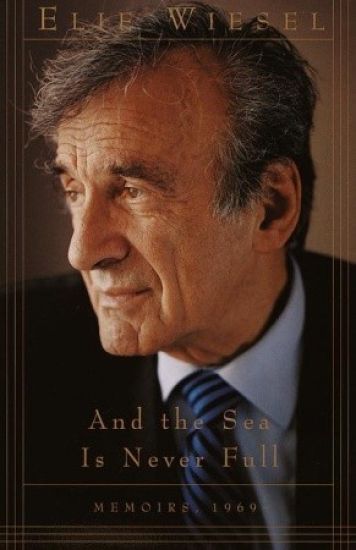
As this concluding volume of his moving and revealing memoirs begins, Elie Wiesel is forty years old, a writer of international repute. Determined to speak out more actively for both Holocaust survivors and the disenfranchised everywhere, he sets himself a challenge: "I will become militant. I will teach, share, bear witness. I will reveal and try to mitigate the victims' solitude." He makes words his weapon, and in these pages we relive with him his unstinting battles. We see him meet with world leaders and travel to regions ruled by war, dictatorship, racism, and exclusion in order to engage the most pressing issues of the day. We see him in the Soviet Union defending persecuted Jews and dissidents; in South Africa battling apartheid and supporting Mandela's ascension; in Cambodia and in Bosnia, calling on the world to face the atrocities; in refugee camps in Albania and Macedonia as an emissary for President Clinton. He chastises Ronald Reagan for his visit to the German military cemetery at Bitburg. He supports Lech Walesa but challenges some of his views. He confronts Francois Mitterrand over the misrepresentation of his activities in Vichy France. He does battle with Holocaust deniers. He joins tens of thousands of young Austrians demonstrating against renascent fascism in their country. He receives the Nobel Peace Prize. Through it all, Wiesel remains deeply involved with his beloved Israel, its leaders and its people, and laments its internal conflicts. He recounts the behind-the-scenes events that led to the establishment of the Holocaust Museum in Washington, D. C. He shares the feelings evoked by his return to Auschwitz, by his recollections of Yitzhak Rabin, and by his memories of his own vanished family. This is the magnificent finale of a historic memoir.

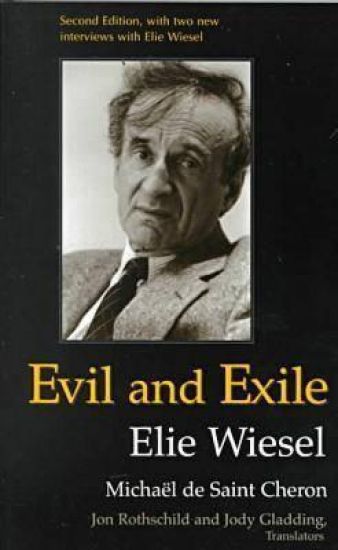
A six-day series of interviews between Nobel Peace Prize Laureate Elie Wiesel and French journalist Michaël de Saint Cheron, Evil and Exile probes some of the most crucial and pressing issues facing humankind today. Having survived the unspeakable evil of the Holocaust, Wiesel remained silent for ten years before dedicating his life to the memory of this tragedy, witnessing tirelessly to remind an often indifferent world of its potential for self-destruction. Wiesel offers wise counsel in this volume concerning evil and suffering, life and death, chance and circumstance. Moreover, the dialogue evokes candid and often surprising responses by Wiesel on the Palestinian problem, Judeo-Christian relations, recent changes in the Soviet Union as well as insights into writers such as Kafka, Malraux, Mauriac, and Unamuno.
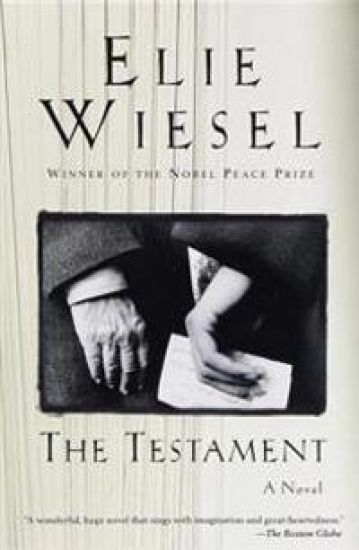
A novel set against the backdrop of Stalin's purge of Jewish writers in 1952.
Rabbi Shlomo Carlebach was one of the most original and inspired Jewish personalities of the twentieth century. In this incredible volume, Yitta Halberstam Mandelbaum, a devoted student of Reb Shlomo, gathers dozens of stories about this charismatic, loving Jewish leader. The episodes retold here by Reb Shlomo's followers and admirers underscore his unfailing generosity, his capacity to love unconditionally, and his desire to reconnect every Jew with his or her heritage. As a whole, the collection reveals how many individuals were touched by Reb Shlomo, and serves as a moving tribute to the man many consider a tzaddik (righteous one).
Reuven Tamiroff, a Holocaust survivor, has never been able to speak about his past to his son, a young man who yearns to understand his father s silence. As campuses burn amidst the unrest of the Sixties and his own generation rebels, the son is drawn to his father s circle of wartime friends in search of clues to the past. Finally discovering that his brooding father has been haunted for years by his role in the murder of a brutal SS officer just after the war, young Tamiroff learns that the Nazi is still alive. Haunting, poetic, and very contemporary, "The Fifth Son "builds to an unforgettable climax as the son sets out to complete his father s act of revenge."
No detailed description available for "Ethics and Memory / Ethik und Erinnerung".
Set in a medieval European village where three itinerant Jewish actors put God on trial to answer for His silence during a pogrom, a powerful drama considers historical and especially post-Holocaust issues surrounding faith. Reprint.