
Kirjailija
Eliphas Levi
Kirjat ja teokset yhdessä paikassa: 190 kirjaa, julkaisuja vuosilta 1913–2026, suosituimpiin kuuluu Dogme et Rituel de la Haute Magie - Dogme. Vertaile teosten hintoja ja tarkista saatavuus suomalaisista kirjakaupoista.
Nimi esiintyy myös muodoissa: Éliphas Lévi, Eliphas Lévi
190 kirjaa
Kirjojen julkaisuvuodet: 1913–2026.

Publicado postumamente e considerado "a obra definitiva" de liphas L vi, assim como seu testamento espiritual, o Grande Arcano ou o Ocultismo Revelado cont m as duas ltimas obras do autor sobre as ci ncias ocultas, que est o divididas em duas partes: Na primeira, a obra aborda o Mist rio Real ou a Arte de Governar as For as e Subjugar os Poderes, discutindo o mal, as trevas exteriores, o grande segredo, o sacrif cio m gico, o poder que cria e transforma, entre outros. Na segunda parte, o autor debate o Mist rio Sacerdotal ou a Arte de Fazer Servir-se pelos Esp ritos, apresentando temas como, as for as errantes, o sobrenatural e o divino, a adivinha o, os ritos sagrados e os malditos, entre outros. Este seu ltimo livro sobre as artes m gicas que envolvem as chamadas "Ci ncias Ocultas". Esta edi o conta com o texto integral da tradu o da primeira edi o francesa de 1889 (totalmente revista), e cotejada com a primeira edi o brasileira, de 1920, traduzida diretamente do original franc s.
Transcendental Magic: Its Doctrine and Ritual by liphas L vi explores magic, the "esoteric science," and its place between science and religion. Born Alphonse Louis Constant in 1810, this French occultist originally planned for a career in the Catholic Church. Constant was educated at Saint Sulpice's seminary, and planned to become a priest. Yet just before he was to receive his ordination at age 26, Constant renounced his ecclesiastical goals and returned to civilian life. The following years tested Constant's conscience and resilience. He was disowned by his family, and worked as a tutor to earn an income. Without the structure from the seminary, he found himself adrift. Constant dedicated much of his early life to promoting the ideals of a utopian socialist society that worked for the economic improvement of all people. He shared these ideas in an early work called The Bible of Liberty. Within an hour of its release, the copies were seized by French authorities, and Constant spent the next six months in prison. After a failed marriage and the death of his young daughter, Constant discovered the world of the occult and mysticism. He became a ceremonial magician, and developed a social circle of many of the occultists and Kabbalists of the time. Writing on the subject under the Hebrew name liphas L vi, he began to share his ideas on magic with the public in the 1850s. L vi's first published book on ritual magic is the two-part work, Transcendental Magic: Its Doctrines and Rituals. The two parts were first published as single work with a thorough biographical introduction in 1958. This work explores the magician's foundations for his spiritual beliefs, as well as his idea that an elite class of priests would be necessary to lead the people into both social and magical order. He writes, "Occult philosophy seems to have been the nurse and godmother of all intellectual forces, the key of all divine obscurities, and the absolute mistress of society, in those ages when it was exclusively reserved for the education of priests and of kings... Magic is the traditional science of the secrets of Nature which comes to us from the Magi." Part One, The Doctrine of Transcendental Magic, was first published in 1854. This work establishes the concepts behind symbols like the tetragram and pentagram, the significance of Hebrew letters and numbers, and the relationship between science, occultism, and formal religion. L vi was the first to document the meaning of the points of the pentagram. He stated that a pentagram with only one point up and two down is a symbol of the Savior, and a pentagram with two points up and one down is a "symbol of evil and attracts sinister forces." Part Two, The Rituals of Transcendental Magic, was published in 1856. It discusses the actual materials, processes, and settings for conducting ritual magic. The practitioner must purify himself through a temperate diet, regular sleep, and thorough attention to cleaning and hygiene. A complete description of tools like a magical lamp, rod, sword, and dagger follows, leaving the magician well equipped to perform ceremonies and rituals. L vi also added the Tarot to the tools of the magician, which was a new development in the occultism of the time. Although L vi didn't enjoy much notoriety during his life, his works eventually became highly influential among other occultists, and he is now considered one of the fathers of modern mysticism. Famous occultist Aleister Crowley even claimed to be L vi himself in one of his past lives. Additionally, Arthur Edward Waite and Pamela Colman Smith created the Waite-Smith deck based on liphas L vi's writings, which is the basis for most modern Tarot decks.
Transcendental Magic: Its Doctrine and Ritual by liphas L vi explores magic, the "esoteric science," and its place between science and religion. Born Alphonse Louis Constant in 1810, this French occultist originally planned for a career in the Catholic Church. Constant was educated at Saint Sulpice's seminary, and planned to become a priest. Yet just before he was to receive his ordination at age 26, Constant renounced his ecclesiastical goals and returned to civilian life. The following years tested Constant's conscience and resilience. He was disowned by his family, and worked as a tutor to earn an income. Without the structure from the seminary, he found himself adrift. Constant dedicated much of his early life to promoting the ideals of a utopian socialist society that worked for the economic improvement of all people. He shared these ideas in an early work called The Bible of Liberty. Within an hour of its release, the copies were seized by French authorities, and Constant spent the next six months in prison. After a failed marriage and the death of his young daughter, Constant discovered the world of the occult and mysticism. He became a ceremonial magician, and developed a social circle of many of the occultists and Kabbalists of the time. Writing on the subject under the Hebrew name liphas L vi, he began to share his ideas on magic with the public in the 1850s. L vi's first published book on ritual magic is the two-part work, Transcendental Magic: Its Doctrines and Rituals. The two parts were first published as single work with a thorough biographical introduction in 1958. This work explores the magician's foundations for his spiritual beliefs, as well as his idea that an elite class of priests would be necessary to lead the people into both social and magical order. He writes, "Occult philosophy seems to have been the nurse and godmother of all intellectual forces, the key of all divine obscurities, and the absolute mistress of society, in those ages when it was exclusively reserved for the education of priests and of kings... Magic is the traditional science of the secrets of Nature which comes to us from the Magi." Part One, The Doctrine of Transcendental Magic, was first published in 1854. This work establishes the concepts behind symbols like the tetragram and pentagram, the significance of Hebrew letters and numbers, and the relationship between science, occultism, and formal religion. L vi was the first to document the meaning of the points of the pentagram. He stated that a pentagram with only one point up and two down is a symbol of the Savior, and a pentagram with two points up and one down is a "symbol of evil and attracts sinister forces." Part Two, The Rituals of Transcendental Magic, was published in 1856. It discusses the actual materials, processes, and settings for conducting ritual magic. The practitioner must purify himself through a temperate diet, regular sleep, and thorough attention to cleaning and hygiene. A complete description of tools like a magical lamp, rod, sword, and dagger follows, leaving the magician well equipped to perform ceremonies and rituals. L vi also added the Tarot to the tools of the magician, which was a new development in the occultism of the time. Although L vi didn't enjoy much notoriety during his life, his works eventually became highly influential among other occultists, and he is now considered one of the fathers of modern mysticism. Famous occultist Aleister Crowley even claimed to be L vi himself in one of his past lives. Additionally, Arthur Edward Waite and Pamela Colman Smith created the Waite-Smith deck based on liphas L vi's writings, which is the basis for most modern Tarot decks.


As a comprehensive work on magic through the ages, The History of Magic, is hard to beat. liphas L vi was born in poverty in 1810, the son of a Parisian shoemaker. His early associations with the Christian Catholic Church were ambivalent because of his interest in "the Secret Doctrine" - Magic. His voice as a magus emerged in Transcendental Magic, its Doctrine and Ritual, published in 1855-56, followed by The History of Magic (1860), where he combines his belief in both magic and religion. Recognised as the occult scientist of the 19th century, L vi has left a valuable legacy in his writings. The present work is divided into a septad of books - based on the sacred number, seven - with seven chapters in each. L vi begins with a clear definition of magic - "the exact and absolute science of Nature and her laws" and these laws, conforming always to an ideal state of equilibrium, are governed by a supreme intelligent principle, God. Throughout the book the author emphasizes the inseparability of science and religion and that magic is part of both, but he is at pains to denigrate Black magic and counterfeit magicians. He charts magic through the ages, from its early origins to the 19th century occult revival, in which he played a major part. We read about Zoroaster, Abraham, the magic of the Magi, Hermetic magic, Kabalism, Gnosticism, Freemasonry - and much else besides. According to L vi, the Secret Doctrine was eventually passed down to the Roman Catholic Church of which he became a faithful member. However, he admitted this revered institution had lost the Kabalistic Keys and his life's work was to direct their rediscovery that these powerful tools may be applied to our lives, albeit only within the confines of the hierarchical Church. Occult historian and author in his own right, A. E. Waite provides a valuable adjunct to Levi's book with his preface and detailed notes. The original index has been revised and extended by Aziloth Books.
The Kabbalah of Masonry and Related Writings
Eliphas Levi; William Wynn Westcott; Leopold F Strauss
Lamp of Trismegistus
2020
pokkari
Several notable masonic writers explore the subject of Kabbalah and how it intersects with Freemasonry. Included here are the essays: The Kabbalah of Masonry, Gematria and the Letter G, Kabbalah and the Origin of Freemasonry and Notes on the Kabbalah of the Old Testament.
Transcendental Magic - Its Doctrine and Ritual is an unchanged, high-quality reprint of the original edition of 1896. Hansebooks is editor of the literature on different topic areas such as research and science, travel and expeditions, cooking and nutrition, medicine, and other genres. As a publisher we focus on the preservation of historical literature. Many works of historical writers and scientists are available today as antiques only. Hansebooks newly publishes these books and contributes to the preservation of literature which has become rare and historical knowledge for the future.
This vintage book contains the original French version of liphas L vi Zahed's 1861 work "Dogme et Rituel - De la Haute Magie". liphas L vi Zahed (1810 - 1875) was a French author of occult literature and ceremonial magician. Contents include: "Discours Pr liminaire", "Introduction", "Le R cipiendaire", "Les Colonnes du Temple", "Dogme De la Haute Magie", "La R alisation", "La Chaine Magique", "La N cromancie", "Les Envoutements", "Les Philtr s er Les Sorts", etc. This fascinating book will appeal to those with an interest in the occult, and it would make for a fantastic addition to collections of allied literature. Many vintage books such as this are becoming increasingly scarce and expensive. It is with this in mind that we are republishing this volume now in an affordable, modern, high-quality edition complete with a specially-commissioned new biography of the author.
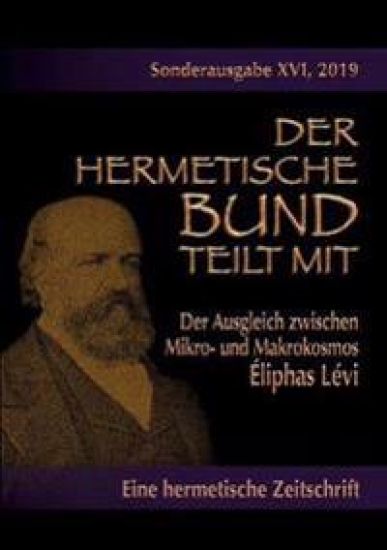
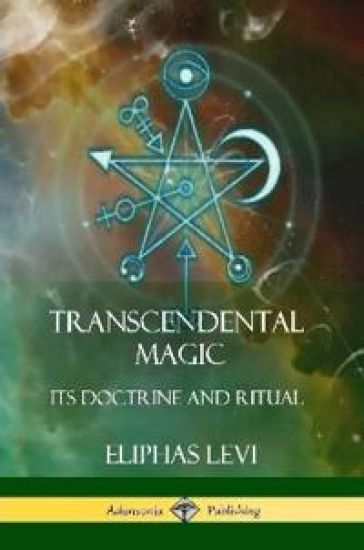
Transcendental Magic is a classic of occultism, prized for its wide-ranging wisdom, thorough guidance and revelatory contents. Written by Eliphas Levi in the mid-19th century, Transcendental Magic offers seekers of occult knowledge a bounty of guidance and knowledge. Informed by research spanning many centuries of arcane arts, the author offers us profound guidance to the ceremonial rituals one must perform in order to make contact with spirits and other non-corporeal entities of the universe. In Levi's explanations we encounter various figures of occult lore. Monad is synonymous with God; the creator of everything contained in our physical plane. Derived from the Pythagorean school, through Levi we learn how Monad interacts with the creation. This discussion is related to the Kabbalah, which attempts to define the relationship between what is infinite and what is finite.
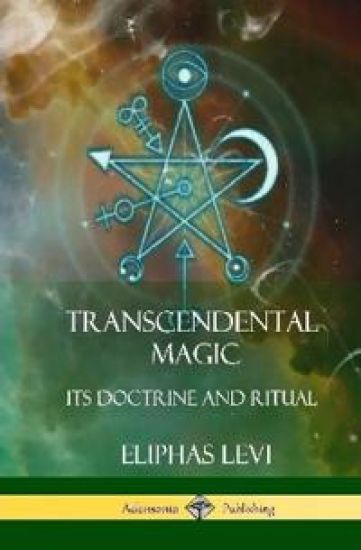
Transcendental Magic is a classic of occultism, prized for its wide-ranging wisdom, thorough guidance and revelatory contents. Written by Eliphas Levi in the mid-19th century, Transcendental Magic offers seekers of occult knowledge a bounty of guidance and knowledge. Informed by research spanning many centuries of arcane arts, the author offers us profound guidance to the ceremonial rituals one must perform in order to make contact with spirits and other non-corporeal entities of the universe. In Levi's explanations we encounter various figures of occult lore. Monad is synonymous with God; the creator of everything contained in our physical plane. Derived from the Pythagorean school, through Levi we learn how Monad interacts with the creation. This discussion is related to the Kabbalah, which attempts to define the relationship between what is infinite and what is finite.

L vi writes, "Magic is the traditional science of the secrets of nature which has been transmitted to us from the magi." Since this coincides with the general goals of Alchemy, and due to the many references to alchemical subjects contained herein, I have included it as part of the R. A. M. S. Library of Alchemy. "To be ever rich, to be always young and to die never: such, from all time, has been the dream of alchemists," Ritual, Chapter XII: The Great Work. Is this not the dream of most people, and not only alchemists? Dogma et Rituel de la Haute Magie was written by liphas L vi ( liphas L vi Zahed, born Alphonse Louis Constant (February 8, 1810 - May 31, 1875)). L vi was a French Occult author and ceremonial magician. The text was translated from French into English by Arthur Edward Waite (1857-1942). Although the book's title was "Transcendental Magic," within the text the work is referred to as "Transcendent Magic." This text was meticulously gathered from several sources, with the copy in the University of Toronto Library being the primary source. There were some damaged pages in that copy, and while comparing several editions to locate the missing pages I found that some of the text had been changed or even omitted between various printings. In particular, certain of the paragraphs in sections on so-called Black Magic were missing in some copies. I here present the complete edition based on all source materials available to me. The writings of liphas L vi are an important part of the teachings of The Golden Dawn. Israel Regardie wrote, "Prominent among the Adepti of our Order and of public renown were liphas L vi the greatest of modern French magi." His discussions of the Tarot are most interesting, and coincide with those presented by Israel Regardie in his Golden Dawn series. This edition includes L vi's translation of the "Nuctemeron of Apollonius of Tyana," a short but very interesting work in itself.
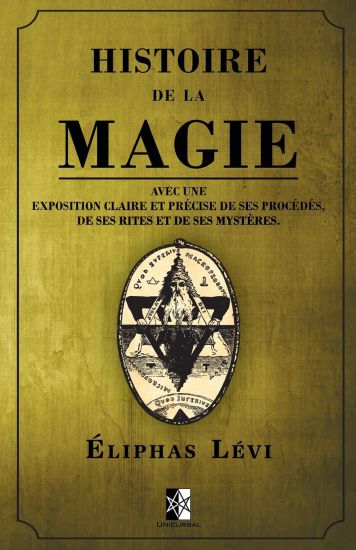
L'Histoire de la Magie et de ses Myst res. L'OEuvre classique du grand liphas L vi. L'Histoire de la Magie est l'oeuvre essentielle d' liphas L vi. Cet ouvrage publi en 1860 fait partie des tr sors de la litt rature sot rique. Chaque biblioth que occulte se doit d'en poss der une copie. Divis en sept livres contenantchacun seps chapitres, il t constamment r dit depuis sa parution. Dans cet ouvrage incontournable, compagnon du Dogme et Rituel de la Haute Magie (1854-1856), l'auteur nous donne les clefs de l'histoire et de la pratique de la magie depuis l'Antiquit jusqu' nos jours.