Kirjailija
Eliphas Levi
Kirjat ja teokset yhdessä paikassa: 190 kirjaa, julkaisuja vuosilta 1913–2026, suosituimpiin kuuluu Dogme et Rituel de la Haute Magie - Dogme. Vertaile teosten hintoja ja tarkista saatavuus suomalaisista kirjakaupoista.
Nimi esiintyy myös muodoissa: Éliphas Lévi, Eliphas Lévi
190 kirjaa
Kirjojen julkaisuvuodet: 1913–2026.
Born Alphonse Louis Constant, French magician Éliphas Lévi (1810–75) wrote prolifically on the occult sciences. This highly popular two-volume treatise on practical magic attempts to initiate the reader into the mysteries of occult philosophy. Identifying magic as the 'nurse or godmother' of all intellectual forces, Lévi proclaims his firm belief in man as microcosm of the universe, the strength of human willpower and the effectiveness of sympathetic magic. Taking a more practical focus than the first part, this second volume, 'The Ritual of Transcendental Magic', focuses on the rituals and ceremonies of Western occult philosophy, offering explanations for magical equilibrium, the use and consecration of the pentagram, talismans, necromancy, transmutations, the Sabbath of the sorcerers, witchcraft, and the alchemical work of Nicholas Flamel and Raymond Lull.
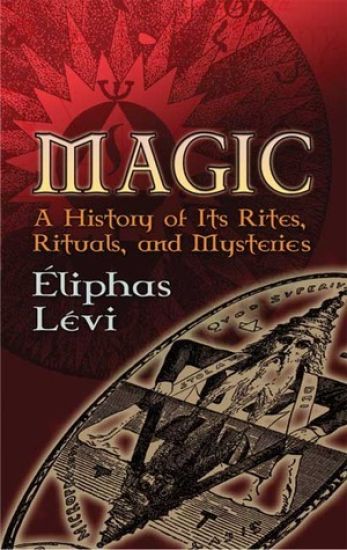
Born Alphonse Louis Constant, French magician Éliphas Lévi (1810–75) wrote prolifically on the occult sciences. This highly popular two-volume treatise on practical magic attempts to initiate the reader into the mysteries of occult philosophy. Identifying magic as the 'nurse or godmother' of all intellectual forces, Lévi proclaims his firm belief in man as microcosm of the universe, the strength of human willpower and the effectiveness of sympathetic magic. This first volume, 'The Doctrine of Transcendental Magic', establishes Lévi's own philosophical approach to the theory of magic, detailing the various methods of accessing esoteric knowledge of the universe through supernatural methods. Beginning with the ancient origins of occult philosophy and influence, Lévi chronicles the history of magic, including transmutations, black magic, bewitchments, astrology, divination and alchemy.
First published in 1860, Éliphas Lévi's history of magic follows in the wake of his enormously successful Dogme et Ritual de la Haute Magie, which first appeared in 1854. In this book, the French occultist and alleged magician offers a thoroughly comprehensive survey of the idea of 'magic' in Western history, from its origins in Indian, Greek, cabalistic and hermetic traditions to the latest developments in nineteenth-century occult philosophy, as well as his own private recollections of his experience with magic. Lévi is adamant in his treatment of magic as a serious science and one compatible with Christianity, encouraging his readers to see magic as the reconciliation point between faith and reason, science and belief, authority and liberty. Extending to almost six hundred pages and with numerous illustrations, this book should appeal to those interested in the nineteenth-century obsession with mysticism and the occult.
The Key of The Mysteries: La Clef Des Grands Mysteres
Eliphas Levi
Theophania Publishing
2011
nidottu
Thank you for checking out this book by Theophania Publishing. We appreciate your business and look forward to serving you soon. We have thousands of titles available, and we invite you to search for us by name, contact us via our website, or download our most recent catalogues. MANY paths lead to the mountain top, and many and diverse are the rifts in the Veil, through which glimpses may be obtained of the secret things of the Universe. The Abb Louis Constant, better known by his nom de plume of LIPHAS L VI, was doubtless a seer; but, though his studies were by no means confined to this, he saw only through the medium of the kabala, the perfect sense of which is, now a days, hidden from all mere kabalists, and his visions were consequently always imperfect and often much distorted and confused. Moreover, he was for a considerable portion of his career a Roman Catholic priest, and as such had to keep terms, to a certain extent, with his church, and even later, when he was unfrocked, he hesitated to shock the prejudices of the public, and never succeeded in even wholly freeing himself from the bias of his early clerical training. Consequently he not only erred at times in good faith, not only constantly wrote ambiguously to avoid a direct collision with his ecclesiastical chiefs or current creeds, but he not unfrequently put forward Dogmas, which, taken in their obvious straightforward meanings, he certainly did not believe, nay, I may say, certainly knew to be false. It is quite true that, in many of these latter cases, an undercurrent of irony may be discerned by those who know the truth, and that in all the enlightened can sufficiently read between the lines to avoid misconceptions. But these defects, the ineradicable bias of his early training, the very narrow standpoint from which he regarded occultism, and the limitations to free expression imposed on him by his position and temperament, seriously detract from the value of all liphas L vi's writings.

This is Levi's first treatise on magic and was translated into English by Arthur Edward Waite as "Transcendental Magic, its Doctrine and Ritual". Its famous opening lines present the single essential theme of Occultism and gives some of the flavor of its atmosphere: "Behind the veil of all the hieratic and mystical allegories of ancient doctrines, behind the darkness and strange ordeals of all initiations, under the seal of all sacred writings, in the ruins of Nineveh or Thebes, on the crumbling stones of old temples and on the blackened visage of the Assyrian or Egyptian sphinx, in the monstrous or marvelous paintings which interpret to the faithful of India the inspired pages of the Vedas, in the cryptic emblems of our old books on alchemy, in the ceremonies practised at reception by all secret societies, there are found indications of a doctrine which is everywhere the same and everywhere carefully concealed. ( From the Introduction)". Lévi's version of magic became a great success, especially after his death. That Spiritualism was popular on both sides of the Atlantic from the 1850s contributed to this success. His magical teachings were free from obvious fanaticisms; he had nothing to sell, and did not pretend to be the initiate of some ancient or fictitious secret society. He incorporated the Tarot cards into his magical system, and as a result the Tarot has been an important part of the paraphernalia of Western magicians. He had a deep impact on the magic of the Hermetic Order of the Golden Dawn and later on the ex-Golden Dawn member Aleister Crowley. He was also the first to declare that a pentagram or five-pointed star with one point down and two points up represents evil, while a pentagram with one point up and two points down represents good. It was largely through the occultists inspired by him that Lévi is remembered as one of the key founders of the twentieth century revival of magic. 2011 Reprint of 1958 London Edition. Full facsimile of the original edition, not reproduced with Optical Recognition Software.
Thoughts On The Metaphysics Of Theosophy, Theosophical Miscellanies No. 1
S. Sandaram Iyer; Eliphas Levi
KESSINGER PUBLISHING CO
2007
pokkari