Kirjojen hintavertailu – 12 903 724 kirjaa ja 27 kauppaa

Kirjailija

Elisabeth Fritz

Kirjat ja teokset yhdessä paikassa: 7 kirjaa, julkaisuja vuosilta 2009–2019, suosituimpiin kuuluu Yvon Chabrowski. Vertaile teosten hintoja ja tarkista saatavuus suomalaisista kirjakaupoista.

7 kirjaa

Kirjojen julkaisuvuodet: 2009–2019.

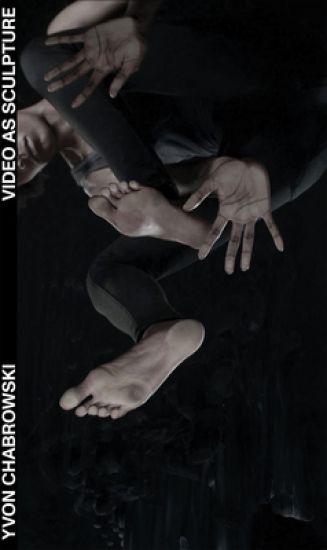
Yvon Chabrowski

Yvon Chabrowski

Inke Arns; Elisabeth Fritz; Katharina Lee Chichester

Spector Books
2019
nidottu
The iconography of contemporary media: three series by German artist Yvon Chabrowski German photographer and conceptual artist Yvon Chabrowski (born 1978), based in Berlin and Leipzig, analyzes visual formulas of contemporary media, which she decontextualizes, revealing their underlying mechanisms and manipulation strategies. This publication presents three series of works from the last decade.
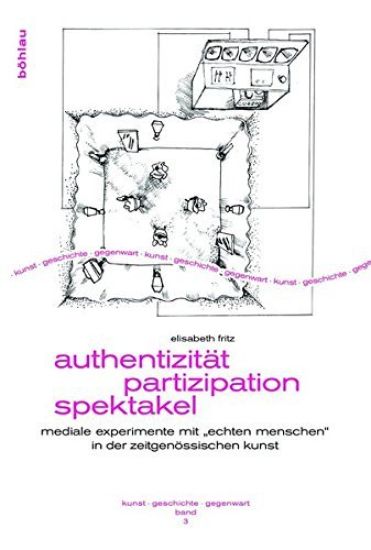
Authentizität – Partizipation – Spektakel

Authentizität – Partizipation – Spektakel

Elisabeth Fritz

Bohlau Verlag
2014
isokokoinen pokkari
Die Vorstellung, authentisches menschliches Verhalten innerhalb von eigens fur die Beobachtung mit der Kamera inszenierten Situationen herstellen zu konnen, ist im 20. und 21. Jahrhundert nicht nur im 'Reality-TV' zu finden. Vielmehr begleitet dieser Topos die Reproduktionsmedien Fotografie, Film und Video seit ihrer Erfindung und regte neben der Popularkultur auch die Sozialwissenschaften sowie zahlreiche bildende Kunstlerinnen und Kunstler zu medialen Experimenten an. Das Phanomen wird aus der Perspektive der zeitgenossischen Partizipationskunst mit detaillierten Verweisen auf die anderen Bereiche diskutiert. Ausfuhrlich werden Werke von Phil Collins, Danica Daki, Rineke Dijkstra, Omer Fast, Aernout Mik, Christoph Schlingensief, Gillian Wearing und Artur Zmijewski analysiert.
Discourse markers

Discourse markers

Elisabeth Fritz

Grin Publishing
2009
pokkari
This paper will deal with the English lexical item 'now' and its German counterpart 'nun'. Its aim is to investigate what functions they can perform in spoken discourse classified as conversation, casting light on the ways they can be used to indicate discourse structures, and to work out similarities and differences between these equivalents from the two languages. This work will focus on 'now' and 'nun' as discourse markers, but will not ignore their original (propositional) meaning and - if applicable - non-propositional meanings besides their function as discourse markers. The analysis of the two items will be based on authentic material: for English, the London-Lund Corpus of Spoken English will be used; the source for instances of German 'nun' will be the Freiburg Corpus (Grundstrukturen: Freiburger Korpus). This paper can only draw on parts of the corpora; consequently, the search has been restricted to two parts of the London-Lund Corpus (cf. chapter 3.1.2.) and those elements of the Freiburg Corpus labelled conversation (cf. chapter 3.2.2.). On the grounds that this material is so limited, the investigation into the different uses of 'now' and 'nun' can only be exemplary and by no means exhaustive. The paper will be structured as follows: the first part is concerned with defining the term discourse marker and classifying discourse marker functions into different types of functions, aiming at a language-independent description. The results will be used as a theoretical basis for the empirical part, which will first deal with English 'now' and then tackle 'nun'. Both of these sections will be organised in the same way: there will first be a language-specific discussion on different (discourse marker and other) functions of the respective lexical item; then criteria for distinguishing the different uses will be established. The second part will briefly demonstrate instances of 'now'/'nun' carrying their propositional meaning - for 'nun', there will also be a
Audience orientation in news stories

Audience orientation in news stories

Elisabeth Fritz

Grin Publishing
2009
pokkari
Every day new things happen. With modern technology, news can be distributed all over the world and faster than ever before. Additionally, the distribution of (and access to) news has become much cheaper. Consequently, the number of sources we can get information from has increased drastically throughout the last decades, as has the amount of information. In our modern information society, the mass media have come to play a decisive role. At the same time, it becomes more and more difficult to judge the reliability of the news. One of the oldest forms of mass media, which is still generally regarded as trustworthy, is the newspaper. When it comes to newspapers, people usually prefer one (or two) specific news papers to others. Every newspaper has its own specific image which includes some characteristics that it is generally known for. If all newspapers provided all the news there is and reported it in an objective manner, this would not make much sense. Indeed, with the amount of potential "news" emerging every day and the restrictions of the medium, it is impossible to cover everything - the newspapers must choose what to include in their coverage and what not to. Similarly, it is an illusion to expect news to be reported completely objectively. One reason for this is that the medium language inherently conveys connotations and values, which makes a purely objective coverage simply impossible. But apart from this restriction, it is a well-known fact that newspapers all have their particular perspective from which they contemplate and present news. However, this is not solely the newspapers' choice. Since they are financially dependent on their readers who buy their issues, they have to do their best in order to meet their readerships' interests. Considering that every newspaper has its own typical kind of readership, it should be possible to identify the means they use and analyse how they adapt to this specific group. This paper will analyse one specific news s

Erste Schriftliche Dokumente

Erste Schriftliche Dokumente

Elisabeth Fritz

Grin Publishing
2009
nidottu
Um die Entwicklung einer Sprache zu rekonstruieren, bedarf es schriftlicher Dokumente, aus denen der jeweilige Zustand ersichtlich wird. Dies erweist sich nat rlich als schwierig, sobald man die romanischen Sprachen zur Zeit ihrer Entstehung untersucht, als nur das Lateinische in der Schriftsprache Verwendung fand. Volkssprachliche Elemente finden jedoch im Laufe einer bergangszeit (etwa 5.-10. Jahrhundert) vermehrt Einzug in den schriftsprachlichen Bereich, meistens in Form von unbewussten Fehlern" der Schreiber, die auf mangelnde Bildung oder Achtsamkeit schlie en lassen. Um ca. 1000 n. Chr. hat die Volkssprache ein Stadium erreicht, in dem sie sich so sehr vom Lateinischen unterscheidet, dass lateinischen Texte in der Regel nicht mehr ohne Hilfestellungen verstanden werden. Zwei der ersten schriftlichen Dokumente der Volkssprache auf der Iberischen Halbinsel sind die Glossen, die genau diesem Zweck dienen: Sie bestehen aus lateinischen oder romanischen Worterkl rungen, ber setzungen und anderen Verst ndnishilfen. Neben den Glossen sollen hier auch El Cantar de M o Cid und die Mester de Clerec a vorgestellt werden.