
Kirjojen hintavertailu – 12 859 818 kirjaa ja 27 kauppaa

Kirjailija

Elisabeth Holmqvist

Kirjat ja teokset yhdessä paikassa: 2 kirjaa, julkaisuja vuosilta 2019–2026, suosituimpiin kuuluu Kuvakalsketta keskiajalta. Vertaile teosten hintoja ja tarkista saatavuus suomalaisista kirjakaupoista.

2 kirjaa

Kirjojen julkaisuvuodet: 2019–2026.

Kuvakalsketta keskiajalta

Kuvakalsketta keskiajalta

Janika Aho; Herman Bengtsson; Pia Bengtsson Melin; Tuuli Heinonen; Elisabeth Holmqvist; Visa Immonen; Sofia Lahti; Saila Leskinen; Lena Liepe; Helena Lonkila; Kristel Markus-Venäläinen; Vilma Mättö; Lars Nylander; Hanna Pirinen; Ninna Pulli; Henni Reijonen; Anna Ripatti; Leena Elina Valkeapää; Katri Vuola

Kustannusosakeyhtiö Parvs
2026
nidottu
Keskiajan esineet, taideteokset ja rakennukset - niin pyhät kuin arkisetkin - ovat kuluneet, säilyneet, kadonneet ja muokkautuneet ihmisten käytössä. Hipaisut, kolhaisut ja korjaukset sekä vaihtelevat arvostukset ja olosuhteet ovat jättäneet jälkensä. Tässä teoksessa taidehistorioitsijat ja arkeologit avaavat uusia näkökulmia keskiajan aineelliseen kulttuuriperintöön. Suomalaisten ja ruotsalaisten asiantuntijoiden laatimat artikkelit kertovat kuvien, tilojen ja esineiden historiasta, fragmentoitumisesta, käytöstä, museoinnista ja konservoinnista. Kuvakalsketta keskiajalta on taidehistorian yliopistonlehtori, dosentti Elina Räsäselle omistettu juhlakirja, ja se kuuluu vertaisarvioituun "Taidehistoriallisia tutkimuksia" -julkaisusarjaan.
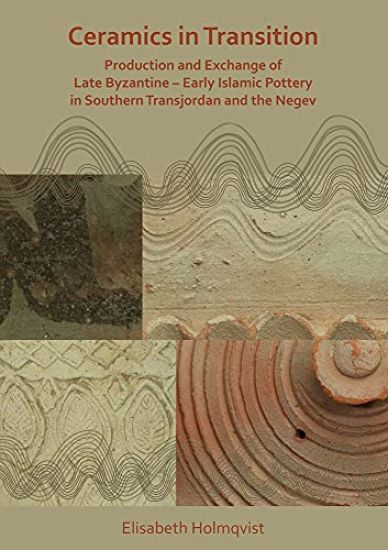
Ceramics in Transition: Production and Exchange of Late Byzantine-Early Islamic Pottery in Southern Transjordan and the Negev
Ceramics in Transition focuses on the utilitarian ceramic traditions during the socio-political transition from the late Byzantine into the early Islamic Umayyad and ‘Abbasid periods, c. 6th–9th centuries CE in southern Transjordan and the Negev. These regions belonged to the Byzantine province of Palaestina Tertia, before Islamic administrative reorganisation in the mid-7th century. Cooking ware and ceramic containers were investigated from five archaeological sites representing different socio-economic contexts, the Jabal Harûn monastery, the village of Khirbet edh-Dharih, the port city of ‘Aqaba/Aila, the town of Elusa in the Negev, and the suburban farmstead of Abu Matar. The ceramics were typo-chronologically categorised and subjected to geochemical and micro-structural characterisation via X-ray fluorescence spectrometry (ED-XRF) and scanning electron microscopy (SEM-EDS) to geochemically ‘fingerprint’ the sampled ceramics and to identify production clusters, manufacturing techniques, ceramic distribution patterns, and material links between rural-urban communities as well as religious-secular communities. The ceramic data demonstrate economic wealth continuing into the early Islamic periods in the southern regions, ceramic exchange systems, specialized manufacture and inter-regional, long-distance ceramic transport. The potters who operated in the southern areas in the formative stages of the Islamic period reformulated their craft to follow new influences diffusing from the Islamic centres in the north.