Kirjojen hintavertailu – 12 903 724 kirjaa ja 27 kauppaa
Kirjailija
ELISABETH S LUKAS
Kirjat ja teokset yhdessä paikassa: 11 kirjaa, julkaisuja vuosilta 2014–2022, suosituimpiin kuuluu LOGOTERAPIA Y ANALISIS EXISTENCIAL HOY. Vertaile teosten hintoja ja tarkista saatavuus suomalaisista kirjakaupoista.
Chronic illnesses exact a toll--the symptoms are ever-present and whittle away at the individual's life energy and experience. Tinnitus is an example of an ongoing series of symptoms that can create havoc in a person's inner life. In this book, Lukas uses tinnitus as an example of a chronic illness that can be addressed by finding an inner point of stillness and concentration. From the book: "Tinnitus carries its own challenge and message, which could be put like this: You will have to acquire new hearing, not that of physical ears, but rather of the heart's ears. You must develop what Frankl called your organ of meaning, the conscience, which hears the daily and hourly call knocking on your door, the call to a concretely meaningful form of existence.... The person who is attuned to his or her conscience is quite simply tuned in some octaves higher than the one who is only picking up the noise of the daily invasive din." (p. 3)"There is a most meaningful path for every person, with signposts to unique tasks that we--and only we--can and ought to fulfill. All human beings are awaited by something in particular which can and ought to be theirs; there is something intended for each of us in this world." (p. 77)
In our world, there is a growing unease, a sense of frustration and anxiety among individuals from all walks of life. There is a gnawing feeling that maybe there must be something more than "success," a promotion, the latest technology, a new car. The question that comes to mind is "is this all there is?" "Could there be something more?" "Does my life have meaning?" Meaningful Living, (2nd expanded edition) by Elisabeth Lukas gives a thorough introduction to the theory and practice of logotherapy. Individual chapters detail the application of modulation of attitudes, paradoxical intention, dereflection, and the suggestive technique. Numerous case studies are used to illuminate the theory throughout. Elisabeth Lukas and Bianca Hirsch present a concise overview of logotherapy theory and praxis in the second part. Excerpts from the book: There is an order in the universe despite chaos, destruction, and injustice. In this worldview, all of creation is full of meaning, and every life situation has its unique meaning, opportunities, and possibilities. (p. 164)True human freedom is never freedom from but always freedom to something. Freedom goes beyond release from rules and guidelines by outer authority. Its corollary is the freedom to follow inner authority--self-chosen tasks, commitments, goals. Freedom is not doing as we please but pleasure in doing what we consider meaningful. (p. 19)To cure and prevent worldwide meaninglessness is not merely a matter of psychotherapeutic methods or interpretation of symptoms. It is a matter of defining a new concept of human nature. (p.22)Distress does not inevitably cause psychological collapse; it may contain the possibility of finding new meanings.... To solve conflicts it is not always essential to dig up childhood traumas or to focus on an unhappy past. It may be more important to widen and strengthen the inner meaning orientation of individuals so they can grow from distress situations instead of being defeated by them. Distress does not inevitably cause psychological collapse; it may contain the possibility of finding new meanings. (p. 14)
In our world, there is a growing unease, a sense of frustration and anxiety among individuals from all walks of life. There is a gnawing feeling that maybe there must be something more than "success," a promotion, the latest technology, a new car. The question that comes to mind is "is this all there is?" "Could there be something more?" "Does my life have meaning?" Meaningful Living, (2nd expanded edition) by Elisabeth Lukas gives a thorough introduction to the theory and practice of logotherapy. Individual chapters detail the application of modulation of attitudes, paradoxical intention, dereflection, and the suggestive technique. Numerous case studies are used to illuminate the theory throughout. Elisabeth Lukas and Bianca Hirsch present a concise overview of logotherapy theory and praxis in the second part. Excerpts from the book: There is an order in the universe despite chaos, destruction, and injustice. In this worldview, all of creation is full of meaning, and every life situation has its unique meaning, opportunities, and possibilities. (p. 164)True human freedom is never freedom from but always freedom to something. Freedom goes beyond release from rules and guidelines by outer authority. Its corollary is the freedom to follow inner authority--self-chosen tasks, commitments, goals. Freedom is not doing as we please but pleasure in doing what we consider meaningful. (p. 19)To cure and prevent worldwide meaninglessness is not merely a matter of psychotherapeutic methods or interpretation of symptoms. It is a matter of defining a new concept of human nature. (p.22)Distress does not inevitably cause psychological collapse; it may contain the possibility of finding new meanings.... To solve conflicts it is not always essential to dig up childhood traumas or to focus on an unhappy past. It may be more important to widen and strengthen the inner meaning orientation of individuals so they can grow from distress situations instead of being defeated by them. Distress does not inevitably cause psychological collapse; it may contain the possibility of finding new meanings. (p. 14)
Chronic illnesses exact a toll--the symptoms are ever-present and whittle away at the individual's energy and experience. Tinnitus is an example of an ongoing series of symptoms that can create havoc in a person's inner life. In this book, Lukas uses tinnitus as an example of a chronic illness that can be addressed by finding an inner point of stillness and concentration. The book ends with a section on "reflections on a psychotherapy with dignity." From the book: "Tinnitus carries its own challenge and message, which could be put like this: You will have to acquire new hearing, not that of physical ears, but rather of the heart's ears. You must develop what Frankl called your organ of meaning, the conscience, which hears the daily and hourly call knocking on your door, the call to a concretely meaningful form of existence.... The person who is attuned to his or her conscience is quite simply tuned in some octaves higher than the one who is only picking up the noise of the daily invasive din." (p. 3)"There is a most meaningful path for every person, with signposts to unique tasks that we--and only we--can and ought to fulfill. All human beings are awaited by something in particular which can and ought to be theirs; there is something intended for each of us in this world." (p. 77)
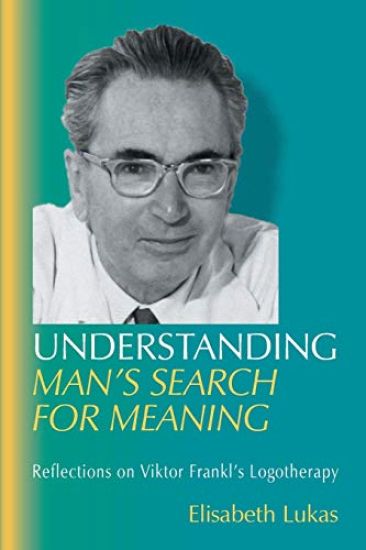
In Man's Search for Meaning, Viktor Frankl told the story of his experience in the Nazi concentration camps, and outlined the basis for finding meaning in life, which he called logotherapy. Elisabeth Lukas is one of Frankl's foremost students, and has written numerous books and given lectures and training courses around the world. This book contains a distillation of the writings of Elisabeth Lukas, based on decades of reflection on, and application of, the core ideas embodied in the logotherapy of Viktor Frankl. Available for the first time in English, this collection of articles and keynote addresses gives further insights into topics including: The role of meaning in finding health Moving beyond self-actualization toward self-transcendence How our view of past, present, and future can be healing: "no tic temporality" The importance of "key words" in preventing the imposition of values How relapses can be reduced using the concepts of logotherapy Unique characteristics of logotherapy that distinguish it from other approaches From the book: Logotherapy is often nothing but the correction of a "how" in a patient's viewpoint. The future will give 50 lashes or 50 gold pieces. It will reward or punish for the views and attitudes chosen--attitudes to the same situations For the attitude: "Why should I take care of my children? No one took care of me " it will strike such an individual 20 years later when the great distance to his or her children causes great pain. For the attitude: "I suffered as a child, so I want to spare my children that lot " it will place something precious into that person's hands 20 years later, when the children give their warm greetings and affection. (p. 35)
In Man's Search for Meaning, Viktor Frankl told the story of his experience in the Nazi concentration camps, and outlined the basis for finding meaning in life, which he called logotherapy. Elisabeth Lukas is one of Frankl's foremost students, and has written numerous books and given lectures and training courses around the world. This book contains a distillation of the writings of Elisabeth Lukas, based on decades of reflection on, and application of, the core ideas embodied in the logotherapy of Viktor Frankl. Available for the first time in English, this collection of articles and keynote addresses gives further insights into topics including: The role of meaning in finding health Moving beyond self-actualization toward self-transcendence How our view of past, present, and future can be healing: "no tic temporality" The importance of "key words" in preventing the imposition of values How relapses can be reduced using the concepts of logotherapy Unique characteristics of logotherapy that distinguish it from other approaches From the book: Logotherapy is often nothing but the correction of a "how" in a patient's viewpoint. The future will give 50 lashes or 50 gold pieces. It will reward or punish for the views and attitudes chosen--attitudes to the same situations For the attitude: "Why should I take care of my children? No one took care of me " it will strike such an individual 20 years later when the great distance to his or her children causes great pain. For the attitude: "I suffered as a child, so I want to spare my children that lot " it will place something precious into that person's hands 20 years later, when the children give their warm greetings and affection. (p. 35)