Kirjojen hintavertailu – 12 859 828 kirjaa ja 27 kauppaa

Kirjailija

Eliseo Jacob

Kirjat ja teokset yhdessä paikassa: 4 kirjaa, julkaisuja vuodelta 2022, suosituimpiin kuuluu Améfrica in Letters. Vertaile teosten hintoja ja tarkista saatavuus suomalaisista kirjakaupoista.

4 kirjaa

Améfrica in Letters

Améfrica in Letters

Jennifer Carolina Gómez Menjívar; Paulette Ramsay; Juan Guillermo Sánchez Martínez; Michael Handelsman; Gloria Chacón; Ángela Castro; Eliseo Jacob; Isis Barra Costa; Juan Eduardo Wolf; Diana Rodríguez Quevedo; Mamadou Badiane

VANDERBILT UNIVERSITY PRESS
2022
nidottu
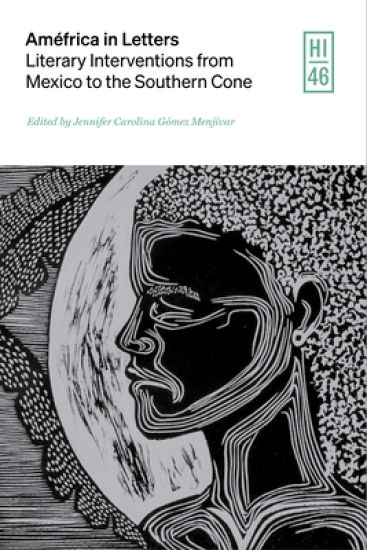
Traditional histories of Black letters in Latin America have delimited their geographic scope to the Caribbean while also omitting intertwined Afro-Indigenous discourses. Inspired by the legacy of Amefrican thinker LÉlia Gonzalez, AmÉfrica in Letters highlights the Black poets, songwriters, novelists, essayists, and bloggers who have created a counter-multiculturalist literary history on the Latin American mainland. To capture a sense of the variety of their contributions, this book spans Mexico, Central America, the Andes, and the Southern Cone—highlighting the transcontinental nature of the legacy of Black writing and its impact beyond national boundaries. The writers examined in the volume engage with regional intellectual frameworks while putting into circulation a demand for a recalibration of the Hispanophone and Lusophone contexts in which they and other Afrodescendants reside.
Améfrica in Letters

Améfrica in Letters

Jennifer Carolina Gómez Menjívar; Paulette Ramsay; Juan Guillermo Sánchez Martínez; Michael Handelsman; Gloria Chacón; Ángela Castro; Eliseo Jacob; Isis Barra Costa; Juan Eduardo Wolf; Diana Rodríguez Quevedo; Mamadou Badiane

VANDERBILT UNIVERSITY PRESS
2022
sidottu
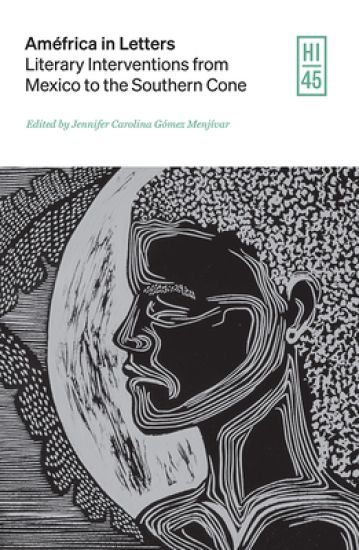
Traditional histories of Black letters in Latin America have delimited their geographic scope to the Caribbean while also omitting intertwined Afro-Indigenous discourses. Inspired by the legacy of Amefrican thinker LÉlia Gonzalez, AmÉfrica in Letters highlights the Black poets, songwriters, novelists, essayists, and bloggers who have created a counter-multiculturalist literary history on the Latin American mainland. To capture a sense of the variety of their contributions, this book spans Mexico, Central America, the Andes, and the Southern Cone—highlighting the transcontinental nature of the legacy of Black writing and its impact beyond national boundaries. The writers examined in the volume engage with regional intellectual frameworks while putting into circulation a demand for a recalibration of the Hispanophone and Lusophone contexts in which they and other Afrodescendants reside.
Trajectories of Empire

Trajectories of Empire

Jerome C. Branche; Elizabeth Wright; Cassia Roth; Baltasar Fra-Molinero; Miguel Valerio; Miguel Olmedo; Agnes Lugo-Ortiz; Lucia Helena Costigan; Abreu Alberto; Eliseo Jacob; Maria Andrea de Santos Soares

VANDERBILT UNIVERSITY PRESS
2022
nidottu
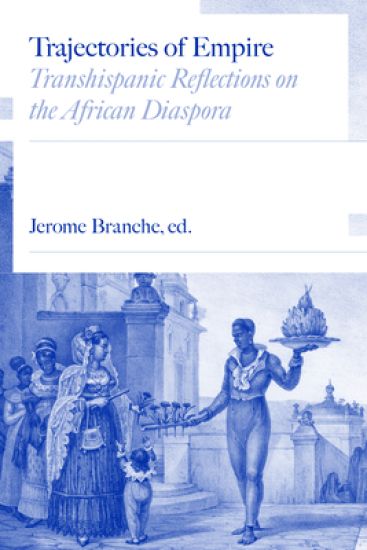
Trajectories of Empire extends from the beginning of the Iberian expansion of the mid-fifteenth century, through colonialism and slavery, and into the twentieth and twenty-first centuries in Latin American republics. Its point of departure is the question of empire and its aftermath, as reflected in the lives of contemporary Latin Americans of African descent, and of their ancestors caught up in the historical process of Iberian colonial expansion, colonization, and the Atlantic slave trade. The book's chapters explore what it's like to be Black today in the so-called racial democracies of Brazil, Colombia, and Cuba; the role of medical science in the objectification and nullification of Black female personhood during slavery in Brazil in the nineteenth century; the deployment of visual culture to support insurgency for a largely illiterate slave body again in the nineteenth century in Cuba; aspects of discourse that promoted the colonial project as evangelization, or alternately offered resistance to its racialized culture of dominance in the seventeenth century; and the experiences of the first generations of forced African migrants into Spain and Portugal in the fifteenth and sixteenth centuries, as the discursive template was created around their social roles as enslaved or formerly enslaved people. Trajectories of Empire's contributors come from the fields of literary criticism, visual culture, history, anthropology, popular culture (rap), and cultural studies. As the product of an interdisciplinary collective, this book will be of interest to researchers and graduate students in Iberian or Hispanic Studies, Africana Studies, Postcolonial Studies, and Transatlantic Studies, as well as the general public.
Trajectories of Empire

Trajectories of Empire

Jerome C. Branche; Elizabeth Wright; Cassia Roth; Baltasar Fra-Molinero; Miguel Valerio; Miguel Olmedo; Agnes Lugo-Ortiz; Lucia Helena Costigan; Abreu Alberto; Eliseo Jacob; Maria Andrea de Santos Soares

VANDERBILT UNIVERSITY PRESS
2022
sidottu
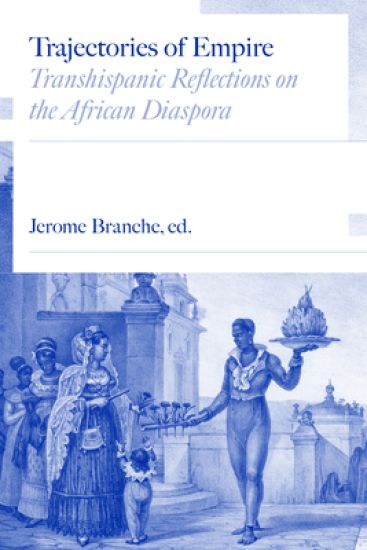
Trajectories of Empire extends from the beginning of the Iberian expansion of the mid-fifteenth century, through colonialism and slavery, and into the twentieth and twenty-first centuries in Latin American republics. Its point of departure is the question of empire and its aftermath, as reflected in the lives of contemporary Latin Americans of African descent, and of their ancestors caught up in the historical process of Iberian colonial expansion, colonization, and the Atlantic slave trade. The book's chapters explore what it's like to be Black today in the so-called racial democracies of Brazil, Colombia, and Cuba; the role of medical science in the objectification and nullification of Black female personhood during slavery in Brazil in the nineteenth century; the deployment of visual culture to support insurgency for a largely illiterate slave body again in the nineteenth century in Cuba; aspects of discourse that promoted the colonial project as evangelization, or alternately offered resistance to its racialized culture of dominance in the seventeenth century; and the experiences of the first generations of forced African migrants into Spain and Portugal in the fifteenth and sixteenth centuries, as the discursive template was created around their social roles as enslaved or formerly enslaved people. Trajectories of Empire's contributors come from the fields of literary criticism, visual culture, history, anthropology, popular culture (rap), and cultural studies. As the product of an interdisciplinary collective, this book will be of interest to researchers and graduate students in Iberian or Hispanic Studies, Africana Studies, Postcolonial Studies, and Transatlantic Studies, as well as the general public.