
Kirjojen hintavertailu – 12 903 724 kirjaa ja 27 kauppaa

Kirjailija

Eliza W.Y. Lee

Kirjat ja teokset yhdessä paikassa: 2 kirjaa, julkaisuja vuosilta 2013–2015, suosituimpiin kuuluu Public Policymaking in Hong Kong. Vertaile teosten hintoja ja tarkista saatavuus suomalaisista kirjakaupoista.

2 kirjaa

Kirjojen julkaisuvuodet: 2013–2015.

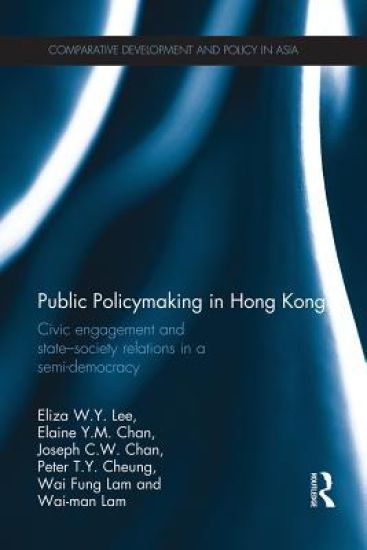
Public Policymaking in Hong Kong

Public Policymaking in Hong Kong

Eliza W.Y. Lee; Elaine Y.M. Chan; Joseph C.W. Chan; Peter T.Y. Cheung; Wai Fung Lam; Wai Man Lam

Routledge
2015
nidottu
Why and how has civic engagement emerged in the policy process of Hong Kong as an Asian semi-democratic state? This book attempts to answer this question through examining six cases that straddle diverse policy domains. It identifies three explanatory factors, namely, the profile of a policy domain, the structure of societal interest, and the strength of the civil society sector as important in shaping the state’s strategy in managing society, hence its propensity to engage. These factors affect the outcome through dynamic interaction between the state and societal actors. The findings outlined in the book show that the development of civic engagement in Hong Kong consists of both society-led and state-led cases. Society-led development brought about a high degree of openness and inclusiveness, whereas state-led civic engagement practices tended to be tactics utilized by the state for appeasing or depoliticizing civil society. Compared with other Asian regimes, the use of ‘transgressive contention’ as a way to compel the state to engage society is a feature that stands out in the liberal autocratic regime in Hong Kong.
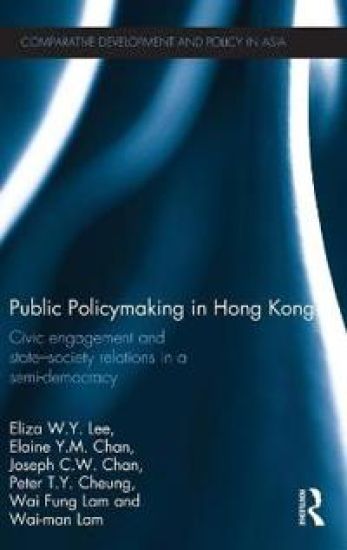
Public Policymaking in Hong Kong

Public Policymaking in Hong Kong

Eliza W.Y. Lee; Elaine Y.M. Chan; Joseph C.W. Chan; Peter T.Y. Cheung; Wai Fung Lam; Wai Man Lam

Routledge
2013
sidottu
Why and how has civic engagement emerged in the policy process of Hong Kong as an Asian semi-democratic state? This book attempts to answer this question through examining six cases that straddle diverse policy domains. It identifies three explanatory factors, namely, the profile of a policy domain, the structure of societal interest, and the strength of the civil society sector as important in shaping the state’s strategy in managing society, hence its propensity to engage. These factors affect the outcome through dynamic interaction between the state and societal actors. The findings outlined in the book show that the development of civic engagement in Hong Kong consists of both society-led and state-led cases. Society-led development brought about a high degree of openness and inclusiveness, whereas state-led civic engagement practices tended to be tactics utilized by the state for appeasing or depoliticizing civil society. Compared with other Asian regimes, the use of ‘transgressive contention’ as a way to compel the state to engage society is a feature that stands out in the liberal autocratic regime in Hong Kong.