Kirjojen hintavertailu – 12 859 828 kirjaa ja 27 kauppaa
Kirjailija
Elizabeth Barrett Browning
Kirjat ja teokset yhdessä paikassa: 276 kirjaa, julkaisuja vuosilta 1972–2026, suosituimpiin kuuluu A Selection from the Poetry of Elizabeth Barrett Browning. Vertaile teosten hintoja ja tarkista saatavuus suomalaisista kirjakaupoista.
Nimi esiintyy myös muodoissa: Elizabeth Barrett-Browning, Elizabeth Barrett Browning
Elizabeth Barrett Browning's reputation has sometimes been overshadowed both by the achievements of her husband, Robert Browning, and by the romantic story of their elopement. This selection recovers the best work of this independent, passionate and intelligent poet, presenting it on its own terms. Browning emerges as an acute observer of the political dramas taking place in Italy and the private dramas of relationships. Brought up to a life of confinement, Browning (1806-1861) matured into a champion of personal and social freedom, a poetic innovator who wrote some of the 19th century's most politically engaged and subtly erotic poetry.
Famed series of 44 love poems written to the poet's husband, Robert Browning, plus a selection of poems dealing with religion, art, social problems and political events. Alphabetical lists of titles and first lines.
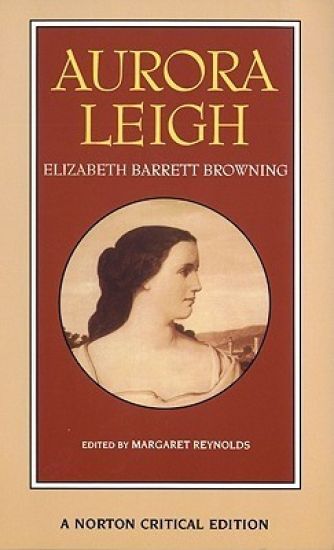
The text is accompanied by both explanatory annotations and textual notes. "Backgrounds and Contexts" includes thirty letters or letter excerpts by Elizabeth Barrett Browning and Robert Browning that trace Aurora Leigh’s inception, evolution, and publication. Seven contemporary documents—on the "woman question," prostitution, socialism, and poetic theory—place the text historically. "Criticism" collects twenty-five assessments of Aurora Leigh from the period 1899–1993. A wide range of opinion is provided by George Eliot, Virginia Woolf, Ellen Moers, Sandra Gilbert and Susan Gubar, Angela Leighton, Deirdre David, Dorothy Mermin, and Margaret Reynolds, among others. A Chronology and Selected Bibliography are also included.
Widely regarded as Barrett Browning's major work, Aurora Leigh is important both for its address to contemporary social issues, the "woman question" in particular, and for its bold experimentation with poetic form. Since 1979 it has held its place in the canon as "the feminist poem" (Ellen Moers), yet, until now, no reliable edition of the work has been available. The text of this edition is based upon meticulous examination of the extant manuscripts, corrected proofs and revision to the poem. It is accompanied by a full textual history of the poem's composition and publication, a comprehensive annotation of literary allusions and contemporary reference, and a new and closely argued essay on the significance of the verse-novel as an early example of politically self-conscious women's writing/ This authoritative edition of Aurora Leigh provides a text and apparatus designed to combat conventional notions of women's poetry as "instinctive" improvisation. It argues for the verse-novel as a poem which offers both the excitement of intellectual experimentation and the powerful engagement of a judicious political passion. The arrival of this edition should be of great interest and use to students of nineteenth-century studies and feminist scholars alike.
Most of Elizabeth Barrett Browning's poetry has been unavailable to new readers, in spite of a growing appreciation of her innovativeness as a poet—and it spite of her onvious importance for any feminist reading of nineteenth-century English poetry. With the publication of this book, a major portion of Elizabeth Barrett Browning's wok returns to print. The poems selected here includ early verse published in 1826, when the poet was twenty, as well as the last poems she wrote before her death in 1861. Her religious verse appears alongside lively ballads, examples of her social-reforming and political verse, and generous selections of her love poetry, including the whole of the Sonnets from the Portuguese. The volume illustrates Elizabeth Barrett Browning's development as a poet and reveals her contribution to feminist literature. Innocent-seeming ballads, beloved in the Victorian period for their sweetness and condemned thereafter for their cloying sentimentality, here emerge as subversive articulations of the plight of women. "Few heard what Elizabeth Barrett Browning said [in her time]," Margaret Forster writes. "Today, with ears more finely attuned, we can hear her clearly."
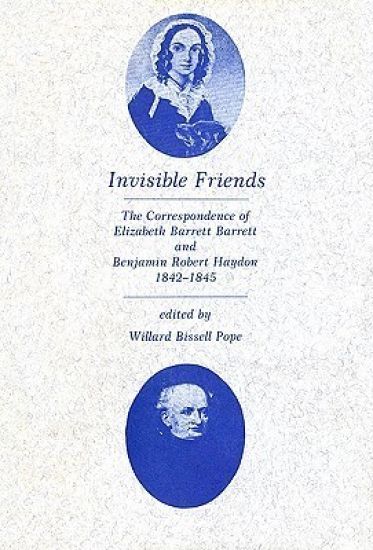
Although Elizabeth Barrett Browning and Benjamin Robert Haydon never met, their lively and topical conversation, initiated in 1842, continued unabated until 1845, about a year before the painter’s suicide. It was a somewhat lopsided correspondence in which ninety-four letters written by Haydon, most of which have not been published before, received fewer replies from Miss Barrett, twenty-eight of which are included in this book. Judging from the contents of the letters, the epistolary friendship was truly meaningful to both. To Miss Barrett, Haydon was “my dear kind friend”; he was far more effusive, addressing her as “you Ingenious little darling invisible” and “my dearest dream & invisible intellectuality.” In spite of Haydon’s frequent pleas for a meeting, Miss Barrett never agreed to receive him. However, as the correspondence progressed, they exchanged more and more confidences and each recognized the other as a responsive and sympathetic listener. With complete candor Haydon admitted at one point that egotism was the basis of his pleasure in the correspondence; “I never ask what you are doing,” he wrote, “but take it for granted what I am doing must be delightful to you.” Evincing warmth and poignancy, the letters range over a variety of colorful subjects covering art, literature, current events, and gossip. The Elgin Marbles and Queen Victoria are discussed, and the correspondents air opposing views on mesmerism and Napoleon versus Wellington. After a thoughtful introduction which provides background information on Miss Barrett and Haydon, Willard Pope presents the letters—carefully annotated with identifying information on people, places, and current events—in chronological order.