Kirjailija
Elizabeth Cleghorn Gaskell
Kirjat ja teokset yhdessä paikassa: 752 kirjaa, julkaisuja vuosilta 1850–2026, suosituimpiin kuuluu Cranford. Vertaile teosten hintoja ja tarkista saatavuus suomalaisista kirjakaupoista.
752 kirjaa
Kirjojen julkaisuvuodet: 1850–2026.
Sylvia's Lovers (1863) is a novel written by Elizabeth Gaskell, which she called "the saddest story I ever wrote". The novel begins in the 1790s in the coastal town of Monkshaven (modeled on Whitby, England) against the background of the practice of impressment during the early phases of the Napoleonic Wars. Sylvia Robson lives happily with her parents on a farm, and is passionately loved by her rather dull Quaker cousin Philip. She, however, meets and falls in love with Charlie Kinraid, a dashing sailor on a whaling vessel, and they become secretly engaged. When Kinraid goes back to his ship, he is forcibly enlisted in the Royal Navy by a press gang, a scene witnessed by Philip. Philip does not tell Sylvia of the incident nor relay to her Charlie's parting message and, believing her lover is dead, Sylvia eventually marries her cousin. This act is primarily prompted out of gratefulness for Philip's assistance during a difficult time following her father's imprisonment and subsequent execution for leading a revengeful raid on press-gang collaborators. They have a daughter. Inevitably, Kinraid returns to claim Sylvia and she discovers that Philip knew all the time that he was still alive. Philip leaves her in despair at her subsequent rage and rejection, but she refuses to live with Kinraid because of her child. Philip joins the army under a pseudonym, and ends up fighting in the Napoleonic wars, where he saves Kinraid's life. Kinraid returns to Britain, and marries. His wife, who knows nothing of their history together, informs Sylvia that her husband is a great military leader. Kinraid's marriage suggests to Sylvia that he was not as faithful to her as she had remained to him, and she then realizes she is actually in love with Philip. Philip, meanwhile horribly disfigured by a shipboard explosion, returns to the small Northumbrian village to try to secretly get a glimpse of his child. He ends up staying with the sister of a servant of Sylvia's deceased parents, and rescues his child when she nearly drowns. He is fatally injured while saving his daughter, but his identity then becomes known and he is reconciled with his wife on his deathbed. (wikipedia.org)
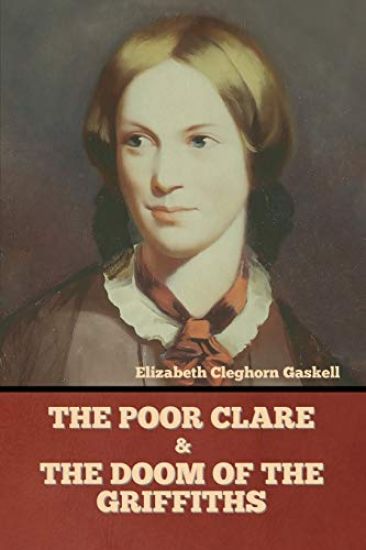
The Poor Clare and The Doom of the Griffiths
Elizabeth Cleghorn Gaskell
Bibliotech Press
2022
sidottu
Elizabeth Cleghorn Gaskell (n e Stevenson; 29 September 1810 - 12 November 1865), often referred to as Mrs Gaskell, was an English novelist, biographer and short story writer. Her novels offer a detailed portrait of the lives of many strata of Victorian society, including the very poor. Her work is of interest to social historians as well as readers of literature. Her first novel, Mary Barton, was published in 1848. Gaskell's The Life of Charlotte Bront , published in 1857, was the first biography of Charlotte Bront . In this biography, she wrote only of the moral, sophisticated things in Bront 's life; the rest she left out, deciding that certain, more salacious aspects were better kept hidden. Among Gaskell's best known novels are Cranford (1851-53), North and South (1854-55), and Wives and Daughters (1865), each having been adapted for television by the BBC. Gaskell's first novel, Mary Barton, was published anonymously in 1848. The best-known of her remaining novels are Cranford (1853), North and South (1854), and Wives and Daughters (1865). She became popular for her writing, especially her ghost stories, aided by Charles Dickens, who published her work in his magazine Household Words. Her ghost stories are in the "Gothic" vein, making them quite distinct from her "industrial" fiction. Even though her writing conforms to Victorian conventions, including the use of the name "Mrs. Gaskell", she usually framed her stories as critiques of contemporary attitudes. Her early works focused on factory work in the Midlands. She usually emphasized the role of women, with complex narratives and realistic female characters. Gaskell said she was influenced by the writings of Jane Austen. She then felt qualified to write a book on one of the greatest authors of all time, smoothing over patches in her life that were too rough for the sophisticated society woman. Her treatment of class continues to interest social historians as well as fiction lovers. (wikipedia.org)
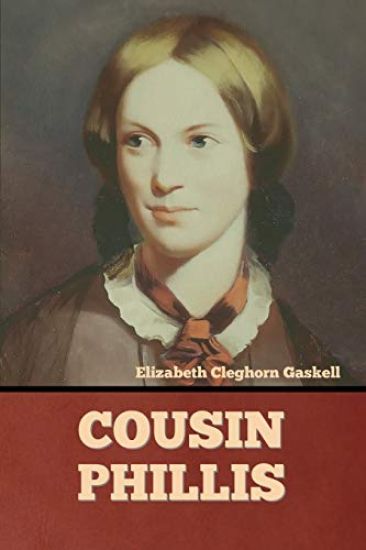
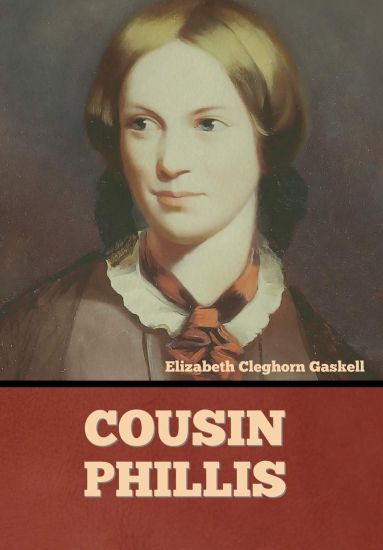
Cousin Phillis (1864) is a novel by Elizabeth Gaskell. It was published in four parts, though a fifth and sixth part were planned. The story is about 19-year-old Paul Manning, who moves to the country and befriends his mother's family and his (second) cousin Phillis Holman, who is confused by her own placement at the edge of adolescence. Most critics agree that Cousin Phillis is Gaskell's crowning achievement in the short novel. The story is uncomplicated; its virtues are in the manner of its development and telling. Cousin Phillis is also recognized as a fitting prelude for Gaskell's final and most widely acclaimed novel, Wives and Daughters, which ran in Cornhill Magazine from August 1864 to January 1866. (wikipedia.org)
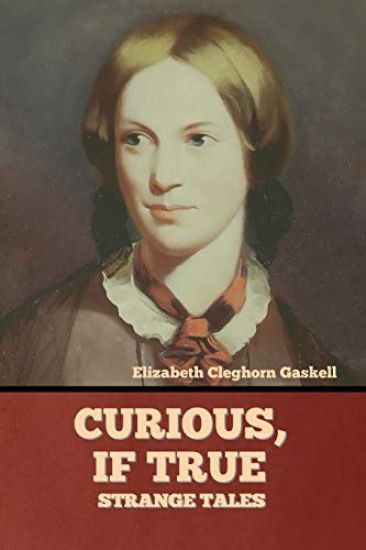
CONTENTSThe Old Nurse's Story The Poor Clare Lois the Witch The Grey WomanCurious, if TrueElizabeth Cleghorn Gaskell (n e Stevenson; 29 September 1810 - 12 November 1865), often referred to as Mrs Gaskell, was an English novelist, biographer and short story writer. Her novels offer a detailed portrait of the lives of many strata of Victorian society, including the very poor. Her work is of interest to social historians as well as readers of literature. Her first novel, Mary Barton, was published in 1848. Gaskell's The Life of Charlotte Bront , published in 1857, was the first biography of Charlotte Bront . In this biography, she wrote only of the moral, sophisticated things in Bront 's life; the rest she left out, deciding that certain, more salacious aspects were better kept hidden. Among Gaskell's best known novels are Cranford (1851-53), North and South (1854-55), and Wives and Daughters (1865), each having been adapted for television by the BBC. Gaskell's first novel, Mary Barton, was published anonymously in 1848. The best-known of her remaining novels are Cranford (1853), North and South (1854), and Wives and Daughters (1865). She became popular for her writing, especially her ghost stories, aided by Charles Dickens, who published her work in his magazine Household Words. Her ghost stories are in the "Gothic" vein, making them quite distinct from her "industrial" fiction. Even though her writing conforms to Victorian conventions, including the use of the name "Mrs. Gaskell", she usually framed her stories as critiques of contemporary attitudes. Her early works focused on factory work in the Midlands. She usually emphasized the role of women, with complex narratives and realistic female characters. Gaskell said she was influenced by the writings of Jane Austen. She then felt qualified to write a book on one of the greatest authors of all time, smoothing over patches in her life that were too rough for the sophisticated society woman. Her treatment of class continues to interest social historians as well as fiction lovers. (wikipedia.org)
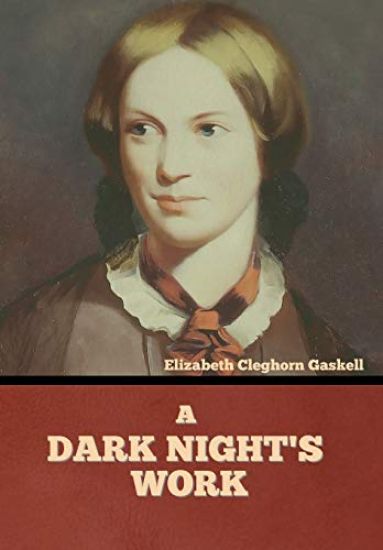
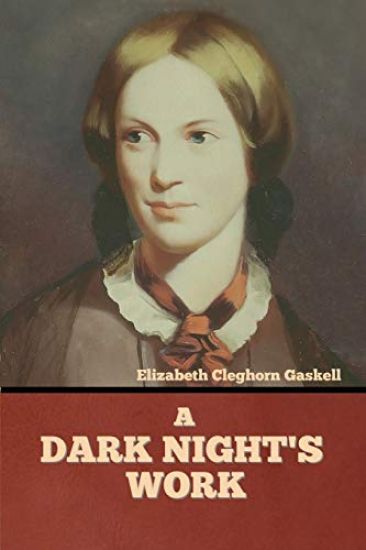
A Dark Night's Work is an 1863 novel by Elizabeth Gaskell. It was first published serially in Charles Dickens's magazine All the Year Round. The word "dark" was added to the original title by Dickens against Gaskell's wishes. Dickens felt that the altered title would be more striking. The story centers on a country lawyer, Edward Wilkins, and his daughter Ellinor. Edward has an artistic and literary personality, unsuited to his social position as the son of a successful lawyer who takes over his father's practice in the provincial town of Hamley. His legal representation of the local gentry and nobility leads him to try fitting into their social circles, only to be mocked and treated with derision. He develops a drinking problem and spends more money than he can afford to in his attempts to be an equal to his clients. His bad habits lead to problems in his business, and Edward is forced to take on a junior partner named Mr. Dunster. At the same time, Ellinor becomes engaged to a young upcoming country gentleman named Ralph Corbet. Corbet initiates the engagement partly through love of Ellinor and partly because of a promise of money from Edward. Edward continues to drink and overspend, leading to a confrontation with Mr. Dunster. In the heat of the argument, Edward strikes Mr. Dunster, killing him. Ellinor and a family servant named Dixon help Edward to bury the body in their flower garden. Ellinor soon tells Ralph that a possible disgrace hangs over her. Ralph questions Edward about this, and Edward insults him in a drunken tirade. Ralph dissolves his engagement to Ellinor because of this, and because he regrets forming an engagement to someone who offers no opportunity of helping him advance in society. He later marries into the nobility and becomes a judge. Edward drinks himself to death and Ellinor moves to a distant town, East Chester, after the Wilkins's home Ford Bank is rented out in order to provide Ellinor with a living. Dixon remains as a servant to watch over the home and property where the body is buried. The secret goes unknown for about 15 years until the body is dug up during the construction of a railroad. Dixon is arrested for the murder and later convicted by Ralph, who acts as the judge in the case. Ellinor then tells Ralph the truth, and Dixon is pardoned. She returns to East Chester and marries a local clergyman, Canon Livingstone, who she had known in her youth, and has two children with him. (wikipedia.org)
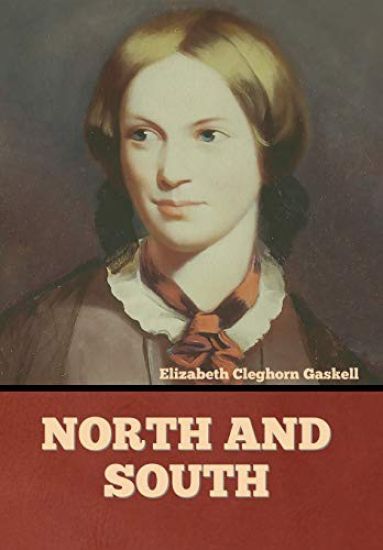
North and South is a social novel published in 1854 by English writer Elizabeth Gaskell. With Wives and Daughters (1865) and Cranford (1853), it is one of her best-known novels and was adapted for television three times (1966, 1975 and 2004). The 2004 version renewed interest in the novel and attracted a wider readership. Gaskell's first novel, Mary Barton (1848), focused on relations between employers and workers in Manchester from the perspective of the working poor; North and South uses a protagonist from southern England to present and comment on the perspectives of mill owners and workers in an industrializing city. The novel is set in the fictional industrial town of Milton in the north of England. Forced to leave her home in the tranquil, rural south, Margaret Hale settles with her parents in Milton. She witnesses the brutal world wrought by the Industrial Revolution, seeing employers and workers clashing in the first strikes. Sympathetic to the poor (whose courage and tenacity she admires and among whom she makes friends), she clashes with John Thornton: a nouveau riche cotton-mill owner who is contemptuous of his workers. The novel traces her growing understanding of the complexity of labour relations and their influence on well-meaning mill owners and her conflicted relationship with John Thornton. Gaskell based her depiction of Milton on Manchester, where she lived as the wife of a Unitarian minister. (wikipedia.org)
Mary Barton: A Tale of Manchester Life is the first novel by English author Elizabeth Gaskell, published in 1848. The story is set in the English city of Manchester between 1839 and 1842, and deals with the difficulties faced by the Victorian working class. The novel begins in Manchester, where we are introduced to the Bartons and the Wilsons, two working-class families. John Barton is a questioner of the distribution of wealth and the relations between rich and poor. Soon his wife dies-he blames it on her grief over the disappearance of her sister Esther. Having already lost his son Tom at a young age, Barton is left to raise his daughter, Mary, alone and now falls into depression and begins to involve himself in the Chartist, trade-union movement. Chapter 1 takes place in the countryside where Greenheys is now. Mary takes up work at a dressmaker's (her father had objected to her working in a factory) and becomes subject to the affections of hard-working Jem Wilson and Harry Carson, son of a wealthy mill owner. She fondly hopes, by marrying Carson, to secure a comfortable life for herself and her father, but immediately after refusing Jem's offer of marriage she realizes that she truly loves him. She, therefore, decides to evade Carson, planning to show her feelings to Jem in the course of time. Jem believes her decision to be final, though this does not change his feelings for her. Meanwhile, Esther, a "street-walker," returns to warn John Barton that he must save Mary from becoming like her. He simply pushes her away, however, and she's sent to jail for a month on the charge of vagrancy. Upon her release, she talks to Jem with the same purpose. He promises that he will protect Mary and confronts Carson, eventually entering into a fight with him, which is witnessed by a policeman passing by. Not long afterward, Carson is shot dead, and Jem is arrested for the crime, his gun having been found at the scene. Esther decides to investigate the matter further and discovers that the wadding for the gun was a piece of paper on which is written Mary's name. She visits her niece to warn her to save the one she loves, and after she leaves Mary realizes that the murderer is not Jem but her father. She is now faced with having to save her lover without giving away her father. With the help of Job Legh (the intelligent grandfather of her blind friend Margaret), Mary travels to Liverpool to find the only person who could provide an alibi for Jem - Will Wilson, Jem's cousin and a sailor, who was with him on the night of the murder. Unfortunately, Will's ship is already departing, so that, after Mary chases after the ship in a small boat, the only thing Will can do is promise to return in the pilot ship and testify the next day. During the trial, Jem learns of Mary's great love for him. Will arrives in court to testify, and Jem is found "not guilty". Mary has fallen ill during the trial and is nursed by Mr. Sturgis, an old sailor, and his wife. When she finally returns to Manchester she has to face her father, who is crushed by his remorse. He summons John Carson, Harry's father, to confess to him that he is the murderer. Carson is still set on justice, but after turning to the Bible he forgives Barton, who dies soon afterward in Carson's arms. Not long after this Esther comes back to Mary's home, where she, too, soon dies. Jem decides to leave England, where, his reputation damaged, it would be difficult for him to find a new job. The novel ends with the wedded Mary and Jem, their little child, and Mrs. Wilson living happily in Canada. The news comes that Margaret has regained her sight and that she and Will, soon to be married, will visit. (wikipedia.org)
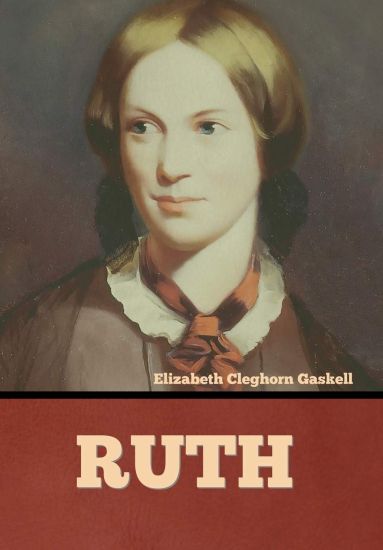
Ruth is Elizabeth Gaskell's tale of an orphaned girl who falls into the hands of an unscrupulous man and finds herself in the usual predicament that such girls face. What might, in our time, be a difficulty but barely raise an eyebrow, was, in Victorian times, a serious path to ruin for both the girl and her resultant child. Illegitimacy was not just a mistake, it was a sin, and the attitude of society was particularly cruel toward the woman involved, regardless of age, in this case 16, or circumstance, alone in the world and innocently naive. (Sara)
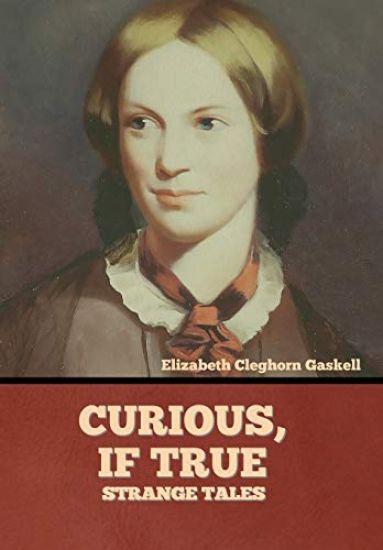
CONTENTSThe Grey Woman Curious if True Six Weeks at Heppenheim Libbie Marsh's Three Eras Christmas Storms and Sunshine Hand and Heart Bessy's Troubles at Home Disappearances
Elizabeth Cleghorn Gaskell (n e Stevenson; 29 September 1810 - 12 November 1865), often referred to as Mrs Gaskell, was an English novelist, biographer and short story writer. Her novels offer a detailed portrait of the lives of many strata of Victorian society, including the very poor. Her work is of interest to social historians as well as readers of literature. Her first novel, Mary Barton, was published in 1848. Gaskell's The Life of Charlotte Bront , published in 1857, was the first biography of Charlotte Bront . In this biography, she wrote only of the moral, sophisticated things in Bront 's life; the rest she left out, deciding that certain, more salacious aspects were better kept hidden. Among Gaskell's best known novels are Cranford (1851-53), North and South (1854-55), and Wives and Daughters (1865), each having been adapted for television by the BBC. Gaskell's first novel, Mary Barton, was published anonymously in 1848. The best-known of her remaining novels are Cranford (1853), North and South (1854), and Wives and Daughters (1865). She became popular for her writing, especially her ghost stories, aided by Charles Dickens, who published her work in his magazine Household Words. Her ghost stories are in the "Gothic" vein, making them quite distinct from her "industrial" fiction. Even though her writing conforms to Victorian conventions, including the use of the name "Mrs. Gaskell", she usually framed her stories as critiques of contemporary attitudes. Her early works focused on factory work in the Midlands. She usually emphasized the role of women, with complex narratives and realistic female characters. Gaskell said she was influenced by the writings of Jane Austen. She then felt qualified to write a book on one of the greatest authors of all time, smoothing over patches in her life that were too rough for the sophisticated society woman. Her treatment of class continues to interest social historians as well as fiction lovers. (wikipedia.org)
The Poor Clare and The Doom of the Griffiths
Elizabeth Cleghorn Gaskell
Bibliotech Press
2022
pokkari
Elizabeth Cleghorn Gaskell (n e Stevenson; 29 September 1810 - 12 November 1865), often referred to as Mrs Gaskell, was an English novelist, biographer and short story writer. Her novels offer a detailed portrait of the lives of many strata of Victorian society, including the very poor. Her work is of interest to social historians as well as readers of literature. Her first novel, Mary Barton, was published in 1848. Gaskell's The Life of Charlotte Bront , published in 1857, was the first biography of Charlotte Bront . In this biography, she wrote only of the moral, sophisticated things in Bront 's life; the rest she left out, deciding that certain, more salacious aspects were better kept hidden. Among Gaskell's best known novels are Cranford (1851-53), North and South (1854-55), and Wives and Daughters (1865), each having been adapted for television by the BBC. Gaskell's first novel, Mary Barton, was published anonymously in 1848. The best-known of her remaining novels are Cranford (1853), North and South (1854), and Wives and Daughters (1865). She became popular for her writing, especially her ghost stories, aided by Charles Dickens, who published her work in his magazine Household Words. Her ghost stories are in the "Gothic" vein, making them quite distinct from her "industrial" fiction. Even though her writing conforms to Victorian conventions, including the use of the name "Mrs. Gaskell", she usually framed her stories as critiques of contemporary attitudes. Her early works focused on factory work in the Midlands. She usually emphasized the role of women, with complex narratives and realistic female characters. Gaskell said she was influenced by the writings of Jane Austen. She then felt qualified to write a book on one of the greatest authors of all time, smoothing over patches in her life that were too rough for the sophisticated society woman. Her treatment of class continues to interest social historians as well as fiction lovers. (wikipedia.org)
A Dark Night's Work is an 1863 novel by Elizabeth Gaskell. It was first published serially in Charles Dickens's magazine All the Year Round. The word "dark" was added to the original title by Dickens against Gaskell's wishes. Dickens felt that the altered title would be more striking. The story centers on a country lawyer, Edward Wilkins, and his daughter Ellinor. Edward has an artistic and literary personality, unsuited to his social position as the son of a successful lawyer who takes over his father's practice in the provincial town of Hamley. His legal representation of the local gentry and nobility leads him to try fitting into their social circles, only to be mocked and treated with derision. He develops a drinking problem and spends more money than he can afford to in his attempts to be an equal to his clients. His bad habits lead to problems in his business, and Edward is forced to take on a junior partner named Mr. Dunster. At the same time, Ellinor becomes engaged to a young upcoming country gentleman named Ralph Corbet. Corbet initiates the engagement partly through love of Ellinor and partly because of a promise of money from Edward. Edward continues to drink and overspend, leading to a confrontation with Mr. Dunster. In the heat of the argument, Edward strikes Mr. Dunster, killing him. Ellinor and a family servant named Dixon help Edward to bury the body in their flower garden. Ellinor soon tells Ralph that a possible disgrace hangs over her. Ralph questions Edward about this, and Edward insults him in a drunken tirade. Ralph dissolves his engagement to Ellinor because of this, and because he regrets forming an engagement to someone who offers no opportunity of helping him advance in society. He later marries into the nobility and becomes a judge. Edward drinks himself to death and Ellinor moves to a distant town, East Chester, after the Wilkins's home Ford Bank is rented out in order to provide Ellinor with a living. Dixon remains as a servant to watch over the home and property where the body is buried. The secret goes unknown for about 15 years until the body is dug up during the construction of a railroad. Dixon is arrested for the murder and later convicted by Ralph, who acts as the judge in the case. Ellinor then tells Ralph the truth, and Dixon is pardoned. She returns to East Chester and marries a local clergyman, Canon Livingstone, who she had known in her youth, and has two children with him. (wikipedia.org)
CONTENTSThe Old Nurse's Story The Poor Clare Lois the Witch The Grey WomanCurious, if TrueElizabeth Cleghorn Gaskell (n e Stevenson; 29 September 1810 - 12 November 1865), often referred to as Mrs Gaskell, was an English novelist, biographer and short story writer. Her novels offer a detailed portrait of the lives of many strata of Victorian society, including the very poor. Her work is of interest to social historians as well as readers of literature. Her first novel, Mary Barton, was published in 1848. Gaskell's The Life of Charlotte Bront , published in 1857, was the first biography of Charlotte Bront . In this biography, she wrote only of the moral, sophisticated things in Bront 's life; the rest she left out, deciding that certain, more salacious aspects were better kept hidden. Among Gaskell's best known novels are Cranford (1851-53), North and South (1854-55), and Wives and Daughters (1865), each having been adapted for television by the BBC. Gaskell's first novel, Mary Barton, was published anonymously in 1848. The best-known of her remaining novels are Cranford (1853), North and South (1854), and Wives and Daughters (1865). She became popular for her writing, especially her ghost stories, aided by Charles Dickens, who published her work in his magazine Household Words. Her ghost stories are in the "Gothic" vein, making them quite distinct from her "industrial" fiction. Even though her writing conforms to Victorian conventions, including the use of the name "Mrs. Gaskell", she usually framed her stories as critiques of contemporary attitudes. Her early works focused on factory work in the Midlands. She usually emphasized the role of women, with complex narratives and realistic female characters. Gaskell said she was influenced by the writings of Jane Austen. She then felt qualified to write a book on one of the greatest authors of all time, smoothing over patches in her life that were too rough for the sophisticated society woman. Her treatment of class continues to interest social historians as well as fiction lovers. (wikipedia.org)
CONTENTSThe Grey Woman Curious if True Six Weeks at Heppenheim Libbie Marsh's Three Eras Christmas Storms and Sunshine Hand and Heart Bessy's Troubles at Home Disappearances