Kirjojen hintavertailu – 12 859 824 kirjaa ja 27 kauppaa

Kirjailija

Elizabeth Freeman

Kirjat ja teokset yhdessä paikassa: 12 kirjaa, julkaisuja vuosilta 2002–2024, suosituimpiin kuuluu Beside You in Time. Vertaile teosten hintoja ja tarkista saatavuus suomalaisista kirjakaupoista.

12 kirjaa

Kirjojen julkaisuvuodet: 2002–2024.

Pulp Mythology Volume Three

Pulp Mythology Volume Three

Elizabeth Freeman; Eric Esquivel; Harding McFadden

Airship 27 Productions
2024
pokkari
HEROES OF LEGEND In this new collection, four classic heroes from mythology face new and dangerous challenges to prove once again their worthiness to claim the stature of legends. In the old world of the past, the Viking warrior Sigurd must battle overwhelming odds to attain Valhalla while Hercules travels to Africa to seek the aid of the Red Sorceress. Switching to the American frontier, the steel-driving man, John Henry encounters a blood-sucking monster ready to contaminate the West. Then Johnny Appleseed, the walking barefoot lad in his tin pot hat, comes to the aid of weary pioneers. Here are four imaginative adventures from the pens of Teel James Glenn, Elizabeth Freeman, Eric Esquivel, Harding McFadden and Iris Hawkins. All beautifully illustrated by artist Ron Hill.
Beside You in Time

Beside You in Time

Elizabeth Freeman

Duke University Press
2019
pokkari
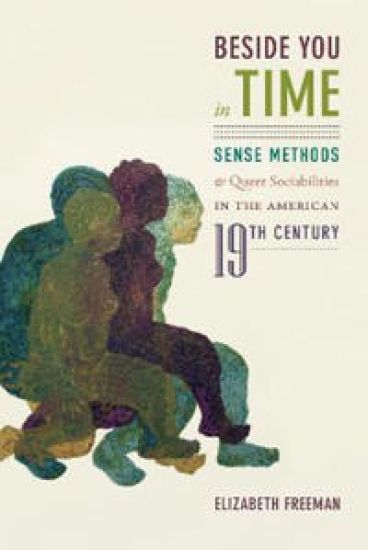
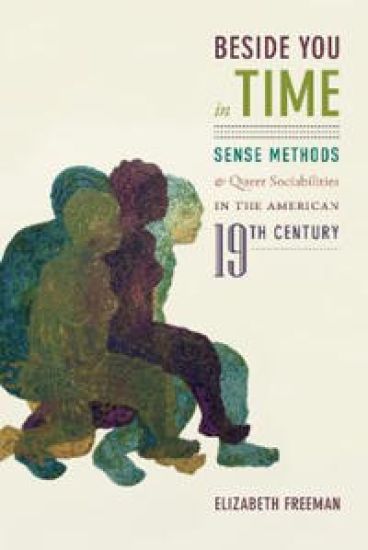
In Beside You in Time Elizabeth Freeman expands biopolitical and queer theory by outlining a temporal view of the long nineteenth century. Drawing on Foucauldian notions of discipline as a regime that yoked the human body to time, Freeman shows how time became a social and sensory means by which people assembled into groups in ways that resisted disciplinary forces. She tracks temporalized bodies across many entangled regimes-religion, secularity, race, historiography, health, and sexuality-and examines how those bodies act in relation to those regimes. In analyses of the use of rhythmic dance by the Shakers; African American slave narratives; literature by Mark Twain, Pauline Hopkins, Herman Melville, and others; and how Catholic sacraments conjoined people across historical boundaries, Freeman makes the case for the body as an instrument of what she calls queer hypersociality. As a mode of being in which bodies are connected to others and their histories across and throughout time, queer hypersociality, Freeman contends, provides the means for subjugated bodies to escape disciplinary regimes of time and to create new social worlds.
Beside You in Time

Beside You in Time

Elizabeth Freeman

Duke University Press
2019
sidottu
In Beside You in Time Elizabeth Freeman expands biopolitical and queer theory by outlining a temporal view of the long nineteenth century. Drawing on Foucauldian notions of discipline as a regime that yoked the human body to time, Freeman shows how time became a social and sensory means by which people assembled into groups in ways that resisted disciplinary forces. She tracks temporalized bodies across many entangled regimes-religion, secularity, race, historiography, health, and sexuality-and examines how those bodies act in relation to those regimes. In analyses of the use of rhythmic dance by the Shakers; African American slave narratives; literature by Mark Twain, Pauline Hopkins, Herman Melville, and others; and how Catholic sacraments conjoined people across historical boundaries, Freeman makes the case for the body as an instrument of what she calls queer hypersociality. As a mode of being in which bodies are connected to others and their histories across and throughout time, queer hypersociality, Freeman contends, provides the means for subjugated bodies to escape disciplinary regimes of time and to create new social worlds.
Sexual Disorientations

Sexual Disorientations

Elizabeth Freeman

FORDHAM UNIVERSITY PRESS
2017
sidottu
Sexual Disorientations brings some of the most recent and significant works of queer theory into conversation with the overlapping fields of biblical, theological and religious studies to explore the deep theological resonances of questions about the social and cultural construction of time, memory, and futurity. Apocalyptic, eschatological and apophatic languages, frameworks, and orientations pervade both queer theorizing and theologizing about time, affect, history and desire. The volume fosters a more explicit engagement between theories of queer temporality and affectivity and religious texts and discourses.
Sexual Disorientations

Sexual Disorientations

Elizabeth Freeman

Fordham University Press
2017
pokkari
Sexual Disorientations brings some of the most recent and significant works of queer theory into conversation with the overlapping fields of biblical, theological and religious studies to explore the deep theological resonances of questions about the social and cultural construction of time, memory, and futurity. Apocalyptic, eschatological and apophatic languages, frameworks, and orientations pervade both queer theorizing and theologizing about time, affect, history and desire. The volume fosters a more explicit engagement between theories of queer temporality and affectivity and religious texts and discourses.
Time Binds

Time Binds

Elizabeth Freeman

Duke University Press
2010
pokkari
Time Binds is a powerful argument that temporal and sexual dissonance are intertwined, and that the writing of history can be both embodied and erotic. Challenging queer theory’s recent emphasis on loss and trauma, Elizabeth Freeman foregrounds bodily pleasure in the experience and representation of time as she interprets an eclectic archive of queer literature, film, video, and art. She examines work by visual artists who emerged in a commodified, “postfeminist,” and “postgay” world. Yet they do not fully accept the dissipation of political and critical power implied by the idea that various political and social battles have been won and are now consigned to the past. By privileging temporal gaps and narrative detours in their work, these artists suggest ways of putting the past into meaningful, transformative relation with the present. Such “queer asynchronies” provide opportunities for rethinking historical consciousness in erotic terms, thereby countering the methods of traditional and Marxist historiography. Central to Freeman’s argument are the concepts of chrononormativity, the use of time to organize individual human bodies toward maximum productivity; temporal drag, the visceral pull of the past on the supposedly revolutionary present; and erotohistoriography, the conscious use of the body as a channel for and means of understanding the past. Time Binds emphasizes the critique of temporality and history as crucial to queer politics.
Time Binds

Time Binds

Elizabeth Freeman

Duke University Press
2010
sidottu
Time Binds is a powerful argument that temporal and sexual dissonance are intertwined, and that the writing of history can be both embodied and erotic. Challenging queer theory’s recent emphasis on loss and trauma, Elizabeth Freeman foregrounds bodily pleasure in the experience and representation of time as she interprets an eclectic archive of queer literature, film, video, and art. She examines work by visual artists who emerged in a commodified, “postfeminist,” and “postgay” world. Yet they do not fully accept the dissipation of political and critical power implied by the idea that various political and social battles have been won and are now consigned to the past. By privileging temporal gaps and narrative detours in their work, these artists suggest ways of putting the past into meaningful, transformative relation with the present. Such “queer asynchronies” provide opportunities for rethinking historical consciousness in erotic terms, thereby countering the methods of traditional and Marxist historiography. Central to Freeman’s argument are the concepts of chrononormativity, the use of time to organize individual human bodies toward maximum productivity; temporal drag, the visceral pull of the past on the supposedly revolutionary present; and erotohistoriography, the conscious use of the body as a channel for and means of understanding the past. Time Binds emphasizes the critique of temporality and history as crucial to queer politics.
The Wedding Complex

The Wedding Complex

Elizabeth Freeman

Duke University Press
2002
pokkari
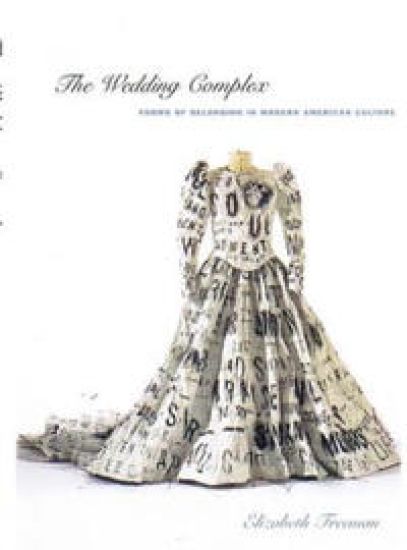
In The Wedding Complex Elizabeth Freeman explores the significance of the wedding ceremony by asking what the wedding becomes when you separate it from the idea of marriage. Freeman finds that weddings-as performances, fantasies, and rituals of transformation-are sites for imagining and enacting forms of social intimacy other than monogamous heterosexuality. Looking at the history of Anglo-American weddings and their depictions in American literature and popular culture from the antebellum era to the present, she reveals the cluster of queer desires at the heart of the "wedding complex"-longings not for marriage necessarily but for public forms of attachment, ceremony, pageantry, and celebration. Freeman draws on queer theory and social history to focus on a range of texts where weddings do not necessarily lead to legal marriage but instead reflect yearnings for intimate arrangements other than long-term, state-sanctioned, domestic couplehood. Beginning with a look at the debates over gay marriage, she proceeds to consider literary works by Nathaniel Hawthorne, William Faulkner, Carson McCullers, Vladimir Nabokov, and Edgar Allan Poe, along with such Hollywood films as Father of the Bride, The Graduate, and The Godfather. She also discusses less well-known texts such as Su Friedrich’s experimental film First Comes Love and the off-Broadway, interactive dinner play Tony ‘n’ Tina’s Wedding. Offering bold new ways to imagine attachment and belonging, and the public performance and recognition of social intimacy, The Wedding Complex is a major contribution to American studies, queer theory, and cultural studies.
The Wedding Complex

The Wedding Complex

Elizabeth Freeman

Duke University Press
2002
sidottu
In The Wedding Complex Elizabeth Freeman explores the significance of the wedding ceremony by asking what the wedding becomes when you separate it from the idea of marriage. Freeman finds that weddings-as performances, fantasies, and rituals of transformation-are sites for imagining and enacting forms of social intimacy other than monogamous heterosexuality. Looking at the history of Anglo-American weddings and their depictions in American literature and popular culture from the antebellum era to the present, she reveals the cluster of queer desires at the heart of the "wedding complex"-longings not for marriage necessarily but for public forms of attachment, ceremony, pageantry, and celebration. Freeman draws on queer theory and social history to focus on a range of texts where weddings do not necessarily lead to legal marriage but instead reflect yearnings for intimate arrangements other than long-term, state-sanctioned, domestic couplehood. Beginning with a look at the debates over gay marriage, she proceeds to consider literary works by Nathaniel Hawthorne, William Faulkner, Carson McCullers, Vladimir Nabokov, and Edgar Allan Poe, along with such Hollywood films as Father of the Bride, The Graduate, and The Godfather. She also discusses less well-known texts such as Su Friedrich’s experimental film First Comes Love and the off-Broadway, interactive dinner play Tony ‘n’ Tina’s Wedding. Offering bold new ways to imagine attachment and belonging, and the public performance and recognition of social intimacy, The Wedding Complex is a major contribution to American studies, queer theory, and cultural studies.