
Kirjailija
Elizabeth Hamilton
Kirjat ja teokset yhdessä paikassa: 26 kirjaa, julkaisuja vuosilta 1999–2022, suosituimpiin kuuluu Memoirs of Modern Philosophers. Vertaile teosten hintoja ja tarkista saatavuus suomalaisista kirjakaupoista.
26 kirjaa
Kirjojen julkaisuvuodet: 1999–2022.
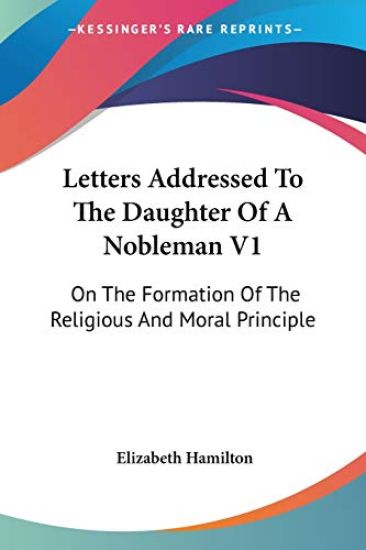
Letters Addressed To The Daughter Of A Nobleman V1
Elizabeth Hamilton
Kessinger Publishing
2007
pokkari
When the Anti-Jacobin Review described Memoirs of Modern Philosophers in 1800 as "the first novel of the day" and as proof that "all the female writers of the day are not corrupted by the voluptuous dogmas of Mary Godwin, or her more profligate imitators," they clearly situated Elizabeth Hamilton's work within the revolutionary debate of the 1790s. As with her successful first novel, Letters of a Hindoo Rajah, Hamilton uses fiction to enter the political fray and discuss issues such as female education, the rights of woman and new philosophy. The novel follows the plight of three heroines. The mock heroine, Bridgetina Botherim-a crude caricature of Mary Hays-participates in an English-Jacobin group, leading her to abandon her mother and home to pursue her beloved to London in hopes of emigrating to the Hottentots in Africa. The second heroine, Julia Delmont, is another member of the local group; she is seduced by a hairdresser masquerading as a New Philosopher. She is left pregnant and destitute only to discover that her actions caused her father's untimely death. The third heroine is the virtuous Harriet, whose Christian faith enables her to resist the teachings of the New Philosophers.
In Translation of the Letters of a Hindoo Rajah, Elizabeth Hamilton engages directly with the major issues of her day, from colonialism and the "New Philosophy" to the present state of literature and female education. Satirizing British society and incorporating material from a wide range of the orientalists' new translations of Indian writing, Hamilton's book is a key document in the debates which raged in England over the British role in India. It remains one of the most interesting political novels of the 18th century.