Kirjojen hintavertailu – 12 903 725 kirjaa ja 27 kauppaa
Kirjailija
Elizabeth Hinton
Kirjat ja teokset yhdessä paikassa: 11 kirjaa, julkaisuja vuosilta 2000–2024, suosituimpiin kuuluu January 6 and the Politics of History. Vertaile teosten hintoja ja tarkista saatavuus suomalaisista kirjakaupoista.
On January 6, 2021, more than two thousand rioters stormed the doors of the U. S. Capitol building in Washington, D. C., hoping to interrupt the peaceful transfer of power from former president Donald Trump to his successor, Joseph Biden. The deaths, property damage, and vicious rampage that ensued were witnessed on live television as an unprecedented attack on the democratic process and those who strive to protect it. As an installment of UGA Press’s History in the Headlines series, this book offers a rich discussion between highly respected scholars on the historical backdrop and context for contemporary issues from the headlines. In addition to the historical context, this conversation demonstrates how historians speak to one another about contentious topics and how they contribute in meaningful ways to the public’s understanding of momentous events. This volume focuses on the historical context of the January 6 attack and employs a free-flowing conversation style that allows the historians a more unconventional format. The participants discuss if—and if so, how—historians should engage in public debates and what that engagement means to their roles as academic authorities in the public.

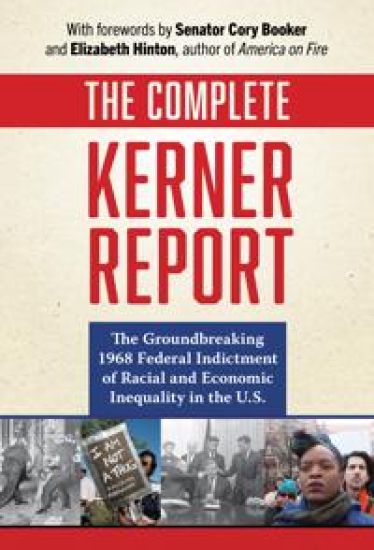
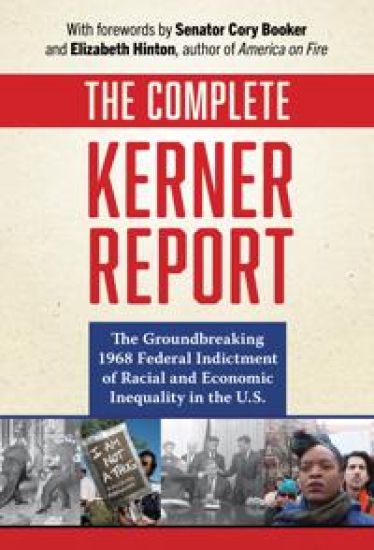
Given the present-day threats to American democracy and the deep political divisions ahead of the 2024 presidential election, Teachers College Press is publishing this federal report with a new introduction. The Kerner Commission Report was issued by the National Advisory Commission on Civil Disorders--a presidential commission established by President Lyndon B. Johnson to determine the causes of urban riots during the summer of 1967, and to provide suggestions for improving race relations. After 7 months of investigation, a groundbreaking report was released that sent shockwaves through the nation. Contrary to commonly held beliefs that largely blamed young Black men for the riots, the report pointed to a lack of economic opportunity, disastrous social service programs, white racism, police violence, and a biased national media. This federal report is being reissued to accompany the new book edited by Alan Curtis, Creating Justice in a Multiracial Democracy, which is a collection of essays by seminal scholars and activists on how the United States has (or has not) progressed since the Kerner Commission Report.
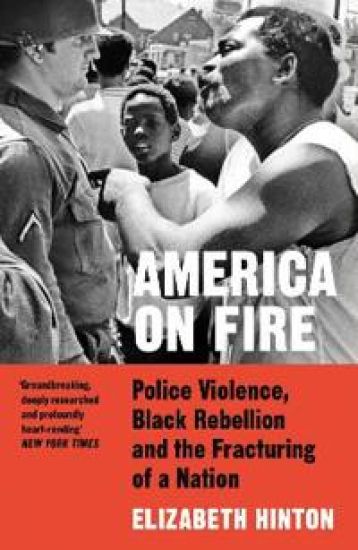
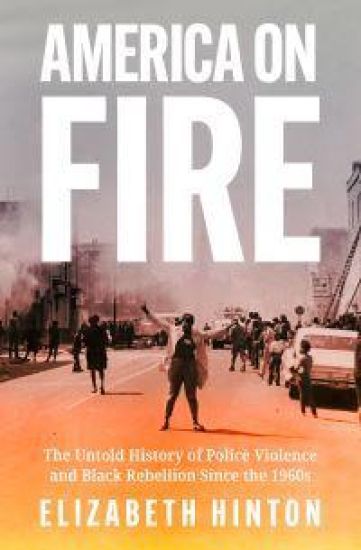
A New York Times Notable Book Best Books of 2021: TIME, Smithsonian New York Times Book Review • Editors' Choice A radical reckoning with the racial inequality of America’s past and present, by one of the country’s leading scholars of policing and mass incarceration Between 1964 and 1972, the United States endured domestic violence on a scale not seen since the Civil War. During these eight years, Black residents responded to police brutality and systemic racism by throwing punches and Molotov cocktails at police officers, plundering local businesses and vandalizing exploitative institutions. Ever since, Americans have been living in a nation and national culture created, in part, by the extreme violence of this period. In America on Fire, acclaimed professor Elizabeth Hinton draws on previously untapped sources to unravel this extraordinary history for the first time, arguing that we cannot understand the civil rights struggle without coming to terms with the astonishing violence, and hugely expanded policing regime, that followed it. A leading scholar of policing, Hinton underlines a crucial lesson in the book – that police violence precipitates community violence – and shows how it continues to escape policy makers, who respond by further criminalizing entire groups instead of addressing underlying socioeconomic causes. Taking us from the uprising in Watts, Los Angeles in 1965 to the murder of George Floyd in 2020, Hinton’s urgent, eye-opening and much-anticipated America on Fire offers an unprecedented framework for understanding the crisis at the country’s heart.
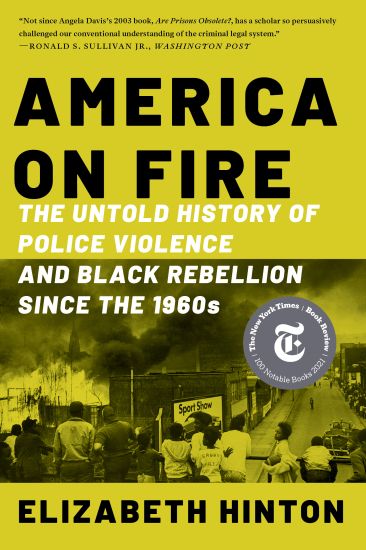
What began in spring 2020 as local protests in response to the killing of George Floyd by Minneapolis police quickly exploded into a massive nationwide movement. Millions of mostly young people defiantly flooded into the nation's streets, demanding an end to police brutality and to the broader, systemic repression of Black people and other people of color. To many observers, the protests appeared to be without precedent in their scale and persistence. Yet, as the acclaimed historian Elizabeth Hinton demonstrates in America on Fire, the events of 2020 had clear precursors--and any attempt to understand our current crisis requires a reckoning with the recent past. Even in the aftermath of Donald Trump, many Americans consider the decades since the civil rights movement in the mid-1960s as a story of progress toward greater inclusiveness and equality. Hinton's sweeping narrative uncovers an altogether different history, taking us on a troubling journey from Detroit in 1967 and Miami in 1980 to Los Angeles in 1992 and beyond to chart the persistence of structural racism and one of its primary consequences, the so-called urban riot. Hinton offers a critical corrective: the word riot was nothing less than a racist trope applied to events that can only be properly understood as rebellions--explosions of collective resistance to an unequal and violent order. As she suggests, if rebellion and the conditions that precipitated it never disappeared, the optimistic story of a post-Jim Crow United States no longer holds. Black rebellion, America on Fire powerfully illustrates, was born in response to poverty and exclusion, but most immediately in reaction to police violence. In 1968, President Lyndon Johnson launched the "War on Crime," sending militarized police forces into impoverished Black neighborhoods. Facing increasing surveillance and brutality, residents threw rocks and Molotov cocktails at officers, plundered local businesses, and vandalized exploitative institutions. Hinton draws on exclusive sources to uncover a previously hidden geography of violence in smaller American cities, from York, Pennsylvania, to Cairo, Illinois, to Stockton, California. The central lesson from these eruptions--that police violence invariably leads to community violence--continues to escape policymakers, who respond by further criminalizing entire groups instead of addressing underlying socioeconomic causes. The results are the hugely expanded policing and prison regimes that shape the lives of so many Americans today. Presenting a new framework for understanding our nation's enduring strife, America on Fire is also a warning: rebellions will surely continue unless police are no longer called on to manage the consequences of dismal conditions beyond their control, and until an oppressive system is finally remade on the principles of justice and equality.
'Groundbreaking, deeply researched and profoundly heart-rending' Peniel Joseph, New York Times A radical reckoning with the racial inequality of America's past and present, by one of the leading scholars of policing and mass incarceration in the US
A New York Times Notable BookBest Books of 2021: TIME, SmithsonianNew York Times Book Review * Editors' ChoiceA radical reckoning with the racial inequality of America's past and present, by one of the country's leading scholars of policing and mass incarceration
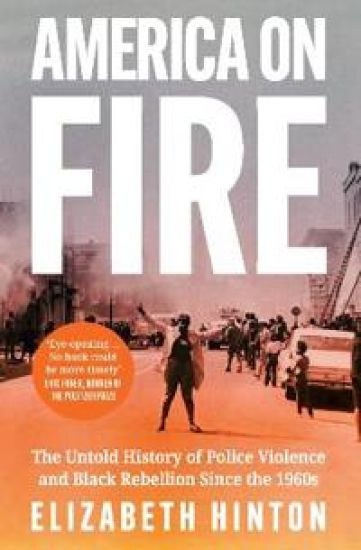
What began in spring 2020 as local protests in response to the killing of George Floyd by Minneapolis police quickly exploded into a massive nationwide movement. Millions of mostly young people defiantly flooded into the nation's streets, demanding an end to police brutality and to the broader, systemic repression of Black people and other people of color. To many observers, the protests appeared to be without precedent in their scale and persistence. Yet, as the acclaimed historian Elizabeth Hinton demonstrates in America on Fire, the events of 2020 had clear precursors--and any attempt to understand our current crisis requires a reckoning with the recent past. Even in the aftermath of Donald Trump, many Americans consider the decades since the civil rights movement in the mid-1960s as a story of progress toward greater inclusiveness and equality. Hinton's sweeping narrative uncovers an altogether different history, taking us on a troubling journey from Detroit in 1967 and Miami in 1980 to Los Angeles in 1992 and beyond to chart the persistence of structural racism and one of its primary consequences, the so-called urban riot. Hinton offers a critical corrective: the word riot was nothing less than a racist trope applied to events that can only be properly understood as rebellions--explosions of collective resistance to an unequal and violent order. As she suggests, if rebellion and the conditions that precipitated it never disappeared, the optimistic story of a post-Jim Crow United States no longer holds. Black rebellion, America on Fire powerfully illustrates, was born in response to poverty and exclusion, but most immediately in reaction to police violence. In 1968, President Lyndon Johnson launched the "War on Crime," sending militarized police forces into impoverished Black neighborhoods. Facing increasing surveillance and brutality, residents threw rocks and Molotov cocktails at officers, plundered local businesses, and vandalized exploitative institutions. Hinton draws on exclusive sources to uncover a previously hidden geography of violence in smaller American cities, from York, Pennsylvania, to Cairo, Illinois, to Stockton, California. The central lesson from these eruptions--that police violence invariably leads to community violence--continues to escape policymakers, who respond by further criminalizing entire groups instead of addressing underlying socioeconomic causes. The results are the hugely expanded policing and prison regimes that shape the lives of so many Americans today. Presenting a new framework for understanding our nation's enduring strife, America on Fire is also a warning: rebellions will surely continue unless police are no longer called on to manage the consequences of dismal conditions beyond their control, and until an oppressive system is finally remade on the principles of justice and equality.
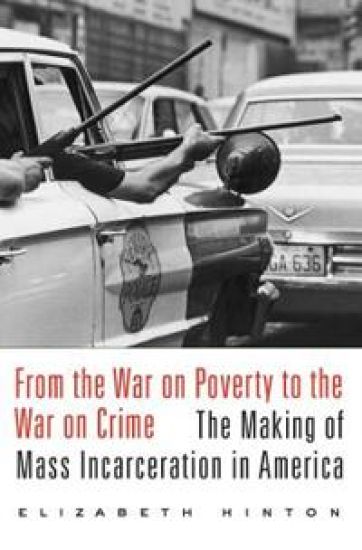
Co-Winner of the Thomas J. Wilson Memorial PrizeA New York Times Notable Book of the YearA New York Times Book Review Editors’ ChoiceA Wall Street Journal Favorite Book of the YearA Choice Outstanding Academic Title of the YearA Publishers Weekly Favorite Book of the YearIn the United States today, one in every thirty-one adults is under some form of penal control, including one in eleven African American men. How did the “land of the free” become the home of the world’s largest prison system? Challenging the belief that America’s prison problem originated with the Reagan administration’s War on Drugs, Elizabeth Hinton traces the rise of mass incarceration to an ironic source: the social welfare programs of Lyndon Johnson’s Great Society at the height of the civil rights era.“An extraordinary and important new book.”—Jill Lepore, New Yorker“Hinton’s book is more than an argument; it is a revelation…There are moments that will make your skin crawl…This is history, but the implications for today are striking. Readers will learn how the militarization of the police that we’ve witnessed in Ferguson and elsewhere had roots in the 1960s.”—Imani Perry, New York Times Book Review
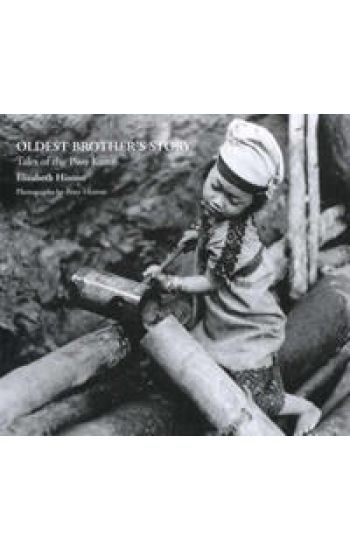
Writer Elizabeth Hinton collected and translated the folktales in this volume during her stay in the Pwo Karen village of Dong Luang in the hills of northern Thailand, in 1968 and 1969. She places the stories in the context of the people she knew there, endearingly framed by their human relationships, daily routines, and cycle of seasons—indeed, the very stuff from which the stories themselves spring. The tales are woven into the village’s unchanging agrarian rhythm: sowing in the hot season, weeding during the early rains, waiting through the monsoons, and harvesting in the cool season. In a society where people did not read or write, listen to the radio, or watch television, stories were of great importance. Stories entertained, transmitted history, taught right and wrong, and defined the Karen view of the world. They were also touching human dramas—and literature in their own right. The stories in this collection were recorded during evenings spent chatting by firelight. Most of the stories were told by Grandfather Pai, whose skill in storytelling was unsurpassed, but stories were told by anyone with a story to tell, whenever there were people to listen. Peter Hinton’s evocative photographs of village people and society enliven the text, creating a unique and intimate portrayal of a Karen community that has remained intact in the midst of a changing Thailand.