Kirjojen hintavertailu – 12 859 827 kirjaa ja 27 kauppaa

Kirjailija

Elizabeth Plain

Kirjat ja teokset yhdessä paikassa: 6 kirjaa, julkaisuja vuosilta 2013–2017, suosituimpiin kuuluu Inu to Fue: The Dogs and the Flute. Vertaile teosten hintoja ja tarkista saatavuus suomalaisista kirjakaupoista.

6 kirjaa

Kirjojen julkaisuvuodet: 2013–2017.

Inu to Fue: The Dogs and the Flute

Inu to Fue: The Dogs and the Flute

Ryunosuke Akutagawa; Elizabeth Plain

Createspace Independent Publishing Platform
2017
nidottu
JAPANESE EDITION with notes in English A lively introduction to Japanese literature by world famous author Akutagawa Rynosuke Kami-naga-hiko lives in the ancient Japanese province of Yamato. He makes his living as a wood-cutter, but he is also an exceptionally talented musician. One day, a mountain god, who has been captivated by the sound of Kami-naga-hiko's playing, offers to give him anything, anything he cares to mention, in grateful thanks for the joy that his music brings. At first the god is astonished that Kami-naga-hiko asks only for a dog, but then, pleased by the modesty of the request, he promises that the dog will be the most wonderful one in all the world. This unexpected visitation and miraculous gift are, however, just the beginning of Kami-naga-hiko's adventures and he soon finds himself on a quest to rescue a pair of nobly born sisters from the clutches of their not entirely human abductors. The story is written in a straightforward way and in it elements of Japanese folklore are skilfully combined with some of the traditional traits of European fairy stories. It was written for a juvenile audience and first published in the Akai Tori magazine in 1919. Despite its age, the plot-line may seem familiar to fans of modern-day anime and manga, as the story revolves around an apparently unlikely hero who encounters samurai warriors and a variety of super-natural beings as he battles his way to a (hopefully) happy ending. This edition features: - Modern Japanese text - Kanji with furigana readings - Detailed notes in English *Recommended for intermediate students. About the author: - Akutagawa Ryunosuke (1892 - 1927) is probably best known for literary works such as Rashomon, Hell-screen and Kappa, and it is a tribute to his standing as a writer that several of his short stories are well-known in the West and have been available in English translation for many years. The few stories that he wrote for a younger audience (of which Inu to Fue is one) are less well known, but none the less well-crafted. Other books in this series include: Taketori Monogatari - retold by Dr. Mankichi Wada Niwa - Two Tales - (Matsuri no Ban and Futari no Yakunin) - by Kenji Miyazawa
Niwa: Two Tales: Matsuri No Ban and Futari No Yakunin

Niwa: Two Tales: Matsuri No Ban and Futari No Yakunin

Kenji Miyazawa; Elizabeth Plain

Createspace Independent Publishing Platform
2014
nidottu
JAPANESE EDITION with notes in English Two tales from the master storyteller Kenji Miyazawa Matsuri no Ban - Ryoji goes to the autumn festival that takes place in the village near his home. There he encounters a giant man with eyes the colour of "grubby gold." Is he, as the villagers claim, the Mountain Man of legend and is Ryoji wise to try to help him? Kenji Miyazawa is well known for his tales of fantasy, but this story, although it contains an element of the supernatural, is firmly based in reality. Futari no Yakunin - Very early one Sunday morning, two young boys set out to visit the fields outside the town where they live. When they are nearly at their destination they find that a notice board has been erected telling the public to "Keep Out." Despite the warning they decide to continue with their outing... Told in the first person, this is a superb example of Miyazawa's "un-magical" writing. The characters and locations are acutely observed and lovingly described in a way which powerfully evokes the lost days of childhood. In both these stories the characters very often speak colloquially, using language that is outside the province of most language learning text-books. Because of this extra pains have been taken to highlight and explain idiomatic expressions and contractions in speech and, although it is never possible to make a word for word translation from one language to another, all the speech has been translated, as literally as possible, into English. This Japanese-English edition features: - Modern Japanese text - Kanji with furigana readings - Detailed notes in English *Recommended for intermediate and advanced students. About the author: - Kenji Miyazawa (1896-1933) is often referred to as a writer of children's literature, but although his stories may appear simple they are far from child-like in conception or execution. Among his best known tales are Gingatetsudo no Yoru and Cello Hiki no Goshu both of which been made into animated films. Other books in this series include: Taketori Monogatari - retold by Dr. Mankichi Wada Inu to Fue - by Akutagawa Ryunosuke
Taketori Monogatari: The Tale of the Bamboo-Cutter

Taketori Monogatari: The Tale of the Bamboo-Cutter

Mankichi Wada; Elizabeth Plain

Createspace Independent Publishing Platform
2014
nidottu
JAPANESE EDITION with notes in English A Gentle Introduction to Japanese Literature Taketori Monogatari is the classic tale of the mysterious moon-child Kaguyahime and the unsettling effect that she has on the lives of all those around her. The story is one of the earliest surviving works of Japanese literary fiction and in this edition it has been interpreted for modern readers by a specialist in ancient texts, Dr. Mankichi Wada. It is written in a straightforward, elegant style and although the premise of the tale is fantastic, the characters and the situations in which they find themselves are described with realism, pathos and humor. This Japanese-English edition features: - Modern Japanese text - Kanji with furigana readings - Detailed notes in English *Recommended for advanced beginner and intermediate students. About the author: - Mankichi Wada (1865-1934) was a highly respected scholar of ancient texts and a pioneer of library science in Japan. His other works include classics such Noh Plays and Montanus Nihon Shi, a translation of, and commentary on, Ogildby's 1670 English version of Arnoldus Montanus' Atlas Japannensis. Other books in this series include: Niwa - Two Tales (Matsuri no Ban, Futari no Yakunin) - by Kenji Miyazawa Inu to Fue - by Akutagawa Ryunosuke
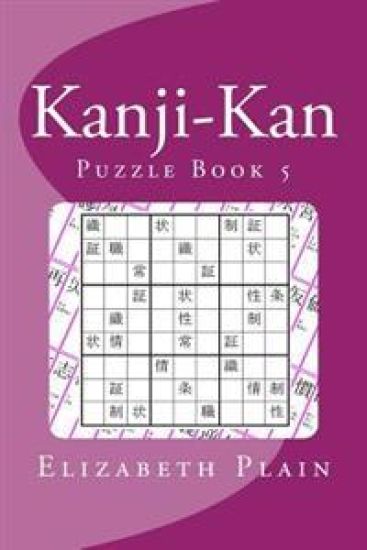
Kanji-Kan: Puzzle Book 3

Kanji-Kan: Puzzle Book 3

Elizabeth Plain

Createspace Independent Publishing Platform
2013
nidottu
Read, Write and Remember Kanji. The puzzles in this book focus on the 200 kanji that are taught in the third year of compulsory education in Japan. These kanji are essential for daily life and therefore appear in the JLPT examinations (new levels 4 and 3 upwards). In addition to 100 puzzles and their solutions, the book contains clearly set out examples for each of the kanji, with on and kun readings for each character. There are also detailed word lists which give examples of at least 400 commonly used words, with readings in hiragana and translations in English. Kanji-Kan are not complicated to do and everyone who has completed a Sudoku puzzle should feel instantly at home. Each puzzle is based on a 9 x 9 grid. Some cells in each grid have been completed already and all you need to do is identify the missing characters and fill in the empty cells. The rules are simple: - A kanji can be used only once in each row - A kanji can be used only once in each column - A kanji can be used only once in each small 3 x 3 block Where to begin? Learn 9 new kanji and then complete a puzzle, or simply dive in and see how many you know already? The choice is yours...