Kirjojen hintavertailu – 12 903 725 kirjaa ja 27 kauppaa

Kirjailija

Elizabeth R. Baer

Kirjat ja teokset yhdessä paikassa: 4 kirjaa, julkaisuja vuosilta 2007–2017, suosituimpiin kuuluu Gender in Conflicts. Vertaile teosten hintoja ja tarkista saatavuus suomalaisista kirjakaupoista.

4 kirjaa

Kirjojen julkaisuvuodet: 2007–2017.

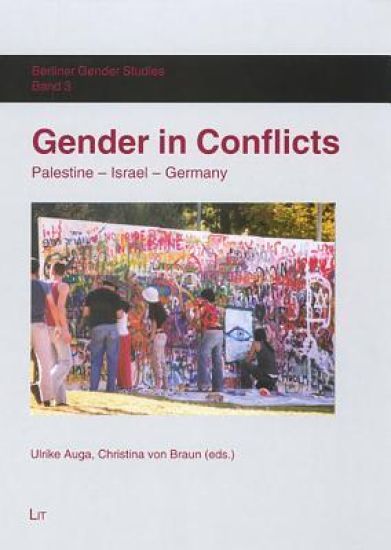
Gender in Conflicts

Gender in Conflicts

Theodore Zev Weiss; Christina von Braun; Jurgen Zimmerer; Annette Becker; Kate Brown; Omer Bartov; Na'ama Shik; Elizabeth R. Baer; Dori Laub

Lit Verlag
2007
nidottu
Gender order is one domain in which claims to power are demarcated in societies based on a religious codex as well as in secular societies such as nation-states. Gender order especially becomes the area in which conflicts are carried out when a society experiences transition or clashes with another society. At a time when Israel and Palestine face an escalation of their conflict and Germany is undergoing profound changes, renowned scholars discuss the implications on the gender order from their individual vantage points. The transdisciplinary articles focus on Gender in the context of Knowledge, Arts and Representation, Memory and Scripture, Political Transition, and Life Sciences. "Ulrike Auga" is assistant professor at Humboldt University, Berlin (Germany). "Christina von Braun" is the head of the Chair for Cultural History and Gender at Humboldt University, Berlin.
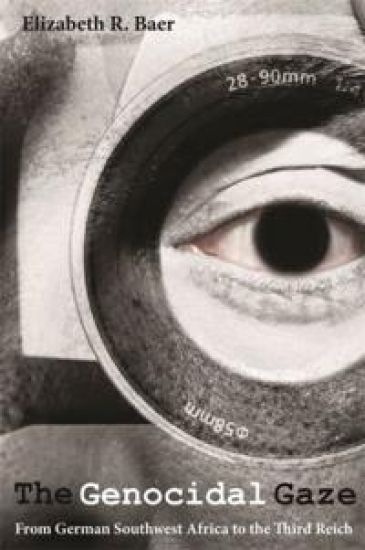
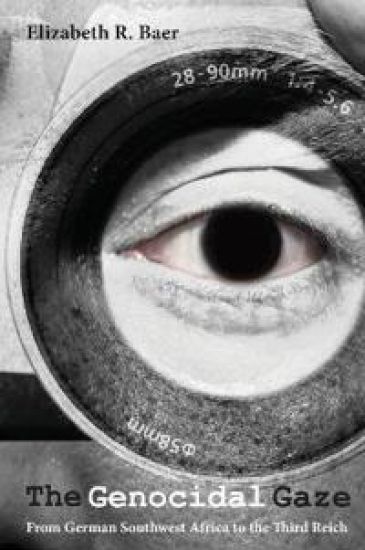
The Genocidal Gaze

The Genocidal Gaze

Elizabeth R. Baer

Wayne State University Press
2017
sidottu
Examines literature and art to reveal the German genocidal gaze in Africa and the Holocaust. The first genocide of the twentieth century, though not well known, was committed by Germans between 1904–1907 in the country we know today as Namibia, where they exterminated thousands of Herero and Nama people and subjected the surviving indigenous men, women, and children to forced labor. The perception of Africans as subhuman—lacking any kind of civilization, history, or meaningful religion—and theresulting justification for the violence against them is what author Elizabeth R. Baer refers to as the “genocidal gaze,” an attitude that was later perpetuated by the Nazis. In The Genocidal Gaze: From German Southwest Africa to the Third Reich, Baer uses the trope of the gaze to trace linkages between the genocide of the Herero and Nama and that of the victims of the Holocaust. Baer also considers the African gaze of resistance returned by the indigenous people and their leaders upon the German imperialists. Baer explores the threads of shared ideology in the Herero and Nama genocide and the Holocaust—concepts such as racial hierarchies, lebensraum (living space), rassenschande (racial shame), and endlösung (final solution) that were deployed by German authorities in 1904 and again in the 1930s and 1940s to justify genocide. She also notes the use of shared methodology—concentration camps, death camps, intentional starvation, rape, indiscriminate killing of women and children—in both instances. While previous scholars have made these links between the Herero and Nama genocide and that of the Holocaust, Baer’s book is the first to examine literary texts that demonstrate this connection. Texts under consideration include the archive of Nama revolutionary Hendrik Witbooi; a colonial novel by German Gustav Frenssen (1906), in which the genocidal gaze conveyed an acceptance of racial annihilation; and three post-Holocaust texts that critique the genocidal gaze. Baer posits that writing and reading about the gaze is an act of mediation, a power dynamic that calls those who commit genocide to account for their crimes and discloses their malignant convictions. Her transnational analysis provides the groundwork for future studies of links between imperialism and genocide, links among genocides, and the devastating impact of the genocidal gaze.
The Genocidal Gaze

The Genocidal Gaze

Elizabeth R. Baer

Wayne State University Press
2017
nidottu
Examines literature and art to reveal the German genocidal gaze in Africa and the Holocaust. The first genocide of the twentieth century, though not well known, was committed by Germans between 1904–1907 in the country we know today as Namibia, where they exterminated thousands of Herero and Nama people and subjected the surviving indigenous men, women, and children to forced labor. The perception of Africans as subhuman—lacking any kind of civilization, history, or meaningful religion—and theresulting justification for the violence against them is what author Elizabeth R. Baer refers to as the “genocidal gaze,” an attitude that was later perpetuated by the Nazis. In The Genocidal Gaze: From German Southwest Africa to the Third Reich, Baer uses the trope of the gaze to trace linkages between the genocide of the Herero and Nama and that of the victims of the Holocaust. Baer also considers the African gaze of resistance returned by the indigenous people and their leaders upon the German imperialists. Baer explores the threads of shared ideology in the Herero and Nama genocide and the Holocaust—concepts such as racial hierarchies, lebensraum (living space), rassenschande (racial shame), and endlösung (final solution) that were deployed by German authorities in 1904 and again in the 1930s and 1940s to justify genocide. She also notes the use of shared methodology—concentration camps, death camps, intentional starvation, rape, indiscriminate killing of women and children—in both instances. While previous scholars have made these links between the Herero and Nama genocide and that of the Holocaust, Baer’s book is the first to examine literary texts that demonstrate this connection. Texts under consideration include the archive of Nama revolutionary Hendrik Witbooi; a colonial novel by German Gustav Frenssen (1906), in which the genocidal gaze conveyed an acceptance of racial annihilation; and three post-Holocaust texts that critique the genocidal gaze. Baer posits that writing and reading about the gaze is an act of mediation, a power dynamic that calls those who commit genocide to account for their crimes and discloses their malignant convictions. Her transnational analysis provides the groundwork for future studies of links between imperialism and genocide, links among genocides, and the devastating impact of the genocidal gaze.
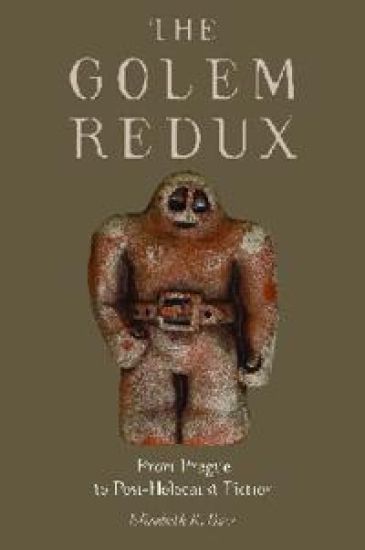
The Golem Redux

The Golem Redux

Elizabeth R. Baer

Wayne State University Press
2012
nidottu
First mentioned in the Book of Psalms in the Hebrew Bible, the golem is a character in an astonishing number of post-Holocaust Jewish-American novels and has served as inspiration for such varied figures as Mary Shelley s monster in her novel Frankenstein, a frightening character in the television series The X-Files, and comic book figures such as Superman and the Hulk. In The Golem Redux: From Prague to Post-Holocaust Fiction, author Elizabeth R. Baer introduces readers to these varied representations of the golem and traces the history of the golem legend across modern pre- and post-Holocaust culture. In five chapters, The Golem Redux examines the different purposes for which the golem has been used in literature and what makes the golem the ultimate text and intertext for modern Jewish writers. Baer begins by introducing several early manifestations of the golem legend, including texts from the third and fourth centuries and from the medieval period; Prague’s golem legend, which is attributed to the Maharal, Rabbi Judah Loew; the history of the Josefov, the Jewish ghetto in Prague, the site of the golem legend; and versions of the legend by Yudl Rosenberg and Chayim Bloch, which informed and influenced modern intertexts. In the chapters that follow, Baer traces the golem first in pre-Holocaust Austrian and German literature and film and later in post-Holocaust American literature and popular culture, arguing that the golem has been deployed very differently in these two contexts. Where prewar German and Austrian contexts used the golem as a signifier of Jewish otherness to underscore growing anti-Semitic cultural feelings, post-Holocaust American texts use the golem to depict the historical tragedy of the Holocaust and to imagine alternatives to it. In this section, Baer explores traditional retellings by Isaac Bashevis Singer and Elie Wiesel, the considerable legacy of the golem in comics, Michael Chabon s The Amazing Adventures of Kavalier and Clay, and, finally, Golems to the Rescue in twentieth- and twenty-first-century works of film and literature, including those by Cynthia Ozick, Thane Rosenbaum, and Daniel Handler. By placing the Holocaust at the centre of her discussion, Baer illustrates how the golem works as a self-conscious intertextual character who affirms the value of imagination and story in Jewish tradition. Students and teachers of Jewish literature and cultural history, film studies, and graphic novels will appreciate Baer s pioneering and thought-provoking volume.