Kirjojen hintavertailu – 12 903 725 kirjaa ja 27 kauppaa

Kirjailija

Elizabeth R. Varon

Kirjat ja teokset yhdessä paikassa: 9 kirjaa, julkaisuja vuosilta 2005–2020, suosituimpiin kuuluu Secession Winter. Vertaile teosten hintoja ja tarkista saatavuus suomalaisista kirjakaupoista.

9 kirjaa

Kirjojen julkaisuvuodet: 2005–2020.

Secession Winter

Secession Winter

Robert J. Cook; William L. Barney; Elizabeth R. Varon

Johns Hopkins University Press
2013
sidottu
Politicians and opinion leaders on both sides of the Mason-Dixon line struggled to formulate coherent responses to the secession of the deep South states. The Confederate attack on Fort Sumter in mid-April 1861 triggered civil war and the loss of four upper South states from the Union. The essays by three senior historians in "Secession Winter" explore the robust debates that preceded these events. For five months in the winter of 1860-1861, Americans did not know for certain that civil war was upon them. Some hoped for a compromise; others wanted a fight. Many struggled to understand what was happening to their country. Robert J. Cook, William L. Barney, and Elizabeth R. Varon take approaches to this period that combine political, economic, and social-cultural lines of analysis. Rather than focus on whether civil war was inevitable, they look at the political process of secession and find multiple internal divisions-political parties, whites and nonwhites, elites and masses, men and women. Even individual northerners and southerners suffered inner conflicts. The authors include the voices of Unionists and Whig party moderates who had much to lose and upcountry folk who owned no slaves and did not particularly like those who did. Barney contends that white southerners were driven to secede by anxiety and guilt over slavery. Varon takes a new look at Robert E. Lee's decision to join the Confederacy. Cook argues that both northern and southern politicians claimed the rightness of their cause by constructing selective narratives of historical grievances. "Secession Winter" explores the fact of contingency and reminds readers and students that nothing was foreordained.
Secession Winter

Secession Winter

Robert J. Cook; William L. Barney; Elizabeth R. Varon

Johns Hopkins University Press
2013
pokkari
Politicians and opinion leaders on both sides of the Mason-Dixon line struggled to formulate coherent responses to the secession of the deep South states. The Confederate attack on Fort Sumter in mid-April 1861 triggered civil war and the loss of four upper South states from the Union. The essays by three senior historians in "Secession Winter" explore the robust debates that preceded these events. For five months in the winter of 1860-1861, Americans did not know for certain that civil war was upon them. Some hoped for a compromise; others wanted a fight. Many struggled to understand what was happening to their country. Robert J. Cook, William L. Barney, and Elizabeth R. Varon take approaches to this period that combine political, economic, and social-cultural lines of analysis. Rather than focus on whether civil war was inevitable, they look at the political process of secession and find multiple internal divisions-political parties, whites and nonwhites, elites and masses, men and women. Even individual northerners and southerners suffered inner conflicts. The authors include the voices of Unionists and Whig party moderates who had much to lose and upcountry folk who owned no slaves and did not particularly like those who did. Barney contends that white southerners were driven to secede by anxiety and guilt over slavery. Varon takes a new look at Robert E. Lee's decision to join the Confederacy. Cook argues that both northern and southern politicians claimed the rightness of their cause by constructing selective narratives of historical grievances. "Secession Winter" explores the fact of contingency and reminds readers and students that nothing was foreordained.
Armies of Deliverance

Armies of Deliverance

Elizabeth R. Varon

Oxford University Press Inc
2020
nidottu
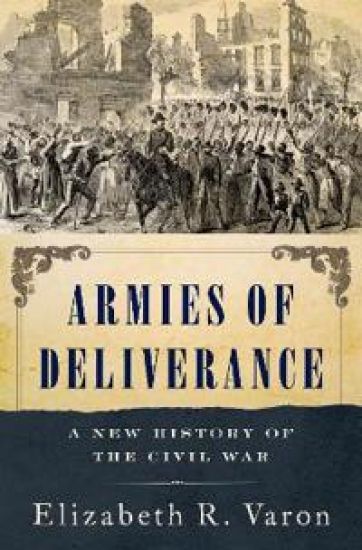
In Armies of Deliverance, Elizabeth R. Varon argues that Northerners imagined the war as a crusade to deliver the Southern masses from slaveholder domination and to bring democracy, prosperity, and education to the region. And that Confederates, fighting to establish an independent slaveholding republic, were determined to preempt, discredit, and silence Yankee appeals to the Southern masses. Interweaving military and social history, Varon shows how theUnion's politics of deliverance helped it to win the war but also ultimately sowed the seeds of postwar discord.
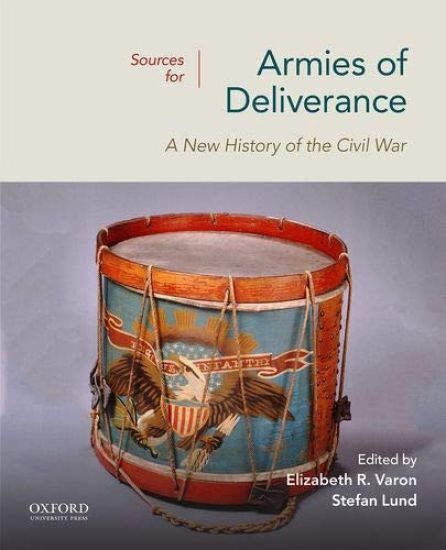
Sources for Armies of Deliverance: A New History of the Civil War

Sources for Armies of Deliverance: A New History of the Civil War

Elizabeth R. Varon; Stefan Lund

Oxford University Press
2020
nidottu
Designed to accompany Armies of Deliverance: A New History of the Civil War, College Edition, by Elizabeth R. Varon, Sources for Armies of Deliverance: A New History of the Civil War features at least five sources per chapter that highlight key themes in the study of the Civil War. In addition to essential documents that chart the political and military course of the war, sources include photographs, posters, lyrics, diary entries, and letters. The volume begins with a special unit, "How to Read a Primary Source," that provides students with important advice on how to work with textual documents in studying the past. Each source is accompanied by a headnote and study questions.
Armies of Deliverance

Armies of Deliverance

Elizabeth R. Varon

Oxford University Press Inc
2019
sidottu
Loyal Americans marched off to war in 1861 not to conquer the South but to liberate it. In Armies of Deliverance, Elizabeth Varon offers both a sweeping narrative of the Civil War and a bold new interpretation of Union and Confederate war aims. Lincoln's Union coalition sought to deliver the South from slaveholder tyranny and deliver to it the blessings of modern civilization. Over the course of the war, supporters of black freedom built the case that slavery was the obstacle to national reunion and that emancipation would secure military victory and benefit Northern and Southern whites alike. To sustain their morale, Northerners played up evidence of white Southern Unionism, of antislavery progress in the slaveholding border states, and of disaffection among Confederates. But the Union's emphasis on Southern deliverance served, ironically, not only to galvanize loyal Amer icans but also to galvanize disloyal ones. Confederates, fighting to establish an independent slaveholding republic, scorned the Northern promise of liberation and argued that the emancipation of blacks was synonymous with the subjugation of the white South. Interweaving military strategy, political decision-making, popular culture, and private reflections, Varon shows that contests over war aims took place at every level of society within the Union and Confederacy. Everyday acts on the ground--scenes of slave flight, of relief efforts to alleviate suffering, of protests against the draft, of armies plundering civilian homes, of civilian defiance of military occupation, of violence between neighbors, of communities mourning the fallen--reverberated at the highest levels of governance. In this book, major battles receive extensive treatment, providing windows into how soldiers and civilians alike coped with physical and emotional toll of the war, as it escalated into a massive humanitarian crisis. Although the Union's politics of deliverance helped to bring military victory, such appeals ultimately failed to convince Confederates to accept peace on the victor's terms.
Appomattox

Appomattox

Elizabeth R. Varon

Oxford University Press Inc
2015
nidottu
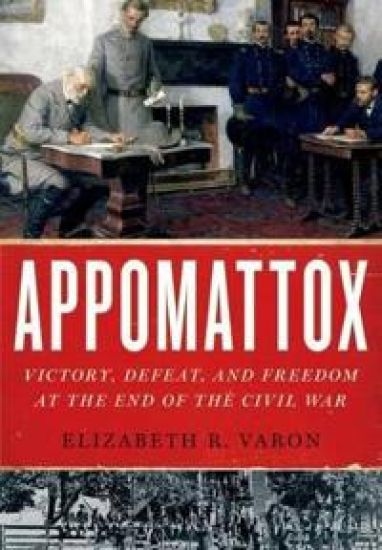
Winner of the Dan and Marilyn Laney Prize of the Austin Civil War Round Table Finalist, Jefferson Davis Award of the Museum of the Confederacy Finalist, Library of Virginia Literary Award for Nonfiction Lee's surrender to Grant at Appomattox Court House evokes a highly gratifying image in the popular mind -- it was, many believe, a moment that transcended politics, a moment of healing, a moment of patriotism untainted by ideology. But as Elizabeth Varon reveals in this vividly narrated history, this rosy image conceals a seething debate over precisely what the surrender meant and what kind of nation would emerge from war. The combatants in that debate included the iconic Lee and Grant, but they also included a cast of characters previously overlooked, who brought their own understanding of the war's causes, consequences, and meaning. In Appomattox, Varon deftly captures the events swirling around that well remembered-but not well understood-moment when the Civil War ended. She expertly depicts the final battles in Virginia, when Grant's troops surrounded Lee's half-starved army, the meeting of the generals at the McLean House, and the shocked reaction as news of the surrender spread like an electric charge throughout the nation. But as Varon shows, the ink had hardly dried before both sides launched a bitter debate over the meaning of the war. For Grant, and for most in the North, the Union victory was one of right over wrong, a vindication of free society; for many African Americans, the surrender marked the dawn of freedom itself. Lee, in contrast, believed that the Union victory was one of might over right: the vast impersonal Northern war machine had worn down a valorous and unbowed South. Lee was committed to peace, but committed, too, to the restoration of the South's political power within the Union and the perpetuation of white supremacy. Lee's vision of the war resonated broadly among Confederates and conservative northerners, and inspired Southern resistance to reconstruction. Did America's best days lie in the past or in the future? For Lee, it was the past, the era of the founding generation. For Grant, it was the future, represented by Northern moral and material progress. They held, in the end, two opposite views of the direction of the country-and of the meaning of the war that had changed that country forever.
Appomattox

Appomattox

Elizabeth R. Varon

Oxford University Press Inc
2013
sidottu
General Robert E. Lee's surrender of the Army of Northern Virginia to General Ulysses S. Grant's Army of the Potomac might look serene in the amber-tinted popular images of two gentlemen sharing cigars, but that image conceals seething debate over precisely what the surrender meant and what kind of United States would emerge from war. The combatants in that debate included the iconic Lee and Grant, but they also included a cast of characters previously overlooked, who brought their own understanding of the war's causes, consequences, and meaning. Whereas April 1865 has been commonly viewed as a clear breaking point, Elizabeth Varon's Appomattox promises to connect the war to the immediate postwar in ways that have the potential to tell us far more than we currently know about how the creative potential generated by the destruction of war went unfulfilled in the decades that followed. Painting a portrait of this event between the triumphalist version of 1865 as a moment of strength and healing and a more persuasive but still incomplete portrait of the postwar painted by David Blight in Race and Reunion, Varon's work seeks to examine the surrender at Appomattox with an eye toward (a) narrating the events of April 1865, (b) exploring the immediate reactions, North and South, to the surrender, (c) exploring the political uses of the surrender during Reconstruction, and (d) challenging the popular, and comforting, perception that Appomattox inaugurated an easy end to a tragic war by beginning a process of reunion that reminded Americans that they were, after all, one people who shared far more similarities than differences. Varon will bring African American voices and attitudes into a story typically limited to white actors.
Southern Lady, Yankee Spy

Southern Lady, Yankee Spy

Elizabeth R. Varon

Oxford University Press Inc
2005
nidottu
Northern sympathizer in the Confederate capital, daring spymaster, postwar politician: Elizabeth Van Lew was one of the most remarkable figures in American history, a woman who defied the conventions of the nineteenth-century South. In Southern Lady, Yankee Spy, historian Elizabeth Varon provides a gripping, richly researched account of the woman who led what one historian called "the most productive espionage operation of the Civil War." Under the nose of the Confederate government, Van Lew ran a spy ring that gathered intelligence, hampered the Southern war effort, and helped scores of Union soldiers to escape from Richmond prisons. Varon describes a woman who was very much a product of her time and place, yet continually took controversial stands--from her early efforts to free her family's slaves, to her daring wartime activities and beyond. Varon's powerful biography brings Van Lew to life, showing how she used the stereotypes of the day to confound Confederate authorities (who suspected her, but could not believe a proper Southern lady could be a spy), even as she brought together Union sympathizers at all levels of society, from slaves to slaveholders. After the war, a grateful President Ulysses S. Grant named her postmaster of Richmond--a remarkable break with custom for this politically influential post. But her Unionism, Republican politics, and outspoken support of racial justice earned her a lifetime of scorn in the former Confederate capital. Even today, Elizabeth Van Lew remains a controversial figure in her beloved Richmond, remembered as the "Crazy Bet" of Lost Cause propaganda. Elizabeth Varon's account rescues her from both derision and oblivion, depicting an intelligent, resourceful, highly principled woman who remained, as she saw it, true to her country to the end.