Kirjojen hintavertailu – 12 903 725 kirjaa ja 27 kauppaa

Kirjailija

Elizabeth Tucker

Kirjat ja teokset yhdessä paikassa: 8 kirjaa, julkaisuja vuosilta 2005–2018, suosituimpiin kuuluu Haunted Southern Tier. Vertaile teosten hintoja ja tarkista saatavuus suomalaisista kirjakaupoista.

8 kirjaa

Kirjojen julkaisuvuodet: 2005–2018.

Harald Szeemann - Selected Writings

Harald Szeemann - Selected Writings

Harald Szeemann; Doris Chon; Glenn Phillips; Pietro Rigolo; Jonathan Blower; Elizabeth Tucker

Getty Publications
2018
nidottu

Halvin toimitettuna 57,50 €

Born in Bern, Switzerland in 1933, Harald Szeemann was a crucial force in identifying, exhibiting, and writing about the important new movements in postwar contemporary art. This collection of seventy-four texts from the curator's vast body of written work-which includes essays, lectures, studio notes, reviews, interviews, correspondence, and transcripts-introduces the depth of his method, insight, and inclusive artistic interests. The pieces have been translated from German and French and collected in an informed, authoritative edition, making this the first time Szeemann's work is accessible in English. The first two sections of this volume republish Szeemann's anthologies "Museum der Obsessionen" (1981) and "Individuelle Mythologien" (1985). The final part assembles important writing from 1986 until his death in 2005 to represent the later years of his career and round out a record of his contribution to and dialogue with later twentieth century art and artists. The book's publication coincides with the opening of the Getty Research Institute's exhibition Harald Szeemann: Museum of Obsessions, as well as a satellite show that recreates on Szeemann's "Grandfather exhibition" at the Institute of Contempoary Art, Los Angeles.

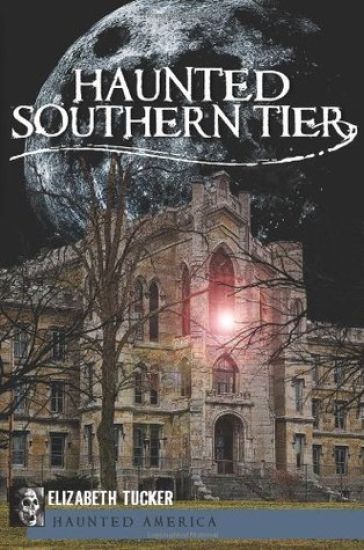
Haunted Southern Tier

Haunted Southern Tier

Elizabeth Tucker

History Press
2011
nidottu
New York's Southern Tier and its many communities abound with legends about strange, intriguing events. Stories of ghosts and other supernatural phenomena create an aura of foreboding and mystery in upstate New York. Tortured souls try to escape from the Inebriate Asylum in Binghamton; Native American treasure lies buried beneath the banks of the Susquehanna River; grandeur and heartbreak haunt Wellsville's Pink House; and locals speculate about the identity of a young woman in white who walks Devil's Bend in Owego. Local learning institutions are also fraught with otherworldly beings--Elmira College, SUNY Fredonia and Binghamton University students all have long told stories about the paranormal. Folklorist Elizabeth Tucker tells these and other eerie legends of haunted homes, mansions, churches, parks and cemeteries of the Southern Tier.
Haunted Southern Tier

Haunted Southern Tier

Elizabeth Tucker

History Press Library Editions
2011
sidottu
New York's Southern Tier and its many communities abound with legends about strange, intriguing events. Stories of ghosts and other supernatural phenomena create an aura of foreboding and mystery. Tortured souls try to escape from the Inebriate Asylum in Binghamton; Native American treasure lies buried beneath the banks of the Susquehanna River; grandeur and heartbreak haunt Wellsville's Pink House; and locals speculate about the identity of a young woman in white who walks "Devil's Bend" in Owego. Local learning institutions are also fraught with otherworldly beings--Elmira College, SUNY Fredonia and Binghamton University students all tell stories about the paranormal. Folklorist Elizabeth Tucker tells these and other eerie legends of haunted homes, mansions, churches, parks and cemeteries of the Southern Tier.
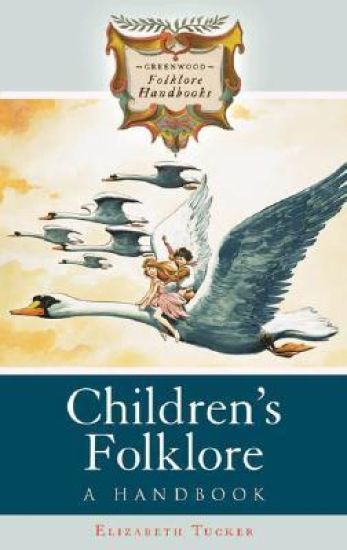
Children's Folklore

Children's Folklore

Elizabeth Tucker

Greenwood Press
2008
sidottu
Children have their own games, stories, riddles, and so forth. This book gives students and general readers an introduction to children's folklore. Included are chapters on the definition and classification of children's folklore, the presence of children's folklore in literature and popular culture, and the scholarly interpretation of children's folklore. The volume also includes a wide range of examples and texts demonstrating the variety of children's folklore around the world. Children have always had their own games, stories, riddles, jokes, and so forth. Many times, children's folklore differs significantly from the folklore of the adult world, as it reflects the particular concerns and experiences of childhood. In the late 19th century, children's folklore began receiving growing amounts of scholarly attention, and it is now one of the most popular topics among folklorists, general readers, and students. This book is a convenient and authoritative introduction to children's folklore for nonspecialists. The volume begins with a discussion of how children's folklore is defined, and how various types of children's folklore are classified. This is followed by a generous selection of examples and texts illustrating the variety of children's folklore from around the world. The book then looks at how scholars have responded to children's folklore since the 19th century, and how children's folklore has become prominent in popular culture. A glossary and bibliography round out the volume.
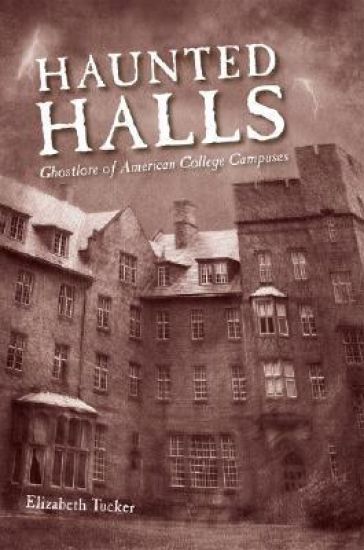
Haunted Halls

Haunted Halls

Elizabeth Tucker

University Press of Mississippi
2007
sidottu
Why do so many American college students tell stories about encounters with ghosts? In Haunted Halls, the first book-length interpretive study of college ghostlore, Elizabeth Tucker takes the reader back to school to get acquainted with a wide range of college spirits. Some of the best-known ghosts that she discusses are Emory University\'s Dooley, who can disband classes by shooting professors with his water pistol; Mansfield Uni-versity\'s Sara, who threw herself down a flight of stairs after being rejected by her boyfriend; and Huntingdon College\'s Red Lady, who slit her wrists while dressed in a red robe. Gettysburg College students have collided with ghosts of soldiers, while students at St. Mary-of-the-Woods College have reported frightening glimpses of the Faceless Nun. Tucker presents campus ghostlore from the mid-1960s to 2006, with special attention to stories told by twenty-first-century students through e-mail and instant messages. Her approach combines social, psychological, and cultural analysis, with close attention to students\' own explanations of the significance of spectral phenomena. As metaphors of disorder, insanity, and school spirit, college ghosts convey multiple meanings. Their colorful stories warn students about the dangers of overindulgence, as well as the pitfalls of potentially horrifying relationships. Besides offering insight into students\' initiation into campus life, college ghost stories make important statements about injustices suffered by Native Americans, African Americans, and others. Elizabeth Tucker is associate professor of English at Binghamton University. She is the author of Campus Legends: A Handbook and has published widely in folklore journals.
Haunted Halls

Haunted Halls

Elizabeth Tucker

University Press of Mississippi
2007
nidottu
Why do so many American college students tell stories about encounters with ghosts? In Haunted Halls, the first book-length interpretive study of college ghostlore, Elizabeth Tucker takes the reader back to school to get acquainted with a wide range of college spirits. Some of the best-known ghosts that she discusses are Emory University\'s Dooley, who can disband classes by shooting professors with his water pistol; Mansfield Uni-versity\'s Sara, who threw herself down a flight of stairs after being rejected by her boyfriend; and Huntingdon College\'s Red Lady, who slit her wrists while dressed in a red robe. Gettysburg College students have collided with ghosts of soldiers, while students at St. Mary-of-the-Woods College have reported frightening glimpses of the Faceless Nun. Tucker presents campus ghostlore from the mid-1960s to 2006, with special attention to stories told by twenty-first-century students through e-mail and instant messages. Her approach combines social, psychological, and cultural analysis, with close attention to students\' own explanations of the significance of spectral phenomena. As metaphors of disorder, insanity, and school spirit, college ghosts convey multiple meanings. Their colorful stories warn students about the dangers of overindulgence, as well as the pitfalls of potentially horrifying relationships. Besides offering insight into students\' initiation into campus life, college ghost stories make important statements about injustices suffered by Native Americans, African Americans, and others. Elizabeth Tucker is associate professor of English at Binghamton University. She is the author of Campus Legends: A Handbook and has published widely in folklore journals.
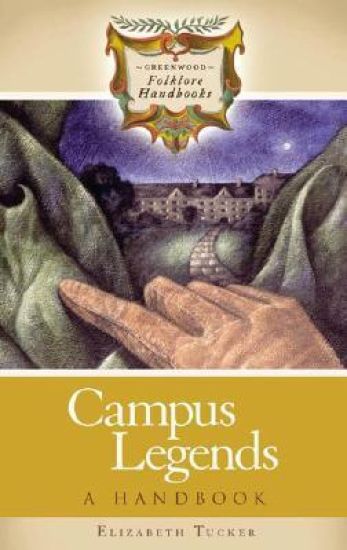
Campus Legends

Campus Legends

Elizabeth Tucker

Greenwood Press
2005
sidottu
Since the earliest days of universities, students have told stories about their daily lives, often emphasizing extraordinary, surprising, and baffling events. This book examines the fascinating world of college and university legends. While it primarily looks at legends, it also gives some attention to rumors, pranks, rituals, and other forms of folklore. Included are introductory chapters on types of campus folklore, a collection of some 50 legends from a broad range of colleges and universities, an overview of scholarship, and a discussion of campus legends in movies, television, and popular culture. Since the earliest days of universities, students have told stories about their daily lives, often emphasizing extraordinary, surprising, and baffling events. Legends often dramatize certain hopes and fears, showing how stressful and exciting the college experience can be. From the stereotype of the absent minded professor to the adventures of spring break to the mysterious world of fraternities and sororities, campus legends have also become an important part of popular culture. This book provides a convenient, readable introduction to campus legends. While the volume focuses primarily on legends, it also explores rumors, pranks, rituals, and other related folklore types. The book begins with an overview of college and university folklore. This is followed by a discussion of particular types of legends and other folklore genres. The handbook then presents some 50 examples of college and university legends, including ghost stories, urban legends, food lore, drinking tales, murders and suicides, and many others. These examples are accompanied by brief comments. The book next surveys scholarship on campus folklore and discusses the place of college and university legends in films, television, literature, and popular culture. The volume cites numerous print and electronic resources.