Kirjojen hintavertailu – 12 903 735 kirjaa ja 27 kauppaa
Kirjailija
Elizabeth von Arnim
Kirjat ja teokset yhdessä paikassa: 258 kirjaa, julkaisuja vuosilta 1898–2026, suosituimpiin kuuluu Vera. Vertaile teosten hintoja ja tarkista saatavuus suomalaisista kirjakaupoista.
Elizabeth von Arnim (31 August 1866 - 9 February 1941), born Mary Annette Beauchamp, was an Australian-born British novelist. By marriage she became Grafin (Countess) von Arnim-Schlagenthin, and by a second marriage, Countess Russell. Although known in her early life as Mary, after the publication of her first book, she was known to her readers, eventually to her friends, and finally even to her family as Elizabeth 1] and she is now invariably referred to as Elizabeth von Arnim. She also wrote under the pen name Alice Cholmondeley. Elizabeth von Arnim (31 August 1866 - 9 February 1941), born Mary Annette Beauchamp, was an Australian-born British novelist. By marriage she became Grafin (Countess) von Arnim-Schlagenthin, and by a second marriage, Countess Russell. Although known in her early life as Mary, after the publication of her first book, she was known to her readers, eventually to her friends, and finally even to her family as Elizabeth 1] and she is now invariably referred to as Elizabeth von Arnim. She also wrote under the pen name Alice Cholmondeley. In 1891, Elizabeth married Count Henning August von Arnim-Schlagenthin, a Prussian aristocrat, whom she had met during an Italian tour with her father. They lived in Berlin and eventually moved to the countryside where, in Nassenheide, Pomerania, the Arnims had their family estate. The couple had five children, four daughters and a son. The children's tutors at Nassenheide included E. M. Forster and Hugh Walpole.n 1908 Arnim left Nassenheide to return to London. Count von Arnim died in 1910, and later that year she moved to Randogne, Switzerland, where she built the Chalet Soleil and entertained literary and society friends. From 1910 until 1913, she was a mistress of the novelist H. G. Wells. In 1916 she married John Francis Stanley Russell, 2nd Earl Russell, elder brother of Bertrand Russell. The marriage ended in acrimony, with Elizabeth fleeing to the United States and the couple separating in 1919, although they never divorced. In 1920, she embarked on an affair with Alexander Stuart Frere Reeves (1892-1984), a British publisher nearly 30 years her junior; he later married and named his only daughter Elizabeth in her honour. After leaving Germany, she lived, variously, in London, France and Switzerland. In 1939, on the outbreak of the Second World War, she returned to the United States, where she died of influenza at the Riverside Infirmary, Charleston, South Carolina, on 9 February 1941, aged 74. She was cremated at Fort Lincoln cemetery, Maryland and in 1947 her ashes were mingled with her brother Sydney's in the churchyard of St Margaret's, Tylers Green, Penn, Buckinghamshire. The Latin inscription on her tombstone reads, parva sed apta (small but apt), alluding to her short stature.
The Enchanted April, by Elizabeth Von Amim, is a story of four women, all seeking a place to get away. A discreet advertisement in The Times, addressed "To Those who Appreciate Wistaria and Sunshine", offers a small medieval castle for rent, above a bay on the Italian Riviera. Four very different women - the dishevelled and downtrodden Mrs Wilkins, the sad, sweet-faced Mrs Arbuthnot, the formidable widow Mrs Fisher and the ravishing socialite Lady Caroline Dester - are drawn to the shores of the Mediterranean that April. As each, in turn, blossoms in the warmth of the Italian spring and finds their spirits stirring, quite unexpected changes occur.
The Enchanted April, by Elizabeth Von Amim, is a story of four women, all seeking a place to get away. A discreet advertisement in The Times, addressed "To Those who Appreciate Wistaria and Sunshine", offers a small medieval castle for rent, above a bay on the Italian Riviera. Four very different women - the dishevelled and downtrodden Mrs Wilkins, the sad, sweet-faced Mrs Arbuthnot, the formidable widow Mrs Fisher and the ravishing socialite Lady Caroline Dester - are drawn to the shores of the Mediterranean that April. As each, in turn, blossoms in the warmth of the Italian spring and finds their spirits stirring, quite unexpected changes occur.
The discreet advertisement in The Times, addressed "To Those who Appreciate Wistaria and Sunshine", offers a small medieval castle for rent, above a bay on the Italian Riviera. Four very different women - the dishevelled and downtrodden Mrs Wilkins, the sad, sweet-faced Mrs Arbuthnot, the formidable widow Mrs Fisher and the ravishing socialite Lady Caroline Dester - are drawn to the shores of the Mediterranean that April. As each, in turn, blossoms in the warmth of the Italian spring and finds their spirits stirring, quite unexpected changes occur.
Elizabeth von Arnim (31 August 1866 - 9 February 1941), born Mary Annette Beauchamp, was an Australian-born British novelist. By marriage she became Gr fin (Countess) von Arnim-Schlagenthin, and by a second marriage, Countess Russell. Although known in her early life as Mary, after the publication of her first book, she was known to her readers, eventually to her friends, and finally even to her family as Elizabeth and she is now invariably referred to as Elizabeth von Arnim. She also wrote under the pen name Alice Cholmondeley. She was born at her family's holiday home in Kirribilli Point, Australia. When she was three years old, the family returned to England where she was raised. Her parents were Henry Herron Beauchamp (1825-1907), merchant, and Elizabeth (Louey) Weiss Lassetter (1836-1919). Arnim had four brothers, a sister, and a cousin from New Zealand, Kathleen Beauchamp, who later married John Middleton Murry and wrote under the pen name, Katherine Mansfield. In 1891, Elizabeth married Count Henning August von Arnim-Schlagenthin, a Prussian aristocrat, whom she had met during an Italian tour with her father. They lived in Berlin and eventually moved to the countryside where, in Nassenheide, Pomerania, the Arnims had their family estate. The couple had five children, four daughters and a son. The children's tutors at Nassenheide included E. M. Forster and Hugh Walpole. In 1908, Arnim left Nassenheide to return to London. Count von Arnim died in 1910, and later that year she moved to Randogne, Switzerland, where she built the Chalet Soleil and entertained literary and society friends. From 1910 until 1913, she was a mistress of the novelist H. G. Wells. In 1916, she married John Francis Stanley Russell, 2nd Earl Russell, elder brother of Bertrand Russell. The marriage ended in acrimony, with Elizabeth fleeing to the United States and the couple separating in 1919, although they never divorced. In 1920, she embarked on an affair with Alexander Stuart Frere Reeves (1892-1984), a British publisher nearly 30 years her junior; he later married and named his only daughter Elizabeth in her honour. After leaving Germany, she lived, variously, in London, France and Switzerland. In 1939, on the outbreak of the Second World War, she returned to the United States, where she died of influenza at the Riverside Infirmary, Charleston, South Carolina, on 9 February 1941, aged 74. She was cremated at Fort Lincoln cemetery, Maryland and in 1947 her ashes were mingled with her brother Sydney's in the churchyard of St Margaret's, Tylers Green, Penn, Buckinghamshire. The Latin inscription on her tombstone reads, parva sed apta (small but apt), alluding to her short stature. Arnim would later refer to her domineering first husband by the Biblical title the "Man of Wrath" and writing became her refuge from what turned out to be an incompatible marriage. Arnim's husband had increasing debts and was eventually sent to prison for fraud. This was when she created her pen name "Elizabeth" and launched her career as a writer by publishing her semi-autobiographical, brooding, yet satirical Elizabeth and Her German Garden (1898). Detailing her struggles both to create a garden on the estate and her attempts to integrate into German, high-class, Junker society, it was such a success that it was reprinted twenty times in its first year. A bitter-sweet memoir and companion to it was The Solitary Summer (1899). Other works, such as the The Benefactress (1902), Vera (1921), and Love (1925)
Pubblicato originariamente nel 1898, "Elizabeth and her German Garden" fu il primo libro di Marie Annette Beauchamp - conosciuta per tutta la vita come Elizabeth. Il libro fu pubblicato in forma anonima. Elizabeth era una cugina della scrittrice pi famosa Katherine Mansfield (il cui vero nome era Kathleen Mansfield Beauchamp). Nata in Australia, Elizabeth fu educata in Inghilterra, e spos poi un conte tedesco, von Arnim. Nel 1897 gli Arnim si trasferirono nell'antica residenza familiare di Nassenheide (oggi Rzedsiny, Polonia). Il libro, ispirato dall'amore per il giardino di quella antica casa, fu pubblicato l'anno successivo ed ebbe un successo clamoroso (ben 21 edizioni nel 1899), tanto che da allora l'autrice firm le maggior parte delle opere successive con l'espressione by the author of "Elizabeth and her German garden". Tornata in Inghilterra dopo la morte del marito, Elizabeth divenne amica di intellettuali di spicco come Wells, e Bertrand Russell (di cui spos il fratello). La sua scrittura leggera, ironica, critica delle convenzioni sociali, e l'autrice stata rivalutata recentemente come scrittrice "femminista ante-litteram", per le sue critiche alle convinzioni e convenzioni di genere. Traduzione di Silvia Cecchini dall' edizione integrale del 1900 (le edizioni successive alla prima furono poi private della parte dei ricordi d'infanzia della protagonista).
'The Enchanted April', a novel by Elizabeth von Arnim, follows four dissimilar women in 1920s England who leave their rainy, grey environments to go on holiday in Italy. Mrs Arbuthnot and Mrs Wilkins, who belong to the same ladies' club but have never spoken, become acquainted after reading a newspaper advertisement for a small medieval castle on the Mediterranean to be let furnished for April. They find some common ground in that both are struggling to make the best of unhappy marriages. They also reluctantly take on the waspish, elderly Mrs Fisher and the stunning but aloof Lady Caroline Dester to defray expenses. The four women come together at the castle and find rejuvenation in the tranquil beauty of their surroundings, rediscovering hope and love.
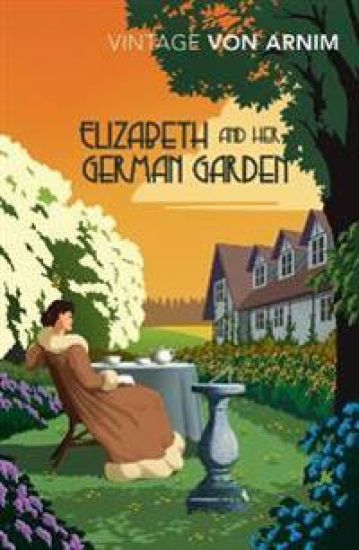
Meet Elizabeth and discover there is no greater happiness to be found than when lost in a wilderness of a garden, with bird cherries, lilacs, hollyhocks and lilies crowding the vision. This is her sanctuary from a host of unreasonable demands, whether from the Man of Wrath (husband), babies, servants and (worst of all horrors) house guests. Plunge into her charming diaries and be warned: you won't be able to remain indoors.
Lucy Entwhistle and Everard Wemyss are both reeling from recent unhappiness when they meet and swiftly fall in love. Lucy is Wemyss’s ‘sweet girl’, and to Lucy, Everard is the whole world. The only blot on Lucy’s happiness is the shadowy figure of Wemyss’s first wife, Vera, who died in mysterious circumstances. But it is not until the happy couple return home and begin their life of wedded bliss that Lucy really begins to wonder: what did happen to Vera?
What on earth could have induced Mr Anstruther to fall in love with Fraulein Schmidt? He is an eligible English bachelor from a good family with great expectations; she is the plain, poor, ‘spinster’ daughter of a German scholar. But Rose-Marie Schmidt is also funny, intelligent, brave and gifted with an irrepressible talent for happiness. The real question is, does Mr Anstruther know how lucky he is?
Mrs. Wilkins had never yet spoken to Mrs. Arbuthnot, who belonged to one of the various church sets, and who analysed, classified, divided and registered the poor; whereas she and Mellersh, when they did go out, went to the parties of impressionist painters, of whom in Hampstead there were many. Mellersh had a sister who had married one of them and lived up on the Heath, and because of this alliance Mrs. Wilkins was drawn into a circle which was highly unnatural to her, and she had learned to dread pictures. She had to say things about them, and she didn't know what to say. She used to murmur, "marvelous," and feel that it was not enough. But nobody minded. Nobody listened. Nobody took any notice of Mrs. Wilkins. She was the kind of person who is not noticed at parties. Her clothes, infested by thrift, made her practically invisible; her face was non-arresting; her conversation was reluctant; she was shy. And if one's clothes and face and conversation are all negligible, thought Mrs. Wilkins, who recognized her disabilities, what, at parties, is there left of one? Also she was always with Wilkins, that clean-shaven, fine-looking man, who gave a party, merely by coming to it, a great air. Wilkins was very respectable.
Elizabeth von Arnim (31 August 1866 - 9 February 1941), born Mary Annette Beauchamp, was an Australian-born British novelist. By marriage she became Gr fin (Countess) von Arnim-Schlagenthin, and by a second marriage, Countess Russell. Although known in her early life as Mary, after the publication of her first book, she was known to her readers, eventually to her friends, and finally even to her family as Elizabeth and she is now invariably referred to as Elizabeth von Arnim. She also wrote under the pen name Alice Cholmondeley. She was born at her family's holiday home in Kirribilli Point, Australia. When she was three years old, the family returned to England where she was raised. Her parents were Henry Herron Beauchamp (1825-1907), merchant, and Elizabeth (Louey) Weiss Lassetter (1836-1919). Arnim had four brothers, a sister, and a cousin from New Zealand, Kathleen Beauchamp, who later married John Middleton Murry and wrote under the pen name, Katherine Mansfield. In 1891, Elizabeth married Count Henning August von Arnim-Schlagenthin, a Prussian aristocrat, whom she had met during an Italian tour with her father. They lived in Berlin and eventually moved to the countryside where, in Nassenheide, Pomerania, the Arnims had their family estate. The couple had five children, four daughters and a son. The children's tutors at Nassenheide included E. M. Forster and Hugh Walpole. In 1908, Arnim left Nassenheide to return to London. Count von Arnim died in 1910, and later that year she moved to Randogne, Switzerland, where she built the Chalet Soleil and entertained literary and society friends. From 1910 until 1913, she was a mistress of the novelist H. G. Wells. In 1916, she married John Francis Stanley Russell, 2nd Earl Russell, elder brother of Bertrand Russell. The marriage ended in acrimony, with Elizabeth fleeing to the United States and the couple separating in 1919, although they never divorced. In 1920, she embarked on an affair with Alexander Stuart Frere Reeves (1892-1984), a British publisher nearly 30 years her junior; he later married and named his only daughter Elizabeth in her honour. After leaving Germany, she lived, variously, in London, France and Switzerland. In 1939, on the outbreak of the Second World War, she returned to the United States, where she died of influenza at the Riverside Infirmary, Charleston, South Carolina, on 9 February 1941, aged 74. She was cremated at Fort Lincoln cemetery, Maryland and in 1947 her ashes were mingled with her brother Sydney's in the churchyard of St Margaret's, Tylers Green, Penn, Buckinghamshire. The Latin inscription on her tombstone reads, parva sed apta (small but apt), alluding to her short stature.
Princess Priscilla's Fortnight is a 1905 comedy-drama novel by the British writer Elizabeth von Arnim, known at the time as Elizabeth Russell. It was turned into a play The Cottage in the Air in 1909. Film adaptation In 1929 the novel was turned into a film The Runaway Princess directed by Anthony Asquith and Fritz Wendhausen and starring Mady Christians, Norah Baring and Paul Cavanagh. It was a co-production between the Britain and Germany, and a separate German language version Priscillas Fahrt ins Gl ck was made........... Elizabeth von Arnim (31 August 1866 - 9 February 1941), born Mary Annette Beauchamp, was an Australian-born British novelist. By marriage she became Gr fin (Countess) von Arnim-Schlagenthin, and by a second marriage, Countess Russell. Although known in her early life as Mary, after the publication of her first book, she was known to her readers, eventually to her friends, and finally even to her family as Elizabeth and she is now invariably referred to as Elizabeth von Arnim. She also wrote under the pen name Alice Cholmondeley. She was born at her family's holiday home in Kirribilli Point, Australia. When she was three years old, the family returned to England where she was raised. Her parents were Henry Herron Beauchamp (1825-1907), merchant, and Elizabeth (Louey) Weiss Lassetter (1836-1919). Arnim had four brothers, a sister, and a cousin from New Zealand, Kathleen Beauchamp, who later married John Middleton Murry and wrote under the pen name, Katherine Mansfield. In 1891, Elizabeth married Count Henning August von Arnim-Schlagenthin, a Prussian aristocrat, whom she had met during an Italian tour with her father. They lived in Berlin and eventually moved to the countryside where, in Nassenheide, Pomerania, the Arnims had their family estate. The couple had five children, four daughters and a son. The children's tutors at Nassenheide included E. M. Forster and Hugh Walpole. In 1908, Arnim left Nassenheide to return to London. Count von Arnim died in 1910, and later that year she moved to Randogne, Switzerland, where she built the Chalet Soleil and entertained literary and society friends. From 1910 until 1913, she was a mistress of the novelist H. G. Wells. In 1916, she married John Francis Stanley Russell, 2nd Earl Russell, elder brother of Bertrand Russell. The marriage ended in acrimony, with Elizabeth fleeing to the United States and the couple separating in 1919, although they never divorced. In 1920, she embarked on an affair with Alexander Stuart Frere Reeves (1892-1984), a British publisher nearly 30 years her junior; he later married and named his only daughter Elizabeth in her honour. After leaving Germany, she lived, variously, in London, France and Switzerland. In 1939, on the outbreak of the Second World War, she returned to the United States, where she died of influenza at the Riverside Infirmary, Charleston, South Carolina, on 9 February 1941, aged 74. She was cremated at Fort Lincoln cemetery, Maryland and in 1947 her ashes were mingled with her brother Sydney's in the churchyard of St Margaret's, Tylers Green, Penn, Buckinghamshire. The Latin inscription on her tombstone reads, parva sed apta (small but apt), alluding to her short stature.
Vera by Elizabeth von Arnim is a black comedy based on her disastrous second marriage to Earl Russell: a mordant analysis of the romantic delusions through which wives acquiesce in husbands' tyrannies. In outline the story of this utterly unromantic novel anticipates DuMaurier's Rebecca. Naive Lucy Entwhistle is swept into marriage by widower, Everard Wemyss. His mansion "The Willows" is pervaded by the spectre of his dead wife Vera, with whom Lucy becomes obsessed. ... Here the servants are partisan for both wives, and lose no opportunity to disrupt Everard's unctuous, oppressive household routines. An extraordinarily black vision of marriage, also continuously funny, the novel's power lies in the wit and economy of the usually prolix Von Arnim. Elizabeth von Arnim (31 August 1866 - 9 February 1941), born Mary Annette Beauchamp, was an Australian-born British novelist. By marriage she became Gr fin (Countess) von Arnim-Schlagenthin, and by a second marriage, Countess Russell. Although known in her early life as Mary, after the publication of her first book, she was known to her readers, eventually to her friends, and finally even to her family as Elizabeth and she is now invariably referred to as Elizabeth von Arnim. She also wrote under the pen name Alice Cholmondeley. She was born at her family's holiday home in Kirribilli Point, Australia. When she was three years old, the family returned to England where she was raised. Her parents were Henry Herron Beauchamp (1825-1907), merchant, and Elizabeth (Louey) Weiss Lassetter (1836-1919). Arnim had four brothers, a sister, and a cousin from New Zealand, Kathleen Beauchamp, who later married John Middleton Murry and wrote under the pen name, Katherine Mansfield. In 1891, Elizabeth married Count Henning August von Arnim-Schlagenthin, a Prussian aristocrat, whom she had met during an Italian tour with her father. They lived in Berlin and eventually moved to the countryside where, in Nassenheide, Pomerania, the Arnims had their family estate. The couple had five children, four daughters and a son. The children's tutors at Nassenheide included E. M. Forster and Hugh Walpole. In 1908, Arnim left Nassenheide to return to London. Count von Arnim died in 1910, and later that year she moved to Randogne, Switzerland, where she built the Chalet Soleil and entertained literary and society friends. From 1910 until 1913, she was a mistress of the novelist H. G. Wells. In 1916, she married John Francis Stanley Russell, 2nd Earl Russell, elder brother of Bertrand Russell. The marriage ended in acrimony, with Elizabeth fleeing to the United States and the couple separating in 1919, although they never divorced. In 1920, she embarked on an affair with Alexander Stuart Frere Reeves (1892-1984), a British publisher nearly 30 years her junior; he later married and named his only daughter Elizabeth in her honour. After leaving Germany, she lived, variously, in London, France and Switzerland. In 1939, on the outbreak of the Second World War, she returned to the United States, where she died of influenza at the Riverside Infirmary, Charleston, South Carolina, on 9 February 1941, aged 74. She was cremated at Fort Lincoln cemetery, Maryland and in 1947 her ashes were mingled with her brother Sydney's in the churchyard of St Margaret's, Tylers Green, Penn, Buckinghamshire. The Latin inscription on her tombstone reads, parva sed apta (small but apt), alluding to her short stature.