

Kirjailija
Elizabeth Wright
Kirjat ja teokset yhdessä paikassa: 28 kirjaa, julkaisuja vuosilta 1998–2026, suosituimpiin kuuluu Our Lady Of Good Counsel Novena. Vertaile teosten hintoja ja tarkista saatavuus suomalaisista kirjakaupoista.
28 kirjaa
Kirjojen julkaisuvuodet: 1998–2026.
First published in 2002. Modes and categories inherited from the past no longer seem to fit the reality experienced by a new generation. ‘New Accents’ is intended as a positive response to the initiative offered by such a situation. Each volume in the series will seek to encourage rather than resist the process of change, to stretch rather than reinforce the boundaries that currently define literature and its academic study. The purpose of this book is to give a critical overview of what has become a very wide field: the relationship of psychoanalytic theory to the theories of literature and the arts, and the way that developments in both domains have brought about changes in critical practice.

This new book is a lively and original study of psychoanalysis and its relations to the arts.

This new book is a lively and original study of psychoanalysis and its relations to the arts.
What is psychoanalytic criticism and how can it be justified as a type of criticism in its own right? In this new and thoroughly revised edition of her classic textbook, Elizabeth Wright provides a cogent answer to this question and a wide-ranging introduction to psychoanalytic criticism from Freud to the present day. Since each school of psychoanalysis has its own theory of the aesthetic process, the field is complex. Adopting a critical perspective, Elizabeth Wright focuses on major figures and texts in psychoanalysis and in literary and art criticism: classical psychoanalysis; Jungian analytic psychology; objects-relations theory; French psychoanalysis; French anti-psychoanalysis; feminist psychoanalytic criticism. Across these divisions certain problems recur, problems which conceal themselves in a wide range of surprising places, from Shakespearean tragedy to performance theatre from magic realism to detective fiction, from the German Lied to Wagner. These areas are investigated with reference to rival psychoanalytic theories, while connections are traced between the aesthetic process and the psychoanalytic approach. Already established as the leading introduction to the field, this new edition of Psychoanalytic Criticism will be essential reading for students of literature and literary theory, psychoanalysis, feminism and feminist theory, cultural studies and the humanities generally.
What is psychoanalytic criticism and how can it be justified as a type of criticism in its own right? In this revised edition, Elizabeth Wright provides an answer to this question and a wide-ranging introduction to psychoanalytic criticism from Freud to the present day.
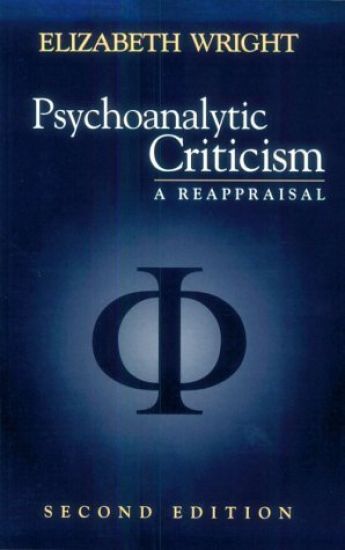
As criticism settles into an end-of-century milieu, its appropriations of psychoanalysis are increasingly polarized: while the last ten years have witnessed a spate of virulent and provocative attacks on psychoanalysis in general and Freud in particular, at no time has psychoanalysis burgeoned and thrived so strongly in literary theory and practice. In this thoroughly updated version of Elizabeth Wright's classic text, the author explores the ways in which Freudian theory has become essential to our experience of literature. Wright's comprehensive, historical approach to literary theory and practice since Freud loses none of its sharpness for its breadth: from Artaud to Zizek, Foucault to Kristeva, Psychoanalytic Criticism maintains a sharp focus on our experience of language, literature and consciousness.