Kirjojen hintavertailu – 12 903 725 kirjaa ja 27 kauppaa
Kirjailija
Ellen Lupton
Kirjat ja teokset yhdessä paikassa: 15 kirjaa, julkaisuja vuosilta 2012–2024, suosituimpiin kuuluu Shriftovoe myshlenie. Kriticheskoe rukovodstvo dlja dizajnerov, pisatelej, redaktorov i studentov. Vertaile teosten hintoja ja tarkista saatavuus suomalaisista kirjakaupoista.
Explore 100 key concepts, theories, and guidelines that are critical for choosing and using type. We communicate with text every single day, but what does it mean to really understand type—to use it with clear intent and purpose? The art and science of typography combines subtle tweaks to line lengths with harmonious combinations of weights and styles; considered typeface pairings with a robust set of alternate characters; exciting technological advances with the realities of font licensing. There are so many ways designers can optimize how text is read and influence the way its message is understood—and yet so many designers miscommunicate without even realizing it. Richly illustrated and easy to navigate, Universal Principles of Typographypairs clear explanations of each principle with visual examples of it applied in practice. By considering these concepts and examples, you can learn to make more informed, and ultimately better, typography decisions. Building upon tried-and-tested principles from the world of print through to the very latest advances in browser technology, this book will equip you with everything you need to make the most informed typographic decisions in your design work today. Featured principles are as diverse as: Characters & GlyphsFont v. TypefaceHierarchyInclusivityOpenTypePairing typeRhythmWeb fontsEach principle is presented in a two-page format. The left-hand page contains a succinct definition, a full description of the principle, examples of its use, and guidelines for use. Sidenotes appear to the right of the text, and provide elaborations and references. The right-hand page contains visual examples and related graphics to support a deeper understanding of the principle. With Universal Principles of Typography, gain a deep understanding of the universal principles of typography and learn how to apply them across any work you do with type, from the simplest of documents to the most complex of cross-platform design systems. The titles in the Rockport Universal series offer comprehensive and authoritative information and edifying and inspiring visual examples on multidisciplinary subjects for designers, architects, engineers, students, and anyone who is interested in expanding and enriching their design knowledge.
The essential and bestselling guide to typography from beloved design educator Ellen Lupton—revised and expanded to include new and additional voices, examples, and principles, and a wider array of typefaces." Thinking with Type is to typography what Stephen Hawking's A Brief History of Time is to physics."—I Love Typography The bestselling Thinking with Type in a revised and expanded third edition: This is the definitive guide to using typography in visual communication. Covering the essentials of typography, this book explores everything from typefaces and type families to kerning and tracking to grids and layout principles. Ellen Lupton provides clear and focused guidance on how letters, words, and paragraphs should be aligned, spaced, ordered, and shaped. Historical and contemporary examples of graphic design show how to learn the rules and how to break them. Critical essays, eye-opening diagrams, helpful exercises, and dozens of examples and illustrations show readers how to be inventive within systems that inform and communicate. Featuring 32 pages of new content, the third edition is revised and refined from cover to cover:More fonts: old fonts, new fonts, weird fonts, libre fonts, Google fonts, Adobe fonts, fonts from independent foundries, and fonts and lettering by women and BIPOC designers Introductions to diverse writing systems, contributed by expert typographers from around the world Demonstrations of basic design principles, such as visual balance, Gestalt grouping, and responsive layout Current approaches to typeface design, including Variable fonts and optical sizes Tips for readability, legibility, and accessibility Stunning reproductions from the Letterform Archive Thinking with Type is the typography book for everyone: designers, writers, editors, students, anyone who works with words on page or screen, and enthusiasts of type and lettering. Readers will also love Ellen Lupton's book Extra Bold: A Feminist, Inclusive, Anti-racist, Nonbinary Field Guide for Graphic Designers.
Ellen Lapton - dizajner, kurator i odin iz samykh izvestnykh amerikanskikh avtorov, pishuschikh o dizajne, - jasno, lakonichno i pri etom maksimalno informativno rasskazyvaet o tom, kak rabotat so shriftom i tekstom, chto takoe bukva, tipografika, nabor i modulnaja setka, kakova ikh istorija i mesto v sovremennom dizajne. V knige mnozhestvo illjustratsij, pravil, nagljadnykh primerov (v tom chisle uzhasnykh "shriftovykh prestuplenij"), tsennykh sovetov, prakticheskikh uprazhnenij i zabavnykh faktov. Eto nezamenimoe izdanie dlja dizajnerov i verstalschikov, kotorye tolko nachinajut znakomitsja s tipografikoj i ee udivitelnymi vozmozhnostjami. Perevodchik: Foronov I.
An engaging introduction to the cutting-edge discipline of experience design for students and practitioners in creative fields, including architecture, product design, gaming, exhibition design, and performance What does it mean to design experiences? Traditional design practices invite us to design things, and to use those things to solve problems. But experience is not a problem; it is life. Experience designers engage with unpredictability and the unknown, partnering with their audiences to generate possibility and relationality. Experience designers create worlds, craft narratives that leave the page and enter people’s lives, and structure transformation. Broadly interdisciplinary and deeply human, experience design is a practice that at once embraces new technologies and offers a balm for our disconnected lives. In this playful, accessible, and visually engaging book, Burickson lays out ten basic principles for this emerging practice. Experience Design: A Participatory Manifesto invites the reader to stop making things and, instead, to craft the minutes and hours of human life. Rigorous and philosophical, the book guides the reader through the processes of empathic research; constructing worlds not just for fantasy fiction but in schools, communities, homes; and mastering the tools necessary to work coherently across disciplines to create new experiences. Whether you are a maker of immersive theater, an architect, a graphic designer, a community organizer, or just someone hoping to give a better gift, this book offers a vision of creating that is both new and as old as civilization.
An unprecedented, definitive look at the school’s typography and print design, from its early expressive tendencies to the functional modernism for which it is famed today The Bauhaus looms large as one of the most influential legacies in 20th-century graphic design. Known for its bold sans-serif typefaces, crisp asymmetrical grids and clean use of negative space, the school emerged as the forebearer of a new look—one that seized the tools of mass production in the creation of a radical new art. Today, just over 100 years after the Bauhaus’s opening in 1919, the school’s visual hallmarks have come to define modernity as it appears on the printed page. The official catalog for Letterform Archive’s inaugural gallery exhibition, Bauhaus Typography at 100 explores the school’s legacy in graphic and typographic design through artifacts of its own making—its books, magazines, course materials, product catalogs, stationery, promotional fliers and other ephemera. From the book’s beautifully designed pages, readers learn of typographic masters László Moholy-Nagy, Herbert Bayer and Joost Schmidt, who channeled Constructivism’s geometric forms and optimism for industry into printed vehicles for the school’s teachings. Here is where Bauhaus typography—its rejection of serifs and capitals, embrace of experimental alphabets, insistence on universal clarity, and innovation in layering and hierarchy—took its distinctive shape. The catalog also shines light on the Bauhaus’s lesser-known early forays into expressive lettering and illustration, also tracing the school’s immediate impact on seminal design movements such as the New Typography and, of course, on design practitioners working today. Lavishly illustrated, carefully researched and written, and accompanied by an in-depth introduction from noted Bauhaus expert, author and curator Ellen Lupton, Bauhaus Typography at 100 is a must-have for any fan of modern design.
A Fast Company “Most Important Books for Designers to Read Right Now” Discover how the principles of human-centered design can be applied to real-world health challenges in dozens of illustrated examples—from drug packaging and cancer detection devices to post-COVID-19 innovations. Written by pioneers in the field—Bon Ku, a physician leader in innovative health design, and Ellen Lupton, an award-winning graphic designer—this book outlines the fundamentals of design thinking and highlights important products, prototypes, and research in health design. This revised and expanded edition describes innovations developed in response to the COVID-19 crisis, including an intensive care unit in a shipping container, a rolling cart with intubation equipment, and a mask brace that gives a surgical mask a tighter seal. Graphics by Lupton bring these ideas to life. The authors also explore the special overlap of health care and the creative process, describing the development of such products and services as a credit card–sized device that allows patients to generate their own electrocardiograms; a mask designed to be worn with a hijab; improved emergency room signage; and a map of racial disparities and COVID-19. Health Design Thinking is an essential volume for health care providers, educators, patients, and designers who seek to create better experiences and improved health outcomes for individuals and communities.
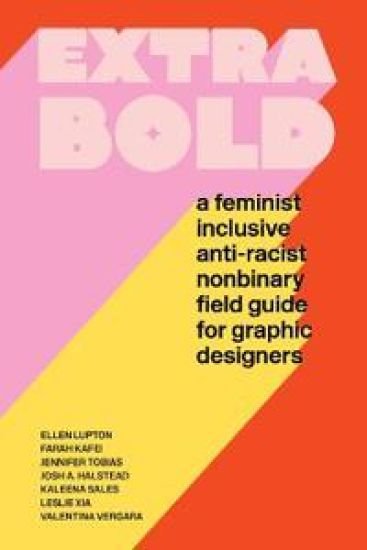
Extra Bold is the inclusive, practical, and informative career handbook for designers that we've all been waiting for. Written collaboratively by a diverse team of authors, the book opens with critical essays that rethink design principles and practices through theories of feminism, racism, inclusion, and nonbinary thinking. Extra Bold features interviews, essays, typefaces, and projects from dozens of contributors with a variety of racial and ethnic backgrounds, abilities, gender identities, and positions of economic and social privilege. The book adds new voices to the dominant design canon. Part textbook and part comic book, zine, manifesto, survival guide, and self-help manual, Extra Bold is filled with stories and ideas that don't show up in other career books or design overviews. Both pragmatic and inquisitive, the book explores power structures and how to navigate them. Interviews showcase people at different stages of their careers, and biographical sketches explore individuals marginalized by sexism, racism, and ableism. Jennifer Tobias's original, handcrafted illustrations bring warmth, happiness, humor, and narrative depth. Extra Bold is the design career manual for everyone.
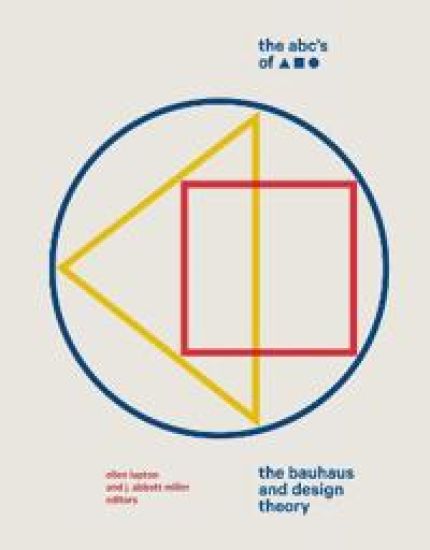
The Bauhaus, the legendary school in Dessau, Germany, transformed architecture and design around the world. This book broke new ground when first published in 1991 by introducing psychoanalysis, geometry, early childhood education, and popular culture into the standard political history of the Bauhaus. The ABC's of Triangle, Square, Circle also introduced two young designers, Ellen Lupton and J. Abbott Miller, whose multidisciplinary approach changed the field of design writing and research. With a new preface by Lupton and Miller, this collection of visually and intellectually stimulating essays is a must-read for educators and students.
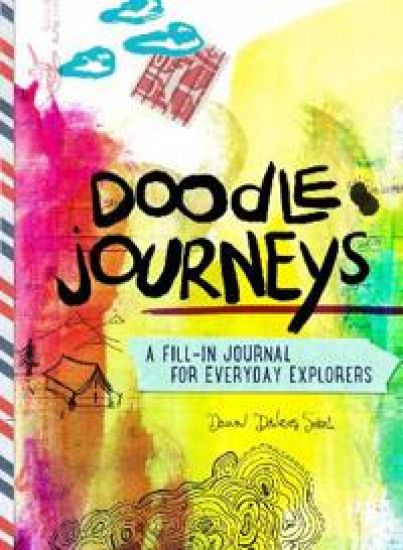
Travel for kids often means sitting in a plane, train, or car with an iPad on their laps—head down, headphones on, watching a movie or playing a mind-numbing game. In Doodle Journeys, an interactive guidebook, Dawn creates prompts that inspire children to pick up their head and look outside the window. They are challenged to imagine where they are going, what they might see. They are also dared to envision worlds that don’t exist. The book will offer suggestions of marking tools (showing a TSA-approved artist kit), ways to adhere photos, and tips for how to document with doodles. Young explorers will use prompts on pages overflowing with colorful, vibrant backgrounds to encourage them to note and document what’s around them. Throughout the book are travel-inspired doodles and quotes.
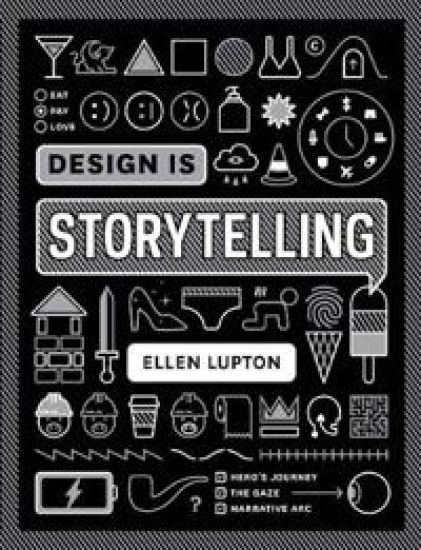
A playbook for creative thinking, created for contemporary students and practitioners working across the fields of graphic design, product design, service design and user experience. Design is Storytelling is a guide to thinking and making created for contemporary students and practitioners working across the fields of graphic design, product design, service design, and user experience. By grounding narrative concepts in fresh, concrete examples and demonstrations, this compelling book provides designers with tools and insights for shaping behaviour and engaging users. Compact, relevant and richly illustrated, the book is written with a sense of humour and a respect for the reader’s time and intelligence. Design is Storytelling unpacks the elements of narrative into a fun and useful toolkit, bringing together principles from literary criticism, narratology, cognitive science, semiotics, phenomenology and critical theory to show how visual communication mobilizes instinctive biological processes as well as social norms and conventions. The book uses 250 illustrations to actively engage readers in the process of looking and understanding. This lively book shows how designers can use the principles of storytelling and visual thinking to create beautiful, surprising and effective outcomes. Although the book is full of practical advice for designers, it will also appeal to people more broadly involved in branding, marketing, business and communication.
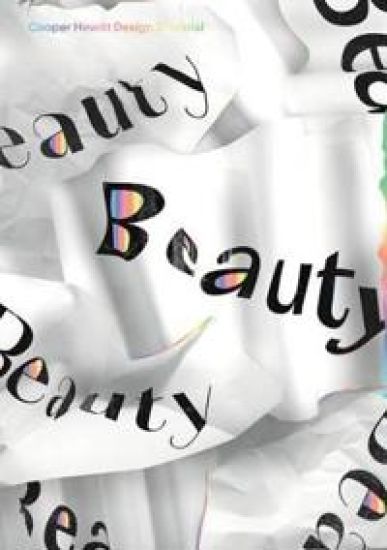
Beauty celebrates design objects and practices that are exuberant, ethereal, atmospheric, experiential, exceptional or sublime. Objects of beauty provoke immediate reactions and demand judgment – asking us to redefine what is lovely or grotesque, formed or malformed, virtuous or subversive. They exalt experience as a living, unfolding exchange between people and things. Beauty honours the voices of designers from 26 countries around the world by conducting original interviews about their works and processes – showing that aesthetic innovation can drive change, whether materially, structurally or ethically. Beauty is an object to be touched, smelled and savoured. Each of the book’s seven sections is printed on a luxurious Japanese matte paper with its own fifth accent colour. A smaller signature of pages – printed on its own creamy pink paper at the centre of the book – is called the heart. It contains front and back matter and the responses from designers to the questions: What comes to mind when you hear the word beauty? What is the most beautiful time of day? What is the most beautiful place you’ve visited? The authors/edited selected the designers for the book and exhibition with a group of international curatorial advisors: Adélia Borges (Brazil), Claire Catterall (England), Kenya Hara (Japan), Mugendi M’Rithaa (South Africa), Sarah Scaturro (United States), Annemartine van Kesteren (Netherlands) and Suvi Saloniemi (Finland).
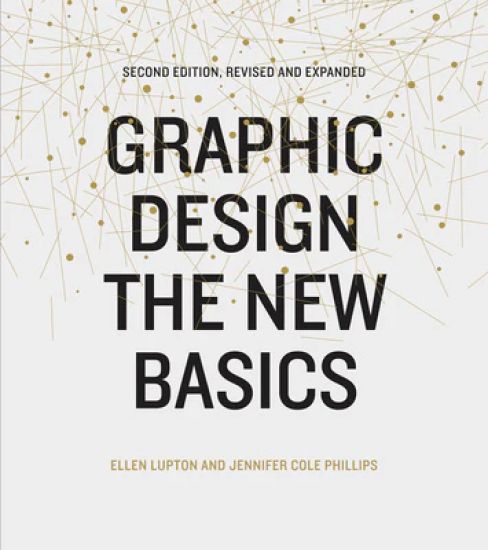
"A longstanding excellent primer, in an equally excellent updated edition."—Print Ellen Lupton and Jennifer Cole Phillips's celebrated introduction to graphic design, available in a revised and updated edition. Graphic Design: The New Basics explains the key concepts of visual language that inform any work of design. A foundational graphic design book for students, Lupton and Phillips explore the formal elements of design through visual demonstrations and concise commentary. From logos to letterhead to complex website design, this is a graphic design book for everyone, no matter your design project or focus. Topics include: • Color • Texture • Rhythm and balance • Hierarchy • Layers • Grids • And much more! The new revised edition features new chapters on: • Visualizing data • Typography • Modes of representation • Gestalt principles Sixteen new pages of student and professional work covering such topics as working with grids and designing with color make this a course adoption favorite in any graphic design program and graphic design school. Graphic Design: The New Basics is an invaluable introduction to the field of graphic design from two accomplished designers and design educators.
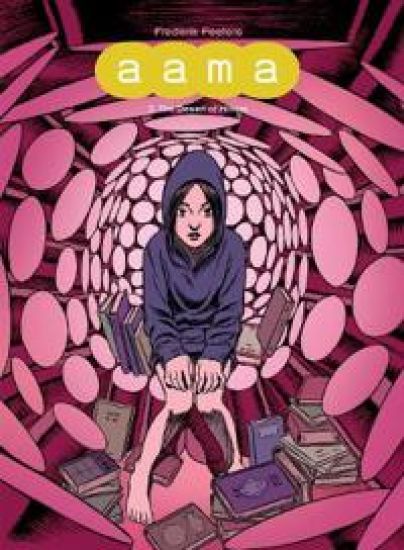
Verloc Nim and his brother Conrad depart on an expedition to recover the mysterious substance aama, which has transformed the environment of the planet Ona(ji). As they progress through a world as hostile as it is amazing, the mystery begins to unravel – but the truth about aama remains unknown, and reality begins to waver…
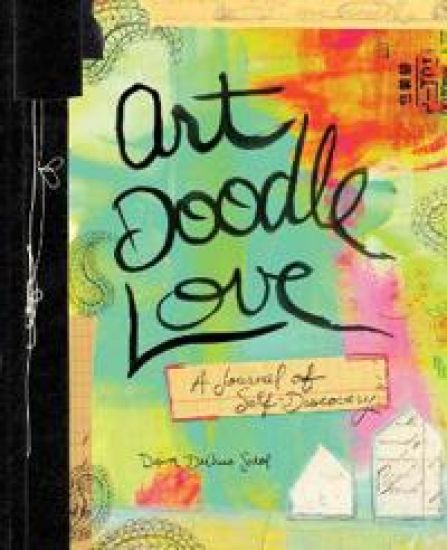
Many women love the idea of leading a more creative life, but don’t know where to begin. With Art Doodle Love, art journal expert Dawn DeVries Sokol provides the perfect jump start: an interactive fill-in book of prompts that will motivate women to “discover” themselves and their inner creative goddesses. Loosely inspired by Eat Pray Love, Elizabeth Gilbert’s memoir of self-discovery, Art Doodle Love
A sci-fi tale which has all the echoes of a David Lynch film. Almost cinematic in style, in the breathless opening to this graphic novel we get a traffic jam due to a wounded elephant; a blind pigkeeper; an alien-looking grey baby; a cavalier and alcoholic skirt-chasing surgeon; and a beanpole of a Swiss secret policeman. Our heroine, Carice, walks from her car through the woods, as if in a trance, to a hospital to visit her diplomat husband, indisposed from a car accident. Her goodbye note, which she intends to deliver in person, is in her purse. The hospital is vast, remote, and foreboding, filled with suitable loonies. The book’s first third ends with Carice waking an apparently dead body in the morgue with her whistling. Chopin? the body asks. Carice nods. We learn of her too-early marriage, her dashed dreams as a concert pianist, and in the course of conversation realize that the aged cadaver she’s talking to is her future self.