Kirjojen hintavertailu – 12 903 725 kirjaa ja 27 kauppaa

Kirjailija

Elliot W. Eisner

Kirjat ja teokset yhdessä paikassa: 8 kirjaa, julkaisuja vuosilta 1994–2026, suosituimpiin kuuluu The Art of Educational Evaluation. Vertaile teosten hintoja ja tarkista saatavuus suomalaisista kirjakaupoista.

8 kirjaa

Kirjojen julkaisuvuodet: 1994–2026.

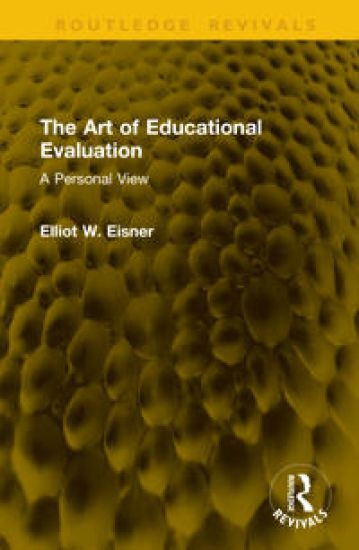
The Art of Educational Evaluation

The Art of Educational Evaluation

Elliot W. Eisner

TAYLOR FRANCIS LTD
2026
sidottu
First published in 1985, The Art of Educational Evaluation traces the evolution of the author’s thinking about both educational evaluation and curriculum from the mid-1960s through the early period of the 1980s. Eisner questions some of the more hallowed assumptions about educational planning and educational evaluation and provides a perspective on both curriculum and evaluation that has been influenced by his work in the fine arts. The book provides a fresh perspective with which to view the nature of evaluation and curriculum planning.
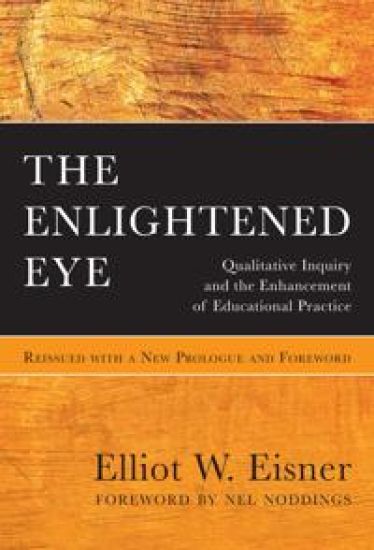
The Enlightened Eye

The Enlightened Eye

Elliot W. Eisner

Teachers' College Press
2017
nidottu
Now available from TC Press with a new foreword by Nel Noddings and a new prologue by P. Bruce Uhrmacher and Christy McConnell Moroye, this classic text on qualitative research is ideal for both novice and established researchers. Eisner’s seminal work on mind, education, and research explores the ways in which the methods, content, and assumptions in the arts, humanities, and social sciences can help us better understand our schools and classrooms. The Enlightened Eye expands how we think about inquiry in education and broadens our views about what it means to “know” with the goal of positively influencing the educational experience of those who live and work in our schools. The text includes examples depicting this type of research and how it can be used to evaluate teaching, learning, and the school environment. Book Features: provides researchers with ethical frameworks promoting diversity and inclusivity; establishes connections between qualitative inquiry in our daily lives and its functions in the practice and study of education; and broadens understanding of how we come to know the world.
Arts Based Research

Arts Based Research

Tom Barone; Elliot W. Eisner

SAGE Publications Inc
2011
nidottu
Arts Based Research is ideal for students, researchers, and practitioners. This unique book provides a framework for broadening the domain of qualitative inquiry in the social sciences by incorporating the arts as a means of better understanding and rethinking important social issues. In the book's 10 thought-provoking chapters, authors Tom Barone and Elliot W. Eisner--pioneers in the field--address key aspects of arts based research, including its purpose and fundamental ideas, controversies that surround the field and the politics and ethics involved, and key criteria for evaluation.
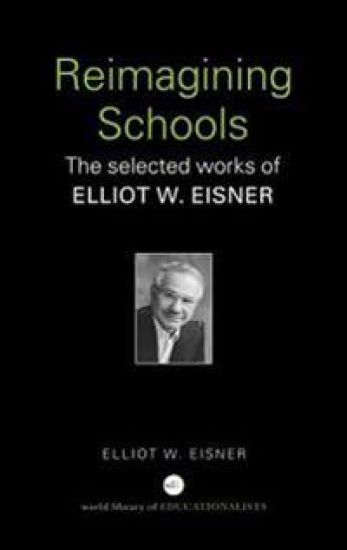
Reimagining Schools

Reimagining Schools

Elliot W. Eisner

Routledge
2005
sidottu
Elliot Eisner has spent the last forty years researching, thinking and writing about some of the enduring issues in arts education, curriculum studies and qualitative research. He has compiled a career-long collection of his finest work including extracts from books, key articles, salient research findings and major theoretical contributions and brought them together in a single volume. Starting with a specially written introduction, which gives an overview of Eisner’s career and contextualises his selection, the chapters cover a wide range of issues including:* children and art* the use of educational connoisseurship* aesthetic modes of knowing* absolutism and relativism in curriculum theory* education reform and the ecology of schooling* the future of education research.
Reimagining Schools

Reimagining Schools

Elliot W. Eisner

Routledge
2005
nidottu
Elliot Eisner has spent the last forty years researching, thinking and writing about some of the enduring issues in arts education, curriculum studies and qualitative research. He has compiled a career-long collection of his finest work including extracts from books, key articles, salient research findings and major theoretical contributions and brought them together in a single volume. Starting with a specially written introduction, which gives an overview of Eisner’s career and contextualises his selection, the chapters cover a wide range of issues including:* children and art* the use of educational connoisseurship* aesthetic modes of knowing* absolutism and relativism in curriculum theory* education reform and the ecology of schooling* the future of education research.
Tuned In and Fired Up

Tuned In and Fired Up

Sam M. Intrator; Elliot W. Eisner

Yale University Press
2005
pokkari
We treasure the occasions when a classroom of students becomes totally focused, absorbed by ideas. How can teachers make these special moments happen more often? Every teacher has powerful memories of becoming swept up in an electric moment when the classroom hums with energy and students are wholly engaged in learning. During such moments of real learning, teenagers find genuine meaning, worth, and value in their academic experiences. And their teachers find in these heightened and exuberant moments the embodiment of their best hopes and ideals as educators. How can such “teachable moments” be encouraged? What can teachers do to inspire more of these educationally vital episodes? In this compelling book, Sam M. Intrator scrutinizes powerful learning moments in a high school classroom. He offers five detailed portraits of these experiences, describing in each case how the teacher shaped the culture of the class, made critical pedagogical decisions, and connected students to the subject matter. Intrator confirms that seemingly magical learning moments can becultivated, and he suggests numerous practical ideas to help teachers do so.
The Arts and the Creation of Mind

The Arts and the Creation of Mind

Elliot W. Eisner

Yale University Press
2004
pokkari

Halvin toimitettuna 25,70 €

Although the arts are often thought to be closer to the rim of education than to its core, they are, surprisingly, critically important means for developing complex and subtle aspects of the mind, argues Elliot Eisner in this engrossing book. In it he describes how various forms of thinking are evoked, developed, and refined through the arts. These forms of thinking, Eisner argues, are more helpful in dealing with the ambiguities and uncertainties of daily life than are the formally structured curricula that are employed today in schools. Offering a rich array of examples, Eisner describes different approaches to the teaching of the arts and the virtues each possesses when well taught. He discusses especially nettlesome issues pertaining to the evaluation of performance in the arts. Perhaps most important, Eisner provides a fresh and admittedly iconoclastic perspective on what the arts can contribute to education, namely a new vision of both its aims and its means. This new perspective, Eisner argues, is especially important today, a time at which mechanistic forms of technical rationality often dominate our thinking about the conduct and assessment of education.
Cognition and Curriculum Reconsidered

Cognition and Curriculum Reconsidered

Elliot W. Eisner

Teachers' College Press
1994
nidottu
In his 1980 John Dewey Lecture, Elliot Eisner argued powerfully and eloquently for a view of literacy that goes beyond verbal and numerical skills, focusing instead on the central role of the senses in the twin processes of human conceptualization and expression. A few years later, Professor Eisner elaborated and expanded that lecture into Cognition and Curriculum, a book that was hailed as having the potential to ""shake up educational decision makers as Dewey's Experience and Education did."" Now, as the back-to-basics curriculum and standardized modes of evaluation—whose very foundations Eisner was questioning a decade ago are again finding favor, Eisner has chosen to revisit his classic work. The result is Cognition and Curriculum Reconsidered, a substantially revised edition that adds two entirely new chapters, including a critique of the reform efforts of the intervening years. Eisner starts out with an inclusive definition of literacy in its metaphorical sense: ""the ability to encode and decode meaning in any of the forms of respresentation used in the culture to convey or express meaning."" This in turn implies a radically different approach to education, one that seeks to develop multiple literacies in the student, not privileging the understandings of the sciences and mathematics over those of the fine arts, humanities, and other branches of human knowledge. Such an approach will both enhance efforts at achieving educational equity and cultivate rather than stifle individual differences. Eisner brings together an impressive body of evidence from various fields of inquiry to produce an engaging, thought-provoking discussion about the appropriate boundaries of school curriculum and educational evaluation. A new first chapter looks at a decade of school reform efforts, distilling the common roots of their failure before outlining a path that holds promise for success. The next two chapters on the primary role of the senses in concept formation and the multiplicity of representational forms through which those concepts can be made known to others—are now followed by a new synthesis in which he undertakes to transform these ideas into practice in the classroom, both through the curriculum itself and through ""the artistry with which that program is mediated by teachers. We call such artistry 'teaching.'"" His conclusions have implications for education at all levels and in all areas. This book will be important reading for teachers and teacher educators and will be a welcome addition to courses in foundations of education, curriculum theory, qualitative research, and educational evaluation.