Kirjojen hintavertailu – 12 903 724 kirjaa ja 27 kauppaa

Kirjailija

Elliott West

Kirjat ja teokset yhdessä paikassa: 7 kirjaa, julkaisuja vuosilta 1995–2025, suosituimpiin kuuluu The Last Indian War. Vertaile teosten hintoja ja tarkista saatavuus suomalaisista kirjakaupoista.

7 kirjaa

Kirjojen julkaisuvuodet: 1995–2025.

Continental Reckoning

Continental Reckoning

Elliott West

University of Nebraska Press
2025
pokkari

Halvin toimitettuna 28,20 €

Finalist for the 2024 Pulitzer Prize in History Winner of Columbia University's 2024 Bancroft Prize in American History Winner of the 2024 Caughey Western History Prize Winner of the 2024 Spur Award Named a Best Civil War Book of 2023 by Civil War Monitor In Continental Reckoning renowned historian Elliott West presents a sweeping narrative of the American West and its vital role in the transformation of the nation. In the 1840s, by which time the United States had expanded to the Pacific, what would become the West was home to numerous vibrant Native cultures and vague claims by other nations. Thirty years later it was organized into states and territories and bound into the nation and world by an infrastructure of rails, telegraph wires, and roads and by a racial and ethnic order, with its Indigenous peoples largely dispossessed and confined to reservations. Unprecedented exploration uncovered the West’s extraordinary resources, beginning with the discovery of gold in California within days of the United States acquiring the territory following the Mexican-American War. As those resources were developed, often by the most modern methods and through modern corporate enterprise, half of the contiguous United States was physically transformed. Continental Reckoning guides the reader through the rippling, multiplying changes wrought in the western half of the country, arguing that these changes should be given equal billing with the Civil War in this crucial transition of national life. As the West was acquired, integrated into the nation, and made over physically and culturally, the United States shifted onto a course of accelerated economic growth, a racial reordering and redefinition of citizenship, engagement with global revolutions of science and technology, and invigorated involvement with the larger world. The creation of the West and the emergence of modern America were intimately related. Neither can be understood without the other. With masterful prose and a critical eye, West presents a fresh approach to the dawn of the American West, one of the most pivotal periods of American history.
Hundreds of Little Wars

Hundreds of Little Wars

Elliott West; Patrick Williams

LOUISIANA STATE UNIVERSITY PRESS
2025
sidottu
From Texas to Virginia, towns, regions, counties, regiments, prisons, and even refugee camps played a significant role in shaping the contours of the Civil War. According to historian Daniel E. Sutherland, whose many books and essays helped establish the field of community studies, these varied assemblages of individuals experienced and fought the real war. Following his lead, the contributors to Hundreds of Little Wars reveal how viewing the war from the vantage point of singular communities allows us to better understand the larger conflict. The volume includes contributions from a wide array of Civil War scholars. Lesley J. Gordon and Eric P. Totten examine military outfits, namely the 126th New York Regiment and the 4th New Hampshire Volunteer Infantry. Madeleine C. Forrest provides an analysis of Fauquier County, Virginia, in 1862, and Matthew M. Stith evaluates a Confederate prisoner-of-war camp in East Texas. Christopher Phillips and Scott A. Tarnowieckyi investigate the middle border region spanning the Ohio, Mississippi, and Missouri rivers. Lorien Foote and G. David Schieffler assess the demographically diverse Sea Islands of South Carolina and Georgia, as well as Helena, Arkansas. Barton A. Myers and Terry L. Beckenbaugh employ Sutherland's framing while considering irregular war, first with an examination of partisan officers and then with a survey of the White River Valley in Arkansas. Finally, Niels Eichhorn and Michael Shane Powers assume a transnational viewpoint, comparing Richmond with Vienna, Austria, and analyzing a community of Confederate veterans in Central America. The essays in Hundreds of Little Wars show that no one single conflict defined the Civil War. Instead, hundreds of wars existed, variously categorized by geography, race, gender, environment, and myriad other factors. Only by concentrating on these communities can we grasp the scope and complexity of the Civil War.
Continental Reckoning

Continental Reckoning

Elliott West

University of Nebraska Press
2023
sidottu
Finalist for the 2024 Pulitzer Prize in History Winner of Columbia University's 2024 Bancroft Prize in American History Winner of the 2024 Caughey Western History Prize Winner of the 2024 Spur Award Named a Best Civil War Book of 2023 by Civil War Monitor In Continental Reckoning renowned historian Elliott West presents a sweeping narrative of the American West and its vital role in the transformation of the nation. In the 1840s, by which time the United States had expanded to the Pacific, what would become the West was home to numerous vibrant Native cultures and vague claims by other nations. Thirty years later it was organized into states and territories and bound into the nation and world by an infrastructure of rails, telegraph wires, and roads and by a racial and ethnic order, with its Indigenous peoples largely dispossessed and confined to reservations. Unprecedented exploration uncovered the West’s extraordinary resources, beginning with the discovery of gold in California within days of the United States acquiring the territory following the Mexican-American War. As those resources were developed, often by the most modern methods and through modern corporate enterprise, half of the contiguous United States was physically transformed. Continental Reckoning guides the reader through the rippling, multiplying changes wrought in the western half of the country, arguing that these changes should be given equal billing with the Civil War in this crucial transition of national life. As the West was acquired, integrated into the nation, and made over physically and culturally, the United States shifted onto a course of accelerated economic growth, a racial reordering and redefinition of citizenship, engagement with global revolutions of science and technology, and invigorated involvement with the larger world. The creation of the West and the emergence of modern America were intimately related. Neither can be understood without the other. With masterful prose and a critical eye, West presents a fresh approach to the dawn of the American West, one of the most pivotal periods of American history.
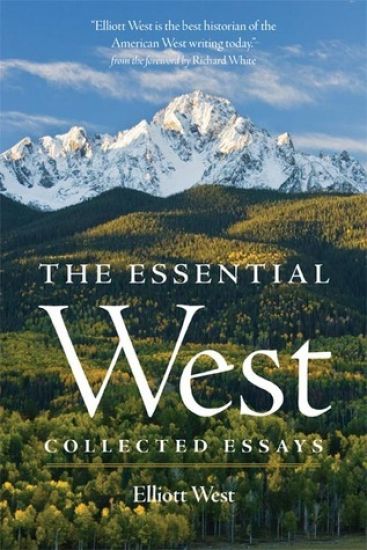
The Essential West

The Essential West

Elliott West; Richard White

University of Oklahoma Press
2014
nidottu

Halvin toimitettuna 30,90 €

Scholars and enthusiasts of western American history have praised Elliott West as a distinguished historian and an accomplished writer, and this book proves them right on both counts. Capitalizing on West's wide array of interests, this collection of his essays touches on topics ranging from viruses and the telegraph to children, bison, and Larry McMurtry. Drawing from the past three centuries, West weaves the western story into that of the nation and the world beyond, from Kansas and Montana to Haiti, Africa, and the court of Louis XV. Divided into three sections, the volume begins with conquest. West is not the first historian to write about Lewis and Clark, but he is the first to contrast their expedition with Mungo Park's contemporaneous journey in Africa. ""The Lewis and Clark expedition,"" West begins, ""is one of the most overrated events in American history - and one of the most revealing."" The humor of this insightful essay is a chief characteristic of the whole book, which comprises ten chapters previously published in major journals and magazines - but revised for this edition - and four brand-new ones. West is well known for his writings about frontier family life, especially the experiences of children at work and play. Fans of his earlier books on these subjects will not be disappointed. In a final section, he looks at the West of myth and imagination, in part to show that our fantasies about the West are worth studying precisely because they have been so at odds with the real West. In essays on buffalo, Jesse James and the McMurtry novel Lonesome Dove, West directs his formidable powers to subjects that continue to shape our understanding - and often our misunderstanding - of the American West, past and present.
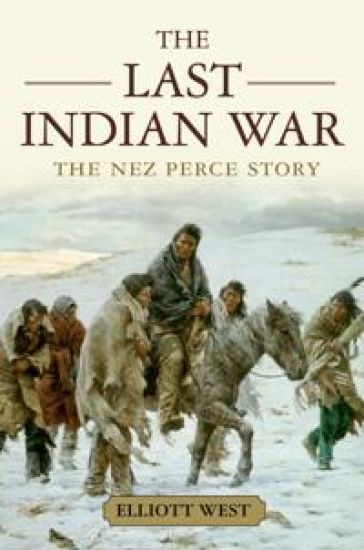
The Last Indian War

The Last Indian War

Elliott West

Oxford University Press Inc
2011
nidottu

Halvin toimitettuna 27,30 €

This volume in Oxford's acclaimed Pivotal Moments series offers an unforgettable portrait of the Nez Perce War of 1877, the last great Indian conflict in American history. It was, as Elliott West shows, a tale of courage and ingenuity, of desperate struggle and shattered hope, of short-sighted government action and a doomed flight to freedom. To tell the story, West begins with the early history of the Nez Perce and their years of friendly relations with white settlers. In an initial treaty, the Nez Perce were promised a large part of their ancestral homeland, but the discovery of gold led to a stampede of settlement within the Nez Perce land. Numerous injustices at the hands of the US government combined with the settlers' invasion to provoke this most accommodating of tribes to war. West offers a riveting account of what came next: the harrowing flight of 800 Nez Perce, including many women, children and elderly, across 1500 miles of mountainous and difficult terrain. He gives a full reckoning of the campaigns and battles--and the unexpected turns, brilliant stratagems, and grand heroism that occurred along the way. And he brings to life the complex characters from both sides of the conflict, including cavalrymen, officers, politicians, and--at the center of it all--the Nez Perce themselves (the Nimiipuu, "true people").
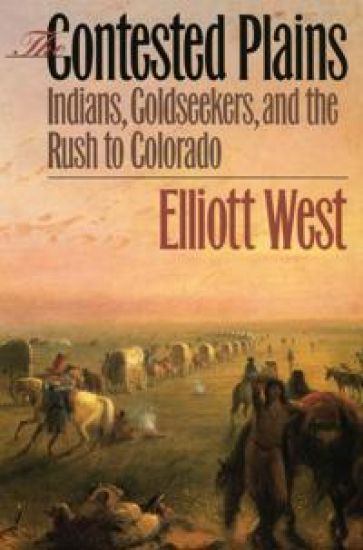
The Contested Plains

The Contested Plains

Elliott West

University Press of Kansas
1998
nidottu
Although many books have been written about the Colorado gold rush, this one concentrates on assessing the cataclysmic changes that it brought to the Great Plains. In addition, rather than casting the story in the usual terms of heartless aggressors and hapless victims, it supplies a large and insightful interpretation that at once softens and increases our understanding of the Anglo disruption of Plains Indian cultures. The book's lucid writing and extensive research give meaning to the frontier concept that has been lambasted for 30 years or more. West's story is a story of cultural revisions - and thus the imaginations and aspirations of many people.
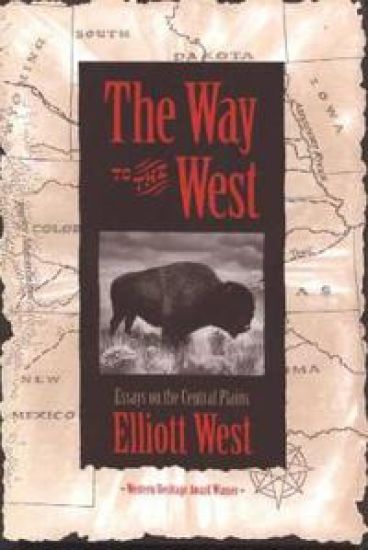
The Way to the West

The Way to the West

Elliott West

University of New Mexico Press
1995
nidottu
This poignant history of the great migrations of the Cheyenne Indians and Anglo pioneers onto the arid Central Plains tells a complex story of the relationship between people and the environment. Elliott West, a distinguished western historian, turns his attention here to land, animals, families, and stories. Focusing on a region embracing parts of present-day Kansas, Nebraska, Colorado, and Wyoming, he examines both the facts and myths of the migrations. How did the environment and people affect one another? How did families respond to the challenges of the Central Plains? How have our stories shaped our consciousness of that history? The Way to the West combines deep research with insightful analysis and narrative skill to present a story that both historians and students will enjoy." An accomplished social historian, West argues forcefully here that history can never be only about human society. It always takes place--unfolds within the shifting, particular complexity of nature. His treatment of the Indian era on the plains is a particularly fresh, insightful demonstration of that fact."--Donald Worster"It may not be possible to take a fresher look at a slice of the West that Elliott West does here. These are inventive, compelling and original essays. Like their author, they are wry, learned, and just plain curious. A wonderful book."--Richard White