Kirjojen hintavertailu – 12 859 829 kirjaa ja 27 kauppaa

Kirjailija

Ellis Amdur

Kirjat ja teokset yhdessä paikassa: 26 kirjaa, julkaisuja vuosilta 2010–2019, suosituimpiin kuuluu Words of Power. Vertaile teosten hintoja ja tarkista saatavuus suomalaisista kirjakaupoista.

26 kirjaa

Kirjojen julkaisuvuodet: 2010–2019.

Old School

Old School

Ellis Amdur

FreeLance Academy Press
2014
nidottu

Halvin toimitettuna 56,20 €

Koryu, literally 'old flow from the past,' refers to Japanese martial traditions that predate the sweeping cultural changes that followed the Meiji Restoration of 1868. They generally have a very different character and tone from modern martial arts, such as kendo, judo or aikido which followed. More than the study of antique weapons, self-defense or a form of athletics, these martial traditions are a cultural legacy and a window to another time and place. In the first edition of Old School, Ellis Amdur, a renowned martial arts researcher, and himself an instructor in two different surviving koryu, gave readers a rare glimpse into feudal Japanese warrior arts, both as they were in the past and as they live on today. Nearly a decade later, he returns to the subject in this new, greatly expanded edition, bringing readers inside the dojos of a number ancient schools, providing details analysis of the evolution and morphology of uniquely Japanese weaponry, addressing the myth and reality of Japan's naginata-wielding warrior women, and discussing the modern relevance of the blood oaths, magical ritual and mysticism that often permeate the koryu. Finally, he looks at the challenge of preservation and transmission, especially as more and more practitioners of the koryu exist outside of Japan itself. Writing with a combination of the initiate's passion for his subject, and the scientist's rigorous search for the truth, Amdur asks critically: do the ancient traditions still meet the objectives of their founders? Are they successfully passing their ancient legacy down to the next generation? Over a third larger than the first edition and filled with new artwork and photography, Old School: Japanese Martial Traditions Expanded Edition will be an invaluable addition to the library of old readers and new alike. 125 b&w illustrations, photographs and drawings.

The Thin Blue Lifeline

The Thin Blue Lifeline

John Hutchings; Ellis Amdur

Createspace Independent Publishing Platform
2011
pokkari
I have had the opportunity to review and read THE THIN BLUE LIFELINE and I cannot recommend this book highly enough. This moves policing communication so far beyond "Verbal Judo" and "Tac Com" that those systems cannot even compare (though, to be sure, there are some similar techniques that they utilise in those systems). It is relevant, well-written, operationally-based, and goes to the heart of the matter in dealing with people who are in crisis - not just for dealing with "mentally ill" folks - but virtually everyone with whom police officers come into contact. In an age where police officers are under increasing pressure to move from call-to-call, there can be accompanying pressure to resolve situations more quickly than they should be resolved - which, when time is compressed, usually leads to the application of physical force. This book offers perspective, is incredibly insightful and will help officers recognize specific issues and conditions. It provides real-world, usable tools, tactics and techniques to help resolve situations at the preferred threshold of "Officer Presence" and "Communication." If you own books such as: The Art of War; Sharpening the Warrior's Edge, On Killing, Training at the Speed of Life, Police Pistolcraft, Warfighting, Terror at Beslan, On Combat, or The Green Beret in You -you MUST add this extremely relevant text to your library. I wish I had read this book 25 years ago.- Joel A. Johnston Staff Sergeant 1314 Use of Force & Municipal ERT Coordinator Province of British Columbia
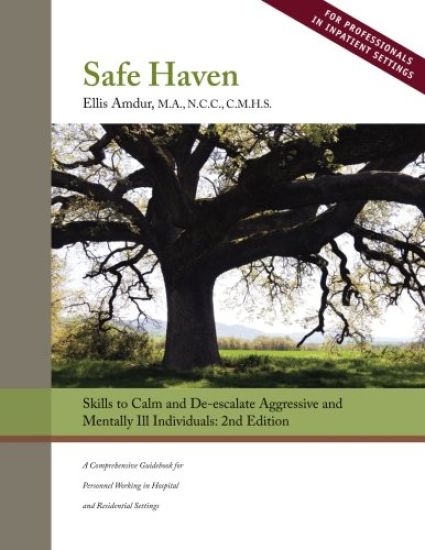
Safe Haven

Safe Haven

Ellis Amdur

Createspace Independent Publishing Platform
2011
pokkari
Individuals suffering from psychiatric or substance use disorders sometimes display any one of a number of frightening behaviors: verbal outbursts, physical threats and even violence. In this comprehensive guidebook, Ellis Amdur walks professionals working in inpatient and residential settings through a multitude of steps they can take to keep themselves, their colleagues, and their clientele safe. Amdur s focus is based on behavior rather than diagnosis. The first sections of the book discuss specific behaviors ranging from such relatively minor irritants as reluctance to complete tasks and obsessive concerns to more troubling, pervasive syndromes such as psychosis, mania and disorganization. In one very important section, he discusses interactions with anti-social and psychopathic individuals, people who present danger to the psychological and physical well being of both staff and patients. In the second major section of the book, he focuses on us: what we can do to achieve a state of integrity and powerful calm. Rather than abstract pronouncements, he offers specific strategies, including a method of breathing that is for the purpose of maintaining one s center in crisis situations. He then moves on to direct face-to-face encounters. This includes how to handle tense situations before they deteriorate into chaos, and how to de-escalate once a crisis is in play. Amdur elucidates the various motivations that drive aggression and further delineates the different types of aggression that result. De-escalation tactics are specific one learns how to instantly recognize what mode of aggression the person is in, and then, well-trained and practiced, one can almost instantaneously shift into the correct de-escalation tactic that fits the aggression one is facing. The final sections of the book offer a macro-view: how to establish and maintain a culture of safety within the hospital or residential setting. The likelihood that one will have to use de-escalation skills or other self-protective strategies is far diminished when such a culture of safety is in place.
In the Eye of the Hurricane

In the Eye of the Hurricane

Ellis Amdur

Createspace Independent Publishing Platform
2011
pokkari
Individuals suffering from psychiatric or substance use disorders sometimes display any one of a number of frightening behaviors: verbal outbursts, physical threats and even violence. In this comprehensive guidebook, Ellis Amdur walks families through a multitude of strategies they can use to keep themselves, and their mentally ill family member safe. Amdur s focus is based on behavior rather than diagnosis. The first sections of the book discuss specific behaviors ranging from such relatively minor irritants as reluctance to complete tasks and obsessive concerns to more troubling, pervasive syndromes such as psychosis, mania and disorganization. In one very important section, he discusses interactions with manipulative individuals, people who present danger to the psychological and physical well being of everyone in your family. In the second major section of the book, he focuses on us: what we can do to achieve a state of integrity and powerful calm. Rather than abstract pronouncements, he offers specific strategies, including a method of breathing that is for the purpose of maintaining one s center in crisis situations. He then moves on to direct face-to-face encounters, covering situations that can occur anywhere: in the community, at your residence, on the street, or even your car. Instruction includes how to handle tense situations before they deteriorate into chaos, and how to manage a crisis once it has started, whether it concerns an adult or a young person. He instructs you on how to instantly recognize what mode of aggression the person is in, and then, well-trained and practiced, how to almost instantaneously shift into the correct de- escalation tactic that fits the aggression one is facing.
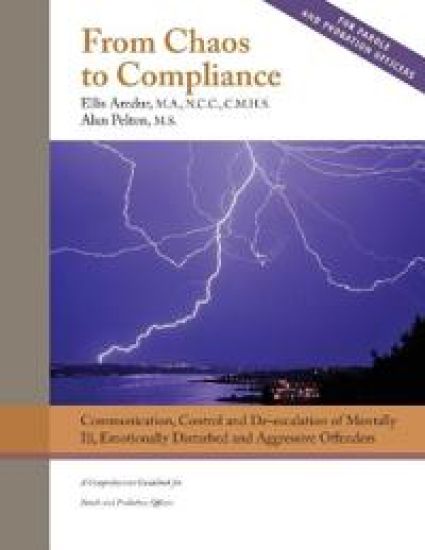
From Chaos to Compliance

From Chaos to Compliance

Alan Pelton; Ellis Amdur

Createspace Independent Publishing Platform
2011
pokkari
Parole and probation officers must deal with individuals suffering from psychiatric or substance abuse disorders on a frequent basis. Ellis Amdur and Alan Pelton offer parole and probation officers a comprehensive set of strategies to keep themselves as well as the general public safe, while functioning at the highest level of professionalism. The first section of this book offers an overview of the role of community corrections in dealing with the mentally ill and/or substance abusing offender. The second section is tactical: everything from field safety and tactical planning on one side, to honing your intuition to pick up early signs of danger on the other. In the third section of the book, the authors focus on us: what we can do to achieve a state of integrity and powerful calm. Rather than abstract pronouncements, they offer specific strategies, including a method of breathing for the purpose of maintaining one's own center in crisis situations. They then discuss specific behaviors ranging from confusion and obsessive concerns to psychosis, mania and acute disorganization. In one very important section, they discuss interactions with manipulative individuals (at worst, those referred to as psychopaths), people who present a danger to the psychological and physical well-being of anyone with whom they come in contact. They then move on to a discussion of aggression, whether directed at the parole or probation officer or others. There is a specific section set aside on dealing with aggressive youthful offenders. Amdur and Pelton discuss how to de-escalate aggressive and chaotic individuals once a crisis is in play. De-escalation tactics are specific - one learns how to immediately recognize what mode of aggression the person is displaying, and then, one can effectively implement the de-escalation tactics that are best suited to deal with the aggression one is facing.
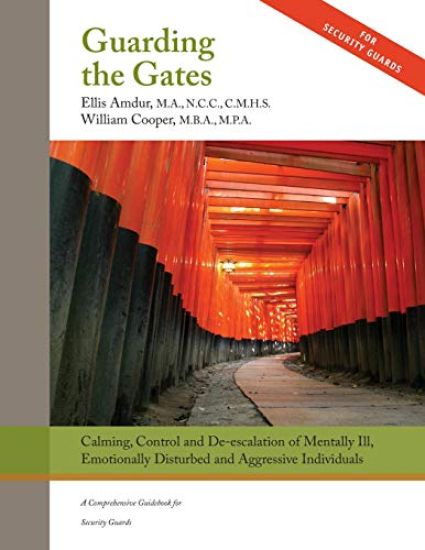
Guarding the Gates

Guarding the Gates

William Cooper; Ellis Amdur

Createspace Independent Publishing Platform
2010
pokkari
Individuals suffering from psychiatric or substance use disorders sometimes display any one of a number of frightening behaviors: verbal outbursts, physical threats and even violence. Security guards must frequently deal with such individuals in locations as varied as hospital emergency rooms, shopping malls, places of business and isolated warehouses in the middle of the night. In this comprehensive guidebook, Ellis Amdur and William Cooper offer security guards a comprehensive set of strategies to keep themselves, those they are protecting and the general public safe, while functioning at the highest level of professionalism. The first sections of this book define the role of the security guard in the de-escalation of emotionally-disturbed individuals, whatever the cause of their upset. This includes development of a safety mindset, as well as tactical planning. In the second major section, they focus on us: how to hone our intuition and how we can develop a state of integrity and powerful calm, the ideal state of mind to function in crisis situations. They then move on to the heart of the book discussing specific behaviors ranging from confusion and obsessive concerns to psychosis, mania and acute disorganization. In one very important chapter, they discuss interactions with opportunistic and manipulative individuals, people who present a danger to the psychological and physical well-being of anyone whom they come in contact. They then discuss how to de-escalate aggressive and chaotic individuals once a crisis begins. Amdur and Cooper elucidate the various motivations that drive aggression and further delineate the different types of aggression that result. De-escalation tactics are specific - one learns how to immediately recognize what mode of aggression the person is displaying, and then, one can quickly and effectively implement the de-escalation tactics that are best suited to deal with the aggression one is facing.