Kirjojen hintavertailu – 12 903 725 kirjaa ja 27 kauppaa

Kirjailija

Else Lasker-Schüler

Kirjat ja teokset yhdessä paikassa: 51 kirjaa, julkaisuja vuosilta 1994–2025, suosituimpiin kuuluu Wenn mein Herz gesund wär. Vertaile teosten hintoja ja tarkista saatavuus suomalaisista kirjakaupoista.

Nimi esiintyy myös muodoissa: Else Lasker-Schuler

51 kirjaa

Kirjojen julkaisuvuodet: 1994–2025.

My Blue Piano

My Blue Piano

Else Lasker-Schüler

Syracuse University Press
2015
nidottu
Else Lasker-Schüler (1869–1945) was born into an affluent German Jewish family. Following the death of her parents and the dissolution of her marriage, the fledgling poet became notorious in the fashionable cafés of Berlin for appearing in costume as a Persian girl or as an Egyptian boy. Her flamboyance was echoed in her poetry, which combined the sexual with the religious in its exploration of the ecstatic experience. Critics have long dismissed her poetry as decadent in its romantic use of references to moonlight, flowers, and woodland creatures. In his introduction, Haxton addresses such criticism by arguing that what others have termed kitsch and cliché in Lasker-Schüler’s poetry may be understood more fully as a kind of iconoclasm, like that of her Expressionist contemporaries, and as an authentic expression of emotional tenderness. Her poetry also resonates with the cultural moment of Sarah Bernhardt’s gender-bending stage performances and Freud’s sexual interpretations of the subconscious. The poems collected in this bilingual volume represent the full range of Lasker-Schüler’s work, from her earliest poems until her death. Haxton’s translation embraces the poems’ lyrical imagery, remaining faithful to the poet’s vision while also capturing the cadence and rhythms of the poetry.

My Blue Piano

My Blue Piano

Else Lasker-Schüler

Syracuse University Press
2015
sidottu
Else Lasker-Schüler (1869–1945) was born into an affluent German Jewish family. Following the death of her parents and the dissolution of her marriage, the fledgling poet became notorious in the fashionable cafés of Berlin for appearing in costume as a Persian girl or as an Egyptian boy. Her flamboyance was echoed in her poetry, which combined the sexual with the religious in its exploration of the ecstatic experience. Critics have long dismissed her poetry as decadent in its romantic use of references to moonlight, flowers, and woodland creatures. In his introduction, Haxton addresses such criticism by arguing that what others have termed kitsch and cliché in Lasker-Schüler’s poetry may be understood more fully as a kind of iconoclasm, like that of her Expressionist contemporaries, and as an authentic expression of emotional tenderness. Her poetry also resonates with the cultural moment of Sarah Bernhardt’s gender-bending stage performances and Freud’s sexual interpretations of the subconscious. The poems collected in this bilingual volume represent the full range of Lasker-Schüler’s work, from her earliest poems until her death. Haxton’s translation embraces the poems’ lyrical imagery, remaining faithful to the poet’s vision while also capturing the cadence and rhythms of the poetry.

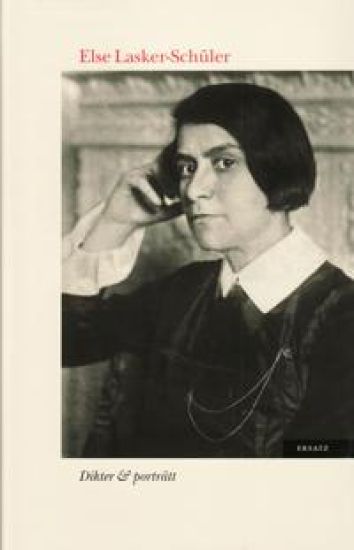
Dikter & porträtt

Dikter & porträtt

Else Lasker-Schüler

Ersatz
2009
sidottu
Poeten, essäisten och dramatikern Else Lasker-Schüler (18691945), en av de främsta företrädarna för den tyska expressionismen, introduceras med ett rikt urval dikter och essäer i svensk översättning av Peter Handberg, i en tvåspråkig utgåva. Else Lasker-Schüler är i dag en del av den tyska litterära kanon, men väckte motstridiga känslor hos sin samtid. Omgiven av bohemer på kaféerna i Weimarrepublikens Berlin speglade hon sin tid med säregen intensitet. Gottfried Benn betraktade henne som »den största lyriker Tyskland någonsin haft« och Karl Kraus menade att hon var »det moderna Tysklands starkaste och mest okuvliga lyriska fenomen«. Franz Kafka å sin sida tålde inte den överhettade kärlekslyriken som är ett av Lasker-Schülers kännetecken, och nationalsocialisterna kallade hennes verk entartet, urartat. Den tysk-judiska poeten flydde hemlandet 1933 och slutade sina dagar i Jerusalem efter flera smärtsamma år i exil. I dag verkar Else Lasker-Schüler-sällskapet bland annat för förföljda författarnas rättigheter.
Mein Herz - Ein Liebesroman mit Bildern und wirklich lebenden Menschen
Dieser "Liebes-Roman mit Bildern und wirklich lebenden Menschen" führt mitten in das Leben der Berliner Boheme vor dem Ersten Weltkrieg. In Briefen an ihren Mann Herwarth Walden erzählt Else Lasker-Schüler Geschichten rund um das Caf? des Westens, schreibt mit Verve und Witz von allen Herzensdingen. "Und die Liebe, Herwarth, Du weißt doch, was ich von der Liebe halte, wäre sie eine Fahne, ich würde sie erobern oder für sie fallen." Der Band basiert auf der Erstausgabe von 1912 mit sämtlichen dort enthaltenen Zeichnungen Else Lasker-Schülers und dem Porträt der Dichterin von Karl Schmidt-Rottluff, mit ausführlichem Kommentar und einem Nachwort von Ricarda Dick.
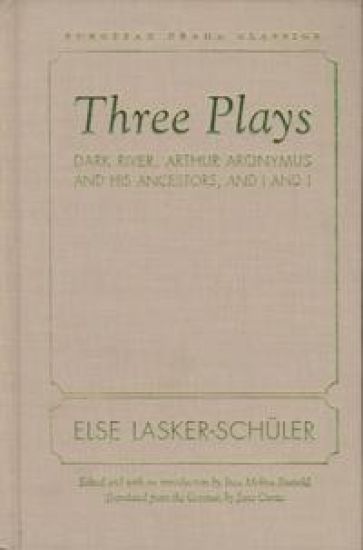
Three Plays

Three Plays

Else Lasker-Schuler

NORTHWESTERN UNIVERSITY PRESS
2005
sidottu
Avant-garde plays by a gifted and unconventional German Jewish writer, one of the few women among the Expressionists of the Berlin Moderns Famous for her poetry and infamous for her bohemian lifestyle, as well as her association with political radicals, Else Lasker-Schüler (1869-1945) is only now returning to just renown as one of the few women writers within the Expressionist movement of the early twentieth century. These plays-Dark River, Arthur Aronymus and His Ancestors, and I and I-in Jane Curtis's fluid translation, allow readers of English to experience the radically avant-garde style that put Lasker-Schüler on a par with Brecht in her day, as well as the passionate treatment of questions of gender, ethnicity, and sexuality that placed her well ahead of her time. Lasker-Schüler's plays reflect her unusual life among the Berlin Moderns of the 1910s and 20s. The daughter of a well-to-do Jewish banker and builder, Else Schüler gave up her bourgeois existence as a doctor's wife for the artistic, social, and political uncertainties that would characterize the rest of her life. Many of her finest poems and plays were written amidst the cafe society of Berlin, where she knew some of the great expressionist artists of the period. The death of her beloved son in 1927, which led her to intense introspection and reflection on the Jewish tradition, especially mysticism and the Kabbalah, also marked the beginning of Lasker-Schüler's years of tragedy, loss, and dislocation, culminating in her flight from Nazi Germany to Switzerland and then Jerusalem, where she ended her days as an eccentric pauper. The plays in this volume mark Lasker-Schüler's movement away from the traditional aesthetic canon, revealing a unique formal development from naturalistic expressionist episodes in the lyrical Dark River to a historicizing politicization of the theater in Arthur Aronymous to the forms of montage and ""epic"" presentations in I and I. A short preface by Inca Molina Rumold places each play in its historical, biographical, and artistic context.
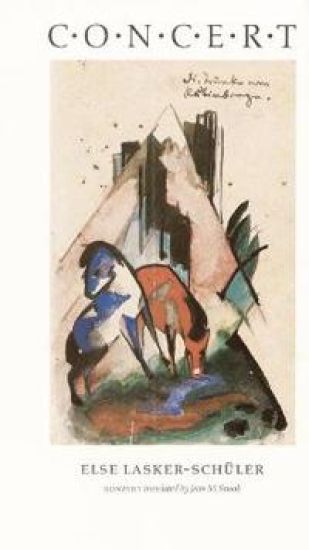
Concert

Concert

Else Lasker-Schuler

University of Nebraska Press
1994
sidottu
Concert was one of the last books published by a Jew in Germany before Hitler came to power. The work is autobiographical, a collection of essays and vignettes that both entertain and engage the reader at a deeper level. Like Robert Schumann's piano suites, each in itself a perfect concert, Else Lasker-Schüler's Concert contains pieces that vary greatly in theme, mood, length, and complexity, yet they are unified by the medium and by the distinct and lyrical personality of the artist. Lasker-Schüler is able to transform and transcend the everyday scenery and events that are her points of departure. She makes magical an unmagical corner of Germany, discerns the miraculous in the neglected and ignored, and finds wisdom and comfort in prayer and cosmic perspective. Lasker-Schüler was attuned to the world and in some ways uncannily prophetic. It may come as a surprise to some readers that Concert, published in German in 1932, contains a warning about the climatic dangers of interfering 'with the merry green leaf people who give us ozone and the breath of life.' With her respect for the natural environment and her emphasis on spiritual development rather than the materialistic, Lasker-Schüler's voice remains relevant to our own times. A recent German edition of her complete works has proven immensely popular. Prior to the Third Reich, Lasker-Schüler had a well-established reputation in her native Germany as a poet, dramatist, and prose writer, as well as for her work in the visual arts, and she received the Kleist Prize for Literature. As a Jew, though, she was increasingly threatened by 'people wearing swastikas,' and was forced to flee the country in 1933, never to return. She died in exile in Palestine in 1945. This is the first English translation of any of Lasker-Schüler's prose: a challenging task because she includes sections in dialect, poems, numerous neologisms, witty alterations of German sayings, and structural emulations with phonetic echoes of famous German art songs.