Kirjojen hintavertailu – 12 859 819 kirjaa ja 27 kauppaa

Kirjailija

Elvin Wyly

Kirjat ja teokset yhdessä paikassa: 6 kirjaa, julkaisuja vuosilta 2007–2026, suosituimpiin kuuluu Dracula Urbanism and Smart City Mania. Vertaile teosten hintoja ja tarkista saatavuus suomalaisista kirjakaupoista.

6 kirjaa

Kirjojen julkaisuvuodet: 2007–2026.

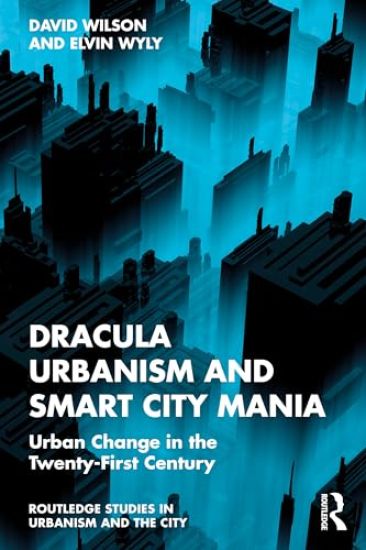
Dracula Urbanism and Smart City Mania

Dracula Urbanism and Smart City Mania

David Wilson; Elvin Wyly

TAYLOR FRANCIS LTD
2026
nidottu
This innovative book applies the metaphor of Dracula to understand a highly controversial reality that marks so many cities today: how the rage of smart city development and growth proceeds, is organized, and produces benefits for some and afflicts others. It also explores how social science research into these issues may be informed by the insights of gothic literature as conceptual bonds are forged between the social sciences and the humanities. Focusing on Miami and Mexico City, the book reveals a new quiet warfare being unleashed on the poor and a “Dracula-like” development conduct being rolled-out that spreads rapidly across the globe. This book will appeal to students, researchers and informed readers interested in urban studies, city planning, urban sociology, critical geography, and literature studies. The book is lucidly written and substantively deep to enhance classroom teaching and provide important detail for research on urban redevelopment, city restructuring, and societal change. On the popular front, non-academic readers will find the book enriching and compelling, as only few books clearly and provocatively link the shadows of gothic horror with contemporary realities in cities.

Dracula Urbanism and Smart City Mania

Dracula Urbanism and Smart City Mania

David Wilson; Elvin Wyly

TAYLOR FRANCIS LTD
2026
sidottu
This innovative book applies the metaphor of Dracula to understand a highly controversial reality that marks so many cities today: how the rage of smart city development and growth proceeds, is organized, and produces benefits for some and afflicts others. It also explores how social science research into these issues may be informed by the insights of gothic literature as conceptual bonds are forged between the social sciences and the humanities. Focusing on Miami and Mexico City, the book reveals a new quiet warfare being unleashed on the poor and a “Dracula-like” development conduct being rolled-out that spreads rapidly across the globe. This book will appeal to students, researchers and informed readers interested in urban studies, city planning, urban sociology, critical geography, and literature studies. The book is lucidly written and substantively deep to enhance classroom teaching and provide important detail for research on urban redevelopment, city restructuring, and societal change. On the popular front, non-academic readers will find the book enriching and compelling, as only few books clearly and provocatively link the shadows of gothic horror with contemporary realities in cities.
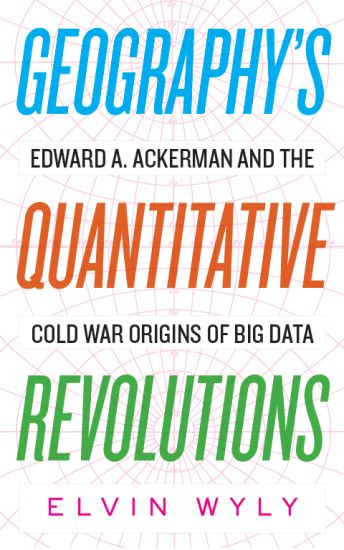
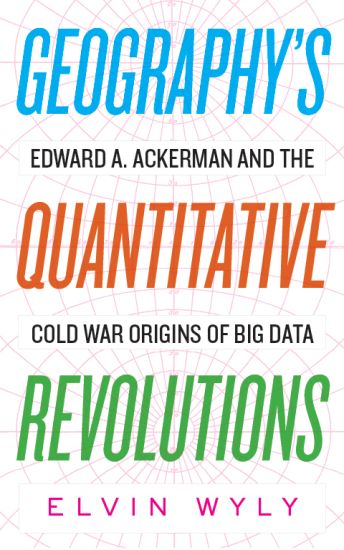
Geography's Quantitative Revolutions

Geography's Quantitative Revolutions

Elvin Wyly

West Virginia University Press
2019
nidottu
Do you have a smartphone? Billions of people on the planet now navigate their daily lives with the kind of advanced Global Positioning System capabilities once reserved for the most secretive elements of America';s military-industrial complex. But when so many people have access to the most powerful technologies humanity has ever devised for the precise determination of geographical coordinates, do we still need a specialized field of knowledge called geography? Just as big data and artificial intelligence promise to automate occupations ranging from customer service and truck driving to stock trading and financial analysis, our age of algorithmic efficiency seems to eliminate the need for humans who call themselves geographers—at the precise moment when engaging with information about the peoples, places, and environments of a diverse world is more popular than ever before. How did we get here? This book traces the recent history of geography, information, and technology through the biography of Edward A. Ackerman, an important but forgotten figure in geography's "quantitative revolution". It argues that Ackerman's work helped encode the hidden logics of a distorted philosophical heritage—a dangerous, cybernetic form of thought known as militant neo-Kantianism—into the network architectures of today's pervasive worlds of surveillance capitalism.
Geography's Quantitative Revolutions

Geography's Quantitative Revolutions

Elvin Wyly

West Virginia University Press
2019
sidottu
Do you have a smartphone? Billions of people on the planet now navigate their daily lives with the kind of advanced Global Positioning System capabilities once reserved for the most secretive elements of America's military-industrial complex. But when so many people have access to the most powerful technologies humanity has ever devised for the precise determination of geographical coordinates, do we still need a specialized field of knowledge called geography? Just as big data and artificial intelligence promise to automate occupations ranging from customer service and truck driving to stock trading and financial analysis, our age of algorithmic efficiency seems to eliminate the need for humans who call themselves geographers-at the precise moment when engaging with information about the peoples, places, and environments of a diverse world is more popular than ever before. How did we get here? This book traces the recent history of geography, information, and technology through the biography of Edward A. Ackerman, an important but forgotten figure in geography's "quantitative revolution." It argues that Ackerman's work helped encode the hidden logics of a distorted philosophical heritage-a dangerous, cybernetic form of thought known as militant neo-Kantianism-into the network architectures of today's pervasive worlds of surveillance capitalism.
Gentrification

Gentrification

Loretta Lees; Tom Slater; Elvin Wyly

Routledge
2007
sidottu
This first textbook on the topic of gentrification is written for upper-level undergraduates in geography, sociology, and planning. The gentrification of urban areas has accelerated across the globe to become a central engine of urban development, and it is a topic that has attracted a great deal of interest in both academia and the popular press. Gentrification presents major theoretical ideas and concepts with case studies, and summaries of the ideas in the book as well as offering ideas for future research.
Gentrification

Gentrification

Loretta Lees; Tom Slater; Elvin Wyly

Routledge
2007
nidottu
This first textbook on the topic of gentrification is written for upper-level undergraduates in geography, sociology, and planning. The gentrification of urban areas has accelerated across the globe to become a central engine of urban development, and it is a topic that has attracted a great deal of interest in both academia and the popular press. Gentrification presents major theoretical ideas and concepts with case studies, and summaries of the ideas in the book as well as offering ideas for future research.