Kirjojen hintavertailu – 12 859 818 kirjaa ja 27 kauppaa

Kirjailija

Emile Zola

Kirjat ja teokset yhdessä paikassa: 2 184 kirjaa, julkaisuja vuosilta 1884–2026, suosituimpiin kuuluu Émile Zola Collection - The Ladies' Paradise. Vertaile teosten hintoja ja tarkista saatavuus suomalaisista kirjakaupoista.

Nimi esiintyy myös muodoissa: Émile Zola, Emile Zolá

2 184 kirjaa

Kirjojen julkaisuvuodet: 1884–2026.

The Drinking Den

The Drinking Den

Émile Zola

Penguin Classics
2004
pokkari

Halvin toimitettuna 18,90 €

Previously published as L'assommoir (The Dram Shop), Emile Zola's The Drinking Den is an unflinching study of a desperate young woman struggling against the ravages of vice. This Penguin Classics edition is translated from the French with an introduction by Robin Buss. Abandoned by her lover and left to bring up their two children alone, Gervaise Macquart has to fight to earn an honest living. When she accepts the marriage proposal of Monsieur Coupeau, it seems as though she is on the path to a decent, respectable life at last. But with her husband's drinking and the unexpected appearance of a figure from her past, Gervaise's plans begin to unravel tragically. The Drinking Den caused a sensation when it was first published, with its gritty depiction of the poverty and squalor, slums and drinking houses of the Parisian underclass. The seventh novel in Zola's great Rougon-Macquart cycle, it was the work that made his reputation. And, in his moving portrayal of Gervaise's struggle for happiness, Zola created one of the most sympathetic heroines in nineteenth-century literature. Robin Buss's translation renders Zola's street argot into clear, contemporary English. This edition also includes an introduction discussing Zola's Naturalistic method, with maps of Paris, Zola's preface responding to his critics, notes, a chronology and further reading. Emile Zola (1840-1902) was the leading figure in the French school of naturalistic fiction. His principal work, Les Rougon-Macquart, is a panorama of mid-19th century French life, in a cycle of 20 novels which Zola wrote over a period of 22 years, including Au Bonheur des Dames (1883), The Beast Within (1890), Nana (1880), and The Drinking Den (1877). If you enjoyed The Drinking Den, you might like Zola's The Beast Within, also available in Penguin Classics.
Germinal

Germinal

Émile Zola

Penguin Classics
2004
pokkari

Halvin toimitettuna 16,20 €

Considered by André Gide to be one of the ten greatest novels in the French language, Émile Zola's Germinal is a brutal depiction of the poverty of a mining community in northern FranceÉtienne Lantier, an unemployed railway worker, is a clever but uneducated young man with a dangerous temper. Compelled to take a back-breakin job at Le Voreux mine when he cannot get other work, he discovers that his fellow miners are ill, hungry and in debt, unable to feed and clothe their families. When conditions in the mining community deteriorate even further, Lantier finds himself leading a strike that could mean starvation or salvation for all. The thirteenth novel in Zola's great Rougon-Macquart sequence, Germinal expresses outrage at the exploitation of the many by the few, but also shows humanity's capacity for compassion and hope. Translated with an introduction by Roger Pearson in Penguin Classics If you enjoyed Germinal, you might like Zola's Thérèse Raquin, also available in Penguin Classics.
Notes from Exile

Notes from Exile

Emile Zola

University of Toronto Press
2003
sidottu
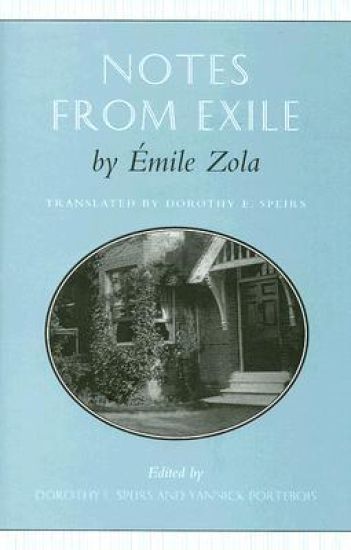
On July 19th, 1898, Emile Zola arrived in England after fleeing imprisonment in France. He was to spend eleven months in self-imposed exile because of his involvement in the Dreyfus Affair. During this time, the family of his English translator, Ernest Alfred Vizetelly, took care of his everyday needs. While in Britain, Zola wrote a short text entitled 'Pages d'exil,' in which he talked about his feelings regarding England, exile, and other matters. An avid photographer, Zola also took pictures of his surroundings that were left with the Vizetelly family when he returned to France. Dorothy Speirs and Yannick Portebois, in collaboration with Ernest Alfred Vizetelly's last surviving grandson, have here reproduced those photographs with the first English translation, fully annotated, of 'Pages d'exil.' The photographs, of landscapes, churches, and street scenes, have never been published before, and represent a major contribution to the collection of Zola photographs, many of which are today largely inaccessible. Together, the text and photographs will be of great interest to anyone who enjoys Zola's work, and to scholars of French history and the Dreyfus Affair.
Truth

Truth

Emile Zola

Prometheus Books
2002
pokkari
In a quiet rural village in late 19th-century France, an eleven-year-old boy is found dead in his room, sexually molested and strangled by an unknown assailant. The shocked townsfolk erupt in outrage: Who could have committed this horrible crime? Rumors immediately begin to fly and suspicions shift from one person to another as ignorant conjecture begins to feed on itself. At first a vagrant is suspected; he could have come in through the open window while passing through the town at night. But in a matter of days another story begins to circulate: the culprit must be Simon, the Jewish schoolmaster, and the murdered boy's uncle and guardian. Did he not, it is rumored, resent the fact that the boy was the product of a mixed Catholic-Jewish marriage and was raised Catholic by his now deceased mother? Despite the total lack of evidence against him, as a Jew in the midst of a predominantly Christian community, Simon is completely vulnerable to these vicious allegations. The web of mendacity that is quickly spun around him is the product of centuries of entrenched anti-Semitism and the long-standing bitter rivalry between the Catholic majority of the town and an emerging secular minority. Through political pressure by influential Catholic clergymen and the manipulation of public opinion, the Church deftly deflects the suspicions of some that the murderer is actually one of the Christian Brothers and succeeds in gaining advantage against the threat of encroaching secularism in the town. Based on his experiences with the infamous Dreyfus case, this powerful last novel by Emile Zola about the scape-goating of a Jewish schoolteacher is a chilling depiction of anti-Semitism fully embedded in European society and an eerie presentiment of the Holocaust that would sweep across the Continent only forty years later. But this is not the whole story, for Zola also brilliantly demonstrates how truth, though suppressed for a generation, slowly but inexorably comes to light through the dedication and perseverance of a few humble defenders, who remain unswerving in their demand for justice.
Au Bonheur des Dames (The Ladies' Delight)
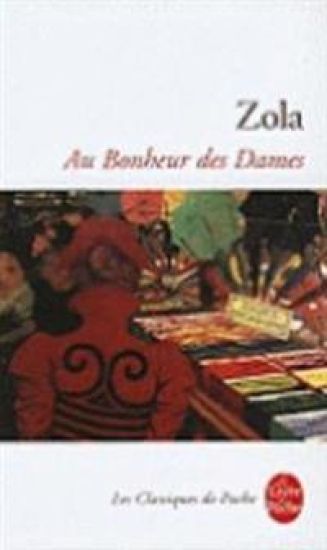
Now the basis for the major BBC tv adaptation The Paradise, this is a lavish drama and a timeless commentary on consumer capitalism. The Penguin Classics edition of Émile Zola's The Ladies' Delight is based on an acclaimed, vivid and modern translation by Robin Buss, who has also introduced the novel. The Ladies' Delight is the glittering Paris department store run by Octave Mouret. He has used charm and drive to become director of this mighty emporium, unscrupulously exploiting his young female staff and seducing his lady customers with luxurious displays of shimmering silks, satins, velvets and lace. Then Denise Baudu, a naïve provincial girl, becomes an assistant at the store - and Mouret discovers that he in turn can also be enchanted. With its greedy customers, gossiping staff and vibrant sense of theatre, The Ladies' Delight (Au Bonheur des Dames in the original French) is one of the most richly exciting novels in Zola's Les Rougon-Macquart cycle. This edition also contains a bibliography, introduction, chronology and explanatory notes. Emile Zola (1840-1902) was the leading figure in the French school of naturalistic fiction. His principal work, Les Rougon-Macquart, is a panorama of mid-19th century French life, in a cycle of 20 novels which Zola wrote over a period of 22 years, including Au Bonheur des Dames (1883), The Beast Within (1890), Nana (1880), and The Drinking Den (1877).'A complete page-turner about the consumer society, greed, fashion and instant gratification'India Knight'A fine translation'The Times Literary Supplement
Lourdes

Lourdes

Emile Zola

Prometheus Books
2000
pokkari
In this moving depiction of a pilgrimage to Lourdes, the master French realist has created a novel of vivid characters and subtle commentary on suffering and the belief in miracles as the last desperate refuge from pain. Based on his own trip to the fabled grotto, the novel follows a simple five-part structure corresponding to the five-day train trip from Paris to Lourdes and back. Zola's brilliant observational powers are at their best as he moves from character to character describing in great detail the physical effects of their illnesses, their hopes, beliefs, fears, and above all endurance. The great novelist himself makes a brief appearance in the story, disguised as a skeptical reporter whose probing questions embarrass a doctor in charge of verifying the alleged miracles. In the end, amidst the tumult of emotions whipped up by religious fervor a miracle of a sort does take place, a psychosomatic cure of a woman suffering from hysterical paralysis. To a few skeptical observers in the entourage the event is a predictable natural occurrence, but to the majority of simple believers it is proof of divine intervention. In our age of televangelists and faith healers, this story has lost none of its relevance.
Zola: Thérèse Raquin

Zola: Thérèse Raquin

Emile Zola

Bristol Classical Press
1998
nidottu
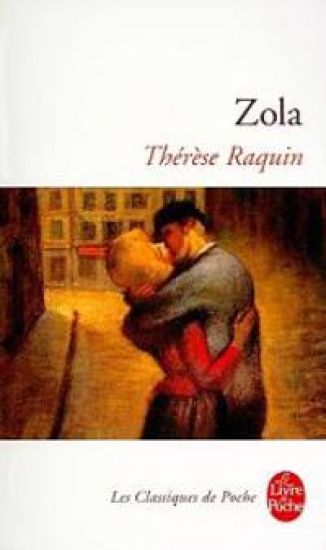
A gothic tale of murder and adultery, Thérèse Raquin was denounced as pornography on its publication in 1867. "Putrid literature" was how Louis Ulbach described the novel in a contemporary review. Zola defended himself against these attacks in his preface to the second edition, in which he outlined his aim to produce a new, "scientific" form of realism. The novel marks a crucial step in Zola's development and is a major early work of Naturalism. In his introduction to Thérèse Raquin, Brian Nelson places the novel in its cultural, intellectual and artistic contexts, and compares Zola's scientific aims with his actual practice in this work. The scientific status of Naturalist fiction remains problematic; in the final analysis it is influenced by literary models and conventions. Zola's powerful mythopoeic imagination does much to counteract the mechanistic view of humanity the novel was intended to embody. The myth of the fall is, indeed, fundamental to Zola's Naturalistic vision.
The Dreyfus Affair

The Dreyfus Affair

Emile Zola

Yale University Press
1997
pokkari
In September 1894 the French authorities intercepted a letter which they claimed emanated from a Jewish army captain, Alfred Dreyfus, which they claimed to be proof of espionage on behalf of Germany. Dreyfus was subsequently court-martialed and imprisoned on Devil's Island, and the efforts of his family to have him released provoked an anti-Semitic controversy that split the French intellectual world down the center. Most famous among the participants was France's greatest living novelist, Emile Zola. This book is the first to provide, in English translation, the full extent of Zola's writings on the Dreyfus affair. It represents, in its polemical entirety, a classic defense of human rights and a searing denunciation of fanaticism and prejudice. The book opens with the complete text of "J'Accuse," Zola's public letter to the French authorities. It also includes impassioned "open letters" to leading French newspapers, interviews with Zola at his home, intimate letters to his wife and friends written during his year-long exile in England (a direct result of three trials and a prison sentence for his part in the defense of Dreyfus), and his final articles, written when Dreyfus was close to being pardoned. Zola's texts constitute a unique and outstandingly eloquent primary source that is essential for a complete understanding of the Dreyfus affair. They shed brilliant new light on the official mind of France and were crucial in reversing public opinion, securing a retrial, and ensuring Dreyfus's rehabilitation. The significance of Zola's cause—and his scathing and passionate prose—resonate from his time to ours.
The Ladies' Paradise

The Ladies' Paradise

Émile Zola

University of California Press
1991
pokkari
Zola's prophetic celebration of unbridled commerce and consumerism, "The Ladies' Paradise" ("Au bonheur des dames", 1883) recounts the frenzied transformations that made late nineteenth-century Paris the fashion capital of the world. The novel's capitalist hero, Octave Mouret, creates a giant department store that devours the dusty, outmoded boutiques surrounding it. Paralleling the story of commercial triumph is the love story between Mouret and the innocent Denise Baudu, who comes to work in "The Ladies' Paradise". She provides the crucial link between Mouret and the three essential social groups in the novel: the female clientele, the shopgirls, and the petit bourgeois shopkeepers of the neighborhood. But the store itself plays the leading role. Zola celebrates capitalism, commerce, and consumerism with a kind of prophetic optimism, calling this novel 'a poem of modern activity.' The work's interest for readers in feminist, cultural, and social history and theory is made abundantly clear in the introduction by Kristin Ross, and the fiction is reproduced in its colorful, 1886 English translation.
Germinal

Germinal

Emile Zola

Everyman
1991
sidottu
This is a documentary-style account of political unrest and personal travail in a late 19th-century French coalfield. Despite the grimness of his subject and the accuracy of his description, Zola tells an irresistible tale above and below ground among the families of Montsou.
Therese Raquin

Therese Raquin

Emile Zola

Absolute Classics
1988
nidottu
Therese Raquin is a clinically observed, sinister tale of adultery and murder among the lower orders in nineteenth-century Paris. Emile Zola’s dispassionate dissection of the motivations of his characters, mere ‘human beasts’ who kill in order to satisfy their lust, is much more than an atmospheric Second Empire period-piece. Therese Raquin stands as a key early manifesto of the French Naturalist movement, of which Zola was the founding father. Even today, this novel has lost none of its power to shock. It proved a great success in this translation by Pip Broughton when it was premiered at the Liverpool Playhouse and later revived at the Warehouse Theatre, Croydon.
The Earth

The Earth

Émile Zola

Penguin Classics
1980
pokkari
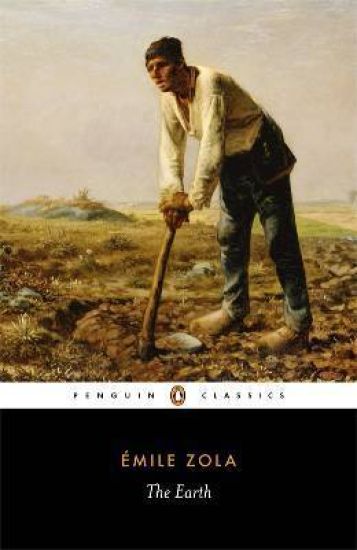
Part of the vast Rougon-Macquart cycle of novels, The Earth was regarded by Émile Zola's as his greatest novel. This Penguin Classics edition is translated with an introduction by Douglas Parmée. When Jean Macquart arrives in the peasant community of Beauce, where farmers have worked the same land for generations, he quickly finds himself involved in the corrupt affairs of the local Fouan family. Aging and Lear-like, Old Man Fouan has decided to divide his land between his three children: his penny-pinching daughter Fanny, his eldest son - a far from holy figure known as 'Jesus Christ' - and the lecherous Buteau, Macquart's friend. But in a community where land is everything, sibling rivalry quickly turns to brutal hatred, as Buteau declares himself unsatisfied with his lot. A fascinating portrayal of a struggling but decadent community, The Earth offers a compelling exploration of the destructive nature of human ignorance and greed. Douglas Parmée's translation vividly conveys the naturalistic tone of the original in clear, contemporary English. This edition also includes an introduction, exploring Zola's motivation in writing The Earth and considering its influence on his contemporaries. Emile Zola (1840-1902) was the leading figure in the French school of naturalistic fiction. His principal work, Les Rougon-Macquart, is a panorama of mid-19th century French life, in a cycle of 20 novels which Zola wrote over a period of 22 years, including Au Bonheur des Dames (1883), The Beast Within (1890), Nana (1880), and The Drinking Den (1877). If you enjoyed The Earth, you might like Zola's Germinal, also available in Penguin Classics.
La bete humaine

La bete humaine

Emile Zola

Gallimard
1978
nidottu
La Bete humaine (1890), the seventeenth novel in the Rougon-Macquart series, is one of Zola's most violent and explicit works. On one level a tale of murder, passion, and possession, it is also a compassionate study of individuals derailed by atavistic forces beyond their control. This new translation captures Zola's fast-paced yet deliberately dispassionate style, while the introduction and detailed notes place the novel in its social, historical, and literary context. About the Series: For over 100 years Oxford World's Classics has made available the broadest spectrum of literature from around the globe. Each affordable volume reflects Oxford's commitment to scholarship, providing the most accurate text plus a wealth of other valuable features, including expert introductions by leading authorities, voluminous notes to clarify the text, up-to-date bibliographies for further study, and much more.