Kirjojen hintavertailu – 12 859 828 kirjaa ja 27 kauppaa

Kirjailija

Emily Teeter

Kirjat ja teokset yhdessä paikassa: 7 kirjaa, julkaisuja vuosilta 1999–2024, suosituimpiin kuuluu Gold of Praise. Vertaile teosten hintoja ja tarkista saatavuus suomalaisista kirjakaupoista.

7 kirjaa

Kirjojen julkaisuvuodet: 1999–2024.

Chicago on the Nile

Chicago on the Nile

Emily Teeter

Institute for the Study of Ancient Cultures
2024
sidottu
Chicago on the Nile relates the colourful story of the University of Chicago's Epigraphic Survey expedition to Egypt, from its conception in 1924 by the first American Egyptologist, James Henry Breasted, through its development over the course of a century to become the major scientific and social presence it is today—not just in Egypt but throughout the world. Initially envisioned as a small group of scientists devoted to documenting the ancient historical inscriptions and reliefs on the walls of the temple of Medinet Habu in Luxor, the Epigraphic Survey's work grew to encompass many of the most important sites in Egypt, including Karnak, Luxor Temple, the tomb of Kheruef, Saqqara, Abydos, and the Beit el-Wali temple in Nubia. The story places this work within the larger contexts of Egyptian and international politics, the vicissitudes of the world financial situation, and academic policies. Drawing on hundreds of letters and photos, most of them previously unpublished, the book explores why the Epigraphic Survey chose specific sites for its work, the often grand expectations for its projects and publication program, and the ultimate results. The history of Chicago House, the Survey's headquarters and residence, is described in detail and offers many amusing anecdotes of social life there over the past century. As such, Chicago on the Nile provides a who's who of Egyptologists and archaeologists who worked for and interacted with the Survey to save the endangered texts and reliefs on the ancient monuments of the Nile Valley.
Religion and Ritual in Ancient Egypt

Religion and Ritual in Ancient Egypt

Emily Teeter

Cambridge University Press
2011
sidottu
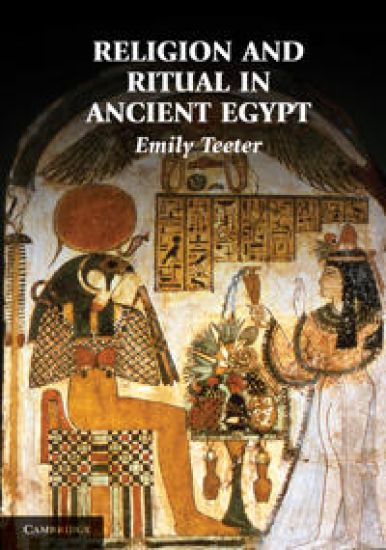
This book is a vivid reconstruction of the practical aspects of ancient Egyptian religion. Through an examination of artefacts and inscriptions, the text explores a variety of issues. For example, who was allowed to enter the temples, and what rituals were performed therein? Who served as priests? How were they organized and trained, and what did they do? What was the Egyptians' attitude toward death, and what happened at funerals? How did the living and dead communicate? In what ways could people communicate with the gods? What impact did religion have on the economy and longevity of the society? This book demystifies Egyptian religion, exploring what it meant to the people and society. The text is richly illustrated with images of rituals and religious objects.
Baked Clay Figurines and Votive Beds from Medinet Habu

Baked Clay Figurines and Votive Beds from Medinet Habu

Emily Teeter

Oriental Institute of the University of Chicago
2008
sidottu
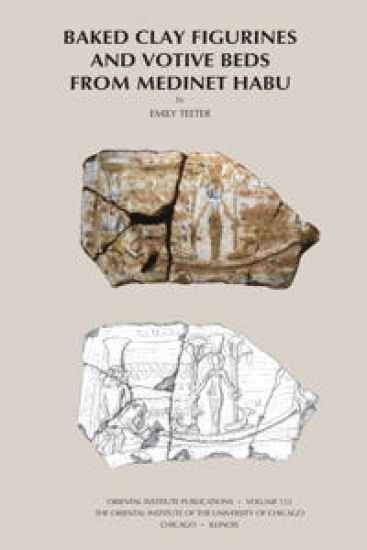
This catalog presents the entire corpus of 272 baked clay figurines and votive beds excavated at Medinet Habu by the Oriental Institute of the University of Chicago during their 1926-1933 campaign. The figurines represent women, women with children, men, deities, and animals. They date from the sixteenth century B. C. to the ninth century A. D., illustrating permanence and change in themes of clay figurines as well as stylistic development within each type. The group of votive beds and the stela made from votive bed molds is among the largest and most diverse collections of such material. Each object is fully described and illustrated and is accompanied by commentary on construction, symbolism, and function.
Egypt and the Egyptians

Egypt and the Egyptians

Douglas J. Brewer; Emily Teeter

Cambridge University Press
2007
pokkari

Halvin toimitettuna 52,50 €

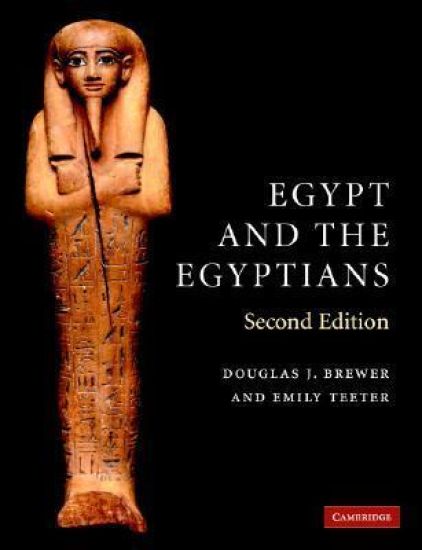
Surveying more than three thousand years of Egyptian civilization, Egypt and the Egyptians offers a comprehensive introduction to this most rich and complex of early societies. From high politics to the concerns of everyday Egyptians, the book explores every aspect of Egyptian culture and society, including religion, language, art, architecture, cities, and mummification. Archaeological and documentary sources are combined to give the reader a unique and expansive view of a remarkable ancient culture. Fully revised and updated, this new edition looks more closely at the role of women in Egypt, delves deeper into the Egyptian Neolithic and Egypt's transition to an agricultural society, and includes many new illustrations. Written for students and the general reader, and including an extensive bibliography, a glossary, a dynastic chronology and suggestions for further reading, this richly illustrated book is an essential resource for anybody wishing to explore the society and civilization of ancient Egypt.
Ancient Egypt

Ancient Egypt

Emily Teeter

Oriental Institute of the University of Chicago
2003
nidottu
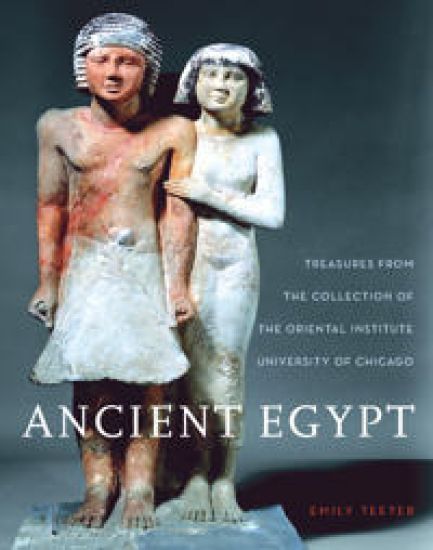
This fully-illustrated catalogue offers highlights of the Egyptian collection at the Oriental Institute of the University of Chicago. A brief history of the collection is followed by a catalogue of seventy-seven objects, which date from the early third millennium BC to the eighth century AD. Many of these objects have not been previously published. The artefacts include statues, stelae, tools, games, clothing, coffins, figured ostraca, and papyri; each item is described, and its function and symbolism are discussed. Brief texts are translated. Appendices give museum registration numbers, provenance, and bibliographies.
Scarabs, Scaraboids, Seals and Seal Impressions from Medinet Habu

Scarabs, Scaraboids, Seals and Seal Impressions from Medinet Habu

Emily Teeter; Terry G. Wilfong

Oriental Institute of the University of Chicago
2003
sidottu
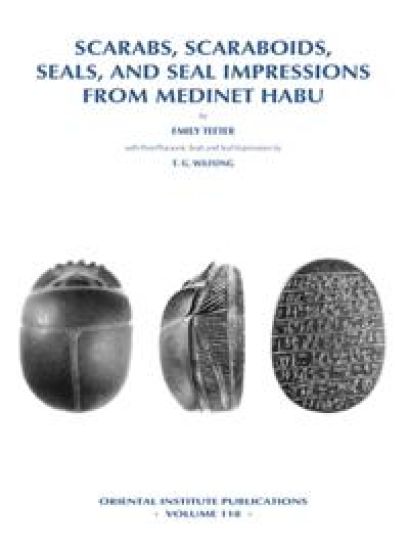
Medinet Habu in western Thebes (modern Luxor, Egypt) is dominated by the great mortuary temples of King Ramesses III (ca. 1182 BC), and Kings Aye and Horemheb (ca. 1324-1293 BC). It served as the seat of the regional government in the Late New Kingdom, and an important Coptic Christian community grew up within its great fortification walls. For nearly 1,500 years Medinet Habu played a central role in Egyptian religion, life, and politics. In 1924, the Oriental Institute of the University of Chicago began the documentation of Medinet Habu, but the last facet of the documentation - the publication of thousands of objects excavated at the site - was interrupted by World War II. This book, the first of a projected multiple volume series, marks the resurrection of the project to publish the small finds. It includes a catalogue of 349 scarabs, scaraboids (including lentoids, cowroids, and buttons), heart scarabs and their Sons of Horus amulets, heart amulets, seals, and seal impressions on bullae, vessel stoppers, amphora handles, mudbricks, and funerary cones that date from approximately 1470 BC to the eighth century AD. Each object is described and illustrated and, whenever possible, placed in its original archaeological context. These scarabs and scaraboids comprise one of the largest groups of such material excavated from any site in Egypt.
Gold of Praise

Gold of Praise

Emily Teeter; John A. Larson

Oriental Institute of the University of Chicago
1999
nidottu
This Festschrift in honor of Prof. Edward F. Wente contains contributions by forty-three of his colleagues and friends. Contents: Publications and Communications of Edward F. Wente ( C. E. Jones ); A Monument of Khaemwaset Honoring Imhotep ( J. P. Allen ); Feuds or Vengeance? Rhetoric and Social Forms ( J. Baines ); Theban Seventeenth Dynasty ( J. von Beckerath ); Inventory Offering Lists and the Nomenclature for Boxes and Chests in the Old Kingdom ( E. Brovarski ); A Case for Narrativity: Gilt Stucco Mummy Cover in the Graeco-Roman Museum, Alexandria, Inv. 27808 ( L. H. Corcoran ); Opening of the Mouth as Temple Ritual ( E. Cruz-Uribe ); A Letter of Reproach ( R. J. Demaree ); Creation on the Potter's Wheel at the Eastern Horizon of Heaven ( P. F. Dorman ); The Border and the Yonder Side ( G. Englund ); Enjoying the Pleasures of Sensation: Reflections on a Significant Feature of Egyptian Religion ( R. B. Finnestad ); Some Comments on Khety's Instruction for Little Pepi on His Way to School (Satire on the Trades) ( J. L. Foster ); On Fear of Death and the Three bwts Connected with Hathor ( P. J. Frandsen ); Two Inlaid Inscriptions of the Earliest Middle Kingdom ( H. Goedicke ); Historical Background to the Exodus: Papyrus Anastasi VIII ( S. I. Groll ); The Mummy of Amenhotep III ( J. E. Harris ); Fragmentary Quartzite Female Hand Found in Abou-Rawash ( Z. Hawass ); Two Stelae of King Seqenenre Djehuty-aa of the Seventeenth Dynasty ( H. Jacquet-Gordon ); A Marital Title from the New Kingdom ( J. J. Janssen ); Remarks on Continuity in Egyptian Literary Tradition ( R. Jasnow ); Ethnic Considerations in Persian Period Egypt ( J. H. Johnson ); The nfrw-Collar Reconsidered ( W. R. Johnson ); The Wealth of Amun of Thebes under Ramesses II ( K. A. Kitchen ); Wie jung ist die memphitische Philosophie auf dem Shabaqo-Stein? ( R. Krauss ); 'Listening' to the Ancient Egyptian Woman: Letters, Testimonials, and Other Expressions of Self ( B. S. Lesko ); Some Further Thoughts on Chapter 162 of the Book of the Dead ( L. H. Lesko ); Royal Iconography of Dynasty 0 ( T. J. Logan ); The Auction of Pharaoh ( J. G. Manning ); Semi-Literacy in Egypt: Some Erasures from the Amarna Period ( P. Der Manuelian ); Vinegar at Deir el-Medina ( N. B. Millet ); Observations on Pre-Amarna Theology during the Earliest Reign of Amenhotep IV ( W. J. Murnane ); Zum Kultbildritual in Abydos ( J. Osing ); Sportive Fencing as a Ritual for Destroying the Enemies of Horus ( P. A. Piccione ); An Oblique Reference to the Expelled High Priest Osorkon? ( R. K. Ritner ); The Ahhotep Coffins: The Archaeology of an Egyptological Reconstruction ( A. M. Roth ); A Litany from the Eighteenth Dynasty Tomb of Merneith ( D. P. Silverman ); Nag-ed-Deir Papyri ( W. K. Simpson ); O. Hess = O. Naville = O. BM 50601: An Elusive Text Relocated ( M. J. Smith ); Celibacy and Adoption among God's Wives of Amun and Singers in the Temple of Amun: A Re-examination of the Evidence ( E. Teeter ); New Kingdom Temples at Elkab ( C. C. Van Siclen III ); Menstrual Synchrony and the 'Place of Women' in Ancient Egypt (OIM 13512) ( T. G. Wilfong ); Serra East and the Mission of the Middle Kingdom Fortresses in Nubia ( B. B. Williams ); End of the Late Bronze Age and Other Crisis Periods: A Volcanic Cause? ( F. J. Yurco ).