Kirjojen hintavertailu – 12 859 818 kirjaa ja 27 kauppaa

Kirjailija

Emin Poljarevic

Kirjat ja teokset yhdessä paikassa: 4 kirjaa, julkaisuja vuosilta 2017–2023, suosituimpiin kuuluu Didaktisk dialog i högre utbildning. Vertaile teosten hintoja ja tarkista saatavuus suomalaisista kirjakaupoista.

4 kirjaa

Kirjojen julkaisuvuodet: 2017–2023.

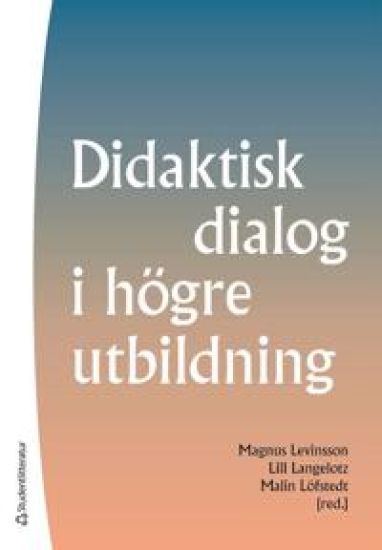
Didaktisk dialog i högre utbildning

Didaktisk dialog i högre utbildning

Magnus Levinsson; Lill Langelotz; Malin Löfstedt; Johan Alvehus; Helen Asklund; Ann-Sofie Axelsson; Linda Barman; Gunnar Berg; Urban Carlén; Martin G Erikson; Martin Karlberg; Olle Larsson; Maria Lindh; Elisabeth Långström; Hanna Maurin Söderholm; Giulia Messina Dahlberg; Olle Nordberg; Sepideh Olausson; Susanne Olsson; Torsten Pettersson; Emin Poljarevic; Peter Reinholdsson; Erika Sandström; Ulrike Schnaas; Susanne Strömberg Jämsvi; Ulrika Svalfors; Cecilia Trenter; Henrik Viberg; Tomas Wahnström; Christer Wede

Studentlitteratur AB
2021
nidottu
Kollegiala samtal är ett viktigt verktyg för att stärka kvaliteten och utveckla undervisningen. Ändå är sådana diskussioner fortfarande sällsynta inom högre utbildning. Den här boken presenterar en modell för kollegiala samtal - så kallade didaktiska utvecklingsdialoger - med utgångspunkt i autentiska undervisningssituationer, hämtade från universitetslärares vardagsarbete inom olika utbildningar. Exempel på teman som belyses och diskuteras i boken är: utmaningen i att behandla ett omfattande ämnesinnehåll på få undervisningstimmar; lärstrukturer för distansstudenter; studenters negativa attityder till ett visst ämnesinnehåll; och relationen mellan vardagsföreställningar och teoretiskt grundad begreppsförståelse. Varje tema illustreras genom reflektion i flera steg, i en dialog mellan universitetslärare, forskare och pedagogiska utvecklare från olika lärosäten runt om i Sverige. Didaktisk dialog i högre utbildning är lämplig som litteratur på högskolepedagogiska kurser, och riktar sig också till enskilda universitetslärare och lärarlag som vill utveckla sin undervisning. Förhoppningen är att dialogerna ska ge inspiration och utmana, och också fungera som modell för samtal om undervisning och om det akademiska lärarskapets komplexitet.

Islamist Grassroots and Youth Activism
Why is the Muslim Brotherhood the most successful social movement in contemporary Egypt and why is Salafism such a strong socio-political force today? This path-breaking book explains that the strength of Islamism in Egypt lies with these groups’ ability to attract youth activists across class divides by providing convincing and desired forms of dissent against a repressive regime which chime with young people’s value-systems and practices. Today, as a result of this, the Islamist parties profit from their political capital gained from decades of social mobilisation. Poljarevic offers an in-depth analysis of youth mobilisation through extensive observation of activists in their everyday social environment and provides first-hand accounts of issues that have not received wide scholarly attention such as the prominent role played by Islamist youth generation in accentuating the virility and innovativeness of Islamist activism, its political and religious dimensions, their organizational dominance of social mobilization, and also the diffusion of civil society mobilization to online activism. Through an innovative critical analysis of contemporary Egyptian Islamist activism, revealing the particularities of its social impact, and the diversity of its ideas, he explains both the durability of Islamist activism and its long-standing capacity to influence civil society according to its own agenda.
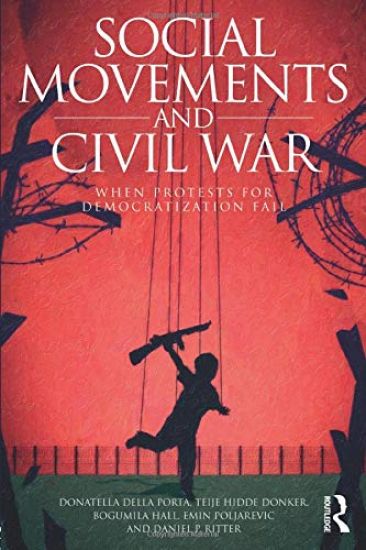
Social Movements and Civil War

Social Movements and Civil War

Donatella della Porta; Teije Hidde Donker; Bogumila Hall; Emin Poljarevic; Daniel P. Ritter

Routledge
2017
nidottu
This book investigates the origins of civil wars which emerge from failed attempts at democratization. The main aim of this volume is to develop a theoretical explanation of the conditions under which and the mechanisms through which social movements’ struggles for democracy end up in civil war. While the empirical evidence suggests that this is not a rare phenomenon, the literatures on social movements, democratization and civil wars have grown apart from each other. At the theoretical level, Social Movements and Civil War bridges insights in the three fields, looking in particular at explanations of the radicalization of social movements, the failure of democratization processes and the onset of civil war. In doing this, it builds upon the relational approach developed in contentious politics with the aim of singling out robust causal mechanisms. At the empirical level, the research provides in-depth descriptions of four cases of trajectory from social movements for democratization into civil wars: in Syria, Libya, Yemen and the former Yugoslavia. Conditions such as the double weakness of civil society and the state, the presence of entrepreneurs of violence as well as normative and material resources for violence, ethnic and tribal divisions, domestic and international military interventions are considered as influencing the chains of actors’ choices rather than as structural determinants. This book will be of great interest to students of civil wars, political violence, social movements, democratization, and IR in general.
Social Movements and Civil War

Social Movements and Civil War

Donatella della Porta; Teije Hidde Donker; Bogumila Hall; Emin Poljarevic; Daniel P. Ritter

Routledge
2017
sidottu
This book investigates the origins of civil wars which emerge from failed attempts at democratization. The main aim of this volume is to develop a theoretical explanation of the conditions under which and the mechanisms through which social movements’ struggles for democracy end up in civil war. While the empirical evidence suggests that this is not a rare phenomenon, the literatures on social movements, democratization and civil wars have grown apart from each other. At the theoretical level, Social Movements and Civil War bridges insights in the three fields, looking in particular at explanations of the radicalization of social movements, the failure of democratization processes and the onset of civil war. In doing this, it builds upon the relational approach developed in contentious politics with the aim of singling out robust causal mechanisms. At the empirical level, the research provides in-depth descriptions of four cases of trajectory from social movements for democratization into civil wars: in Syria, Libya, Yemen and the former Yugoslavia. Conditions such as the double weakness of civil society and the state, the presence of entrepreneurs of violence as well as normative and material resources for violence, ethnic and tribal divisions, domestic and international military interventions are considered as influencing the chains of actors’ choices rather than as structural determinants. This book will be of great interest to students of civil wars, political violence, social movements, democratization, and IR in general.