Kirjojen hintavertailu – 12 859 818 kirjaa ja 27 kauppaa

Kirjailija

Emma Wilson

Kirjat ja teokset yhdessä paikassa: 30 kirjaa, julkaisuja vuosilta 1996–2025, suosituimpiin kuuluu Villasukkabuffet. Vertaile teosten hintoja ja tarkista saatavuus suomalaisista kirjakaupoista.

30 kirjaa

Kirjojen julkaisuvuodet: 1996–2025.

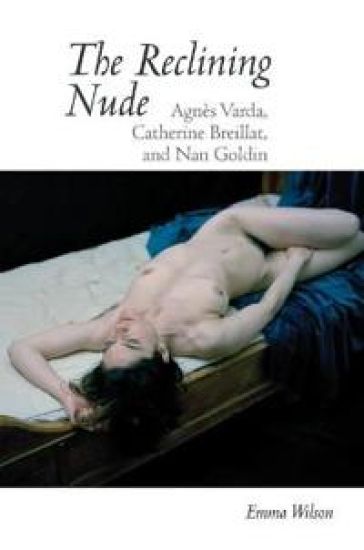
The Reclining Nude

The Reclining Nude

Emma Wilson

Liverpool University Press
2019
sidottu
The figure of a woman reclining, in repose, displayed, abandoned, fallen, asleep, or dreaming, returns in the work of women filmmakers and photographers in the twentieth and twenty-first centuries. Filmmakers Agnès Varda and Catherine Breillat, and American photographer working in Paris, Nan Goldin, return to the paintings of Titian, Velázquez, Goya, Courbet, and others, re-imagining, and re-purposing, their images of female beauty, display, (auto)eroticism, and intimacy. This book, a sensuous evocation of these feminist works, claims a female-identified pleasure in looking. The artists explored align images of repose and sensuality with other images of horizontality and proneness, of strong emotional content, images of erotic involvement, of vulnerability, of bodily contortion, of listlessness, grief, and depression. The reclining nude is for all three artists a starting point for a reflection on the relation of film, projections, and still photography, to painting, and a sustained re-imagining of the meanings conjured through serial returns to a particular pose. This book claims that the image of the reclining nude is compelling, for female-identified artists – and for all allied in feeling and picturing femininity – in the sensitive, ethically adventurous, politically complex feminist issues it engages. The reclining nude is an image of passivity, of submission, of hedonism. It allows thought about passivity as pleasure, about depression and grief figured posturally, about indolence as a form of resistance and anarchy. Through this image, female-identified artists have claimed freedom to offer new focus on these extremes of emotion. They are re-imagining horizontality.
Atom Egoyan

Atom Egoyan

Emma Wilson

University of Illinois Press
2009
sidottu
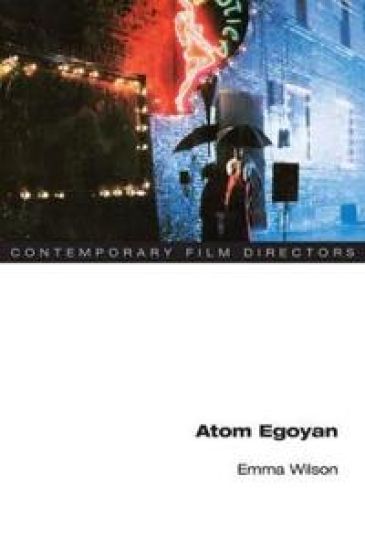
The films of Atom Egoyan immerse the viewer in a world of lush sensuality, melancholia, and brooding obsession. From his earliest films Next of Kin and Family Viewing, to his coruscating Exotica and recent projects such as Where the Truth Lies, Egoyan has paid infinite attention to narrative intricacy and psychological complexity. Traumatic loss and its management through ritual return as themes in his films as he explores personal scenarios of mourning and broader issues of genocide, exile, and postmemory, in particular in relation to his own Armenian heritage. In this study, Emma Wilson closely analyzes the range of Egoyan's films and their visual textures, emotional control, and perverse beauty. Offering a full-scale chronological overview of Egoyan's work on films up to and including Where the Truth Lies, Wilson shows the persistence and development of certain structures and themes in Egoyan's cinema: questions of exile and nostalgia, trauma and healing, the family and sexuality. While drawing on ideas about intercultural cinema, Wilson also sets Egoyan's films in the context of contemporary Canadian cinema and European art-house cinema. Egoyan's own comments on his films thread throughout Wilson's analyses, and the book features a recent interview with the director.
Atom Egoyan

Atom Egoyan

Emma Wilson

University of Illinois Press
2009
nidottu
The films of Atom Egoyan immerse the viewer in a world of lush sensuality, melancholia, and brooding obsession. From his earliest films Next of Kin and Family Viewing, to his coruscating Exotica and recent projects such as Where the Truth Lies, Egoyan has paid infinite attention to narrative intricacy and psychological complexity. Traumatic loss and its management through ritual return as themes in his films as he explores personal scenarios of mourning and broader issues of genocide, exile, and postmemory, in particular in relation to his own Armenian heritage. In this study, Emma Wilson closely analyzes the range of Egoyan's films and their visual textures, emotional control, and perverse beauty. Offering a full-scale chronological overview of Egoyan's work on films up to and including Where the Truth Lies, Wilson shows the persistence and development of certain structures and themes in Egoyan's cinema: questions of exile and nostalgia, trauma and healing, the family and sexuality. While drawing on ideas about intercultural cinema, Wilson also sets Egoyan's films in the context of contemporary Canadian cinema and European art-house cinema. Egoyan's own comments on his films thread throughout Wilson's analyses, and the book features a recent interview with the director.
Memory and Survival the French Cinema of Krzysztof Kieslowski
Kieslowski's last films have indelibly marked the past decade. His cinema has renewed the representation of the human subject and emotion in film: space and luminous surface reveal the finest, most fragile impressions of states of mind and human consciousness. This study is the first to offer specific focus on Kies'lowski's last films, on his French-language cinema and its place within the broader context of French film-making. Engaging with Deleuze's discussions of the time-image, and recent work in trauma theory, Emma Wilson offers radical insights into the innovation in Kies'lowski's explorations of memory, temporality, loss and desire. A charged defence of Kies'lowski's work, Memory and Survival offers new readings of this cinema of blind chance and fleeting beauty.
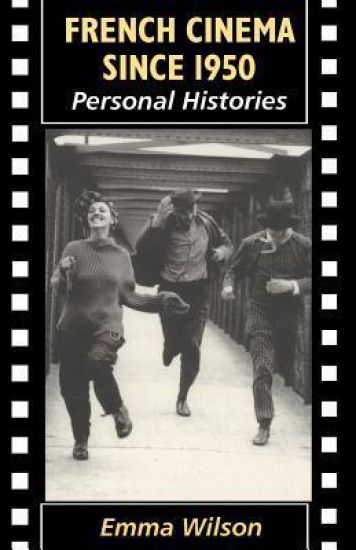
French Cinema Since 1950

French Cinema Since 1950

Emma Wilson

Bristol Classical Press
1999
pokkari
Providing a modern introduction to French cinema, this book describes the French passion for histories in images that gave birth to the 'Nouvelle Vague' and which is still felt today. The post-war period is the first time French directors think consciously of the idea of cinema in the first person, offering a personal vision and embodying a personal style. Yet this personal vision is also the filter through which films focus on public history, mass events and massive trauma.
Sexuality and the Reading Encounter

Sexuality and the Reading Encounter

Emma Wilson

Clarendon Press
1996
sidottu
Can fictions of desire determine real pleasures? Do texts regulate the performance of our sexual identities? In Sexuality and the Reading Encounter, Emma Wilson offers a new account of the intimate relations between reading, identity and identification. Interweaving theoretical debate with analysis of texts by Proust, Duras, Tournier and Cixous, her study reveals the formative potential and transferential pleasures of the reading encounter. Drawing on an understanding of identity as performative, alienated and fictitious, this study argues that the fictions we read act as mirrors and decoys displaying seductive images of intelligible sexual identities. The texts chosen for discussion here draw attention to the strategies by which identity is constructed textually. They work thus to frame the reading encounter and to highlight its formative power. In analysis of these texts, this study works to cut across the axes of homosexuality and heterosexuality, offering an alternative focus on the independence of fantasy and identity.