Kirjojen hintavertailu – 12 859 828 kirjaa ja 27 kauppaa

Kirjailija

Emmanuel Ndhlovu

Kirjat ja teokset yhdessä paikassa: 4 kirjaa, julkaisuja vuosilta 2025–2026, suosituimpiin kuuluu Agriculture, Autonomous Development, and Prospects for Industrialization in Africa. Vertaile teosten hintoja ja tarkista saatavuus suomalaisista kirjakaupoista.

4 kirjaa

Kirjojen julkaisuvuodet: 2025–2026.

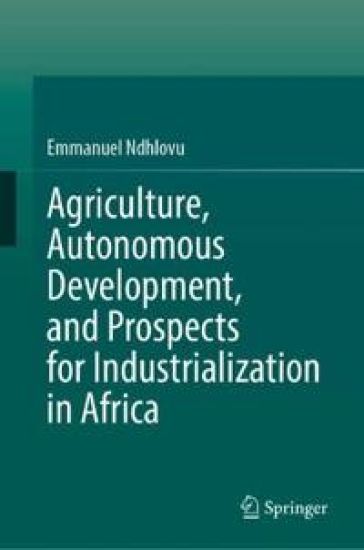
Agriculture, Autonomous Development, and Prospects for Industrialization in Africa
The book investigates the intersection of agriculture and development in Africa and how it impacts rural industrialisation prospects. It provides a comprehensive view of the position of agriculture in African socio-economic activities and the agricultural sector's potential as the source for continental development and industrialisation prospects. Significant research has been done on African development with a focus placed on the problematic role played by slavery, colonialism and later by incompetent African leaders who failed to steer development of the type that delivers a progressive, sustained and sustainable transformation of lives and societies. There is limited focus on the possibility of agriculture being the potential basis of African development and the chance for industrialisation. This is a matter of concern, considering the dominance of agriculture as a livelihood and income source for many people on the continent. In contributing to the debate on development in Africa, this book aims to show how agriculture can serve as the basis for African development and industrialisation. This will be achieved by (i) providing a detailed historical description of the position of agriculture in African socio-economic activities, (ii) outlining the trajectory of African development with a focus on agriculture, innovation, and mechanisation, (iii) identifying challenges to the development of African agriculture, (iv) exploring the opportunities for agricultural development in Africa, and (v) providing practical and policy recommendations to improve African agriculture and make it the engine for development and industrialisation. Utilising a multidisciplinary approach which combines political economy, social policy, financial inclusion, and empowerment approaches, the book also shows how engagement of youth and women, digitalisation, and the provision of support (by public and private actors) can jump-start agriculture as the engine of African development and industrialisation. Taken together with this conscious effort to promote a multi-disciplinary discussion, the book is valuable reading for students, policymakers, and activists interested in emerging new directions in African development thinking and research.
Social Policy in Southern Africa

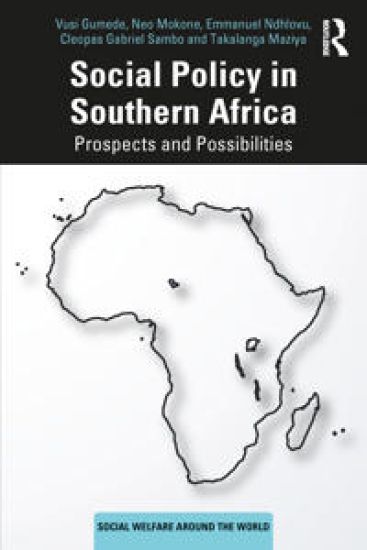
Social Policy in Southern Africa

Vusi Gumede; Neo Mokone; Emmanuel Ndhlovu; Takalanga Maziya; Cleopas Sambo

TAYLOR FRANCIS LTD
2026
sidottu
This book, dealing with social policy in Southern Africa, offers a comprehensive collection of possible social policy-based interventions in Southern Africa’s socio-economic and development realities, starting with the history or background to existing social policies and ultimately proposing the kinds of social policies that are ideal for Southern African countries. Southern Africa as a sub-region has a political history and socio-economic profile that allows a focused study of the sub-region, particularly in relation to socio-economic transformation. The sub-region has been shaped by complex experiences of the various groups over millennia, and the borders are a reflection of events of the colonial era which lasted well into the 20th century. Southern African countries have struggled with socio-economic development. The lack of comprehensive social policies in the sub-region is among the chief reasons for poor socio-economic development outcomes in the sub-region with progress hindered by widespread poverty, rising inequality, massive youth unemployment, female marginalization, and deficits in domestic productivity, competitiveness, value addition, infrastructure, and development planning. Demonstrating how social policy can confront the basic challenges of development in agriculture and the informal sector and showing both the theoretical and practical applicability of social policy in Southern Africa, particularly with regard to responding to contemporary regional challenges such as climate change, war and conflict, and pandemics, this book is necessary reading for all scholars and students of African politics, social policy, and socio-economic development broadly.
Social Policy in Southern Africa

Social Policy in Southern Africa

Vusi Gumede; Neo Mokone; Emmanuel Ndhlovu; Takalanga Maziya; Cleopas Sambo

TAYLOR FRANCIS LTD
2026
nidottu

Halvin toimitettuna 58,10 €

This book, dealing with social policy in Southern Africa, offers a comprehensive collection of possible social policy-based interventions in Southern Africa’s socio-economic and development realities, starting with the history or background to existing social policies and ultimately proposing the kinds of social policies that are ideal for Southern African countries. Southern Africa as a sub-region has a political history and socio-economic profile that allows a focused study of the sub-region, particularly in relation to socio-economic transformation. The sub-region has been shaped by complex experiences of the various groups over millennia, and the borders are a reflection of events of the colonial era which lasted well into the 20th century. Southern African countries have struggled with socio-economic development. The lack of comprehensive social policies in the sub-region is among the chief reasons for poor socio-economic development outcomes in the sub-region with progress hindered by widespread poverty, rising inequality, massive youth unemployment, female marginalization, and deficits in domestic productivity, competitiveness, value addition, infrastructure, and development planning. Demonstrating how social policy can confront the basic challenges of development in agriculture and the informal sector and showing both the theoretical and practical applicability of social policy in Southern Africa, particularly with regard to responding to contemporary regional challenges such as climate change, war and conflict, and pandemics, this book is necessary reading for all scholars and students of African politics, social policy, and socio-economic development broadly.
Agriculture, Autonomous Development, and Prospects for Industrialization in Africa
The book investigates the intersection of agriculture and development in Africa and how it impacts rural industrialisation prospects. It provides a comprehensive view of the position of agriculture in African socio-economic activities and the agricultural sector's potential as the source for continental development and industrialisation prospects. Significant research has been done on African development with a focus placed on the problematic role played by slavery, colonialism and later by incompetent African leaders who failed to steer development of the type that delivers a progressive, sustained and sustainable transformation of lives and societies. There is limited focus on the possibility of agriculture being the potential basis of African development and the chance for industrialisation. This is a matter of concern, considering the dominance of agriculture as a livelihood and income source for many people on the continent. In contributing to the debate on development in Africa, this book aims to show how agriculture can serve as the basis for African development and industrialisation. This will be achieved by (i) providing a detailed historical description of the position of agriculture in African socio-economic activities, (ii) outlining the trajectory of African development with a focus on agriculture, innovation, and mechanisation, (iii) identifying challenges to the development of African agriculture, (iv) exploring the opportunities for agricultural development in Africa, and (v) providing practical and policy recommendations to improve African agriculture and make it the engine for development and industrialisation. Utilising a multidisciplinary approach which combines political economy, social policy, financial inclusion, and empowerment approaches, the book also shows how engagement of youth and women, digitalisation, and the provision of support (by public and private actors) can jump-start agriculture as the engine of African development and industrialisation. Taken together with this conscious effort to promote a multi-disciplinary discussion, the book is valuable reading for students, policymakers, and activists interested in emerging new directions in African development thinking and research.