Kirjojen hintavertailu – 12 859 829 kirjaa ja 27 kauppaa

Kirjailija

Emmanuel Renault

Kirjat ja teokset yhdessä paikassa: 9 kirjaa, julkaisuja vuosilta 2015–2020, suosituimpiin kuuluu Philosophie Des Arts Martiaux Modernes. Vertaile teosten hintoja ja tarkista saatavuus suomalaisista kirjakaupoista.

9 kirjaa

Kirjojen julkaisuvuodet: 2015–2020.

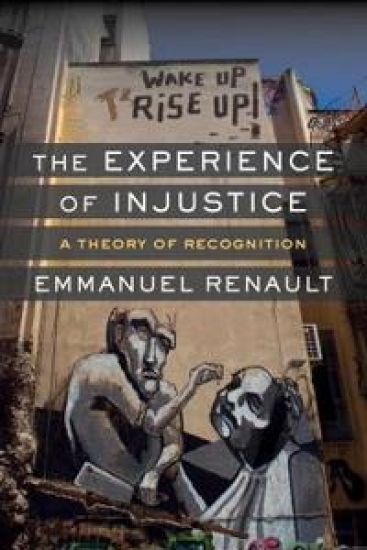
The Experience of Injustice

The Experience of Injustice

Emmanuel Renault

Columbia University Press
2019
sidottu
In The Experience of Injustice, the French philosopher Emmanuel Renault opens an important new chapter in critical theory. He brings together political theory, critical social science, and a keen sense of the power of popular movements to offer a forceful vision of social justice. Questioning normative political philosophy’s conception of justice, Renault gives an account of injustice as the denial of recognition, placing the experience of social suffering at the heart of contemporary critical theory. Inspired by Axel Honneth, Renault argues that a radicalized version of Honneth’s ethics of recognition can provide a systematic alternative to the liberal-democratic projects of such thinkers as Rawls and Habermas. Renault reformulates Honneth’s theory as a framework founded on experiences of injustice. He develops a complex, psychoanalytically rich account of suffering, disaffiliation, and identity loss to explain these experiences as denials of recognition, linking everyday injustice to a robust defense of the politicization of identity in social struggles. Engaging contemporary French and German critical theory alongside interdisciplinary tools from sociology, psychoanalysis, socialist political theory, social-movement theory, and philosophy, Renault articulates the importance of a theory of recognition for the resurgence of social critique.
Marx and Critical Theory

Marx and Critical Theory

Emmanuel Renault

BRILL
2018
nidottu
Marx and Critical Theory examines Marx’s main philosophical, political and social theoretical ideas. Its purpose is twofold: making sense of the concepts and theses of Marx, and showing that they remain relevant for contemporary critical theory. Part One focuses on Marx’s conception of philosophy. Part Two analyses the Marxian primacy of the practical. Part Three is devoted to Capital and the critique of political economy. This book will be useful for those who want to deepen their understanding of Marx’s main ideas, as well as for those who want to clarify what is at stake in contemporary debates about the ways in which contemporary critical theory could or should refer to Marx.
The Return of Work in Critical Theory

The Return of Work in Critical Theory

Christophe Dejours; Jean-Philippe Deranty; Emmanuel Renault; Nicholas H. Smith

Columbia University Press
2018
sidottu

Halvin toimitettuna 86,90 €

From John Maynard Keynes’s prediction of a fifteen-hour workweek to present-day speculation about automation, we have not stopped forecasting the end of work. Critical theory and political philosophy have turned their attention away from the workplace to focus on other realms of domination and emancipation. But far from coming to an end, work continues to occupy a central place in our lives. This is not only because of the amount of time people spend on the job. Many of our deepest hopes and fears are bound up in our labor—what jobs we perform, how we relate to others, how we might flourish. The Return of Work in Critical Theory presents a bold new account of the human significance of work and the human costs of contemporary forms of work organization. A collaboration among experts in philosophy, social theory, and clinical psychology, it brings together empirical research with incisive analysis of the political stakes of contemporary work. The Return of Work in Critical Theory begins by looking in detail at the ways in which work today fails to meet our expectations. It then sketches a phenomenological description of work and examines the normative premises that underlie the experience of work. Finally, it puts forward a novel conception of work that can renew critical theory’s engagement with work and point toward possibilities for transformation. Inspired by Max Horkheimer’s vision of critical theory as empirically informed reflection on the sources of social suffering with emancipatory intent, The Return of Work in Critical Theory is a lucid diagnosis of the malaise and pathologies of contemporary work that proposes powerful remedies.
Philosophie Des Arts Martiaux Modernes

Philosophie Des Arts Martiaux Modernes

Emin Boztepe; Emmanuel Renault

Librarie Philosophique J. Vrin
2017
nidottu
Les arts martiaux d'Asie se distinguent notamment des sports de combat en ce qu'ils donnent lieu a des theorisations specifiques qui sont dites philosophiques. Pourquoi ces pratiques produisent-elles un besoin de theorie? Que doit-on entendre par philosophie dans ce contexte? Ce livre soutient qu'il est possible de developper un discours philosophique sur les arts martiaux qui ne se reduise pas a une application de principes taoistes, bouddhistes ou confucianistes. L'auteur, l'un des specialistes les plus connus internationalement d'un art martial d'origine chinoise, le Wing Chun, poursuit deux objectifs principaux. Il analyse les specificites du processus d'apprentissage de ces techniques du corps hautement elaborees que sont les arts martiaux. Il montre qu'une reflexion sur un art martial oriente vers l'autodefense conduit a reviser un certain nombre de conceptions philosophiques du corps, de l'action, de la violence, du travail, de l'art, et des rapports entre theorie et pratique. Il s'agit egalement d'offrir aux pratiquants des instruments d'autodefense contre les discours irrationnels qui entourent trop souvent leur art.
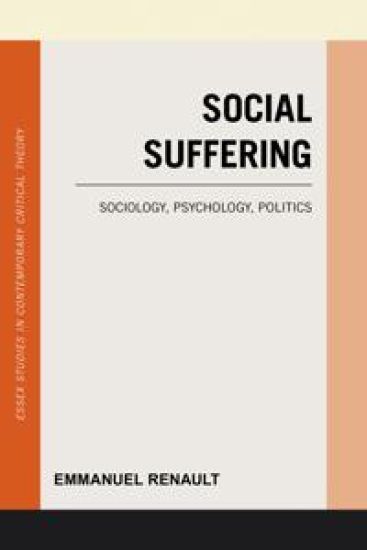
Social Suffering

Social Suffering

Emmanuel Renault

Rowman Littlefield
2017
nidottu
There are various forms of suffering that are best described as social suffering, such as stress, harassment, experience of poverty and domination. Such suffering is a matter of social concern, but it is rarely a matter of discussion in the social sciences, political theory or philosophy. This book aims to change this by making social suffering central to an interdisciplinary critical theory of society. The author advances the various contemporary debates about social suffering, connecting their epistemological and political stakes. He provides tools for recasting these debates, constructs a consistent conception of social suffering, and thereby equips us with a better understanding of our social world, and more accurate models of social critique. The book contributes to contemporary debates about social suffering in sociology, social psychology, political theory and philosophy. Renault argues that social suffering should be taken seriously in social theory as well as in social critique and provides a systematic account of the ways in which social suffering could be conceptualised. He goes on to inquire into the political uses of references to social suffering, surveys contemporary controversies in the social sciences, and distinguishes between economical, socio-medical, sociological, and psychoanalytic approaches, before proposing an integrative model and discussing the implications for social critique. He claims that the notion of social suffering captures some of the most specific features of the contemporary social question and that the most appropriate approach to social suffering is that of an interdisciplinary critical theory of society.

Social Suffering

Social Suffering

Emmanuel Renault

Rowman Littlefield
2017
sidottu
There are various forms of suffering that are best described as social suffering, such as stress, harassment, experience of poverty and domination. Such suffering is a matter of social concern, but it is rarely a matter of discussion in the social sciences, political theory or philosophy. This book aims to change this by making social suffering central to an interdisciplinary critical theory of society. The author advances the various contemporary debates about social suffering, connecting their epistemological and political stakes. He provides tools for recasting these debates, constructs a consistent conception of social suffering, and thereby equips us with a better understanding of our social world, and more accurate models of social critique. The book contributes to contemporary debates about social suffering in sociology, social psychology, political theory and philosophy. Renault argues that social suffering should be taken seriously in social theory as well as in social critique and provides a systematic account of the ways in which social suffering could be conceptualised. He goes on to inquire into the political uses of references to social suffering, surveys contemporary controversies in the social sciences, and distinguishes between economical, socio-medical, sociological, and psychoanalytic approaches, before proposing an integrative model and discussing the implications for social critique. He claims that the notion of social suffering captures some of the most specific features of the contemporary social question and that the most appropriate approach to social suffering is that of an interdisciplinary critical theory of society.

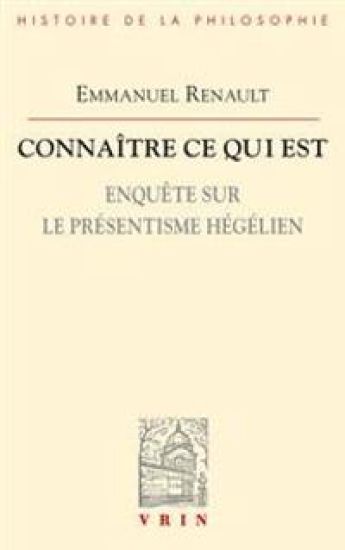
Connaitre Ce Qui Est: Enquete Sur Le Presentisme Hegelien

Connaitre Ce Qui Est: Enquete Sur Le Presentisme Hegelien

Emmanuel Renault

Librarie Philosophique J. Vrin
2015
nidottu
English summary: No one has insisted more than Hegel on the need to know the present and reflect historically on our relationship with our contemporary context. This study examines Hegels focus on the present, on the reasons that drove him to defend the essential importance of the present and the theoretical implications of his convictions. In particular, by bringing to light the place of Hegels theories within the context of German Idealism and the history of philosophy, this book demonstrates the solid basis for Hegels interpretations while also opening new perspectives for applying them today. French description: Nul plus que Hegel n'a insiste sur l'exigence de connaitre le present et de reflechir historiquement aux rapports que nous entretenons avec ce qui nous est contemporain. Quelles sont les raisons qui ont ainsi conduit Hegel a defendre systematiquement l'idee d'un primat du present? Quels en sont les differents enjeux theoriques? Quelles en sont les consequences pratiques? Comment les diagnostics historiques peuvent eclairer ou orienter nos efforts? Telles sont les questions qui guident cette enquete sur le presentisme hegelien. Une premiere partie analyse les trois textes qui formulent explicitement le primat du present: la preface de la Phenomenologie de l'esprit, celle des Principes de la philosophie du droit et les textes introductifs de l'Encyclopedie des sciences philosophiques. Le present y apparait comme l'objet de la reflexion philosophique, et l'analyse du present comme un mode de justification et d'explicitation des presupposes historiques du projet systematique. Une deuxieme partie analyse les textes qui peuvent au contraire conduire a l'idee d'un primat du passe ou de l'eternite. La question de la fin de l'histoire, notamment est examinee, et Hegel apparait en fait comme le penseur de la specificite de l'histoire presente plutot que comme celui de la cloture ou du depassement du processus historique. Une troisieme partie reinscrit les theses hegeliennes dans l'espace theorique de la philosophie de l'histoire et de l'Idealisme allemand, en montrant que dans les differents conflits qui traversent l'un et l'autre, le primat du present guide toujours les prises de position. La contextualisation eclaire alors la reception immediate, comme lorsqu'elle confirme le bienfonde des interpretations hegeliennes de gauche, et elle ouvre egalement des perspectives pour l'actualisation, comme lorsqu'elle fait apparaitre des rapprochements inattendus avec le presentisme de Dewey ou de Foucault.