Kirjojen hintavertailu – 12 859 819 kirjaa ja 27 kauppaa

Kirjailija

Emmet O'Connor

Kirjat ja teokset yhdessä paikassa: 7 kirjaa, julkaisuja vuosilta 2002–2022, suosituimpiin kuuluu Big Jim Larkin. Vertaile teosten hintoja ja tarkista saatavuus suomalaisista kirjakaupoista.

Nimi esiintyy myös muodoissa: Emmet O Connor

7 kirjaa

Kirjojen julkaisuvuodet: 2002–2022.

Rotten Prod

Rotten Prod

Emmet O'Connor

UNIVERSITY COLLEGE DUBLIN PRESS
2022
nidottu
James 'Dongaree' Baird, a boilermaker in Harland and Wolff's shipyard, was one of hundreds of 'rotten Prods', and thousands of Catholics, driven from their place of work by loyalists in 1920. The expulsions marked the end of Belfast's 'two red years', distinguished by the massive engineering strike in 1919 and the municipal elections in 1920, in which Baird was elected to Belfast Corporation. Baird's case offers a rare insight into the city's brief radicalisation, the mentality of Protestant workers who opposed the partition of Ireland, and the reasons why loyalists targeted Labour as their most insidious enemy. As a leader of the expelled workers, Baird spoke to the Irish and British TUCs, but Irish Labour had no practical policy on the North and British trade unions feared that confronting loyalists would lose them members. Subsequently, Baird worked for the National Sailors' and Firemen's Union and the Irish Transport and General Workers' Union, when he led the farm labourers of Waterford in an epic strike against wage cuts and was nearly elected to Dail Eireann. In 1927 he and his family emigrated to Brisbane, Queensland, where his daughters Nora and Helene were decorated by the Australian government for services to music in schools. A compelling account of a rotten Prod and a Labour hero.
Studies in Irish Radical Leadership

Studies in Irish Radical Leadership

Emmet O'Connor; John Cunningham

Manchester University Press
2016
sidottu
By European standards, the left in Ireland has not been successful historically, yet its failure has concealed considerable achievement in the occasional great popular mobilisations of the past two centuries. In the process, virtually every shade of radical thought has found expression in Ireland at some point or other, and the country has produced a diverse and colourful range of social rebels. Studies in Irish radical leadership, an edited collection of nineteen biographies of labour leaders and radical activists, examines a sample of the men and women who made that history of protest. Looking over the shoulders of Connolly and Larkin, it provides fascinating insights into the careers and mentalities of Irish labour's second-string leaders. It ranges from the primitive rebels of the early nineteenth century to the parliamentarians of the late twentieth, and asks what kind of people they were, what motivated them, and what is leadership?
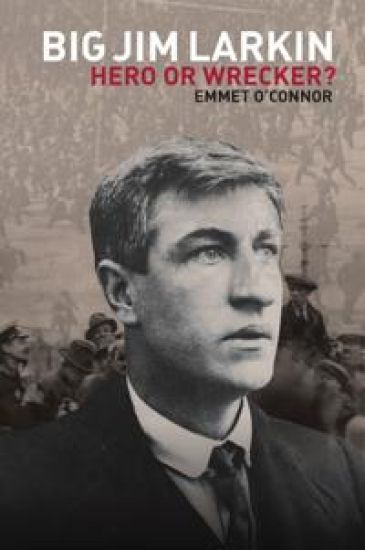
Big Jim Larkin

Big Jim Larkin

Emmet O'Connor

University College Dublin Press
2015
sidottu
Much has been written about 'Big Jim' Larkin but, remarkably, this is the first full-length biography. Through the research of leading Labour historian Emmet O'Connor, Larkin - Labour leader and agitator - is thoroughly evaluated. Based on newly uncovered and extensive police records, FBI files, and archives of the Communist International in Moscow, O'Connor goes beyond the public figure of heroism to explore the hidden side of a very private person who hated people knowing his business and kept his ambitions and personal demons behind a veil of silence. 'Big Jim' remains the central figure in the history, public history, and mythology of Irish Labour. A powerful orator and brilliant agitator, in popular consciousness Larkin is forever linked with the 1913 Lockout and the formation of the modern Irish Labour movement. Since 1909 he has been the hero of the Irish Transport and General Workers' Union, the Workers' Union of Ireland, and SIPTU. For all workers, and all employers, his name is synonymous with militancy and solidarity. And yet this 'hero' succeeded in instigating a civil war in Dublin trade unionism, and in time came to be vilified as a 'wrecker' by some of his former comrades. In Big Jim Larkin Emmet O'Connor reveals a man who proves to be both hero and wrecker.
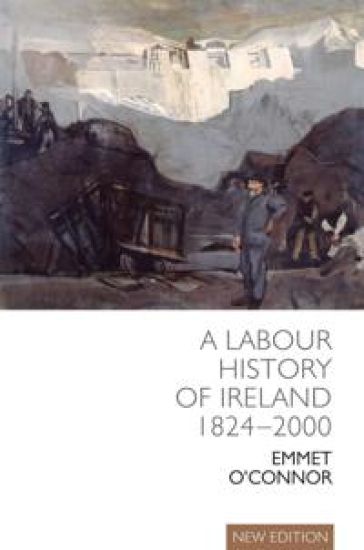
A Labour History of Ireland 1824-2000

A Labour History of Ireland 1824-2000

Emmet O Connor

University College Dublin Press
2011
nidottu
This is a new edition of Emmet O'Connor's classic and pioneering work on Irish labour history, providing an introduction for the general reader and a synopsis for the specialist. The first edition, which covered 1824 to 1960, has been updated to 2000 with the inclusion of three new chapters on developments in the Republic and Northern Ireland. In addition to providing a challenging overview of labour's past, O'Connor addresses industrial relations and political issues of contemporary relevance. He has taken full account of new research on Labour and argued that events in Ireland can only be understood in an international context. The text also features pen portraits of over fifty leading personalities of the left and the trade union movement. This book will be indispensable to undergraduates, labour activists, and those interested in labour's place in modern Ireland.
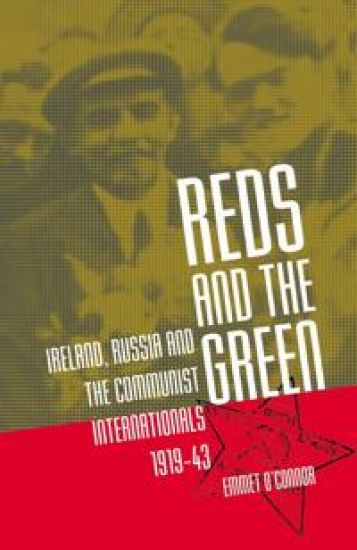
Reds and the Green

Reds and the Green

Emmet O'Connor

University College Dublin Press
2004
sidottu
In August 1922, at the height of the Civil War, when the Communist Party of Ireland could count on barely 50 activists, two agents of the Communist International held a secret meeting in Dublin with two IRA leaders. The four signed an agreement providing for the transformation of Sinn Fein into a socialist party. In return, Moscow was to assist with the supply of weapons to the IRA. The incident illustrates what made the Comintern a beacon of hope to beleaguered revolutionaries or an object of sometimes hysterical suspicion. From February 1918, when over 10,000 thronged central Dublin to acclaim the Bolshevik revolution, to July 1941, when the Party in Eire was dissolved by the votes of just 20 members, communists were involved with every radical movement, and demonised in every pulpit. Based on former Soviet archives, Reds and the Green shows why Irish Marxists and republicans turned repeatedly to Russia for support and inspiration, what Moscow wanted from Ireland, and how the Comintern was able to direct an Irish political party.
Reds and the Green

Reds and the Green

Emmet O'Connor

University College Dublin Press
2004
nidottu
In August 1922, at the height of the Civil War, when the Communist Party of Ireland could count on barely 50 activists, two agents of the Communist International held a secret meeting in Dublin with two IRA leaders. The four signed an agreement providing for the transformation of Sinn Fein into a socialist party. In return, Moscow was to assist with the supply of weapons to the IRA. The incident illustrates what made the Comintern a beacon of hope to beleaguered revolutionaries or an object of sometimes hysterical suspicion. From February 1918, when over 10,000 thronged central Dublin to acclaim the Bolshevik revolution, to July 1941, when the Party in Eire was dissolved by the votes of just 20 members, communists were involved with every radical movement, and demonised in every pulpit. Based on former Soviet archives, Reds and the Green shows why Irish Marxists and republicans turned repeatedly to Russia for support and inspiration, what Moscow wanted from Ireland, and how the Comintern was able to direct an Irish political party.
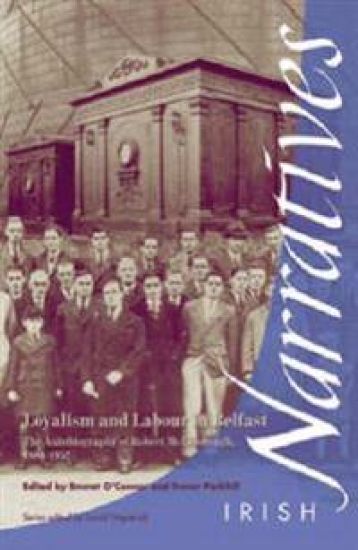
Loyalism and Labour in Belfast

Loyalism and Labour in Belfast

Robert McElborough; Emmet O'Connor; Trevor Parkhill

Cork University Press
2002
nidottu
Robert McElborough was a Belfast trade unionist and unflinching loyalist who worked on tramways and in the gas industry. This selection from his autobiography records Protestant working-class life, the mistreatment of workers and the divisions within Ulster trade unionism, which are further explored in the editor's introduction. Subjective, yet authentic, McElborough's narrative is an essential source for the study of both loyalism and labour in Belfast. Robert McElborough was a Belfast trade unionist of little education, who spent most of his life living in the Sandy row district and working on the tramways and in the gas industry. An active organiser in two loyalist trade unions, he fought proudly 'on the workers side' for wages and conditions as 'a descendant of an Ulster Scot'. This selection from his autobiography provides a unique record of Protestant working-class life, and a trenchant commentary on the mistreatment of workers by their masters. It also chronicles the tensions between English union bosses and Ulster trade unionists, and McElborough's support for Ulster-based unions uncontaminated by either red or green influences. The complexities of Belfast labour history are clarified in the author's introduction and notes. Subjective, sometimes unreliable, yet authentic, McElborough's narrative is an essential source for the study of both loyalism and labour in Belfast.