Kirjojen hintavertailu – 12 903 725 kirjaa ja 27 kauppaa

Kirjailija

Enrique Dussel

Kirjat ja teokset yhdessä paikassa: 19 kirjaa, julkaisuja vuosilta 1982–2024, suosituimpiin kuuluu La production théorique de Marx. Vertaile teosten hintoja ja tarkista saatavuus suomalaisista kirjakaupoista.

19 kirjaa

Kirjojen julkaisuvuodet: 1982–2024.

The Theological Metaphors of Marx

The Theological Metaphors of Marx

Enrique Dussel; Eduardo Mendieta

DUKE UNIVERSITY PRESS
2024
pokkari
In The Theological Metaphors of Marx, Enrique Dussel provides a groundbreaking combination of Marxology, theology, and ethical theory. Dussel shows that Marx unveils the theology of capitalism in his critique of commodity fetishization. Capitalism constitutes an idolatry of the commodity that undergirds the capitalist expropriation of labor. Dussel examines Marx’s early writings on religion and fetishism and proceeds through what Dussel refers to as the four major drafts of Capital, ultimately situating Marx’s philosophical, economic, ethical, and historical insights in relation to the theological problems of his time. Dussel notes a shift in Marx’s underlying theological schema from a political critique of the state to an economic critique of the commodity fetish as the Devil, or anti-God, of modernity. Marx’s thought, impact, and influence cannot be fully understood without Dussel’s historic reinterpretation of the theological origins and implications of Marx’s critiques of political economy and politics.
The Theological Metaphors of Marx

The Theological Metaphors of Marx

Enrique Dussel; Eduardo Mendieta

DUKE UNIVERSITY PRESS
2024
sidottu
In The Theological Metaphors of Marx, Enrique Dussel provides a groundbreaking combination of Marxology, theology, and ethical theory. Dussel shows that Marx unveils the theology of capitalism in his critique of commodity fetishization. Capitalism constitutes an idolatry of the commodity that undergirds the capitalist expropriation of labor. Dussel examines Marx’s early writings on religion and fetishism and proceeds through what Dussel refers to as the four major drafts of Capital, ultimately situating Marx’s philosophical, economic, ethical, and historical insights in relation to the theological problems of his time. Dussel notes a shift in Marx’s underlying theological schema from a political critique of the state to an economic critique of the commodity fetish as the Devil, or anti-God, of modernity. Marx’s thought, impact, and influence cannot be fully understood without Dussel’s historic reinterpretation of the theological origins and implications of Marx’s critiques of political economy and politics.

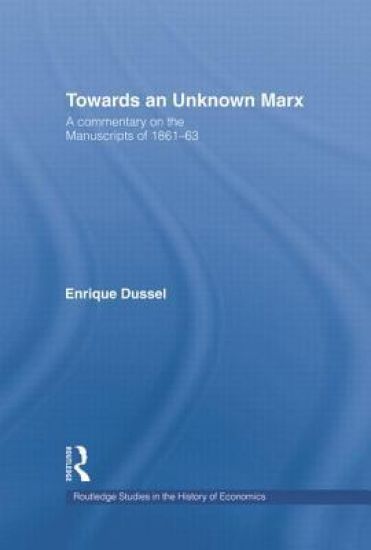
Towards An Unknown Marx

Towards An Unknown Marx

Enrique Dussel

Routledge
2014
nidottu
This book is the first complete commentary on Marx's manuscripts of 1861-63, works that guide our understanding of fundamental concepts such as 'surplus-value' and 'production price'. The recent publication of Marx's writings in their entirety has been a seminal event in Marxian scholarship. The hitherto unknown second draft of Volume 1 and first draft of Volume 3 of Capital, both published in the Manuscripts of 1861-63, now provide an important intermediate link between the Grundrisse and the final published editions of Capital. In this book, Enrique Dussel, one of the most original Marxist philosophers in the world today, provides an authoritative and detailed commentary on the manuscripts of 1861-63. The main points which Dussel emphasises in this path-breaking work are:The fundamental category in Marx's theory is 'living labour' which exists outside of capital and which capital must subsume in order to produce surplus-valueTheories of Surplus Value is not a historical survey of previous theories, but rather a 'critical confrontation' through which Marx developed new categories for his own theoryThe most important new categories developed in this manuscript are related to the 'forms of appearance' of surplus value. The final part of the book discusses the relevance of the Manuscripts of 1861-63 to contemporary global capitalism, especially to the continuing underdevelopment and extreme poverty of Latin America.
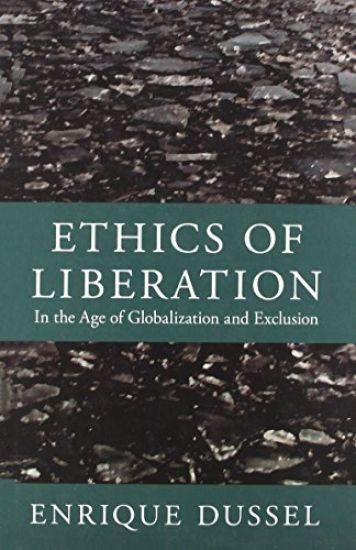
Ethics of Liberation

Ethics of Liberation

Enrique Dussel

Duke University Press
2013
sidottu
Available in English for the first time, this much-anticipated translation of Enrique Dussel's Ethics of Liberation marks a milestone in ethical discourse. Dussel is one of the world's foremost philosophers. This treatise, originally published in 1998, is his masterwork and a cornerstone of the philosophy of liberation, which he helped to found and develop. Throughout his career, Dussel has sought to open a space for articulating new possibilities for humanity out of, and in light of, the suffering, dignity, and creative drive of those who have been excluded from Western Modernity and neoliberal rationalism. Grounded in engagement with the oppressed, his thinking has figured prominently in philosophy, political theory, and liberation movements around the world. In Ethics of Liberation, Dussel provides a comprehensive world history of ethics, demonstrating that our most fundamental moral and ethical traditions did not emerge in ancient Greece and develop through modern European and North American thought. The obscured and ignored origins of Modernity lie outside the Western tradition. Ethics of Liberation is a monumental rethinking of the history, origins, and aims of ethics. It is a critical reorientation of ethical theory.
Ethics of Liberation

Ethics of Liberation

Enrique Dussel

Duke University Press
2013
pokkari
Available in English for the first time, this much-anticipated translation of Enrique Dussel's Ethics of Liberation marks a milestone in ethical discourse. Dussel is one of the world's foremost philosophers. This treatise, originally published in 1998, is his masterwork and a cornerstone of the philosophy of liberation, which he helped to found and develop. Throughout his career, Dussel has sought to open a space for articulating new possibilities for humanity out of, and in light of, the suffering, dignity, and creative drive of those who have been excluded from Western Modernity and neoliberal rationalism. Grounded in engagement with the oppressed, his thinking has figured prominently in philosophy, political theory, and liberation movements around the world. In Ethics of Liberation, Dussel provides a comprehensive world history of ethics, demonstrating that our most fundamental moral and ethical traditions did not emerge in ancient Greece and develop through modern European and North American thought. The obscured and ignored origins of Modernity lie outside the Western tradition. Ethics of Liberation is a monumental rethinking of the history, origins, and aims of ethics. It is a critical reorientation of ethical theory.
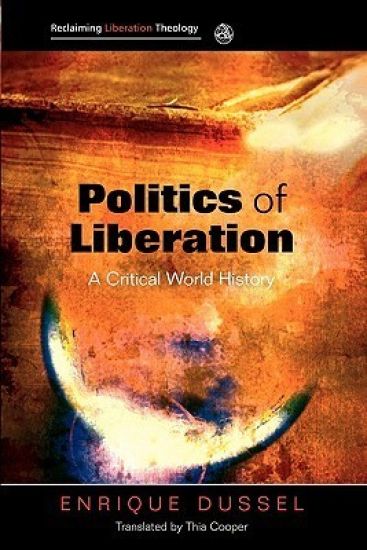
Politics of Liberation

Politics of Liberation

Enrique Dussel; Thia Cooper

SCM Press
2011
nidottu
Enrique Dussel is one of the world’s foremost Marxist philosophers whose work continues to have a profound impact on liberation theology. Here, the author presents an alternative reading of the history of the political world and the ideas that have inspired their political philosophy. He argues that our current view of the world needs to break free from being too focused on the thought world of Ancient Greece and on Europe. In this work he offers a reading of the political history of the world as an against-story, a story of an anti-traditional tradition.
Twenty Theses on Politics

Twenty Theses on Politics

Enrique Dussel

Duke University Press
2008
pokkari
First published in Spanish in 2006, Twenty Theses on Politics is a major statement on political philosophy from Enrique Dussel, one of Latin America’s-and the world’s-most important philosophers, and a founder of the philosophy of liberation. Synthesizing a half-century of his pioneering work in moral and political philosophy, Dussel presents a succinct rationale for the development of political alternatives to the exclusionary, exploitative institutions of neoliberal globalization. In twenty short, provocative theses he lays out the foundational elements for a politics of just and sustainable coexistence. Dussel first constructs a theory of political power and its institutionalization, taking on topics such as the purpose of politics and the fetishization of power. He insists that political projects must criticize or reject as unsustainable all political systems, actions, and institutions whose negative effects are suffered by oppressed or excluded victims. Turning to the deconstruction or transformation of political power, he explains the political principles of liberation and addresses matters such as reform and revolution. Twenty Theses on Politics is inspired by recent political transformations in Latin America. As Dussel writes in Thesis 15, regarding the liberation praxis of social and political movements, “The winds that arrive from the South-from Nestor Kirchner, TabarÉ VÁsquez, Luiz InÁcio Lula da Silva, Evo Morales, Hugo ChÁvez, Fidel Castro, and so many others-show us that things can be changed. The people must reclaim sovereignty!” Throughout the twenty theses Dussel engages with Latin American thinkers and activists and with radical political projects such as the World Social Forum. He is also in dialogue with the ideas of Marx, Hegel, Habermas, Rawls, and Negri, offering insights into the applications and limits of their thinking in light of recent Latin American political thought and practice.
Twenty Theses on Politics

Twenty Theses on Politics

Enrique Dussel

Duke University Press
2008
sidottu
First published in Spanish in 2006, Twenty Theses on Politics is a major statement on political philosophy from Enrique Dussel, one of Latin America’s-and the world’s-most important philosophers, and a founder of the philosophy of liberation. Synthesizing a half-century of his pioneering work in moral and political philosophy, Dussel presents a succinct rationale for the development of political alternatives to the exclusionary, exploitative institutions of neoliberal globalization. In twenty short, provocative theses he lays out the foundational elements for a politics of just and sustainable coexistence. Dussel first constructs a theory of political power and its institutionalization, taking on topics such as the purpose of politics and the fetishization of power. He insists that political projects must criticize or reject as unsustainable all political systems, actions, and institutions whose negative effects are suffered by oppressed or excluded victims. Turning to the deconstruction or transformation of political power, he explains the political principles of liberation and addresses matters such as reform and revolution. Twenty Theses on Politics is inspired by recent political transformations in Latin America. As Dussel writes in Thesis 15, regarding the liberation praxis of social and political movements, “The winds that arrive from the South-from Nestor Kirchner, TabarÉ VÁsquez, Luiz InÁcio Lula da Silva, Evo Morales, Hugo ChÁvez, Fidel Castro, and so many others-show us that things can be changed. The people must reclaim sovereignty!” Throughout the twenty theses Dussel engages with Latin American thinkers and activists and with radical political projects such as the World Social Forum. He is also in dialogue with the ideas of Marx, Hegel, Habermas, Rawls, and Negri, offering insights into the applications and limits of their thinking in light of recent Latin American political thought and practice.
Ethics and Community

Ethics and Community

Enrique Dussel

Wipf Stock Publishers
2008
nidottu
This book is a comprehensive introductory approach to what liberation theology has to say about ethics and morals. Dussel begins by making a fundamental distinction between two types of ethical systems: community ethics and social morality. The first grows out of a central concern with community; the second out of isolated individualism. Dussel first poses ten questions basic to a discussion of ethics (on good and evil; personal and social sin; relative morals and absolute ethics, and others). Next, he examines ten contemporary issues requiring an ethical stance, among them: labor and the work ethic; capitalism and socialism; the arms race; and Third World debt and dependency. Rigorous in design and scholarship, yet clear and accessibly written, Ethics and Community offers the first single, systematic treatment of an ethics rooted, as liberation theology is rooted, in the concerns of the poor of Latin America--and the world.
Beyond Philosophy

Beyond Philosophy

Enrique Dussel

Rowman Littlefield
2003
sidottu
Enrique Ambrosini Dussel is and has been one of the most prolific Latin American philosophers of the last 100 years. He has written over fifty books, and over three hundred articles ranging over the history of the Latin American philosophy, political philosophy, church history, theology, ethics, and occasional pieces on the state of Latin American countries. Dussel is first and foremost a moral philosopher, a philosopher of liberation. But for him, philosophy must be liberated so that it may contribute to social liberation. In one sense, 'beyond philosophy' means to go beyond contemporary, academicized, professionalized, and 'civilized' philosophy by turning to all that demystifies the autonomy of philosophy and turns our attention to its sources. 'Beyond philosophy,' also means to go beyond philosophy in the Marxian sense of abolishing philosophy by realizing it. This is the definitive English language collection of Dussel's enormous body of work. It will allow the reader to get a good sense of the breath and depth of Dussel's opus, covering four major areas: ethics, economics, history, and liberation theology.
Beyond Philosophy

Beyond Philosophy

Enrique Dussel

Rowman Littlefield
2003
nidottu
Enrique Ambrosini Dussel is and has been one of the most prolific Latin American philosophers of the last 100 years. He has written over fifty books, and over three hundred articles ranging over the history of the Latin American philosophy, political philosophy, church history, theology, ethics, and occasional pieces on the state of Latin American countries. Dussel is first and foremost a moral philosopher, a philosopher of liberation. But for him, philosophy must be liberated so that it may contribute to social liberation. In one sense, "beyond philosophy" means to go beyond contemporary, academicized, professionalized, and "civilized" philosophy by turning to all that demystifies the autonomy of philosophy and turns our attention to its sources. "Beyond philosophy," also means to go beyond philosophy in the Marxian sense of abolishing philosophy by realizing it. This is the definitive English language collection of Dussel's enormous body of work. It will allow the reader to get a good sense of the breath and depth of Dussel's opus, covering four major areas: ethics, economics, history, and liberation theology.
Towards An Unknown Marx

Towards An Unknown Marx

Enrique Dussel

Routledge
2001
sidottu
This book is the first complete commentary on Marx's manuscripts of 1861-63, works that guide our understanding of fundamental concepts such as 'surplus-value' and 'production price'. The recent publication of Marx's writings in their entirety has been a seminal event in Marxian scholarship. The hitherto unknown second draft of Volume 1 and first draft of Volume 3 of Capital, both published in the Manuscripts of 1861-63, now provide an important intermediate link between the Grundrisse and the final published editions of Capital. In this book, Enrique Dussel, one of the most original Marxist philosophers in the world today, provides an authoritative and detailed commentary on the manuscripts of 1861-63. The main points which Dussel emphasises in this path-breaking work are:The fundamental category in Marx's theory is 'living labour' which exists outside of capital and which capital must subsume in order to produce surplus-valueTheories of Surplus Value is not a historical survey of previous theories, but rather a 'critical confrontation' through which Marx developed new categories for his own theoryThe most important new categories developed in this manuscript are related to the 'forms of appearance' of surplus value. The final part of the book discusses the relevance of the Manuscripts of 1861-63 to contemporary global capitalism, especially to the continuing underdevelopment and extreme poverty of Latin America.
The Underside of Modernity

The Underside of Modernity

Enrique Dussel

Humanity Books
1996
sidottu
Dussel shows how North American and European philosophers have presupposed a no-longer-acceptable philosophy of history that has led them to fall into a "developmental fallacy," the belief that there is a linear sequence that moves from the pre-modern, underdeveloped, or on the way to industrialisation, to the modern, developed, and industrialised.