Kirjojen hintavertailu – 12 903 725 kirjaa ja 27 kauppaa

Kirjailija

Enrique Krauze

Kirjat ja teokset yhdessä paikassa: 5 kirjaa, julkaisuja vuosilta 1998–2022, suosituimpiin kuuluu Liberties Journal of Culture and Politics. Vertaile teosten hintoja ja tarkista saatavuus suomalaisista kirjakaupoista.

5 kirjaa

Kirjojen julkaisuvuodet: 1998–2022.

Liberties Journal of Culture and Politics

Liberties Journal of Culture and Politics

Giles Kepel; Ingrid Rowland; Vladimir Kara-Murza; Enrique Krauze; Paul Muldoon; Mitchell Abidor; Agnes Callard; Henri Cole; William Deresiewicz; Benjamin Moser; David Nirenberg; Peter Phillips; Becca Rothfeld; Paul Starr; David Thomson; Chaim Nacham Bialik

Liberties Journal Foundation
2021
pokkari
“A Meteor of Intelligent Substance” “Something was Missing in our Culture, and Here It Is” “Liberties sure is needed in these times.” In a short time since its launch, Liberties - A Journal of Culture and Politics, a quarterly, has become essential reading for those engaged in the cultural and political issues and causes of our time. The writers in Liberties offer deep experience from across borders, national identities, political affiliations and artistic achievements. As the introductory essay in the inaugural edition noted, “At this journal we are betting on what used to be called the common reader, who would rather reflect than belong and asks of our intellectual life more than a choice between orthodoxies.” Each issue of Liberties features original in-depth essays and compelling new poetry from some of the world's most significant writers, artists, and scholars, as well as introducing new talent, to inspire and impact the intellectual and creative lifeblood of today’s culture and politics. This spring issue of Liberties includes: Giles Kepel on the Murder of Samuel Paty; Ingrid Rowland’s Long Live the Classics!; Vladimir Kara-Murza Surviving Putin’s Poisons; Paul Starr on Reckoning with National Failure from Covid; Becca Rothfeld on Today's Sanctimony Literature; Enrique Krauze explores What is Latin America?; William Deresiewicz on Why Great Visual Art Forces Us to Think; Benjamin Moser on Rediscovering Frans Hals; David Nirenberg on What We Can Learn from Earlier Plagues; Agnes Callard’s view of Romance without Love, Love without Romance; Mitchell Abidor looks back to “Social Media” in 1895 to Understand a Crowd’s “Wisdom”; The Tallis Scholars' Peter Phillips on the Secrets of Josquin; David Thomson on Movies’ Poetic Desire; Poetry from Henri Cole, Chaim Nachman Bialik, and Paul Muldoon; and, Leon Wieseltier (editor) asks "Where Are the Americans?” and Celeste Marcus (managing editor) writes for a Pluralistic Heart.
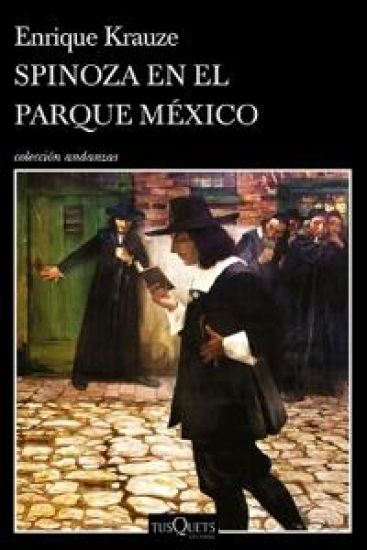
Spinoza En El Parque México

Spinoza En El Parque México

Enrique Krauze

TUSQUETS EDITORES
2022
nidottu
La autobiograf a intelectual de Enrique Krauze, el pensador liberal m s le do de Latinoam rica. Una biograf a intelectual no es la biograf a de la vida privada. Es la historia de una formaci n en la que intervienen muchos factores, muchas presencias y escenarios: escuelas, experiencias, viajes y, sobre todo, lecturas. La vida intelectual sigue la trayectoria de las ideas en el tiempo, de ideas encarnadas en una persona y, fundamentalmente, en el di logo que ha mantenido con figuras tutelares, maestros, colegas, amigos. As se hilvana una biograf a intelectual: conversando con abuelos, mentores, compa eros de tantas batallas, autores admirados. Conversando en el caf m s que en las aulas. Y conversando con los libros. Fascinado por las vidas de tantos mexicanos y latinoamericanos eminentes, por comprenderlas y narrarlas, Enrique Krauze no hab a abordado su propio quehacer como historiador, editor, ensayista y cr tico del poder. Hasta ahora. A partir de una serie de conversaciones con Jos Mar a Lassalle, el autor ofrece su libro m s ntimo y revelador: Spinoza en el Parque M xico.
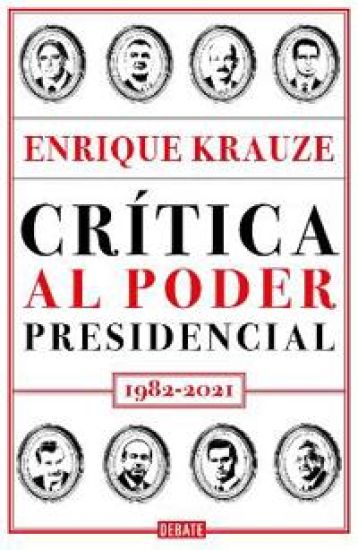
Crítica Al Poder Presidencial: 1982-2021 / A Critique of Presidential Power in Mexico: 1982-2021
«Krauze se ha distinguido por sus intervenciones a favor de la democracia y el debate para mejorar la vida p blica de M xico. Ha sido un estadista ciudadano, con nimo valiente frente al poder y la incomprensi n. --Gabriel Zaid Para Enrique Krauze, la cr tica al poder es un compromiso de larga data que se conecta con la aspiraci n de que logre­mos pasar de una presidencia imperial a una institucional. Al final, estas p ginas vislumbran la posibilidad de recons­truir la concordia perdida en M xico, cuyo camino est en la convergencia entre los partidos de oposici n y una valiente y activa sociedad civil. «El c mulo de cortaduras y pinceladas con gue Krauze analiza la situaci n pol tica mexicana deber a ser una fuente de inspira­ci n para todos, a la izguierda o a la derecha, sin que se le exija a l gue adopte las identidades gue otros deben asumir. Como liberal, su tarea ha sido la de mantenerse independiente y l cido, sin otro compromiso que el de la luz de su inteligencia. --Roger Bartra«La f rmula gue ha prescrito Enrique Krauze, ya esa me atengo, y por ello, lo felicito, porque la ha practicado y suscitado, es debatir, debatir, debatir. --Miguel Angel Granados Chapa ENGLISH DESCRIPTION "Krauze has distinguished himself through his interventions, favoring democracy and debate to improve public life in Mexico. He has been a civic statesman with a courageous spirit in the face of power and incomprehension." -Gabriel Zaid. To Enrique Krauze, critiquing power is a long-lasting commitment, linked to the aspiration of shifting from an imperial presidency to an institutional one. In the end, these pages are a glimpse of the possibility of rebuilding Mexico's lost concord, a path between opposite parties and a brave and active civil society. "The heap of cuts and brushes with which Krauze analyzes the Mexican political scene should be a source of inspiration to all, both left and right wings, without demanding he himself adopts the identities others should assume. As a liberal, his task has been to remain independent and clear-headed, without any other commitment than that of the light of his brilliance." -Roger Bartra. "Enrique Krauze's formula is the one I stand by, and I congratulate him, since he has practiced and elicited it: debating, debating, debating." -Miguel ngel Granados Chapa.
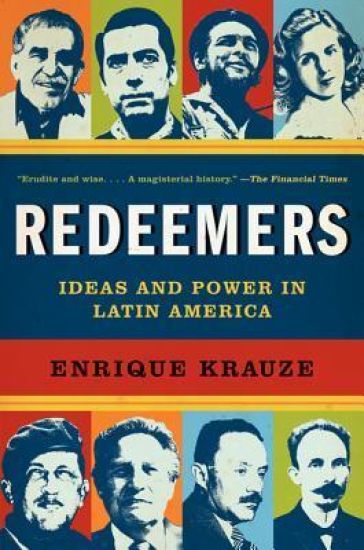
Redeemers

Redeemers

Enrique Krauze

HarperCollins
2012
nidottu
An epicintellectual history of Latin America by one of the region's most prominentthinkersInhis first book to appear in English since Mexico: Biography in Power, awork which the Wall Street Journal calls "the standard history ofpostcolonial Mexico," prize-winning author Enrique Krauzeilluminates the evolution of political, social, and philosophical discourses inLatin America. With echoes of Richard Hofstadter and Edmund Wilson, Krauze explores the Latin American intellectual traditionby deftly animating its decisive figures, from Octavio Paz to Che Guevara, Jose Vasconcelos toHugo Chavez, and inscribing them upon a vivid landscape of patriotism, opportunism, morality, and avarice--and of love, honor, loyalty, and identity. Redeemersdelivers an unparalleled explication of the roots of ideology and action inLatin America today.
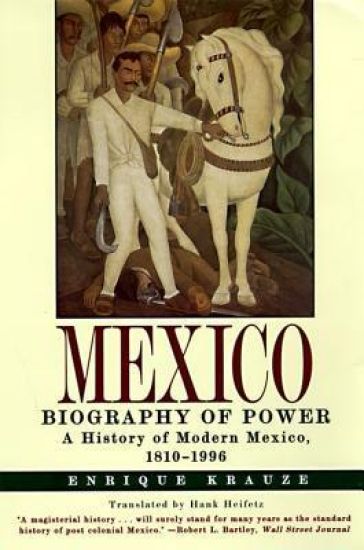
Mexico: Biography of Power

Mexico: Biography of Power

Enrique Krauze

HARPER PERENNIAL
1998
nidottu
A History of Modern Mexico, 1810-1996"A magisterial history. . . . Will surely stand for many years as the standard history of postcolonial Mexico." -- Wall Street JournalThe concentration of power in the caudillo (leader) is as much a formative element of Mexican culture and politics as the historical legacy of the Aztec emperors, Cortez, the Spanish Crown, the Mother Church and the mixing of the Spanish and Indian population into a mestizo culture. Enrique Krauze shows how history becomes biography during the century of caudillos from the insurgent priests in 1810 to Porfirio and the Revolution in 1910. The Revolutionary era, ending in 1940, was dominated by the lives of seven presidents -- Madero, Zapata, Villa, Carranza, Obregon, Calles and Cardenas. Since 1940, the dominant power of the presidency has continued through years of boom and bust and crisis. A major question for the modern state, with today's president Zedillo, is whether that power can be decentralized, to end the cycles of history as biographies of power.