Kirjojen hintavertailu – 12 903 725 kirjaa ja 27 kauppaa
Kirjailija
Enrique Zuazua
Kirjat ja teokset yhdessä paikassa: 7 kirjaa, julkaisuja vuosilta 2005–2026, suosituimpiin kuuluu Asymptotic Behavior of Scalar Convection-Diffusion Equations. Vertaile teosten hintoja ja tarkista saatavuus suomalaisista kirjakaupoista.
This comprehensive monograph illustrates the intricate realm of controllability and stabilization of wave phenomena. Authored by an expert in the field, this book integrates J. L. Lion's renowned HUM method, multiplier techniques, and the construction of Lyapunov functionals. Through meticulous analysis and practical applications, this book provides invaluable insights for researchers seeking to navigate the expansive domain of wave-like equations and their control. Whether you are a seasoned mathematician or a newcomer to the field, this book serves as an indispensable guide, offering a thorough introduction and essential tools for understanding and controlling wave phenomena.
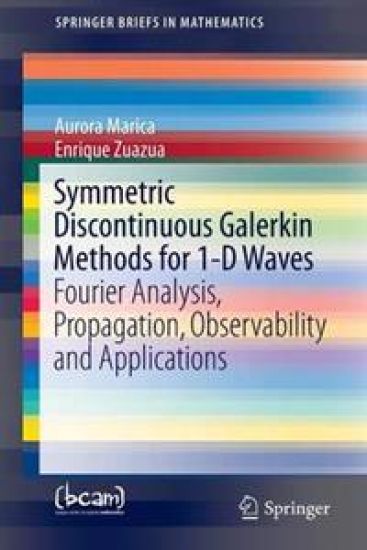
This work describes the propagation properties of the so-called symmetric interior penalty discontinuous Galerkin (SIPG) approximations of the 1-d wave equation. This is done by means of linear approximations on uniform meshes. First, a careful Fourier analysis is constructed, highlighting the coexistence of two Fourier spectral branches or spectral diagrams (physical and spurious) related to the two components of the numerical solution (averages and jumps). Efficient filtering mechanisms are also developed by means of techniques previously proved to be appropriate for classical schemes like finite differences or P1-classical finite elements. In particular, the work presents a proof that the uniform observability property is recovered uniformly by considering initial data with null jumps and averages given by a bi-grid filtering algorithm. Finally, the book explains how these results can be extended to other more sophisticated conforming and non-conforming finite element methods, in particular to quadratic finite elements, local discontinuous Galerkin methods and a version of the SIPG method adding penalization on the normal derivatives of the numerical solution at the grid points. This work is the first publication to contain a rigorous analysis of the discontinuous Galerkin methods for wave control problems. It will be of interest to a range of researchers specializing in wave approximations.
?????? This book is devoted to fully developing and comparing the two main approaches to the numerical approximation of controls for wave propagation phenomena: the continuous and the discrete. This is accomplished in the abstract functional setting of conservative semigroups. The main results of the work unify, to a large extent, these two approaches, which yield similaralgorithms and convergence rates. The discrete approach, however, gives not only efficient numerical approximations of the continuous controls, but also ensures some partial controllability properties of the finite-dimensional approximated dynamics. Moreover, it has the advantage of leading to iterative approximation processes that converge without a limiting threshold in the number of iterations. Such a threshold, which is hard to compute and estimate in practice, is a drawback of the methods emanating from the continuous approach. To complement this theory, the book provides convergence results for the discrete wave equation when discretized using finite differences and proves the convergence of the discrete wave equation with non-homogeneous Dirichlet conditions. The first book to explore these topics in depth, "On the Numerical Approximations of Controls for Waves" has rich applications to data assimilation problems and will be of interest to researchers who deal with wave approximations.?
In recent years flows in networks have attracted the interest of many researchers from different areas, e.g. applied mathematicians, engineers, physicists, economists. The main reason for this ubiquity is the wide and diverse range of applications, such as vehicular traffic, supply chains, blood flow, irrigation channels, data networks and others. This book presents an extensive set of notes by world leaders on the main mathematical techniques used to address such problems, together with investigations into specific applications. The main focus is on partial differential equations in networks, but ordinary differential equations and optimal transport are also included. Moreover, the modeling is completed by analysis, numerics, control and optimization of flows in networks. The book will be a valuable resource for every researcher or student interested in the subject.
The term “control theory” refers to the body of results - theoretical, numerical and algorithmic - which have been developed to influence the evolution of the state of a given system in order to meet a prescribed performance criterion. Systems of interest to control theory may be of very different natures. This monograph is concerned with models that can be described by partial differential equations of evolution. It contains five major contributions and is connected to the CIME Course on Control of Partial Differential Equations that took place in Cetraro (CS, Italy), July 19 - 23, 2010. Specifically, it covers the stabilization of evolution equations, control of the Liouville equation, control in fluid mechanics, control and numerics for the wave equation, and Carleman estimates for elliptic and parabolic equations with application to control. We are confident this work will provide an authoritative reference work for all scientists who are interested in this field, representing at the same time a friendly introduction to, and an updated account of, some of the most active trends in current research.
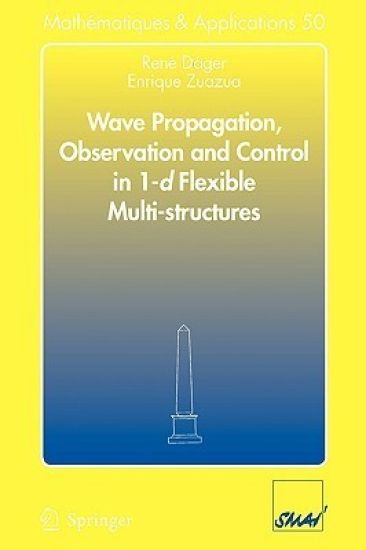
This book is devoted to analyze the vibrations of simpli?ed 1? d models of multi-body structures consisting of a ?nite number of ?exible strings d- tributed along planar graphs. We?rstdiscussissueson existence and uniquenessof solutions that can be solved by standard methods (energy arguments, semigroup theory, separation ofvariables,transposition,...). Thenweanalyzehowsolutionspropagatealong the graph as the time evolves, addressing the problem of the observation of waves. Roughly, the question of observability can be formulated as follows: Can we obtain complete information on the vibrations by making measu- ments in one single extreme of the network? This formulation is relevant both in the context of control and inverse problems. UsingtheFourierdevelopmentofsolutionsandtechniquesofNonharmonic Fourier Analysis, we give spectral conditions that guarantee the observability property to hold in any time larger than twice the total length of the network in a suitable Hilbert space that can be characterized in terms of Fourier series by means of properly chosen weights. When the network graph is a tree, we characterize these weights in terms of the eigenvalues of the corresponding elliptic problem. The resulting weighted observability inequality allows id- tifying the observable energy in Sobolev terms in some particular cases. That is the case, for instance, when the network is star-shaped and the ratios of the lengths of its strings are algebraic irrational numbers.