Kirjojen hintavertailu – 12 859 818 kirjaa ja 27 kauppaa

Kirjailija

Ephraim Radner

Kirjat ja teokset yhdessä paikassa: 37 kirjaa, julkaisuja vuosilta 1998–2026, suosituimpiin kuuluu The Breath of God. Vertaile teosten hintoja ja tarkista saatavuus suomalaisista kirjakaupoista.

37 kirjaa

Kirjojen julkaisuvuodet: 1998–2026.

Chasing the Shadow--The World and Its Times
Christian natural theology is founded on the proper coordination of Scripture and the created world, what was once called ""The Two Books"" of God. Carrying forward the work he began in The World in the Shadow of God, Radner here reflects on the way that Scripture's creative relationship with temporal experience--ordering history rather than being ordered by history--opens up the natural world to its essential Scriptural meaning. Like the earlier volume, poetic description is offered as a primary vehicle for doing natural theology, which is shown to proceed according to the figural shape of the Bible's own description of the world. ""Never sweetly pious, always directly quarried from the particularity of life, Ephraim Radner's poetry beautifully and movingly reflects the straining, searching, God-desiring pathos of natural theology. Shoes and suitcases speak as eloquently--and as obliquely and uncertainly--as the reliable routines of the lowly ant."" --R. R. Reno, Associate Professor of Theology at Creighton University ""Radner's style in the introduction where he wrestles with the nature of natural theology as that which 'beats us on the head' is one of vast but lightly worn learning in service of spiritual discipline, the life of somehow joyful penitence. . . . It is as though the wandering children of Israel camp on the northern prairies to dream dreams of wild nature which has possessed the familiar (cats, raccoons and small children ) One might call this post-Darwinian theology."" --Mark Elliott, University of St. Andrews, School of Divinity ""Ephraim Radner is one of our most creative theologians. I applaud his intriguing effort to rescue Christian natural theology from culturally-determined denunciations of the mid-20th century. Radner's poetic celebration of God's shadows in the creation, espied through the orthodox creed, will challenge and delight the adventuresome reader."" --Gerald McDermott, Professor of Religion, Ronaoke College ""In Chasing the Shadow, Ephraim Radner serves up a rich poetic spread, which echoes in equal measure the Lamentations of Jeremiah, the villanelles of Joyce, and the wit of Eliot. From his very first poem, 'Acrostic Time'--which runs not only from A to Z, but also from Alpha to Omega--Radner invites the reader to imagine a life entirely figured by scripture, reminding us that theology is, in the first instance, a matter of prayer without ceasing."" --Michael Cover, Assistant Professor of Judaism and Christianity in Antiquity, Marquette University ""Chasing the Shadow defies theological classification. Taking up a thoroughly traditional locus (Natural Theology) and shaping his investigation within an unexpected frame (the Apostles' Creed), Radner breaks through conventional boundaries of exposition and offers us a theological poetics. Chasing the Shadow is deeply personal without self-congratulation, and speaks forward in contemporary voice towards the faith once delivered to the saints."" --Kathryn Greene-McCreight, Priest Affiliate, Christ Church Episcopal, New Haven, Connecticut Ephraim Radner is Professor of Historical Theology, Wycliffe College at the University of Toronto. An Anglican priest, he has authored books on ecclesiology, hermeneutics, and theological anthropology, most recently A Time to Keep: Theology, Mortality and the Shape of a Human Life; and Time and the Word: Figural Reading of the Christian Scriptures.
Chasing the Shadow--The World and Its Times
Christian natural theology is founded on the proper coordination of Scripture and the created world, what was once called ""The Two Books"" of God. Carrying forward the work he began in The World in the Shadow of God, Radner here reflects on the way that Scripture's creative relationship with temporal experience--ordering history rather than being ordered by history--opens up the natural world to its essential Scriptural meaning. Like the earlier volume, poetic description is offered as a primary vehicle for doing natural theology, which is shown to proceed according to the figural shape of the Bible's own description of the world. ""Never sweetly pious, always directly quarried from the particularity of life, Ephraim Radner's poetry beautifully and movingly reflects the straining, searching, God-desiring pathos of natural theology. Shoes and suitcases speak as eloquently--and as obliquely and uncertainly--as the reliable routines of the lowly ant."" --R. R. Reno, Associate Professor of Theology at Creighton University ""Radner's style in the introduction where he wrestles with the nature of natural theology as that which 'beats us on the head' is one of vast but lightly worn learning in service of spiritual discipline, the life of somehow joyful penitence. . . . It is as though the wandering children of Israel camp on the northern prairies to dream dreams of wild nature which has possessed the familiar (cats, raccoons and small children ) One might call this post-Darwinian theology."" --Mark Elliott, University of St. Andrews, School of Divinity ""Ephraim Radner is one of our most creative theologians. I applaud his intriguing effort to rescue Christian natural theology from culturally-determined denunciations of the mid-20th century. Radner's poetic celebration of God's shadows in the creation, espied through the orthodox creed, will challenge and delight the adventuresome reader."" --Gerald McDermott, Professor of Religion, Ronaoke College ""In Chasing the Shadow, Ephraim Radner serves up a rich poetic spread, which echoes in equal measure the Lamentations of Jeremiah, the villanelles of Joyce, and the wit of Eliot. From his very first poem, 'Acrostic Time'--which runs not only from A to Z, but also from Alpha to Omega--Radner invites the reader to imagine a life entirely figured by scripture, reminding us that theology is, in the first instance, a matter of prayer without ceasing."" --Michael Cover, Assistant Professor of Judaism and Christianity in Antiquity, Marquette University ""Chasing the Shadow defies theological classification. Taking up a thoroughly traditional locus (Natural Theology) and shaping his investigation within an unexpected frame (the Apostles' Creed), Radner breaks through conventional boundaries of exposition and offers us a theological poetics. Chasing the Shadow is deeply personal without self-congratulation, and speaks forward in contemporary voice towards the faith once delivered to the saints."" --Kathryn Greene-McCreight, Priest Affiliate, Christ Church Episcopal, New Haven, Connecticut Ephraim Radner is Professor of Historical Theology, Wycliffe College at the University of Toronto. An Anglican priest, he has authored books on ecclesiology, hermeneutics, and theological anthropology, most recently A Time to Keep: Theology, Mortality and the Shape of a Human Life; and Time and the Word: Figural Reading of the Christian Scriptures.
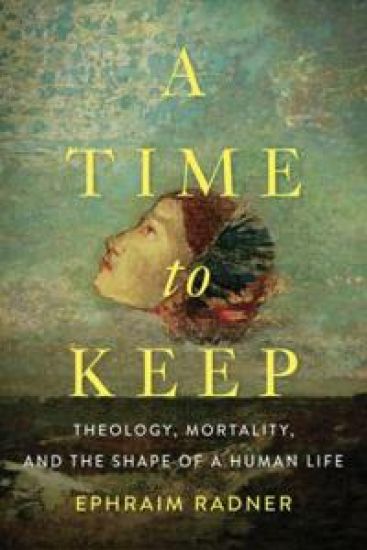
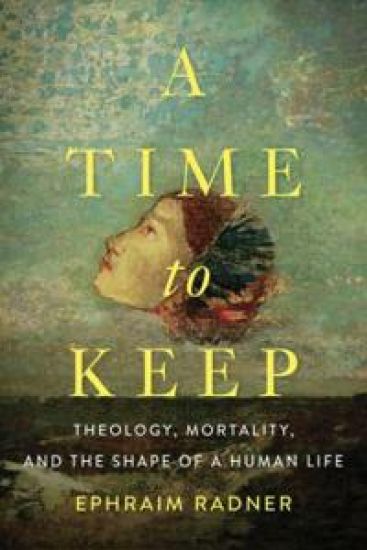
A Time to Keep

A Time to Keep

Ephraim Radner

Baylor University Press
2018
sidottu
The miracle of birth and the mystery of death mark human life. Mortality, like a dark specter, looms over all that lies in between. Human character, behavior, aims, and community are all inescapably shaped by this certainty of human ends. Mortality, like an unwanted guest, intrudes, becoming a burden and a constant struggle. Mortality, like a thief who steals, even threatens the ability to live life rightly. Life is short. Death is certain. Mortality, at all costs, should be resisted or transcended. In A Time to Keep Ephraim Radner revalues mortality, reclaiming it as God's own. Mortality should not be resisted but received. Radner reveals mortality's true nature as a gift, God's gift, and thus reveals that the many limitations that mortality imposes should be celebrated. Radner demonstrates how faithfulness - and not resignation, escape, denial, redefinition, or excess - is the proper response to the gift of humanity's temporal limitation. To live rightly is to recognize and then willingly accept life's limitations. In chapters on sex and sexuality, singleness and family, education and vocation, and a panoply of end of life issues, A Time to Keep plumbs the depths of the secular imagination, uncovering the constant struggle with human finitude in its myriad forms. Radner shows that by wrongly positioning creaturely mortality, these parts of human experience have received an inadequate reckoning. A Time to Keep retrieves the most basic confession of the Christian faith, that life is God's, which Radner offers as grace, as the basis for a Christian understanding of human existence bound by its origin and telos. The possibility and purpose of what comes between birth and death is ordered by the pattern of Scripture, but is performed faithfully only in obedience to the limits that bind it.
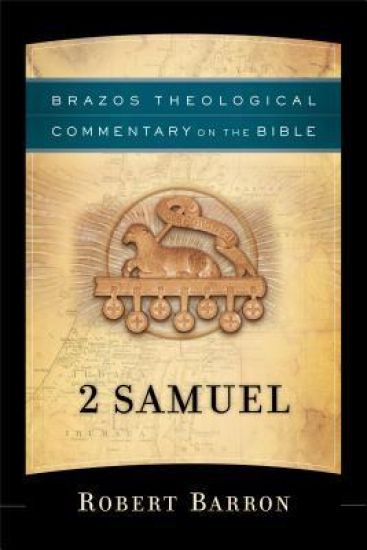
2 Samuel

2 Samuel

Robert Barron; R. Reno; Robert Jenson; Robert Wilken; Ephraim Radner

Brazos Press, Div of Baker Publishing Group
2017
nidottu
Explore how the roots of the ancient Christian tradition inform and shape faithfulness todayThe Brazos Theological Commentary on the Bible enlists leading theologians to read and interpret scripture creedally for the twenty-first century, just as the church fathers, the Reformers, and other orthodox Christians did for their times and places. A rich resource for preachers, teachers, students, and study groups, the BTC provides guidance for reading the Bible under the rule of faith. Each volume in the series includes? a Christological focus and framework grounded in the Nicene Creed? connections between biblical interpretation and today's social issues? applications for contemporary faith and life? devotional depth for meditation and reflection? insights from literature, philosophy, culture, and moreIn this addition to the series, highly acclaimed author, speaker, and theologian Robert Barron offers a theological exegesis of 2 Samuel. He highlights three major themes: God's non-competitive transcendence, the play between divine and non-divine causality, and the role of Old Testament kingship. Ultimately the Brazos Theological Commentary on the Bible demonstrates the continuing intellectual and practical viability of theological interpretation of the Bible.
A Time to Keep

A Time to Keep

Ephraim Radner

Baylor University Press
2017
nidottu
The miracle of birth and the mystery of death mark human life. Mortality, like a dark specter, looms over all that lies in between. Human character, behavior, aims, and community are all inescapably shaped by this certainty of human ends. Mortality, like an unwanted guest, intrudes, becoming a burden and a constant struggle. Mortality, like a thief who steals, even threatens the ability to live life rightly. Life is short. Death is certain. Mortality, at all costs, should be resisted or transcended. In A Time to Keep Ephraim Radner revalues mortality, reclaiming it as God's own. Mortality should not be resisted but received. Radner reveals mortality's true nature as a gift, God's gift, and thus reveals that the many limitations that mortality imposes should be celebrated. Radner demonstrates how faithfulness - and not resignation, escape, denial, redefinition, or excess - is the proper response to the gift of humanity's temporal limitation. To live rightly is to recognize and then willingly accept life's limitations. In chapters on sex and sexuality, singleness and family, education and vocation, and a panoply of end of life issues, A Time to Keep plumbs the depths of the secular imagination, uncovering the constant struggle with human finitude in its myriad forms. Radner shows that by wrongly positioning creaturely mortality, these parts of human experience have received an inadequate reckoning. A Time to Keep retrieves the most basic confession of the Christian faith, that life is God's, which Radner offers as grace, as the basis for a Christian understanding of human existence bound by its origin and telos. The possibility and purpose of what comes between birth and death is ordered by the pattern of Scripture, but is performed faithfully only in obedience to the limits that bind it.
Church

Church

Ephraim Radner

Cascade Books
2017
pokkari
This is an introduction to thinking theologically about the Christian church--what is known as ecclesiology. The book covers background questions of conception, history, differences among separated Christian churches, and several modern approaches to the study of the church. It also introduces readers to a specific scriptural way of thinking about the church centered on mission, that takes into account problems associated with past approaches, and sensitive to contemporary concerns with the reality of Judaism and other national identities in a global context. ""Ephraim Radner has already earned a reputation as one of the most incisive, prophetic theologians of the Anglican Communion. This book solidifies his status as a pastoral teacher as well. With the warmth of a seasoned catechist, he takes dense, challenging theology and demonstrates its necessity, urgency, and beauty. I plan to sing the praises of this book to clergy and laity alike, to my theological colleagues as well as my beginning students."" --Wesley Hill, assistant professor of Biblical Studies, Trinity School for Ministry, Ambridge, Pennsylvania ""Church is vintage Ephraim Radner: generous of spirit, learned, rooted in Scripture and centered on Christ, engaged with ecclesial life as it really is, provocative in its thesis. The reader will find more than a little influence of his teacher George Lindbeck--along with his interests in sociology and an 'Israel-like' ecclesiology, here conjoined with professor Radner's sustained interest in history. He rightly worries, with the aid of both theology and philosophy, about how we in our time can truly think of the church as a 'we.' This remarkable book succeeds both as an introduction for a general audience and a monograph for professionals, and I enthusiastically commend it to both."" --George R. Sumner, Episcopal bishop of Dallas ""In this impressive volume, written with subtlety and conviction, Ephraim Radner demonstrates how one can love the church without ignoring her frailties. Building upon the seminal insights of George Lindbeck, Radner focuses upon the church's identity as an expanded Israel engaged in mission to all the peoples of the earth. In keeping with the biblical figure of Israel, this is also a people which endures the purifying fire of divine judgment. Radner helps us see the church as it is in reality, and to love her in the midst of the fire."" --Mark S. Kinzer, author of Searching Her Own Mystery: Nostra Aetate, the Jewish People, and the Identity of the Church ""There are books about the church that begin on the day of Pentecost and scarcely mention the Old Testament, ignoring the fact that Peter's sermon that day is saturated with Scriptural argument. I have scanned others recently that have no references for 'mission' in the index (except ""see evangelism""). In this historically informative and theologically stimulating study, Ephraim Radner avoids both deficiencies. He takes with utmost exegetical and theological seriousness the implications of the New Testament identity of the church as Israel in the body of the Messiah Jesus, and then digs deeply into the ecclesial and missional implications of the calling and role of church-as-Israel as a nation among the nations for the sake of the nations. Steering critically clear of the varied sad sunderings of anti-semitism (ancient and modern), dispensationalism, and supersessionism, he challenges us with thought-provoking reflections that are richly biblical, ecumenical, and missional. Foremost among them for me is Radner's perception of the church, like Israel, as God's 'repentant missionary, ' standing simultaneously under God's judgment as a sinful people 'like all the nations, ' and yet still summoned by God's grace to be the agent and model of God's mission among the nations. With such a biblically-rooted missional ecclesiology, we can avoid the extremes of arrogant triumphalism and paralyzing despair."" --Christopher J. H. Wright, Lan
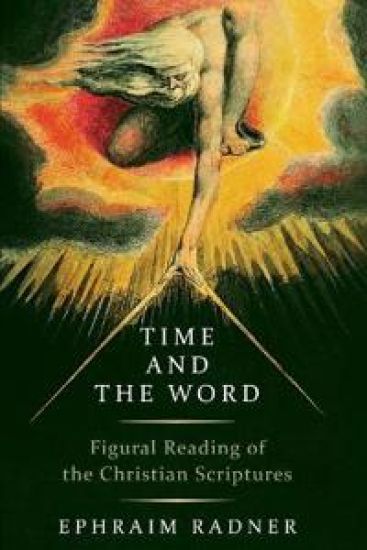
Time and the Word

Time and the Word

Ephraim Radner

William B. Eerdmans Publishing Company
2016
pokkari
This book by Ephraim Radner constitutes the first significant theological account of the foundations and methods of the figural reading of Scripture. Radner's reintroduces contemporary scholars to a traditional approach to biblical interpretation that dates back to Jewish practice from before the time of Jesus. Figural interpretation continued in prominence through the early church, the Middle Ages, and into the early modern period before it was forcefully rejected with the rise of historical criticism. Embracing "spiritual" and "allegorical" ways of understanding the Bible, figural reading once offered a broad approach to reading Scripture--an approach that Radner here engages through a foundational theological lens. Radner first uncovers the theological presuppositions of figural reading, historically and philosophically, focusing especially on the Christian understanding of time and the divine. He then moves from the theoretical to the concrete, looking at examples of how figural reading of the Bible gives rise to specific doctrinal claims about God and showing how it can still fruitfully inform Christian teaching and preaching today. The book concludes with four sample figural sermons from across the centuries.
1 & 2 Kings

1 & 2 Kings

Peter J. Leithart; R. Reno; Robert Jenson; Robert Wilken; Ephraim Radner

BAKER PUBLISHING GROUP
2016
nidottu
Explore how the roots of the ancient Christian tradition inform and shape faithfulness todayThe Brazos Theological Commentary on the Bible enlists leading theologians to read and interpret scripture creedally for the twenty-first century, just as the church fathers, the Reformers, and other orthodox Christians did for their times and places. A rich resource for preachers, teachers, students, and study groups, the BTC provides guidance for reading the Bible under the rule of faith. Each volume in the series includes? a Christological focus and framework grounded in the Nicene Creed? connections between biblical interpretation and today's social issues? applications for contemporary faith and life? devotional depth for meditation and reflection? insights from literature, philosophy, culture, and moreUltimately the Brazos Theological Commentary on the Bible demonstrates the continuing intellectual and practical viability of theological interpretation of the Bible.
Proverbs & Ecclesiastes

Proverbs & Ecclesiastes

Daniel J. Treier; R. Reno; Robert Jenson; Robert Wilken; Ephraim Radner

Brazos Press, Div of Baker Publishing Group
2015
nidottu
Explore how the roots of the ancient Christian tradition inform and shape faithfulness todayThe Brazos Theological Commentary on the Bible enlists leading theologians to read and interpret scripture creedally for the twenty-first century, just as the church fathers, the Reformers, and other orthodox Christians did for their times and places. A rich resource for preachers, teachers, students, and study groups, the BTC provides guidance for reading the Bible under the rule of faith. Each volume in the series includes? a Christological focus and framework grounded in the Nicene Creed? connections between biblical interpretation and today's social issues? applications for contemporary faith and life? devotional depth for meditation and reflection? insights from literature, philosophy, culture, and moreIn this addition to the well-received series, Daniel Treier offers theological exegesis of Proverbs and Ecclesiastes. Ultimately the Brazos Theological Commentary on the Bible demonstrates the continuing intellectual and practical viability of theological interpretation of the Bible.
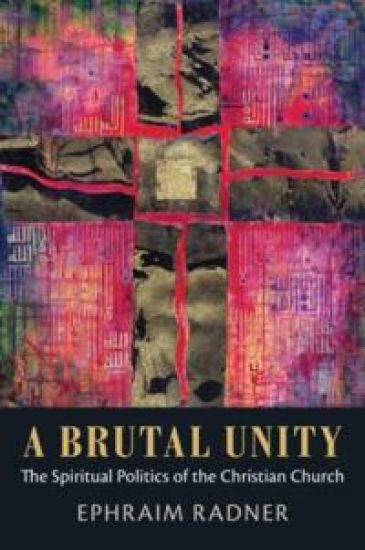
A Brutal Unity

A Brutal Unity

Ephraim Radner

Baylor University Press
2012
sidottu
To describe the Church as "united" is a factual misnomer--even at its conception centuries ago. Ephraim Radner provides a robust rethinking of the doctrine of the church in light of Christianity's often violent and at times morally suspect history. He holds in tension the strange and transcendent oneness of God with the necessarily temporal and political function of the Church, and, in so doing, shows how the goals and failures of the liberal democratic state provide revelatory experiences that greatly enhance one's understanding of the nature of Christian unity.
The Fate of Communion

The Fate of Communion

Ephraim Radner

William B Eerdmans Publishing Co
2007
nidottu
Current debates over a host of issues, particularly those relating to homosexuality, have left the 70-million-member Anglican Communion straining to understand what it means to be a communion -- and even wondering whether life as a communion is possible. In this timely book two priest-scholars, Ephraim Radner and Philip Turner, examine the future of the concept of "communion" as a viable church structure, tracing its historical development as a self-conscious Anglican third way between Protestant congregationalism and Catholic centralism. In examining this essential issue, Radner and Turner relate the specific challenges of the U. S. Episcopal Church to the unity of the worldwide communion, touching on such divisive subjects as the place of Scripture, liberal theology, and episcopal authority. Their discussion is at once measured and impassioned, erudite and practical. Compelling reading for Episcopalians and those in other traditions who are searching for a truly Christian approach to these thorny topics, The Fate of Communion is a forthright, direct examination of a church in turmoil.
The End of the Church

The End of the Church

Ephraim Radner

William B Eerdmans Publishing Co
1998
pokkari
In this first serious assessment of the meaning of church division, Ephraim Radner provides a theological rationale for today's divided church in the Christian West that goes far beyond the standard socio-historical explanations of denominationalism. Through an examination of controversial, post-Reformation discussions about the church, Radner offers a significant theory that describes the relation between Christian division and the work of the Holy Spirit within Western modernity. Radner's description of the church is based on the traditional notion that a divided church is, in a significant sense, a "dead" church, after the figure of the pneumatically abandoned "dead Christ," who himself suffers redemptively the disintegration and restoration of divided Israel in his physical and spiritual passion. The hermeneutical basis for the usefulness of this figure lies deep in the scriptural practice of the undivided church, and was common up through the Reformation. Radner's recovery of this figural perspective is applied to the cluster of pneumatological issues that define ecclesial life.