Kirjojen hintavertailu – 12 859 827 kirjaa ja 27 kauppaa

Kirjailija

Epictetus

Kirjat ja teokset yhdessä paikassa: 144 kirjaa, julkaisuja vuosilta 1890–2026, suosituimpiin kuuluu Meditations Of Marcus Aurelius Antoninus. Vertaile teosten hintoja ja tarkista saatavuus suomalaisista kirjakaupoista.

144 kirjaa

Kirjojen julkaisuvuodet: 1890–2026.

Discourses and Selected Writings

Discourses and Selected Writings

Epictetus

Penguin Classics
2008
pokkari

Halvin toimitettuna 17,00 €

The Discourses/Fragments/Enchiridion'I must die. But must I die bawling?'Epictetus, a Greek Stoic and freed slave, ran a thriving philosophy school in Nicopolis in the early second century AD. His animated discussions were celebrated for their rhetorical wizardry and were written down by Arrian, his most famous pupil. The Discourses argue that happiness lies in learning to perceive exactly what is in our power to change and what is not, and in embracing our fate to live in harmony with god and nature. In this personal, practical guide to the ethics of Stoicism and moral self-improvement, Epictetus tackles questions of freedom and imprisonment, illness and fear, family, friendship and love. Translated and Edited with an Introduction by Robert Dobbin
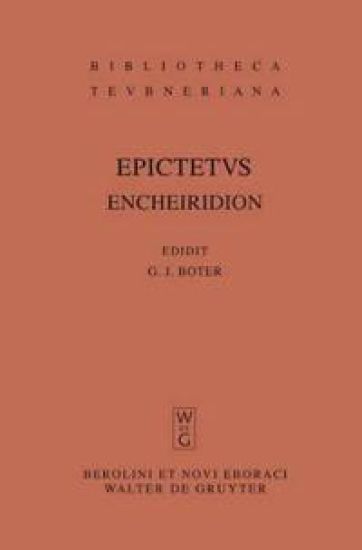
Encheiridion

Encheiridion

Epictetus

De Gruyter
2007
sidottu
The philosopher Epictetus’ Encheiridion (“Little Handbook”), written c. AD 100, is one of the most influential works of Stoic philosophy. The Greek text presented here is the first one to be based an a full evaluation of the complete tradition.
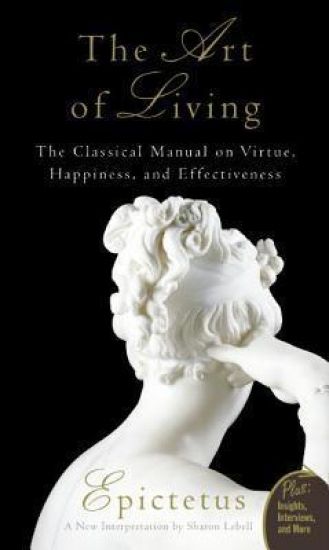
Art of Living

Art of Living

Epictetus; Sharon Lebell

HarperOne
2007
nidottu

Halvin toimitettuna 18,90 €

"An immense dose of Epictetus would do us all a great deal of good, and I am grateful (beyond irony) to Tom Wolfe for reviving Epictetus" - Harold Bloom. So what makes the writings of this former slave so powerful today? Epictetus observed that although everyday life is fraught with difficulty, a life of virtue is within reach. He dedicated his life to outlining the simple way to happiness, fulfillment, and tranquility. By putting into practice the 93 witty, wise, and razor-sharp instructions that make up "The Art of Living", readers learn to gracefully meet the challenges of everyday life as well as life's inevitable major losses and disappointments.
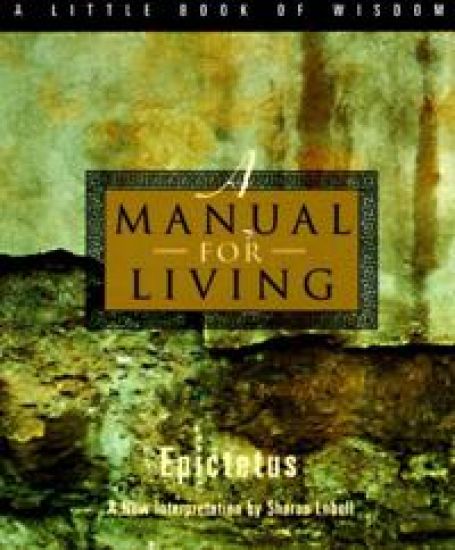
A Manual for Living

A Manual for Living

Epictetus

HarperOne
1994
nidottu

Halvin toimitettuna 17,50 €

The essence of perennial Stoic wisdom in aphorisms of stunning insight and simplicity. The West's first and best little instruction book offers thoroughly contemporary and pragmatic reflections on how best to live with serenity and joy.
The Handbook (The Encheiridion)

The Handbook (The Encheiridion)

Epictetus

Hackett Publishing Co, Inc
1983
sidottu
From the Introduction: "Stoic philosophy, of which Epictetus (c. a.d. 50–130) is a representative, began as a recognizable movement around 300 b.c. Its founder was Zeno of Cytium (not to be confused with Zeno of Elea, who discovered the famous paradoxes). He was born in Cyprus about 336 b.c., but all of his philosophical activity took place in Athens. For more than 500 years Stoicism was one of the most influential and fruitful philosophical movements in the Graeco-Roman world. The works of the earlier Stoics survive only in fragmentary quotations from other authors, but from the Renaissance until well into the nineteenth century, Stoic ethical thought was one of the most important ancient influences on European ethics, particularly because of the descriptions of it by Cicero, through surviving works by the Stoics Seneca, Marcus Aurelius, and also Epictetus--and also because of the effect that it had had in antiquity, and continued to have into the nineteenth century, on Christian ethical views. Nowadays an undergraduate or graduate student learning about ancient philosophy in a university course may well hear only about Plato and Aristotle, along perhaps with the presocratics; but in the history of Western thought and education this situation is somewhat atypical, and in most periods a comparable student would have learned as much or more about Stoicism, as well as two other major ancient philosophical movements, Epicureanism and Scepticism. In spite of this lack of explicit acquaintance with Stoic philosophers and their works, however, most students will recognize in Epictetus various ideas that are familiar through their effects on other thinkers, notably Spinoza, in our intellectual tradition."