Kirjojen hintavertailu – 12 859 827 kirjaa ja 27 kauppaa
Kirjailija
Epiphanius Wilson
Kirjat ja teokset yhdessä paikassa: 65 kirjaa, julkaisuja vuosilta 2002–2026, suosituimpiin kuuluu The Literature of Arabia. Vertaile teosten hintoja ja tarkista saatavuus suomalaisista kirjakaupoista.
The wonders of Egyptian arch ology are the latest and most precious harvest of scholars and explorers. From Belzoni to Flinders Petrie there has been a succession of discoveries in the valley of the Nile with which it is hard for ordinary students to keep pace. Our knowledge of Egyptian life to-day is far clearer and more complete than Bentley's or Porson's acquaintance with the antiquities of Greece and Rome, and we have far more complete access to the treasures of Egyptian literature than Dante or Thomas Aquinas had to the remains of Attic poets and mystics.
The poetry of a nation is always the best revealer of its genuine life: the range of its spiritual as well as of its intellectual outlook. This is the case even where poetry is imitative, for imitation only pertains to the form of poetry, and not to its essence. Vergil copied the metre and borrowed the phraseology of Homer, but is never Homeric. In one sense, all national poetry is original, even though it be shackled by rules of traditional prosody, and has adopted the system of rhyme devised by writers in another language, whose words seem naturally to bourgeon into assonant terminations. But Japanese poetry is original in every sense of the term. Imitative as the Japanese are, and borrowers from other nations in every department of plastic, fictile, and pictorial art, as well as in religion, politics, and manufactures, the poetry of Japan is a true-born flower of the soil, unique in its mechanical structure, spontaneous and unaffected in its sentiment and subject. CLASSICAL POETRY OF JAPAN: Contents Introduction Ballads- The Fisher-Boy Urashima On Seeing a Dead Body The Maiden of Un hi The Grave of the Maiden of Un hi The Maiden of Katsushika The Beggar's Complaint A Soldier's Regrets on Leaving Home Love Songs- On Beholding the Mountain Love is Pain Hitomaro to His Mistress No Tidings Homeward The Maiden and the Dog Love is All Husband and Wife He Comes Not He and She The Pearls A Damsel Crossing a Bridge Secret Love The Omen A Maiden's Lament Rain and Snow Mount Mikash Evening Elegies- On the Death of the Mikado Tenji On the Death of the Poet's Mistress Elegy on the Poet's Wife On the Death of Prince Hinami On the Death of the Nun Riguwa On the Poet's Son, Furubi Short Stanza on the Same Occasion Miscellaneous Poems- View from Mount Kago The Mikado's Bow Spring and Autumn Spring Recollections of My Children The Brook of Hats se Lines to a Friend A Very Ancient Ode The Bridge to Heaven Ode to the Cuckoo The Ascent of Mount Tsuk ba Couplet Short Stanzas
THE DRAMA OF JAPAN Nakamitsu Abstraction Book Excerpt: Nakamitsu.-I am Nakamitsu, a man of the Fujihara clan, and retainer of Mitsunaka, Lord of Tada in the land of Setsushiu. Now you must know that my lord hath an only son, and him hath he sent to a certain monastery amid the mountains named Chiynuza zhi, while I, too, have a son called Kauzhiyu, who is gone as page to young my lord. But young my lord doth not condescend to apply his mind unto study, loving rather nothing so well as to spend from morn to night in quarrelling and disturbance. Wherefore, thinking doubtless to disinherit young my lord, my lord already this many a time, hath sent his messengers to the temple with summons to return home to Kiyauto. Nevertheless, as he cometh not, me hath he now sent on the same errand.
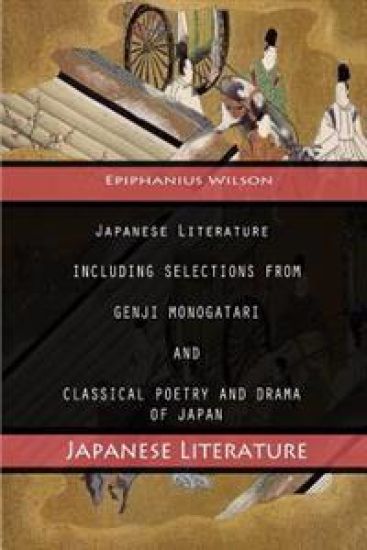
Japanese Literature Genji Monogatari, the original of this translation, is one of the standard works of Japanese literature. It has been regarded for centuries as a national treasure. The title of the work is by no means unknown to those Europeans who take an interest in Japanese matters, for it is mentioned or alluded to in almost every European work relating to our country. It was written by a lady, who, from her writings, is considered one of the most talented women that Japan has ever produced.... and other works. Book Contents: GENJI MONOGATARI Introduction CHAPTER I. -The Chamber of Kiri II. -The Broom-like Tree III. -Beautiful Cicada IV. -Evening Glory V. -Young Violet VI. -Saffron Flower VII. -Maple F te VIII. -Flower-Feast IX. -Hollyhock X. -Divine Tree XI. -Villa of Falling Flowers XII. -Exile at Suma XIII. -Exile at Akashi XIV. -The Beacon XV. -Overgrown Mugwort XVI. -Barrier House XVII. -Competitive Show of Pictures CLASSICAL POETRY OF JAPAN Introduction Ballads- The Fisher-Boy Urashima On Seeing a Dead Body The Maiden of Un hi The Grave of the Maiden of Un hi The Maiden of Katsushika The Beggar's Complaint A Soldier's Regrets on Leaving Home Love Songs- On Beholding the Mountain Love is Pain Hitomaro to His Mistress No Tidings Homeward The Maiden and the Dog Love is All Husband and Wife He Comes Not He and She The Pearls A Damsel Crossing a Bridge Secret Love The Omen A Maiden's Lament Rain and Snow Mount Mikash Evening Elegies- On the Death of the Mikado Tenji On the Death of the Poet's Mistress Elegy on the Poet's Wife On the Death of Prince Hinami On the Death of the Nun Riguwa On the Poet's Son, Furubi Short Stanza on the Same Occasion Miscellaneous Poems- View from Mount Kago The Mikado's Bow Spring and Autumn Spring Recollections of My Children The Brook of Hats se Lines to a Friend A Very Ancient Ode The Bridge to Heaven Ode to the Cuckoo The Ascent of Mount Tsuk ba Couplet Short Stanzas THE DRAMA OF JAPAN Nakamitsu Abstraction
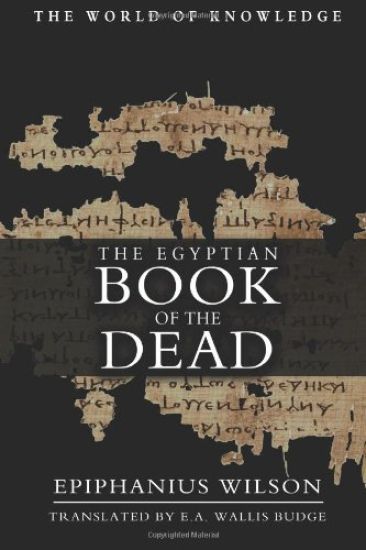
The sacred wisdom of the priests of ancient Egypt and the experiences of the soul after death created what became one of the most important books in Egyptian history. Now in this new translation, we have a more complete and improved version of what was intended in the original hieroglyphic text.