

Kirjailija
Eric Chaline
Kirjat ja teokset yhdessä paikassa: 9 kirjaa, julkaisuja vuosilta 2004–2022, suosituimpiin kuuluu Fifty Minerals That Changed the Course of History. Vertaile teosten hintoja ja tarkista saatavuus suomalaisista kirjakaupoista.
9 kirjaa
Kirjojen julkaisuvuodet: 2004–2022.

Symbols of the Occult
Eric Chaline; Mark Stavish
Thames Hudson Ltd
2021
sidottu
Halvin toimitettuna 26,30 €
Chosen for their powerful symbolism, the illustrations in this book range from the myths and legends of the ancient world to the icons used in modern culture and science. You will discover the fascinating origins and meanings of over 500 signs and symbols, from the secrets of the Maya calendar to demon-summoning seals and secretive symbols of the hermetic orders. Divided into seven thematic sections – astrology; the natural world; sacred writings; alchemy, numerology and sacred geometry; magic; demonology; and the western esoteric tradition – this decoding guide is the ultimate resource for unlocking the secret language of signs and symbols for the modern occultist.
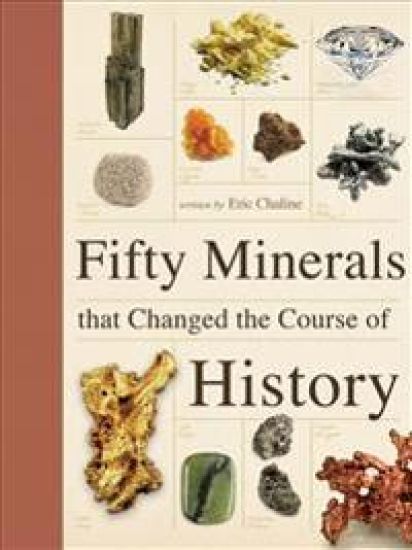
"The brief sections are consistently interesting, and plenty of supplemental illustrations and photos make this a handsome volume... best-suited to curious kids and casual mineralogists." --Publishers Weekly "A beautiful book, nicely bound and richly illustrated... written in an easy to read, casual style." --Science Books and Films Fifty Minerals that Changed the Course of History is a beautifully presented guide to the minerals that have had the greatest impact on human civilization. These are the materials used from the Stone Age to the First and Second Industrial Revolutions to the Nuclear Age and include metals, ores, alloys, salts, rocks, sodium, mercury, steel and uranium. The book includes minerals used as currency, as jewelry and as lay and religious ornamentation when combined with gem minerals like diamonds, amber, coral, and jade. Examples of the fifty minerals are: Diamonds: Did a necklace ordered by Louis XV precipitate the French Revolution? Sulphur: The biblical brimstone now used in organic farming. Clay: The oldest ceramic object is not a cooking pot or drinking bowl, but a statuette. Arsenic: Was Napoleon murdered while imprisoned on the island of St. Helena? Coal: The Romans invented the first central heating system. Saltpeter: China's fourth "Great Invention" was perhaps not so great after all. Salt: Once used as currency, we give it little thought today. Jade: The Chinese fabric of "pajamas for eternity." Ubiquitous or rare, the minerals described in Fifty Minerals that Changed the Course of History have been fundamental to human progress, for good or evil. Many are familiar -- the aluminum can we drink from, the car we drive, the jewelry we wear. They can be poisons, medicines or weapons, but wherever found and however used, their importance can be easily overlooked. This attractive reference gives us fascinating insight into our undeniable dependence on minerals.

'Pleasure beckons at the water's edge.' With these words, Eric Chaline celebrates the physicality and sensuality of swimming - attributes that might have contributed to the evolution of the human species. Chaline's comprehensive account surveys swimming from prehistory to the present day. He decodes the earliest human myths to reconstruct swimming's prehistory and history; he explains its role in religious rituals, trade and manufacture, warfare and medicine, and chronicles its transformation into the leisure activity and competitive sport that together have made it the most commonly practiced physical pastime in the developed world. Swimming is now a cultural marker that stands for eroticism, leisure, endurance, adventure, exploration and excellence, and latterly, like other disciplines that use repetitive movements to discipline the body and still the mind, it is held by wild swimmers to be a lane to spiritual awakening - one stroke at a time. There is no single story of human swimming, but many currents that merge, diverge and remerge towards a future in which our survival may depend on our ability to adapt to life in an aquatic world.
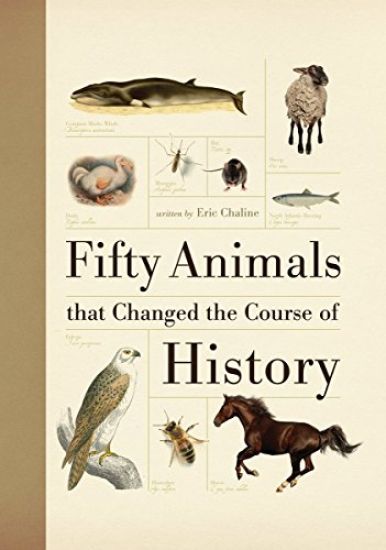
"Uncovers some of the most interesting stories of how animals ... have impacted human civilization in economic, political, and industrial history. This is an original approach that links the biological sciences to the social sciences and students and general readers will find many interesting stories within these pages." --American Reference Books Annual 2012 " An] inspired invitation to browsing, with short but informative essays on each of the subjects, rich in illustrations, excerpts and sidebars." --Globe and Mail Fifty Animals that Changed the Course of History is a beautifully presented guide to the animals that have had the greatest impact on human civilization. The 50 animals include the horse, dog, rat, whale, reindeer, beaver, flea, leech, dodo, falcon, oyster and shark. These creatures great and small have played central roles in the evolution of humankind, but they have remained at the periphery of our understanding of history. Whether it is an advancement in scientific knowledge, a trade war, disease and death, battles won and lost, or encounters with explorers in unknown lands, these animals have changed the course of history. More than 150 elegant drawings, photographs and paintings, as well as excerpts from literature, highlight the concise text. The animals are judged by their influence in four categories: Edible -- animals that have shaped agriculture, such as the cow Medical -- animals that are "disease vectors," spreading bacteria and viruses, from malaria to plague Commercial -- animals used for trade or in manufacturing Practical -- animals used for transportation or clothing. The animals described in Fifty Animals that Changed the Course of History are familiar, but their roles in human history are easily overlooked. This attractive reference gives us a fresh perspective on our membership in the animal kingdom.

Charting the unique relationship between humans and animals and how certain species have been instrumental in the development of our understanding of the evolution of the natural world, this title explores the role animals have played in our culture and history. Often taken for granted, the produce and work of animals have not only met man's basic need for food and clothing, the study of animals has allowed us to develop scientifically and culturally. "Fifty Animals that Changed the Course of History" is a fascinating exploration of the important role animals have played in our changing world, from the honeybee to the scarab beetle.

History's Worst Predictions and the People Who Made Them
Eric Chaline
The History Press Ltd
2011
nidottu
It is said that one of the things that sets us apart from the other animals is our ability to conceive of the future. Since the dawn of history, human civilisation has had its prophets, but whether they claim divine inspiration, employ scientific forecasting or economic modelling, or just use their own fertile imaginations, what they have in common is the ability to get things spectacularly wrong. Organised chronologically, History’s Worst Predictions excavates the strata of history to expose the rich veins of absurdity that are humanity’s prophetic utterances. Every aspect of human life – religion, politics, science, economy, culture and war – has provided material for the most far-fetched and inaccurate of predictions. And the one area where forecasters have got it most consistently wrong is technology: there is not one major invention, from the railroad to the personal computer, that has not been written off as impossible, dangerous or uneconomic. Last but not least are the innumerable prophecies of the End of the World – the religious (Second Comings, Raptures, Armageddons); the natural (comet strikes, killer planetary alignments, rapid ice ages); and the manmade (nuclear annihilation, overpopulation, ecological collapse).
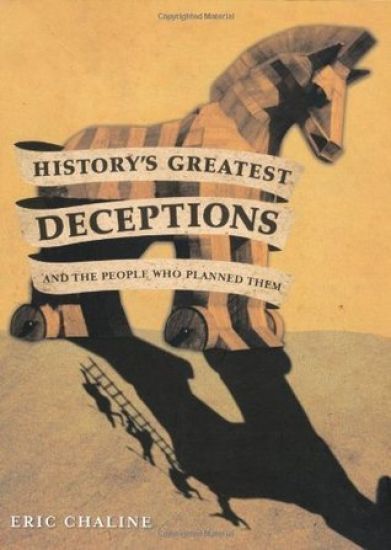
History's Greatest Deceptions and the People Who Planned Them
Eric Chaline
The History Press Ltd
2010
nidottu
Human history is positively shrouded in the dark arts of deceit and subterfuge. According to the Bible, the story of mankind began with the Serpent's lie to Eve, and we have happily profited from deceiving our brothers and sisters ever since. No matter the period or place, the religion or ideology, individuals and institutions have schemed and scammed their way into positions of power and wealth, taking full advantage of man's unique capacity for believing almost anything. With no little skill and imaginative flair, History's Greatest Deceptions chronicles the 50 most remarkable tales of fraud and forgery. This beautifully presented volume, which includes over 80 photographs, paintings, and illustrations, shines a light on the compelling personalities inside the stories, and explores the motivations behind some of the most ambitiously dishonest acts known to humankind.
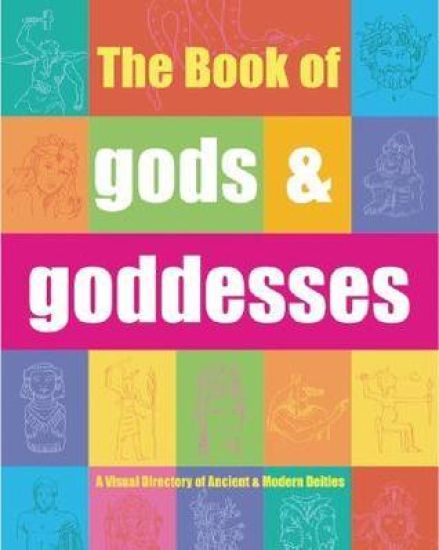
The Book of Gods & Goddesses: A Visual Directory of Ancient and Modern Deities
Eric Chaline
It Books
2004
sidottu
Discover a host of gods and goddesses, some of them familiar, others forgotten or unknown. Drawn from cultures around the globe, divided by region and fully illustrated. From Tiamat (the great mother goddess of the ancient Mesopotamianst) to Olorun (the "Owner of the Heavens" for the Yoruba people of Nigeria).