Kirjojen hintavertailu – 12 859 828 kirjaa ja 27 kauppaa
Kirjailija
Eric Foner
Kirjat ja teokset yhdessä paikassa: 51 kirjaa, julkaisuja vuosilta 1981–2027, suosituimpiin kuuluu A Short History of Reconstruction [Updated Edition]. Vertaile teosten hintoja ja tarkista saatavuus suomalaisista kirjakaupoista.
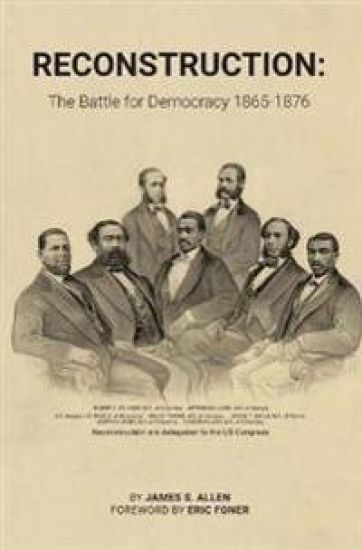
Undoubtedly American history's most distorted period: the decade usually associated with the term "scalawags," "carpetbaggers," and "Negro domination", is here given a new and penetrating analysis. The author presents Reconstruction as the second phase of the social upheaval inaugurated by the Civil War. He shows that a democratic revolution took place in the South where for a time popular rule replaced slave masters, as freedmen sought to realize the promise of full citizenship arising from the defeat of the slavocracy. Betrayal and counter-revolution, Allen holds, left for a later day the democratic transformation of the South.
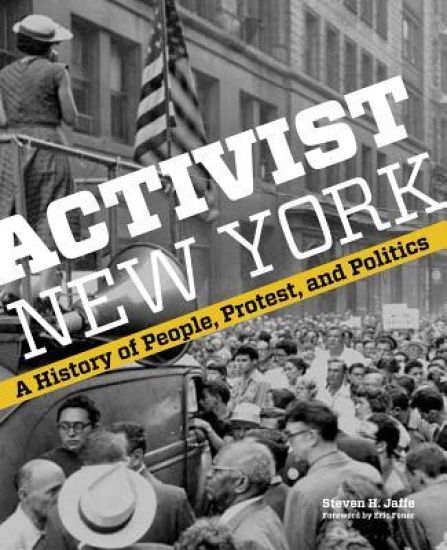
Follows centuries of New York activism to reveal the city as a globally influential machine for social change Activist New York surveys New York City's long history of social activism from the 1650's to the 2010's. Bringing these passionate histories alive, Activist New York is a visual exploration of these movements, serving as a companion book to the highly-praised Museum of the City of New York exhibition of the same name. New York's primacy as a metropolis of commerce, finance, industry, media, and ethnic diversity has given it a unique and powerfully influential role in the history of American and global activism. Steven H. Jaffe explores how New York's evolving identities as an incubator and battleground for activists have made it a "machine for change." In responding to the city as a site of slavery, immigrant entry, labor conflicts, and wealth disparity, New Yorkers have repeatedly challenged the status quo. Activist New York brings to life the characters who make up these vibrant histories, including David Ruggles, an African American shopkeeper who helped enslaved fugitives on the city's Underground Railroad during the 1830s; Clara Lemlich, a Ukrainian Jewish immigrant who helped spark the 1909 "Uprising of 20,000" that forever changed labor relations in the city's booming garment industry; and Craig Rodwell, Karla Jay, and others who forged a Gay Liberation movement both before and after the Stonewall Riot of June 1969. The city's inhabitants have been at the forefront of social change on issues ranging from religious tolerance and minority civil rights to sexual orientation and economic justice. Across 16 lavishly illustrated chronological chapters focusing on specific historical episodes, Jaffe explores how New York and New Yorkers have changed the way Americans think, feel, and act.
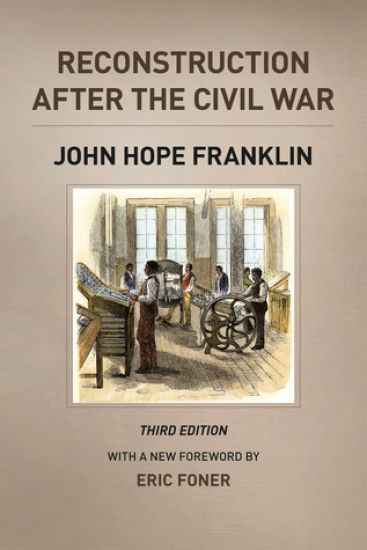
In 1957, the University of Chicago Press asked acclaimed best-selling historian Daniel J. Boorstin to oversee a series of accessible yet authoritative books that, together, would tell the whole history of the American people. The result, published over the course of nearly half a century, is the "Chicago History of American Civilization" series, which provides a nuanced and vibrant portrait of the United States from its inception through the twentieth century. Scholars across many disciplines contributed, and the series covers a broad range of topics, as disparate as the War of 1812, immigration, and American folklore. While the series is certainly eclectic, the books share both ambition and authority - they have been staples for teachers and general readers alike. The authors included in this series represent some of the greatest academic talents ever to turn their mind to the American past. Thus the University of Chicago Press is excited to offer new editions of three of the series' best-known books. "Reconstruction after the Civil War" explores the role of former slaves during this period in American history. Looking past popular myths and controversial scholarship, John Hope Franklin uses his astute insight and careful research to provide an accurate, comprehensive portrait of the era. His arguments concerning the brevity of the North's occupation, the limited power wielded by former slaves, the influence of moderate Southerners, the flawed constitutions of the radical state governments, and the downfall of Reconstruction remain compelling today. This new edition of "Reconstruction after the Civil War" also includes a foreword by Eric Foner and a perceptive essay by Michael W. Fitzgerald.
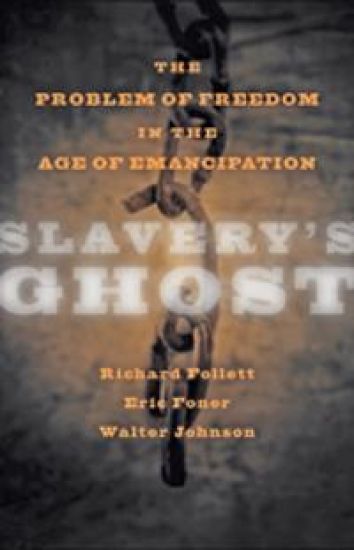
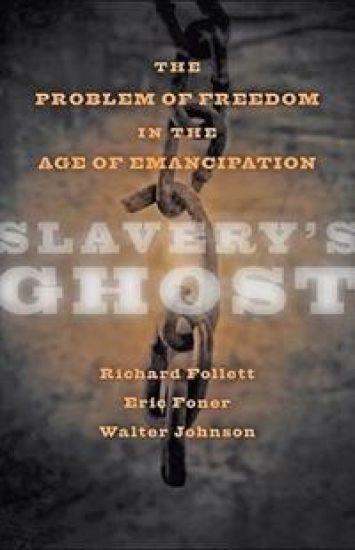
President Abraham Lincoln freed millions of slaves in the South in 1863, rescuing them, as history tells us, from a brutal and inhuman existence and making the promise of freedom and equal rights. This is a moment to celebrate and honor, to be sure, but what of the darker, more troubling side of this story? Slavery's Ghost explores the dire, debilitating, sometimes crushing effects of slavery on race relations in American history. In three conceptually wide-ranging and provocative essays, the authors assess the meaning of freedom for enslaved and free Americans in the decades before and after the Civil War. They ask important and challenging questions: How did slaves and freedpeople respond to the promise and reality of emancipation? How committed were white southerners to the principle of racial subjugation? And in what ways can we best interpret the actions of enslaved and free Americans during slavery and Reconstruction? Collectively, these essays offer fresh approaches to questions of local political power, the determinants of individual choices, and the discourse that shaped and defined the history of black freedom. Written by three prominent historians of the period, Slavery's Ghost forces readers to think critically about the way we study the past, the depth of racial prejudice, and how African Americans won and lost their freedom in nineteenth-century America.
President Abraham Lincoln freed millions of slaves in the South in 1863, rescuing them, as history tells us, from a brutal and inhuman existence and making the promise of freedom and equal rights. This is a moment to celebrate and honor, to be sure, but what of the darker, more troubling side of this story? Slavery's Ghost explores the dire, debilitating, sometimes crushing effects of slavery on race relations in American history. In three conceptually wide-ranging and provocative essays, the authors assess the meaning of freedom for enslaved and free Americans in the decades before and after the Civil War. They ask important and challenging questions: How did slaves and freedpeople respond to the promise and reality of emancipation? How committed were white southerners to the principle of racial subjugation? And in what ways can we best interpret the actions of enslaved and free Americans during slavery and Reconstruction? Collectively, these essays offer fresh approaches to questions of local political power, the determinants of individual choices, and the discourse that shaped and defined the history of black freedom. Written by three prominent historians of the period, Slavery's Ghost forces readers to think critically about the way we study the past, the depth of racial prejudice, and how African Americans won and lost their freedom in nineteenth-century America.
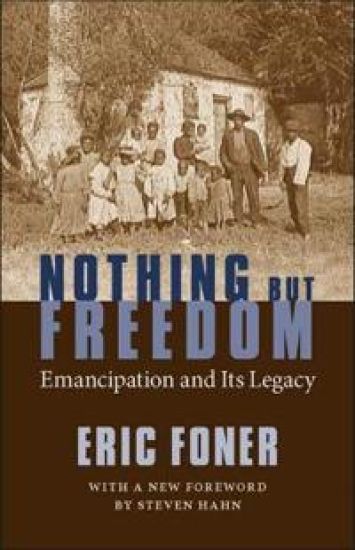
Nothing But Freedom examines the aftermath of emancipation in the South and the restructuring of society by which the former slaves gained, beyond their freedom, a new relation to the land they worked on, to the men they worked for, and to the government they lived under. Taking a comparative approach, Eric Foner examines Reconstruction in the southern states against the experience of Haiti, where a violent slave revolt was followed by the establishment of an undemocratic government and the imposition of a system of forced labor; the British Caribbean, where the colonial government oversaw an orderly transition from slavery to the creation of an almost totally dependent work force; and early twentieth-century southern and eastern Africa, where a self-sufficient peasantry was dispossessed in order to create a dependent black work force. Measuring the progress of freedmen in the post-Civil War South against that of freedmen in other recently emancipated societies, Foner reveals Reconstruction to have been, despite its failings, a unique and dramatic experiment in interracial democracy in the aftermath of slavery. Steven Hahn's timely new foreword places Foner's analysis in the context of recent scholarship and assesses its enduring impact in the twenty-first century.
Originally released in 1990, The New American History, edited for the American Historical Association by Eric Foner, has become an indispensable volume for teachers and students. In essays that chart the shifts in interpretation within their fields, some of our most prominent American historians survey the key works and themes in the scholarship of the last three decades. Along with the substantially revised essays from the first edition, this volume presents three entirely new ones -- on intellectual history, the history of the West, and the histories of the family and sexuality. The second edition of The New American History reflects, in Foner's words, \u0022the continuing vitality and creativity of the study of the past, how traditional fields are being expanded and redefined even as new ones are created.\u0022
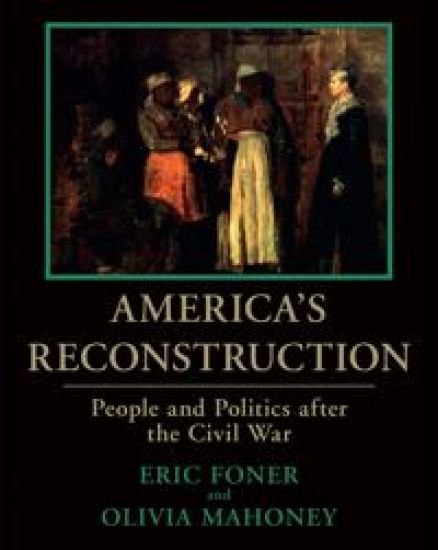
One of the most misunderstood periods in American history, Reconstruction remains relevant today because its central issue - the role of the federal government in protecting citizens' rights and promoting economic and racial justice in a heterogeneous society - is still unresolved. America's Reconstruction examines the origins of this crucial time, explores how black and white Southerners responded to the abolition of slavery, traces the political disputes between Congress and President Andrew Johnson, and analyses the policies of the Reconstruction governments and the reasons for their demise. America's Reconstruction was published in conjunction with a major exhibition on the era produced by the Valentine Museum in Richmond, Virginia, and the Virginia Historical Society. The exhibit included a remarkable collection of engravings from Harper's Weekly, lithographs, and political cartoons, as well as objects such as sculptures, rifles, flags, quilts, and other artifacts. An important tool for deepening the experience of those who visited the exhibit, America's Reconstruction also makes this rich assemblage of information and period art available to the wider audience of people unable to see the exhibit in its host cities. A work that stands along as well as in proud accompaniment to the temporary collection, it will appeal to general readers and assist instructors of both new and seasoned students of the Civil War and its tumultuous aftermath.
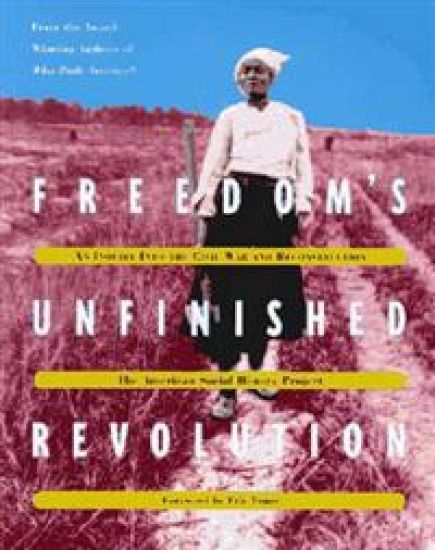
All to often, the history of the Civil War is taught in isolation, without reference to Reconstruction or its broader historical implications. Such an aproach obscures the most telling consequences of America's greatest conflict and the links between the 1860s and 1870s and our modern world. While the failures of Reconstruction led to generations of racial injustice, its successes paved the way for the eventual emergence of the modern Civil Rights Movement. Written by the award-winning authors of "Who Built America?", this work is an attempt to retell this pivotal episode in American history for high-school students. It examines the ways that "ordinary" people - men and women, black and white, Northern and Southern - experienced and helped shape the major events of the era. It highlights the vital role of African Americans, a group whose actions and achievements in this period are often overlooked, although they stood at the centre of national debate. This book contains primary historical documents, including letters, speeches, and excerpts from novels and newspapers. It offers students a glimpse of the war and its aftermath - the struggle to rebuild the South and construct a new society.
"Howard Fast makes superb use of his material. ... Aside from its social and historical implications, Freedom Road is a high-geared story, told with that peculiar dramatic intensity of which Fast is a master". -- Chicago Daily News
Author note: Philip S. Foner is Professor Emeritus of History, Lincoln University. Elinor Randall is a noted translator of Spanish literature. Together they have published five volumes of Jose Martiâs writings in English.