Kirjojen hintavertailu – 12 903 735 kirjaa ja 27 kauppaa

Kirjailija

Eric H. Cline

Kirjat ja teokset yhdessä paikassa: 29 kirjaa, julkaisuja vuosilta 2002–2026, suosituimpiin kuuluu 1177 v. Chr.. Vertaile teosten hintoja ja tarkista saatavuus suomalaisista kirjakaupoista.

Nimi esiintyy myös muodoissa: Eric H Cline

29 kirjaa

Kirjojen julkaisuvuodet: 2002–2026.

Ancient Empires

Ancient Empires

Eric H. Cline; Mark W. Graham

Cambridge University Press
2011
sidottu

Halvin toimitettuna 97,60 €

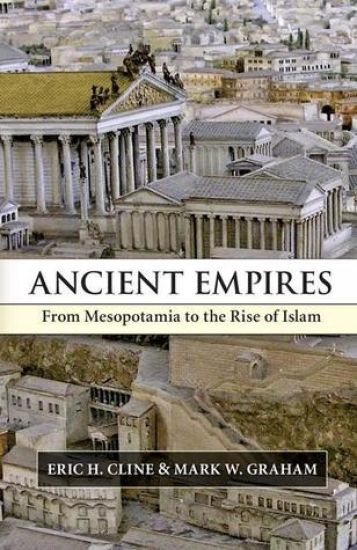
Ancient Empires is a relatively brief yet comprehensive and even-handed overview of the ancient Near East, the Mediterranean and Europe, including the Greco-Roman world, Late Antiquity and the early Muslim period. Taking a focused and thematic approach, it aims to provoke a discussion of an explicit set of themes supplemented by the reading of ancient sources. By focusing on empires and imperialism as well as modes of response and resistance, it is relevant to current discussions about order, justice and freedom. The book concludes that some of the ancient world's most enduring ideas, value systems and institutions were formulated by peoples who were resisting the great empires. It analyzes the central, if problematic, connection between political and ideological power in both empire formation and resistance. The intricate interrelations among ideological, economic, military and political power are explored for every empire and resisting group.
Ancient Empires

Ancient Empires

Eric H. Cline; Mark W. Graham

Cambridge University Press
2011
pokkari

Halvin toimitettuna 60,80 €

Ancient Empires is a relatively brief yet comprehensive and even-handed overview of the ancient Near East, the Mediterranean and Europe, including the Greco-Roman world, Late Antiquity and the early Muslim period. Taking a focused and thematic approach, it aims to provoke a discussion of an explicit set of themes supplemented by the reading of ancient sources. By focusing on empires and imperialism as well as modes of response and resistance, it is relevant to current discussions about order, justice and freedom. The book concludes that some of the ancient world's most enduring ideas, value systems and institutions were formulated by peoples who were resisting the great empires. It analyzes the central, if problematic, connection between political and ideological power in both empire formation and resistance. The intricate interrelations among ideological, economic, military and political power are explored for every empire and resisting group.
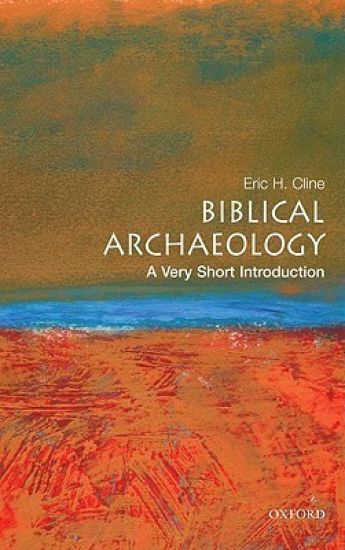
Biblical Archaeology

Biblical Archaeology

Eric H Cline

Oxford University Press Inc
2009
nidottu

Halvin toimitettuna 18,90 €

Public interest in biblical archaeology is at an all-time high, as television documentaries pull in millions of viewers to watch shows on the Exodus, the Ark of the Covenant, and the so-called Lost Tomb of Jesus. Important discoveries with relevance to the Bible are made virtually every year--during 2007 and 2008 alone researchers announced at least seven major discoveries in Israel, five of them in or near Jerusalem. Biblical Archaeology offers a passport into this fascinating realm, where ancient religion and modern science meet, and where tomorrow's discovery may answer a riddle that has lasted a thousand years. Archaeologist Eric H. Cline here offers a complete overview of this exciting field. He discusses the early pioneers, such as Sir William Matthew Flinders Petrie and William Foxwell Albright, the origins of biblical archaeology as a discipline, and the major controversies that first prompted explorers to go in search of objects and sites that would "prove" the Bible. He then surveys some of the most well-known biblical archaeologists, including Kathleen Kenyon and Yigael Yadin, the sites that are essential sources of knowledge for biblical archaeology, such as Hazor, Megiddo, Gezer, Lachish, Masada, and Jerusalem, and some of the most important discoveries that have been made, including the Dead Sea Scrolls, the Mesha Inscription, and the Tel Dan Stele. Subsequent chapters examine additional archaeological finds that shed further light on the Hebrew Bible and New Testament, the issue of potential frauds and forgeries, including the James Ossuary and the Jehoash Tablet, and future prospects of the field. Biblical Archaeology: A Very Short Introduction captures the sense of excitement and importance that surrounds not only the past history of the field but also the present and the future, with fascinating new discoveries made each and every season. ABOUT THE SERIES: The Very Short Introductions series from Oxford University Press contains hundreds of titles in almost every subject area. These pocket-sized books are the perfect way to get ahead in a new subject quickly. Our expert authors combine facts, analysis, perspective, new ideas, and enthusiasm to make interesting and challenging topics highly readable.
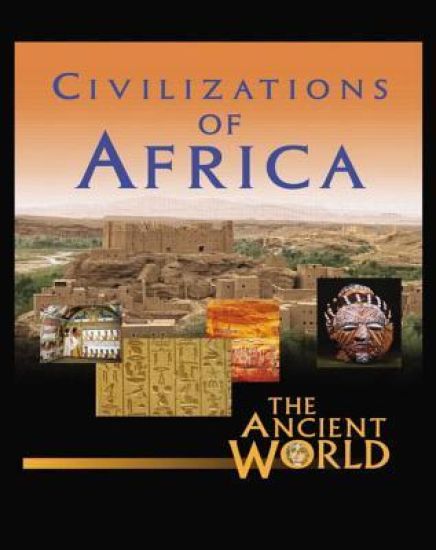
The Ancient World

The Ancient World

Sarolta Anna Takacs; Eric H. Cline

Routledge
2008
muu
Designed to meet the curriculum needs of students from grades 7-12, this five-volume encyclopedia explores the history and civilizations of the ancient world from prehistory to approximately 1000 CE. Organized alphabetically within geographical volumes on Africa, Europe, the Americas, Southwest Asia, and Asia and the Pacific, entries cover the social, political, scientific and technological, economic, and cultural events and developments that shaped the ancient world in all areas of the globe. Each volume explores significant civilizations, personalities, cultural and social developments, and scientific achievements in its geographical area. Boxed features include Link in Time, Link in Place, Ancient Weapons, Turning Points, and Great Lives. Each volume also includes maps, timelines and illustrations; and a glossary, bibliography and indexes complete the set.
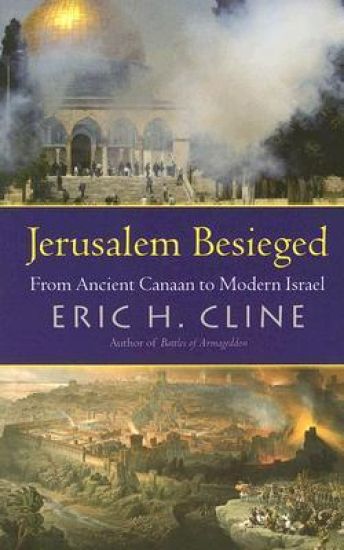
Jerusalem Besieged

Jerusalem Besieged

Eric H. Cline

The University of Michigan Press
2005
nidottu
"Jerusalem Besieged is a fascinating account of how and why a baffling array of peoples, ideologies, and religions have fought for some four thousand years over a city without either great wealth, size, or strategic importance. Cline guides us through the baffling, but always bloody, array of Jewish, Roman, Moslem, Crusader, Ottoman, Western, Arab, and Israeli fights for possession of such a symbolic prize in a manner that is both scholarly and engaging."-Victor Davis Hanson, Stanford University; author of The Other Greeks and Carnage and Culture"A beautifully lucid presentation of four thousand years of history in a single volume. Cline writes primarily as an archaeologist-avoiding polemic and offering evidence for any religious claims-yet he has also incorporated much journalistic material into this study. Jerusalem Besieged will enlighten anyone interested in the history of military conflict in and around Jerusalem."-Col. Rose Mary Sheldon, Virginia Military Institute"This groundbreaking study offers a fascinating synthesis of Jerusalem's military history from its first occupation into the modern era. Cline amply deploys primary source material to investigate assaults on Jerusalem of every sort, starting at the dawn of recorded history. Jerusalem Besieged is invaluable for framing the contemporary situation in the Middle East in the context of a very long and pertinent history."-Baruch Halpern, Pennsylvania State UniversityA sweeping history of four thousand years of struggle for control of one city"[An] absorbing account of archaeological history, from the ancient Israelites' first conquest to today's second intifada. Cline clearly lays out the fascinating history behind the conflicts."-USA Today"A pleasure to read, this work makes this important but complicated subject fascinating."-Jewish Book World"Jerusalem Besieged is a fascinating account of how and why a baffling array of peoples, ideologies, and religions have fought for some four thousand years over a city without either great wealth, size, or strategic importance. Cline guides us through the baffling, but always bloody, array of Jewish, Roman, Moslem, Crusader, Ottoman, Western, Arab, and Israeli fights for possession of such a symbolic prize in a manner that is both scholarly and engaging."-Victor Davis Hanson, Stanford University; author of The Other Greeks and Carnage and Culture
Teaching Guide to the Ancient Egyptian World

Teaching Guide to the Ancient Egyptian World

Eric H. Cline; Jill Rubalcaba

Oxford University Press Inc
2005
nidottu
The Teaching Guide to The Ancient Egyptian World is a complete, all-in-one resource that provides teachers with the support they need to help their students access the content of the book from the Medieval & Early Modern World series. It contains a collection of important instructional tools for the teacher, and a separate section on reading and literacy with practical strategies for teaching content to students with a wide range of abilities and learning styles. Special multimedia, cross-curricular projects, one for each chapter, designed for mixed-group use gives students of all backgrounds and learning styles a chance to access and interact with the content. Chapter-by-chapter three-page lesson plans that are filled with activities to help teachers get the most out of every chapter in the book, including two chapter activities in blackline master form, graphic organizer reproducibles, project outlines, rubrics and a chapter assessment.
The Ancient Egyptian World

The Ancient Egyptian World

Eric H. Cline; Jill Rubalcaba

Oxford University Press
2005
sidottu
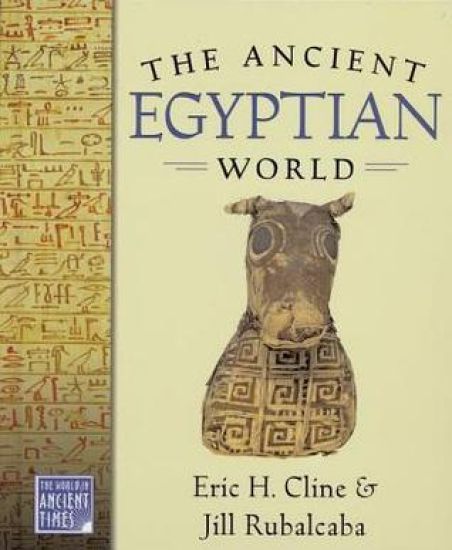
Taking readers back 4,000 years, to the fertile land around the Nile River, The Ancient Egyptian World tells the stories of the kings, queens, pharaohs, gods, tomb builders, and ordinary citizens who lived there. Using papyri, scarabs, tomb inscriptions, mummies, and a rich variety of other primary sources, Eric H. Cline and Jill Rubalcaba uncover the fascinating history of ancient Egypt. Scarabs, which scholars call "imperial news bulletins," record important moments in a pharaoh's reign. The Edwin Smith Papyrus details the injuries sustained by the builders of the great pyramids, and the remedies used to treat them. For a worker who has had a stone fall on his head, it suggests: "bind it with fresh meat . . . and treat afterward with grease, honey and lint." A complex recipe for a top-of-the-line mummy describes a process that could take 70 days and involved drawing the brain out through the nose with a crooked piece of iron. These primary sources also tell the stories of the people of ancient Egypt: Pepi II, the six-year-old boy king who commanded armies; Ramesses II, whose mortuary temple boasts of his expertise in battle against the Hittites; Queen Hatshepsut, the only woman to rule Egypt as pharaoh; and Cleopatra, who courted Roman statesman Mark Antony as part of her quest to extend the Egyptian empire. The Ancient Egyptian World honors the history of a civilization whose monuments and tombs still capture the imagination of the world thousands of years later.
The Battles of Armageddon

The Battles of Armageddon

Eric H. Cline

The University of Michigan Press
2002
nidottu
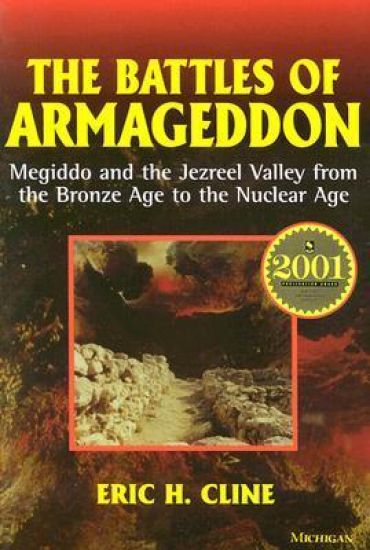
WINNER > Best Popular Book on Archaeology --Biblical Archaeology SocietyApocalypse. Judgment Day. The End Time. Armageddon. Students of the Bible know it as the place where the cataclysmic battle between the forces of good and the forces of evil will unfold. Many believe that this battle will take place in the very near future. But few know that Armageddon is a real place--one that has seen more fighting and bloodshed than any other spot on earth. The name Armageddon is a corruption of the Hebrew phrase Har Megiddo, and it means "Mount of Megiddo." More than thirty bloody conflicts have been fought at the ancient site of Megiddo and adjacent areas of the Jezreel Valley during the past four thousand years. Egyptians, Israelites, Greeks, Muslims, Crusaders, Mongols, British, Germans, Arabs, and Israelis have all fought and died here. The names of the warring leaders reverberate throughout history: Thutmose III, Deborah, Gideon, Saul and Jonathan, Jezebel, Saladin, Napoleon, and Allenby, to name but the most famous. Throughout history Megiddo and the Jezreel Valley have been ground zero for battles that determined the very course of civilization. No wonder that the author of Revelation believed Armageddon, the penultimate battle between good and evil, would also take place here! The Battles of Armageddon introduces readers to a rich cast of ancient and modern warriors, while bringing together for the first time the wide range of conflicts that have been fought at Megiddo and the Jezreel Valley from the Bronze Age to the Nuclear Age. Eric H. Cline has participated in more than seventeen seasons of excavation and survey in Israel, Egypt, Jordan, Greece, and the United States. He is currently a Senior Staff Archaeologist at the ongoing excavations of Megiddo.