Kirjojen hintavertailu – 12 903 724 kirjaa ja 27 kauppaa

Kirjailija

Eric Herring

Kirjat ja teokset yhdessä paikassa: 5 kirjaa, julkaisuja vuosilta 2000–2026, suosituimpiin kuuluu Transforming Education for Sustainable Futures. Vertaile teosten hintoja ja tarkista saatavuus suomalaisista kirjakaupoista.

5 kirjaa

Kirjojen julkaisuvuodet: 2000–2026.

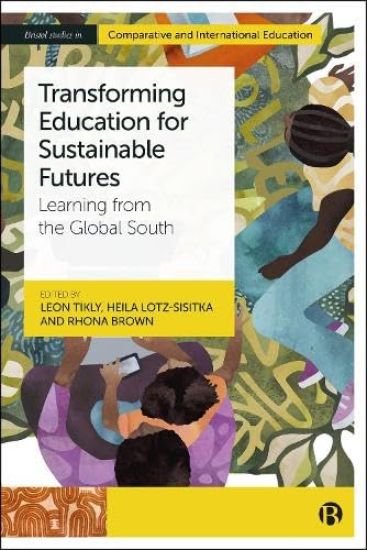
Transforming Education for Sustainable Futures

Transforming Education for Sustainable Futures

Amal Ali; Poonam Batra; Amir Bazaz; Ash Brockwell; Rhona Brown; Beena Choksi; Joan DeJaeghere; Keri Facer; Freya Gasgoyne; Eric Herring; Dan Imaniriho; Latif Ismael; Sanele kaNtshingana; Heila Lotz-Sisitka; Vainola Makan; Simon McGrath; Rafael Mitchell; Sujata Noronha; Sue Parnell; Leon Tikly; Michael Tusiime; Colleen Vogel; Arjen Wals

Bristol University Press
2026
nidottu
Available open access digitally under CC-BY-NC-ND licence. This book examines how education can drive change for marginalized communities across the Global South. Drawing on evidence from 67 projects in India, Rwanda, Somaliland/Somalia and South Africa, the book shows how education can expand youth livelihoods, strengthen sustainable cities and advance climate action. Yet for education to fulfil this role, it must be reimagined—tackling entrenched inequalities of class, caste, clan, gender, race, rurality and indigeneity. Arguing for more democratic, public and inclusive forms of education, the book calls for research that prioritises collaboration and equity over top-down models, offering a bold new agenda for transformative practice.
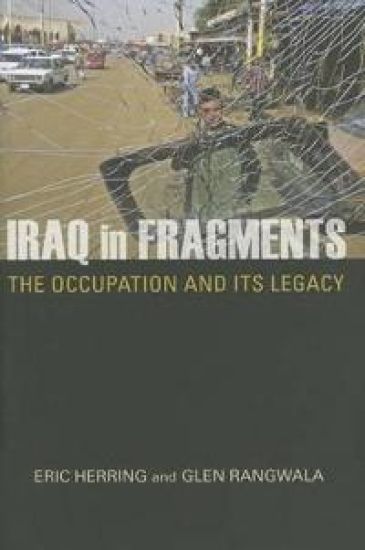
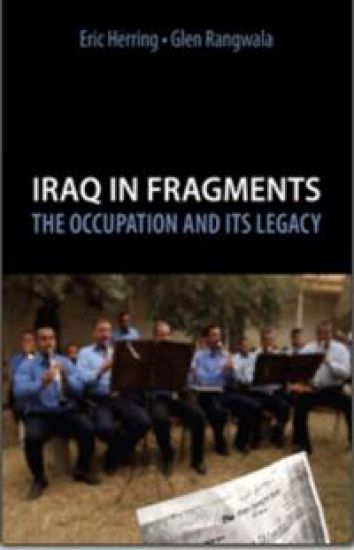
Iraq in Fragments

Iraq in Fragments

Eric Herring; Glen Rangwala

Cornell University Press
2006
sidottu
When the United States led the invasion of Iraq in March 2003, it expected to be able to establish a prosperous liberal democracy with an open economy that would serve as a key ally in the region. It sought to engage Iraqi society in ways that would defeat any challenge to that state building project and U. S. guidance of it. Eric Herring and Glen Rangwala argue that state building in Iraq has been crippled less by preexisting weaknesses in the Iraqi state, Iraqi sectarian divisions or U. S. policy mistakes than by the fact that the US has attempted-with only limited success-to control the parameters and outcome of that process. They explain that the very nature of U. S. state-building in Iraq has created incentives for unregulated local power struggles and patron-client relations. Corruption, smuggling, and violence have resulted. The main legacy of the US-led occupation, the authors contend, is that Iraq has become a fragmented state-that is, one in which actors dispute where overall political authority lies and in which there are no agreed procedures for resolving such disputes. As long as this is the case, the authority of the state will remain limited. Technocratic mechanisms such as training schemes for officials, political fixes such as elections, and the coercive tools of repression will not be able to overcome this situation. Placing the occupation within the context of regional, global, and U. S. politics, Herring and Rangwala demonstrate how the politics of co-option, coercion, and economic change have transformed the lives and allegiances of the Iraqi population. As uncertainty about the future of Iraq persists, this volume provides a much-needed analysis of the deeper forces that give meaning to the daily events in Iraq.
Iraq in Fragments

Iraq in Fragments

Eric Herring; Glen Rangwala

C Hurst Co Publishers Ltd
2006
sidottu
When the US led the invasion of Iraq in March 2003, it expected to be able to establish a prosperous liberal democracy with an open economy that would serve as a key ally in the region. It sought to engage Iraqi society in ways that would defeat any challenge to that state-building project and US guidance of it. Herring and Rangwala argue that state building in Iraq has been crippled less by pre-existing weaknesses in the Iraqi state, Iraqi sectarian divisions or US policy mistakes than by the fact that the US has attempted -- with only limited success -- to control the parameters and outcome of that process. They explain that the very nature of US state building in Iraq has created incentives for unregulated local power struggles and patron-client relations. Corruption, smuggling and violence have resulted. The main legacy of the US-led occupation, the authors contend, is that Iraq has become a fragmented state -- that is, one in which actors dispute where overall political authority lies and in which there are no agreed procedures for resolving such disputes. As long as this is the case, the authority of the state will remain limited. Technocratic mechanisms such as training schemes for officials, political fixes such as elections and the coercive tools of repression will not be able to overcome this situation. Placing the occupation within the context of regional, global and US politics, Herring and Rangwala demonstrate how the politics of co-option, coercion and economic change have transformed the lives and allegiances of the Iraqi population. As uncertainty about the future of Iraq persists, this volume provides a much-needed analysis of the deeper forces which give meaning to the daily events in Iraq.