Kirjojen hintavertailu – 12 903 725 kirjaa ja 27 kauppaa

Kirjailija

Eric Jensen

Kirjat ja teokset yhdessä paikassa: 17 kirjaa, julkaisuja vuosilta 2005–2025, suosituimpiin kuuluu A Teaching Jesus: Ignatian Contemplations with the Gospel of Matthew. Vertaile teosten hintoja ja tarkista saatavuus suomalaisista kirjakaupoista.

17 kirjaa

Kirjojen julkaisuvuodet: 2005–2025.

Doing Research in the Real World

Doing Research in the Real World

David E Gray; Eric Jensen

SAGE PUBLICATIONS LTD
2025
nidottu

Halvin toimitettuna 54,30 €

If your focus is real world research, this book will provide you with an easy-to-follow, step-by-step guide to planning, delivering, and communicating it successfully. Allowing you to see research in action, this book uses real-world case studies from a wide range of disciplines and global markets, encouraging you to apply best practice to your own work. There is step-by-step guidance on quantitative, qualitative and mixed research methods to introduce you to the intricacies of real world research. The sixth edition: · Integrates digital and face-to-face methods to reflect a changing world; · Provides the reality of methods and not just the theories behind them; · Discusses a wider range of assessment in both live and digital settings fully preparing you for your studies. Accompanied online by a wealth of handpicked tools and resources to help you avoid common pitfalls and learn key skills, this complete guide is still the definitive research companion for you.

Doing Research in the Real World

Doing Research in the Real World

David E Gray; Eric Jensen

SAGE PUBLICATIONS LTD
2025
sidottu
If your focus is real world research, this book will provide you with an easy-to-follow, step-by-step guide to planning, delivering, and communicating it successfully. Allowing you to see research in action, this book uses real-world case studies from a wide range of disciplines and global markets, encouraging you to apply best practice to your own work. There is step-by-step guidance on quantitative, qualitative and mixed research methods to introduce you to the intricacies of real world research. The sixth edition: · Integrates digital and face-to-face methods to reflect a changing world; · Provides the reality of methods and not just the theories behind them; · Discusses a wider range of assessment in both live and digital settings fully preparing you for your studies. Accompanied online by a wealth of handpicked tools and resources to help you avoid common pitfalls and learn key skills, this complete guide is still the definitive research companion for you.

Teaching with Poverty and Equity in Mind

Teaching with Poverty and Equity in Mind

Eric Jensen

Association for Supervision Curriculum Development
2022
nidottu
Learn how you can succeed with the students who need you most in ways you never thought possible. In this thought-provoking book, renowned educator and learning expert Eric Jensen takes his most personal, profound look yet at how poverty and inequity hurt students and their chances for success in life—and how teachers across all grade levels and subject areas can infuse equity into every aspect of their practice. Drawing from a broad survey of research, personal and professional experience, and inspiring real-life success stories, Teaching with Poverty and Equity in Mind explains how teachers canBuild relationships with students and create a classwide "in-group" where all learners feel a sense of safety and belonging. Incorporate relevance and cultural responsiveness into curriculum and instruction, increasing student buy-in and replacing compliance with collaboration and leadership. Use the uplifting power of stories to optimize energy and engagement and foster growth mindsets. Provide clear, actionable feedback that empowers students to evaluate and direct their own learning. Shift from disciplining students to coaching them with empathy, de-escalating disruptions and fostering more productive behaviors. Build stronger brains and cultivate capacity through powerful accelerated learning tools. Take steps to become a reflective and equitable educator, examining and debunking harmful biases and establishing personal and professional habits for a lifetime of growth. This insightful, comprehensive guide also includes reflection prompts and downloadable tools and templates to help you move forward with implementation. If we truly believe all students deserve a high-quality education, we need to commit to equity. It starts with each one of us. It starts with you.
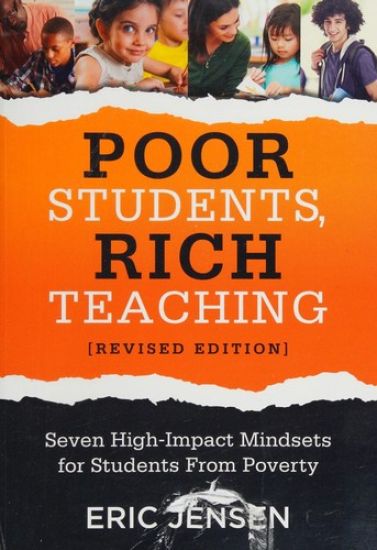
Poor Students, Rich Teaching: Seven High-Impact Mindsets for Students from Poverty (Using Mindsets in the Classroom to Overcome Student Poverty and Ad
There are three critical characteristics to know about poverty and education: The devastating effects of poverty are accelerating. Poverty affects both you and your students in multiple adverse ways. You have the power to reverse the academic impact poverty has on your students, and this comprehensive resource will show you how. In this revised and updated edition, two of Eric Jensen's top-selling books (Poor Students, Rich Teaching and Poor Students, Richer Teaching) have been merged into one must-read resource on poverty and education. Dr. Eric Jensen clearly defines seven mindsets essential for reaching economically disadvantaged students and shares corresponding strategies for overcoming adversity and ensuring college and career readiness for all learners, regardless of socioeconomic status. Motivate students to learn in the face of poverty using mindsets in the classroom: Understand the urgency of poverty in the United States and how poverty affects education, student engagement, and academic achievement. Learn how creating a positive school culture and a growth mindset for students can be beneficial in overcoming adversity. Gain seven high-impact mindsets that bring change: the relational mindset, achievement mindset, rich classroom climate mindset, engagement mindset, positivity mindset, enrichment mindset, and graduation mindset. Build effective teacher-student relationships, and help students see college and career readiness as a reachable target. Create a welcoming classroom climate where all students love to learn, and drive student engagement, motivation, and success. Contents: Part One: Why the Relational Mindset? Chapter 1: Personalize the Learning Chapter 2: Connect Everyone for Success Chapter 3: Show Empathy Parting Wisdom: Lock in the Relational Mindset Part Two: Why the Achievement Mindset? Chapter 4: Set Gutsy Goals Chapter 5: Give Fabulous Feedback Chapter 6: Persist With Grit Parting Wisdom: Lock in the Achievement Mindset Part Three: Why the Positivity Mindset? Chapter 7: Boost Optimism and Hope Chapter 8: Build Positive Attitudes Chapter 9: Change the Emotional Set Point Parting Wisdom: Lock in the Positivity Mindset Part Four: Why the Rich Classroom Climate Mindset? Chapter 10: Engage Voice and Vision Chapter 11: Set Safe Classroom Norms Chapter 12: Foster Academic Optimism Parting Wisdom: Lock in the Rich Classroom Climate Mindset Part Five: Why the Enrichment Mindset? Chapter 13: Manage the Cognitive Load Chapter 14: Develop Better Thinking Skills Chapter 15: Enhance Study Skills and Vocabulary Parting Wisdom: Lock in the Enrichment Mindset Part Six: Why the Engagement Mindset? Chapter 16: Engage for Maintenance and Stress Chapter 17: Engage for Setup and Buy-In Chapter 18: Engage to Build Community Parting Wisdom: Lock in the Engagement Mindset Part Seven: Why the Graduation Mindset? Chapter 19: Support Alternative Solutions Chapter 20: Prepare for College and Careers Parting Wisdom: Lock in the Graduation Mindset
Doing Real Research

Doing Real Research

Eric Jensen; Charles Laurie

SAGE Publications Ltd
2016
sidottu
Challenging the formality and idealized settings of conventional methods teaching and opting instead for a real world approach to social research, this book offers frank, practical advice designed to empower students and researchers alike. Theoretically robust and with an exhaustive coverage of key methodologies and methods the title establishes the cornerstones of social research. Examples reflect research conducted inside and outside formal university settings and range from the extremes of war torn countries to the complexities of school classrooms. Supported by a wealth of learning features and tools the textbook and website include: Video top tipsPodcastsFull text journal articlesInterviews with researchers conducting field researchLinks to external websites and blogsStudent exercisesReal world case studies
Doing Real Research

Doing Real Research

Eric Jensen; Charles Laurie

SAGE Publications Ltd
2016
nidottu
Challenging the formality and idealized settings of conventional methods teaching and opting instead for a real world approach to social research, this book offers frank, practical advice designed to empower students and researchers alike. Theoretically robust and with an exhaustive coverage of key methodologies and methods the title establishes the cornerstones of social research. Examples reflect research conducted inside and outside formal university settings and range from the extremes of war torn countries to the complexities of school classrooms. Supported by a wealth of learning features and tools the textbook and website include: Video top tipsPodcastsFull text journal articlesInterviews with researchers conducting field researchLinks to external websites and blogsStudent exercisesReal world case studies
Engaging Students with Poverty in Mind

Engaging Students with Poverty in Mind

Eric Jensen

Association for Supervision Curriculum Development
2013
nidottu
In this galvanizing follow-up to the best-selling Teaching with Poverty in Mind, renowned educator and learning expert Eric Jensen digs deeper into engagement as the key factor in the academic success of economically disadvantaged students. Drawing from research, experience, and real school success stories, Engaging Students with Poverty in Mind reveals:Smart, purposeful engagement strategies that all teachers can use to expand students' cognitive capacity, increase motivation and effort, and build deep, enduring understanding of content. The (until-now) unwritten rules for engagement that are essential for increasing student achievement. How automating engagement in the classroom can help teachers use instructional time more effectively and empower students to take ownership of their learning. Steps you can take to create an exciting yet realistic implementation plan. Too many of our most vulnerable students are tuning out and dropping out because of our failure to engage them. It's time to set the bar higher. Until we make school the best part of every student's day, we will struggle with attendance, achievement, and graduation rates. This timely resource will help you take immediate action to revitalize and enrich your practice so that all your students may thrive in school and beyond.
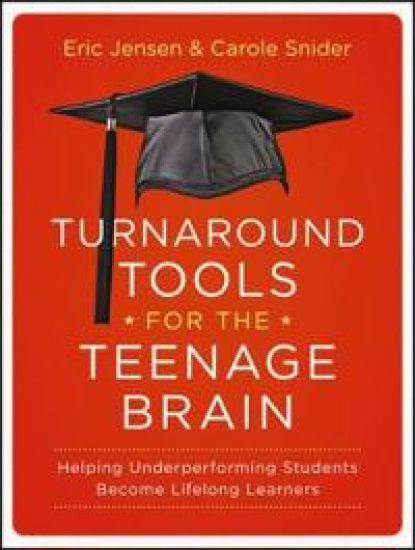
Turnaround Tools for the Teenage Brain

Turnaround Tools for the Teenage Brain

Eric Jensen; Carole Snider

John Wiley Sons Inc
2013
nidottu
Powerful research-based strategies to turn around struggling adolescent students The achievement gap is widening and more teens than ever are struggling in school. The latest research shows not only that brains can change, but that teachers and other providers have the power to boost students' effort, focus, attitude, and even IQs. In this book bestselling author Eric Jensen and co-author Carole Snider offer teacher-friendly strategies to ensure that all students graduate, become lifelong learners, and ultimately be successful in school and life. Drawing on cutting-edge science, this breakthrough book reveals core tools to increase student effort, build attitudes, and improve behaviors. Practical, teacher-tested, and research-supported strategies that will empower educators to make lasting and rapid changesPowerful academic evidence showing that every teacher can make a significant—and lasting—difference in student effort, behavior, attitude, and achievementSpecific tools for making and managing the student's goal-seeking process and helping to develop a winner's mindset From the very first chapter, educators will learn how to help their struggling students become excited, lifelong learners. Eric Jensen is a noted authority on brain-based learning and student engagement. Carole Snider is an expert in both adolescent success and adult learning.
Culture and Social Change

Culture and Social Change

Brady Wagoner; Eric Jensen; Julian A. Oldmeadow

Information Age Publishing
2012
nidottu
This book brings together social sciencists to create an interdisciplinary dialogue on the topic of social change as a cultural process. Culture is as much about novelty as it is about tradition, as much about change as it is about stability. This dynamic tension is analyzed in collective protests, intergroup dynamics, language, mass media, science, community participation, art, and social transitions to capitalism, among others contexts. These diverse cases illustrate a number of key factors that can propel, slow-down and retract social change. An emancipatory and integrative social science is developed in this book, which offers a new explanatory model of human behavior and thought under conditions of institutional and societal change.
Culture and Social Change

Culture and Social Change

Brady Wagoner; Eric Jensen; Julian A. Oldmeadow

Information Age Publishing
2012
sidottu
This book brings together social sciencists to create an interdisciplinary dialogue on the topic of social change as a cultural process. Culture is as much about novelty as it is about tradition, as much about change as it is about stability. This dynamic tension is analyzed in collective protests, intergroup dynamics, language, mass media, science, community participation, art, and social transitions to capitalism, among others contexts. These diverse cases illustrate a number of key factors that can propel, slow-down and retract social change. An emancipatory and integrative social science is developed in this book, which offers a new explanatory model of human behavior and thought under conditions of institutional and societal change.
Schumann

Schumann

Eric Jensen

Oxford University Press Inc
2012
nidottu
Robert Schumann is one of the most intriguing-and enigmatic-composers of the nineteenth century. Extraordinarily gifted in both music and literature, many of his compositions were inspired by poetry and novels. For much of his life he was better known as a music critic than as a composer. But whether writing as critic or composer, what he produced was created by him as a reflection of his often turbulent life. Best known was the tempestuous courtship of his future wife, the pianist Clara Wieck. Though marriage and family life seemed to provide a sense of constancy, he increasingly experienced periods of depression and instability. Mounting criticism of his performance as music director at Dusseldorf led to his attempted suicide in 1854. Schumann was voluntarily committed to an insane asylum near Bonn where, despite indications of improvement and dissatisfaction with his treatment, he spent the final two years of his life. Based on original research and newly published letters and journals from the time, author Eric Frederick Jensen presents a balanced portrait of the composer with both scholarly authority and engaging clarity. Biographical chapters alternate with discussion of Schumann's piano, chamber, choral, symphonic, and operatic works, demonstrating how the circumstances of his life helped shape the music he wrote. Chronicling the romance of Robert and Clara, Jensen offers a nuanced look at the evolution of their relationship, one that changed dramatically after marriage. He also follows Schumann's creative musical criticism, which championed the burgeoning careers of Chopin, Liszt, and Brahms and challenged the musical tastes of Europe.
Inside the Teenage Brain

Inside the Teenage Brain

Sheryl Feinstein; Eric Jensen

Rowman Littlefield Education
2009
sidottu
Teenagers are perplexing, intriguing, and spirited creatures. In an attempt to discover the secrets to their thoughts and actions, parents have tried talking, cajoling, and begging them for answers. The result has usually been just more confusion. But new and exciting light is being shed on these mysterious young adults. What was once thought to be hormones run amuck can now be explained with modern medical technology. MRI and PET scans view the human brain while it is alive and functioning. To no one's surprise, the teenage brain is under heavy construction! These discoveries are helping parents understand the (until now) unexplainable teenager. Neuroscience can help parents adjust to the highs and lows of teenage behavior. Typically, this transformation is a prickly proposition for both teens and their families, but the trials and tribulations of adolescence give teenagers a second chance to develop and create the brain they will take into adulthood.
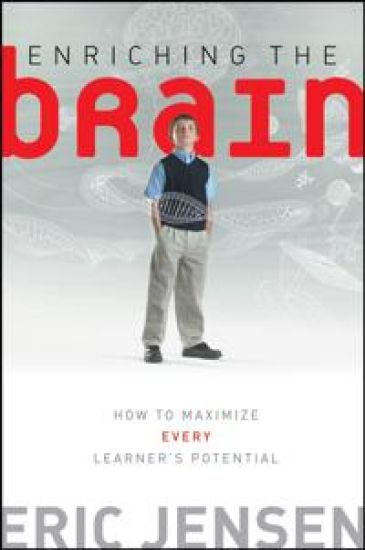
Enriching the Brain

Enriching the Brain

Eric Jensen

John Wiley Sons Inc
2008
nidottu
Eric Jensen—a leading expert in the translation of brain research into education, argues in Enriching the Brain that we greatly underestimate students’ achievement capacity. Drawing from a wide range of neuroscience research as well as related studies, Jensen reveals that the human brain is far more dynamic and malleable than we earlier believed. He offers us a powerful new understanding of how the brain can be “enriched,” across the board to maximize learning, memory, behavior and overall function. The bottom line is we have far more to do with how our children’s brains turn out than we previously thought. Enriching the Brain shows that lasting brain enrichment doesn’t occur randomly through routine or ordinary learning. It requires a specific, and persistent experiences that amount to a “formula” for maximizing brain potential. Parents, teachers and policy-makers would do well to memorize this formula. In fact, the lifelong potential of all school age kids depends on whether or not we use it. Offering an inspiring and innovative set of practices for promoting enrichment in the home, the school, and the classroom, this book is a clarion call. All of us, from teachers to parents to policymakers must take their role as ‘brain shapers’ much more seriously and this book gives the tools with which to do it.