Kirjojen hintavertailu – 12 859 818 kirjaa ja 27 kauppaa

Kirjailija

Eric Karpeles

Kirjat ja teokset yhdessä paikassa: 5 kirjaa, julkaisuja vuosilta 2016–2019, suosituimpiin kuuluu Almost Nothing. Vertaile teosten hintoja ja tarkista saatavuus suomalaisista kirjakaupoista.

5 kirjaa

Kirjojen julkaisuvuodet: 2016–2019.

Józef Czapski

Józef Czapski

Eric Karpeles

Thames Hudson Ltd
2019
sidottu
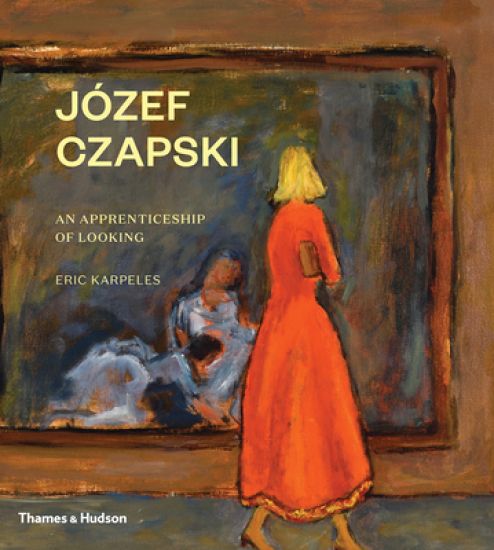
This stunning monograph, a long-overdue critical appraisal of Polish artist Józef Czapski (1896–1993), arrives at a moment when the artist’s legacy is gaining new recognition. Within these pages, author Eric Karpeles conveys how making art was so enmeshed with Czapski’s way of seeing and being in the world that it was second nature. Given that he lived into his 97th year, it’s no surprise that the artist has works dating from every decade of the 20th century but the first. As witness to the tumultuous events of that century, he found in painting ‘a refuge and a salvation’. Prolific as a painter, he was equally disciplined in recording the events of his life in pencil, ink, and watercolour in his journals. At a time when abstract art tended to dominate aesthetic discourse, he preferred to observe the world around him, to portray people going about their daily business. Some of his most compelling works depict theatre-goers and art lovers doing what they do best – looking.
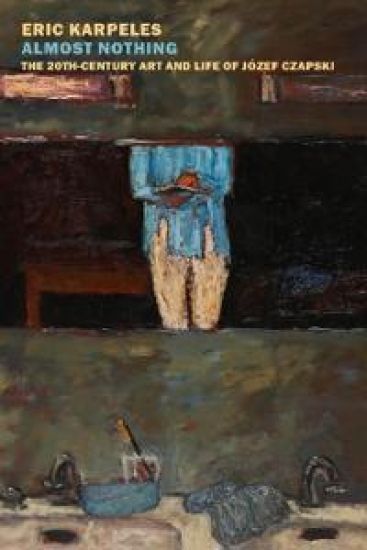
Almost Nothing

Almost Nothing

Eric Karpeles

The New York Review of Books, Inc
2018
nidottu
A compelling biography of the Polish painter and writer J zef Czapski that takes readers to Paris in the Roaring Twenties, to the front lines during WWII, and into the late 20th-century art world. J zef Czapski (1896-1993) lived many lives during his ninety-six years. He was a student in Saint Petersburg during the Russian Revolution and a painter in Paris in the roaring twenties. As a Polish reserve officer fighting against the invading Nazis in the opening weeks of the Second World War, he was taken prisoner by the Soviets. For reasons unknown to this day, he was one of the very few excluded from Stalin's sanctioned massacres of Polish officers. He never returned to Poland after the war, but worked tirelessly in Paris to keep alive awareness of the plight of his homeland, overrun by totalitarian powers. Czapski was a towering public figure, but painting gave meaning to his life. Eric Karpeles, also a painter, reveals Czapski's full complexity, pulling together all the threads of this remarkable life.
Lost Time

Lost Time

Eric Karpeles; Józef Czapski

The New York Review of Books, Inc
2018
nidottu

Halvin toimitettuna 20,90 €

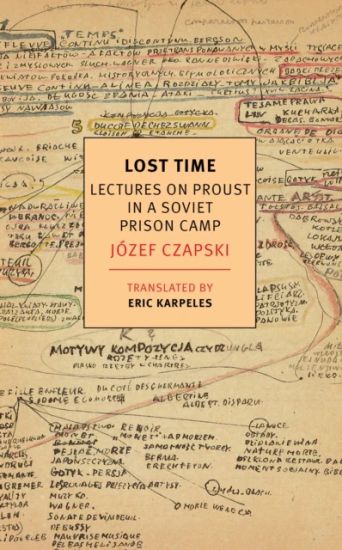
The first translation of painter and writer J zef Czapski's inspiring lectures on Proust, first delivered in a prison camp in the Soviet Union during World War II. During the Second World War, as a prisoner of war in a Soviet camp, and with nothing but memory to go on, the Polish artist and soldier J zef Czapski brought Marcel Proust's In Search of Lost Time to life for an audience of prison inmates. In a series of lectures, Czapski described the arc and import of Proust's masterpiece, sketched major and minor characters in striking detail, and movingly evoked the work's originality, depth, and beauty. Eric Karpeles has translated this brilliant and -altogether unparalleled feat of the critical imagination into English for the first time, and in a thoughtful introduction he brings out how, in reckoning with Proust's great meditation on memory, Czapski helped his fellow officers to remember that there was a world apart from the world of the camp. Proust had staked the art of the novelist against the losses of a lifetime and the imminence of death. Recalling that triumphant wager, unfolding, like Sheherazade, the intricacies of Proust's world night after night, Czapski showed to men at the end of their tether that the past remained present and there was a future in which to hope.
Paintings in Proust

Paintings in Proust

Eric Karpeles

Thames Hudson Ltd
2017
nidottu

Halvin toimitettuna 24,40 €

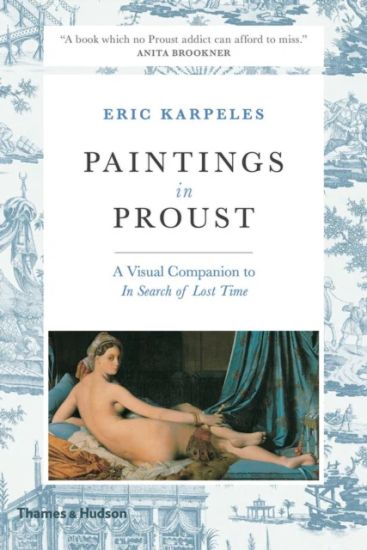
Eric Karpeles’s lavishly illustrated and comprehensive guide offers a feast for the eyes as it celebrates the close relationship between the visual and literary arts in Proust’s masterpiece. Karpeles has identified and located all of the paintings to which Proust makes exact reference. Where only a painter’s name is mentioned to indicate a certain mood or appearance, he has chosen a representative work to illustrate the impression that Proust sought to evoke. Botticelli’s angels, Manet’s courtesans, Mantegna’s warriors and Carpaccio’s saints stand among Monet’s water lilies and Piranesi’s engravings of Rome, while Karpeles’s insightful essay and lucid contextual commentary explain their significance to Proust. The book closes with extensive notes and a comprehensive index of all painters and paintings mentioned in the novel. With over 200 beautifully reproduced paintings, drawings and engravings, and accompanying texts drawn from the Moncrieff/Kilmartin/Enright translation of In Search of Lost Time, this book is an essential addition to the libraries of Proustians worldwide and a handsome volume in its own right.